Neil Winterburn Portfolio

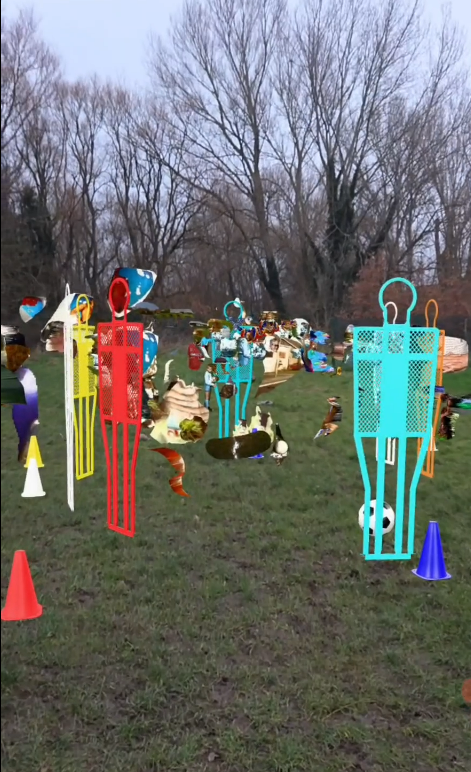
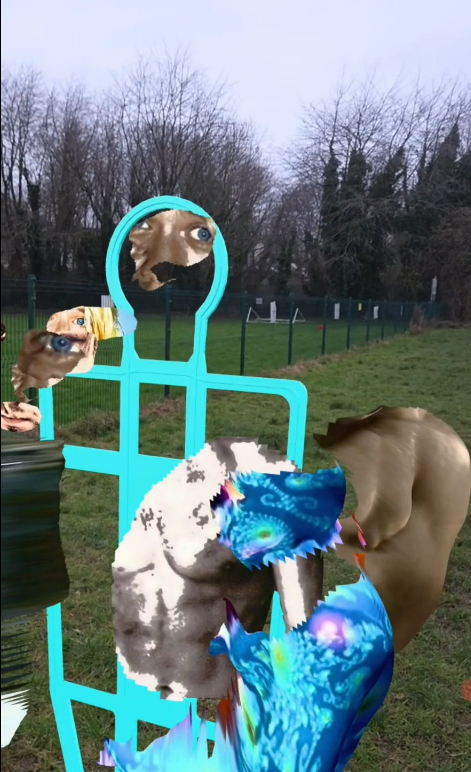
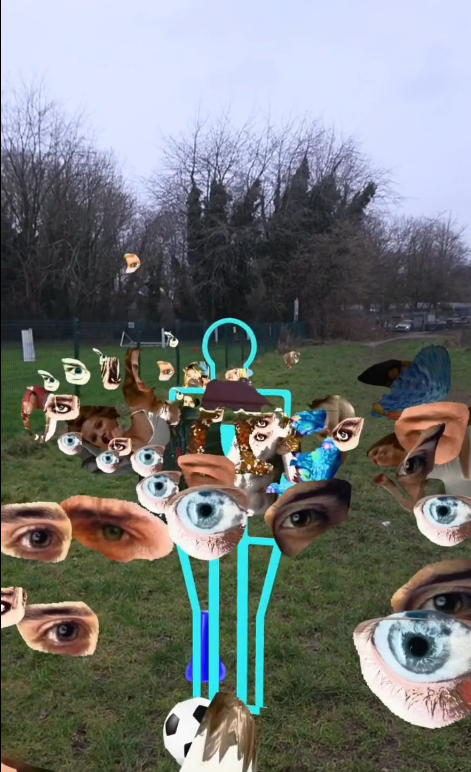
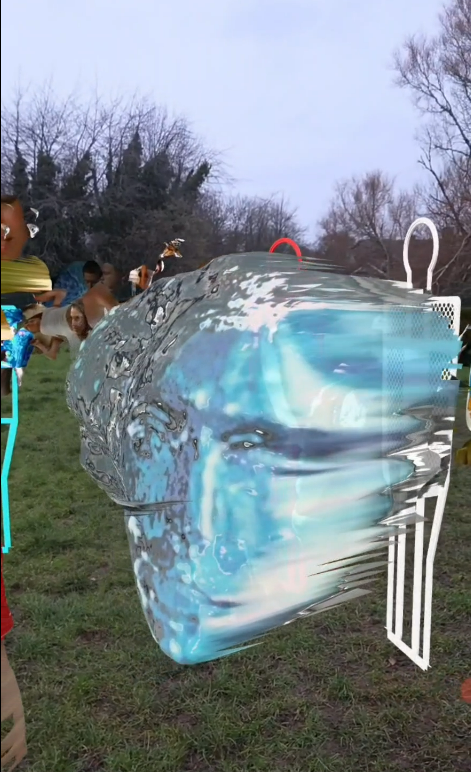
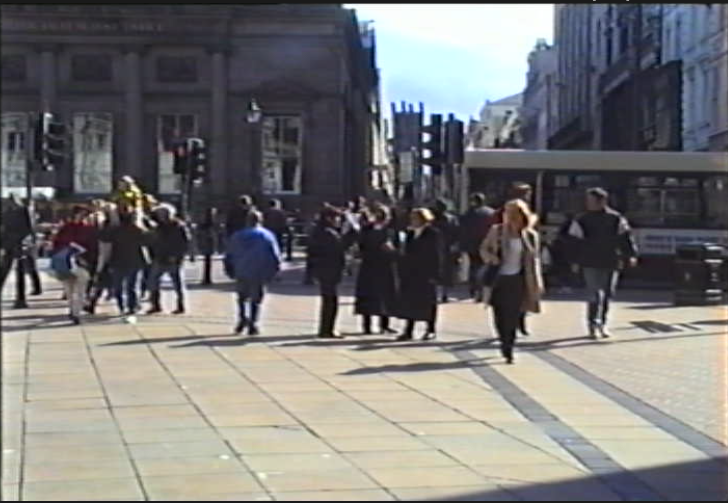
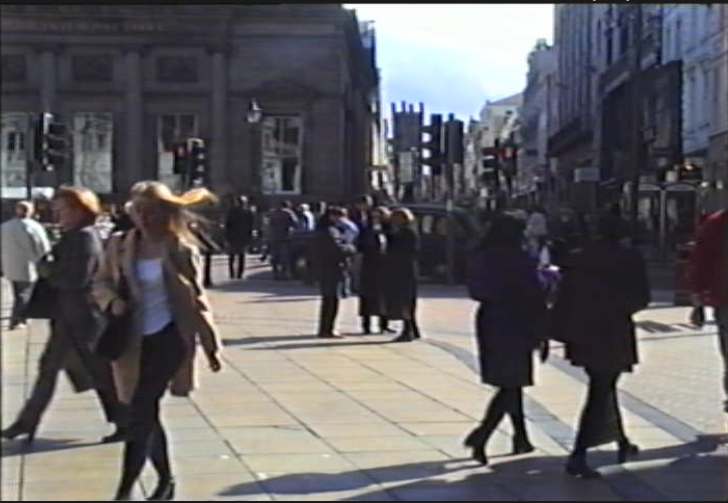
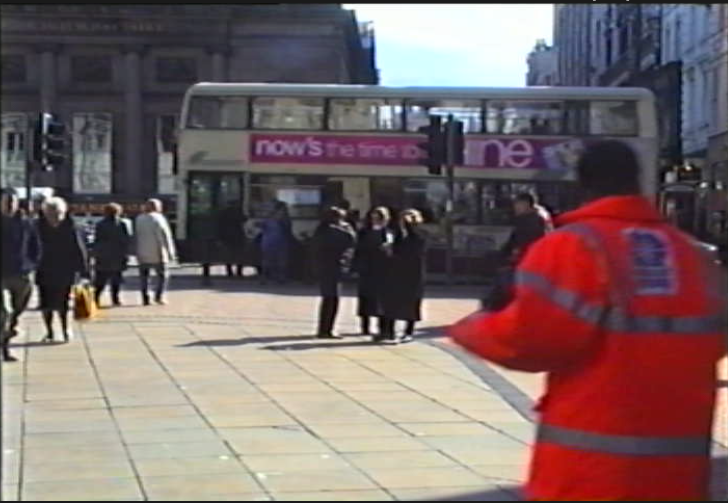
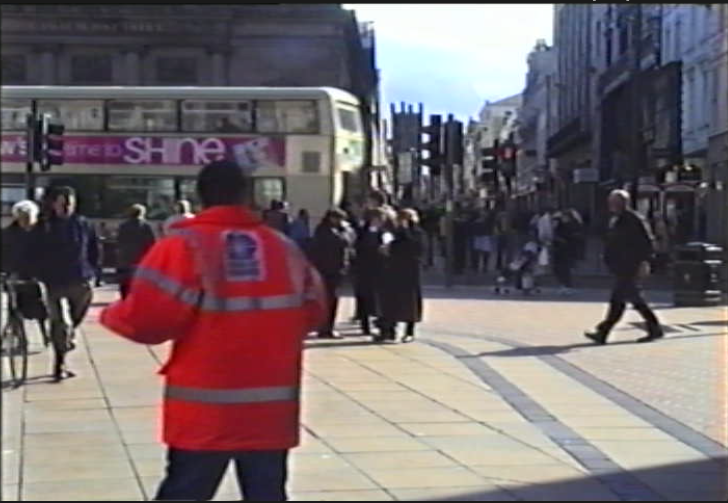
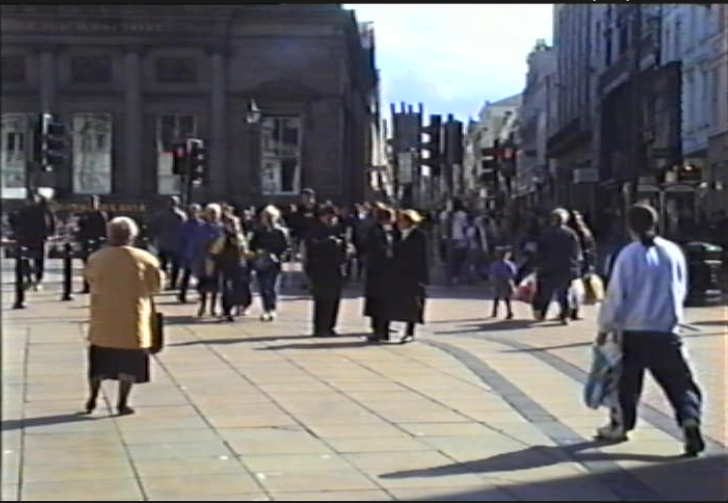
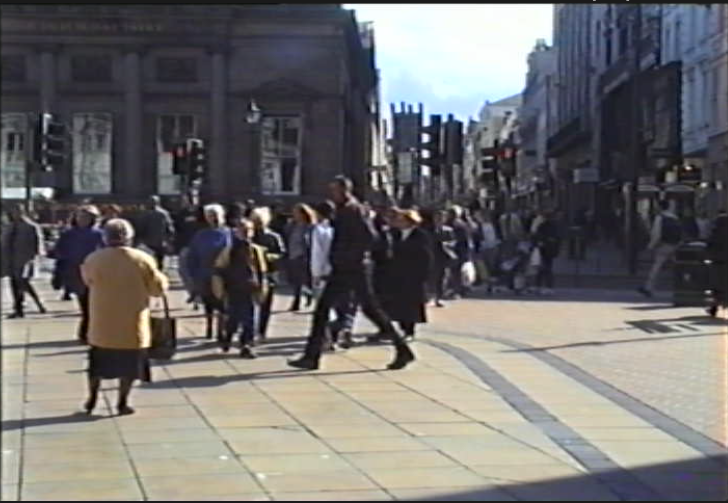
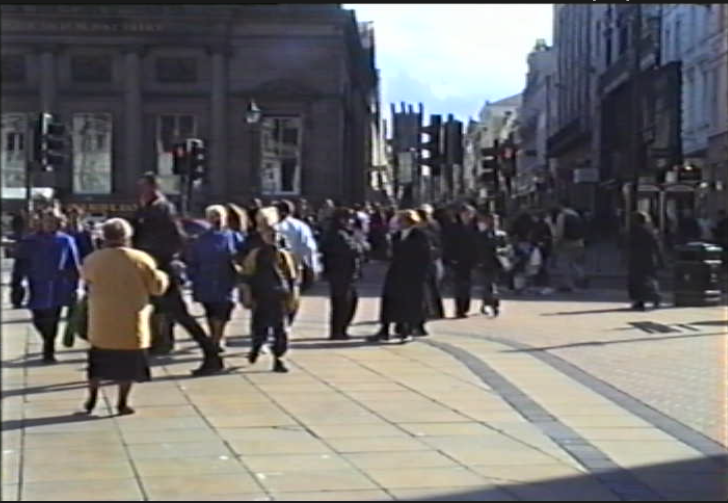
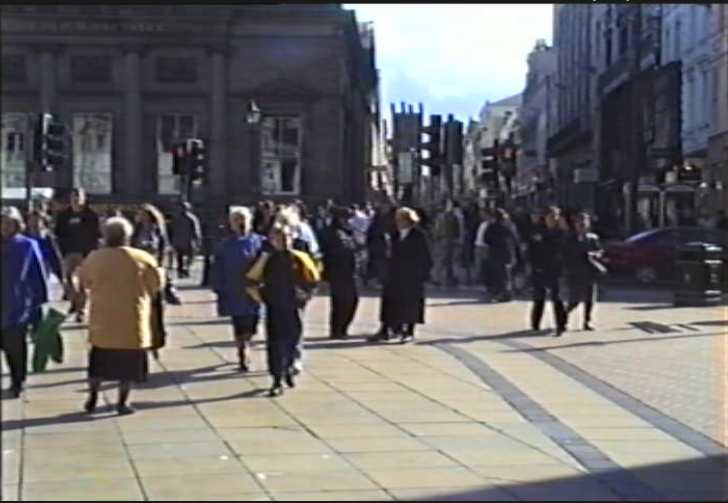
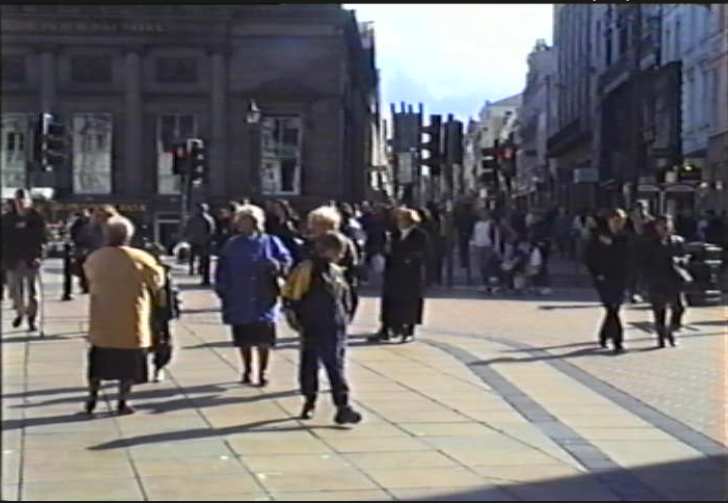
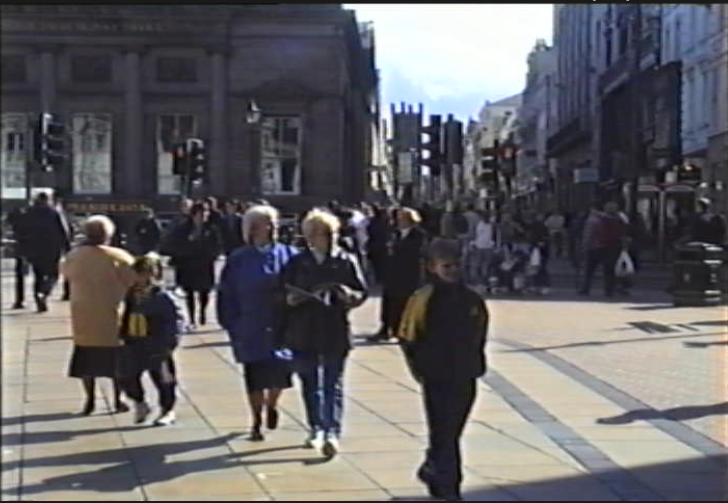
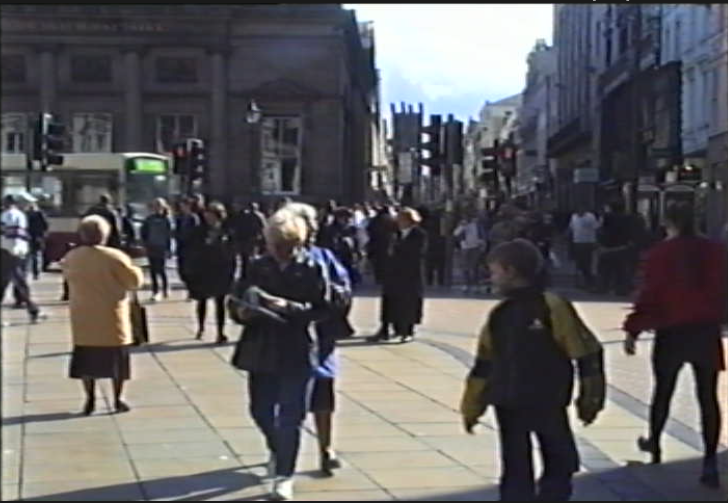
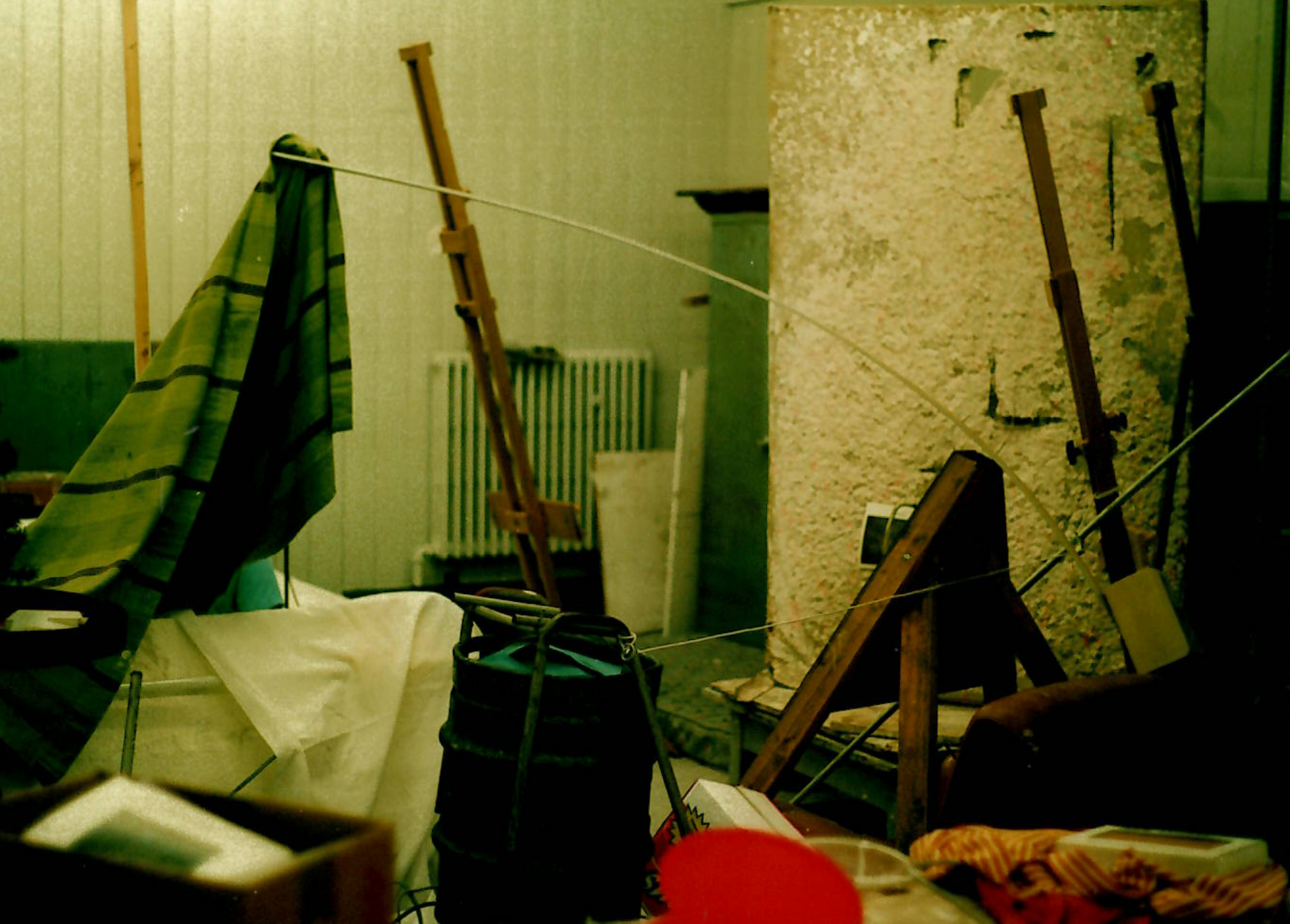
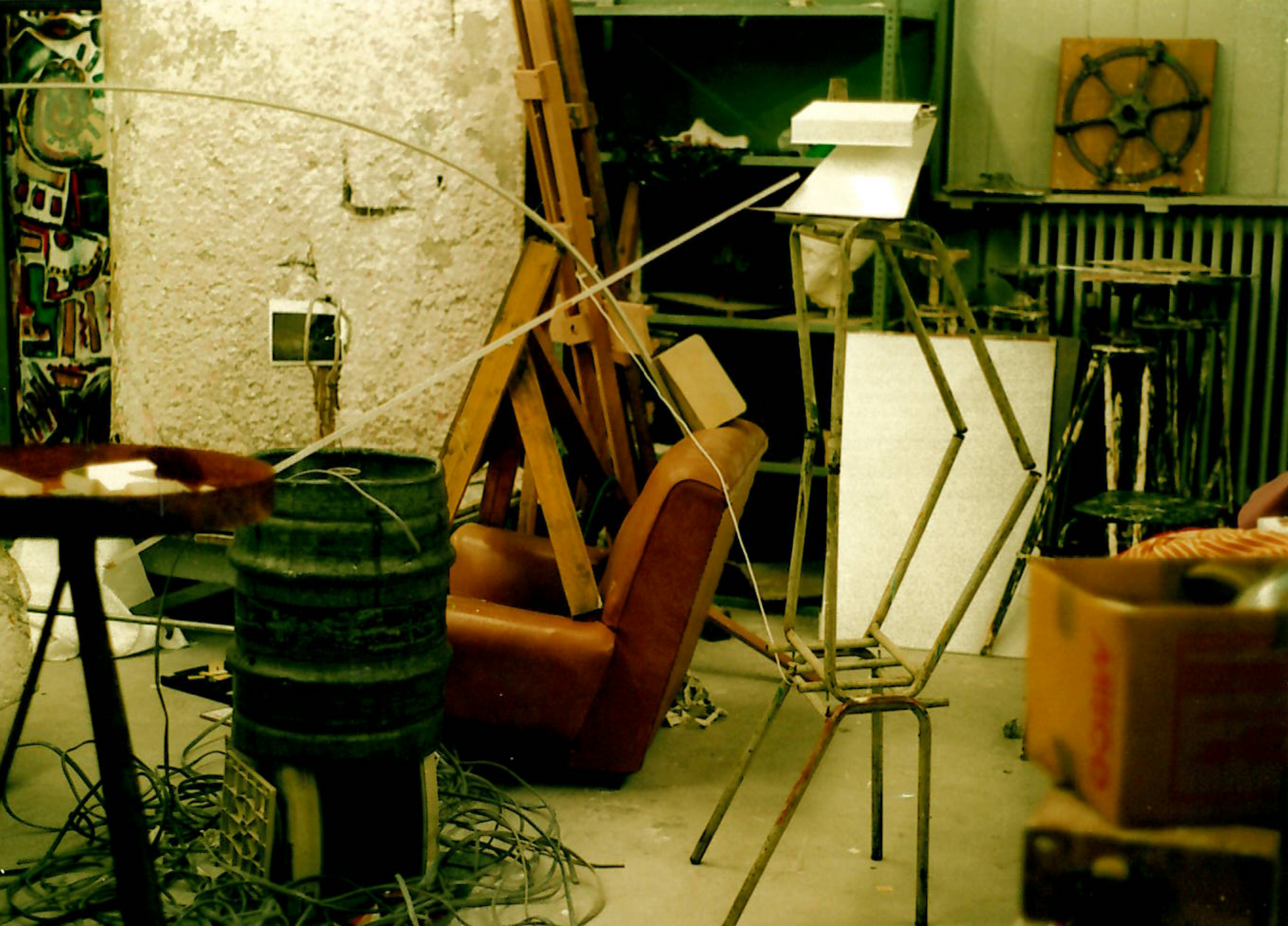
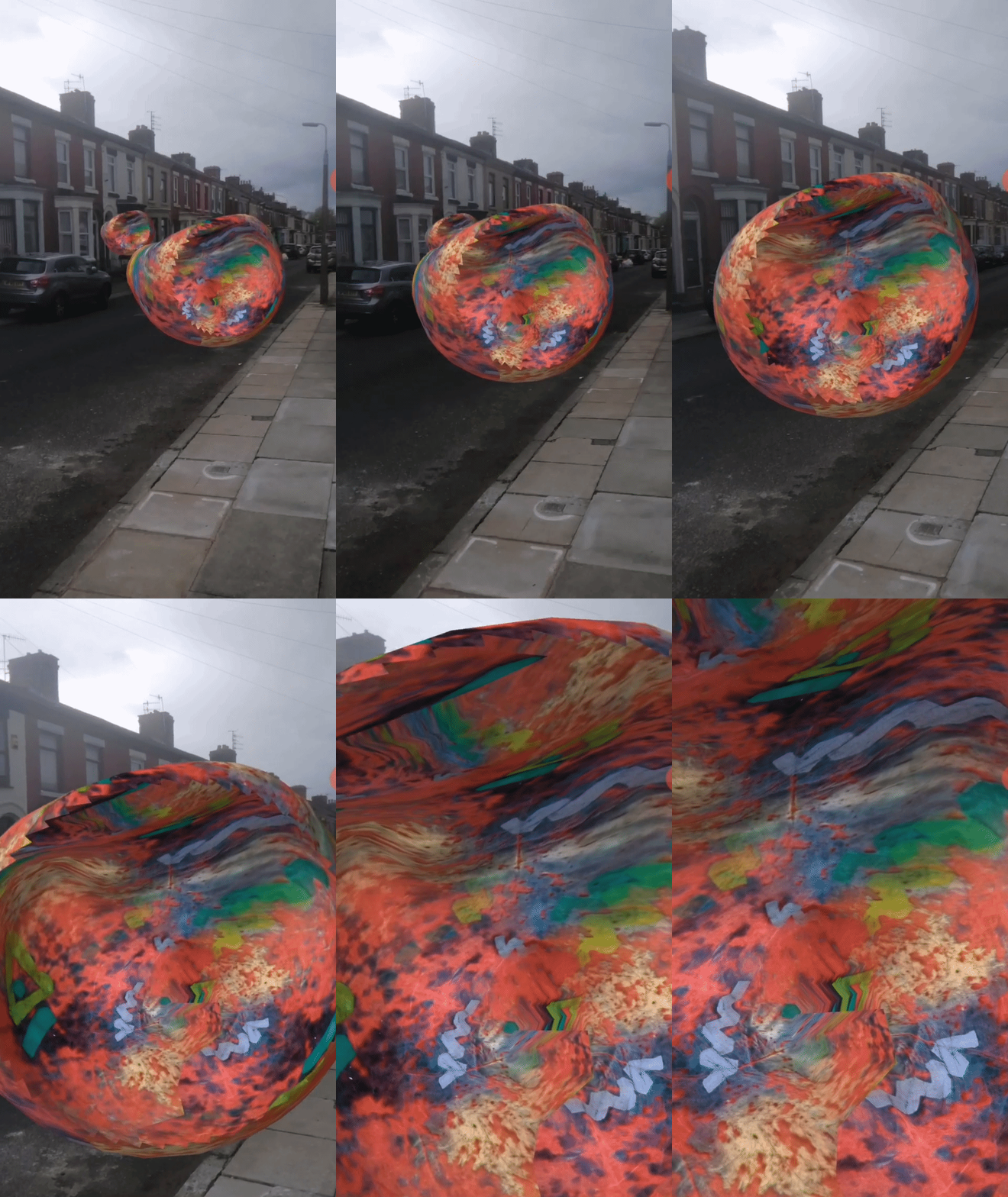
Awake it (WIP) Wood St Liverpool- Jan 2026


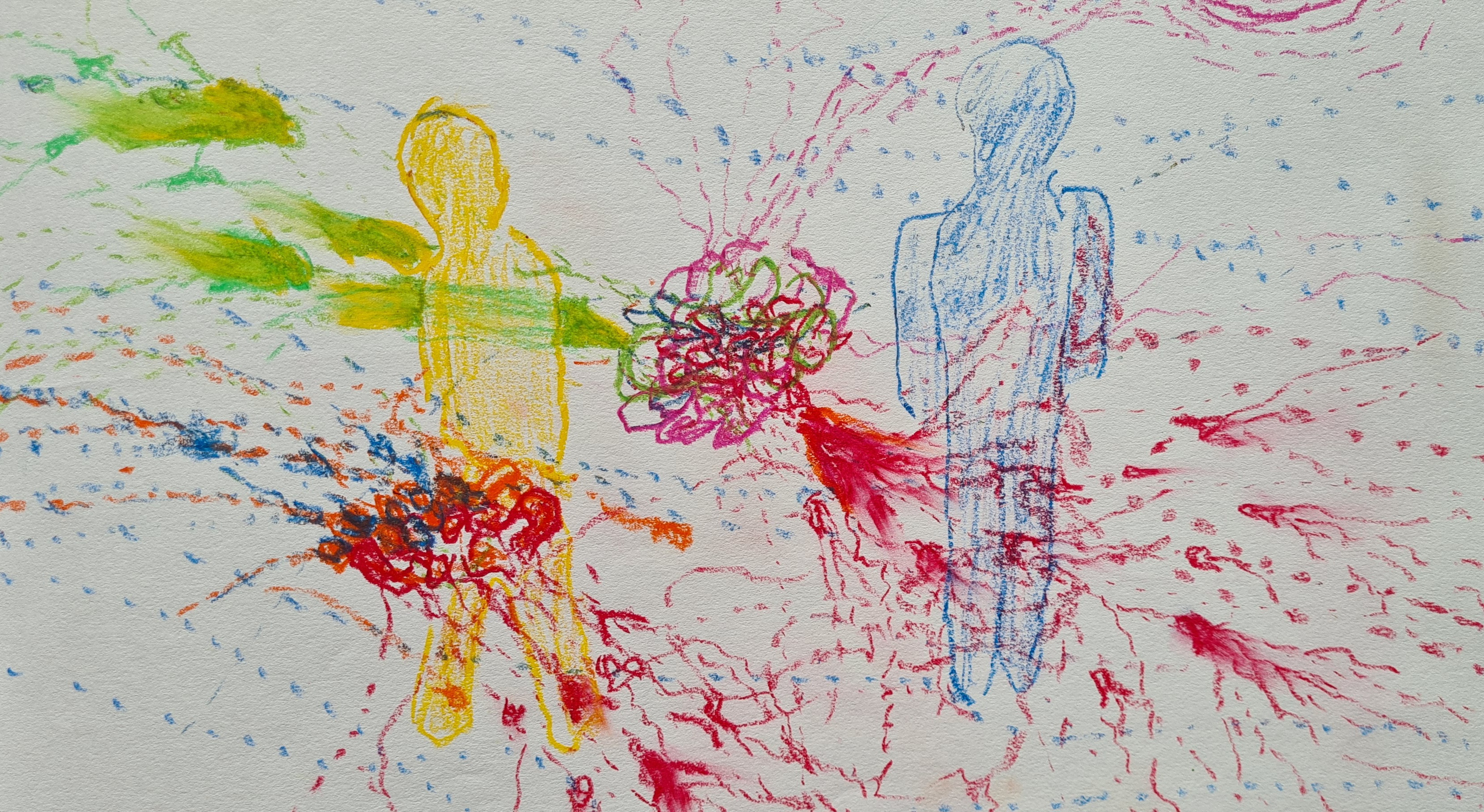
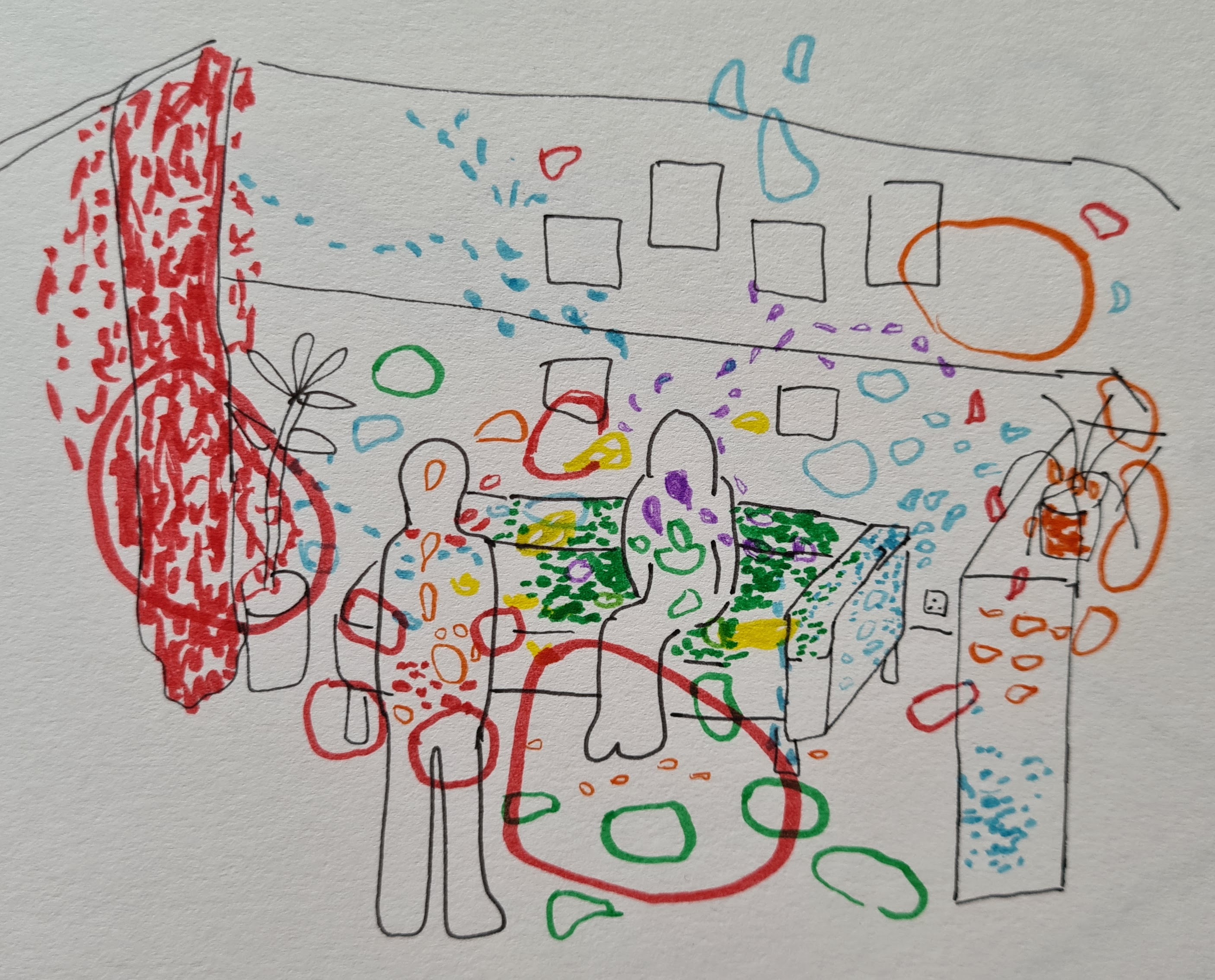
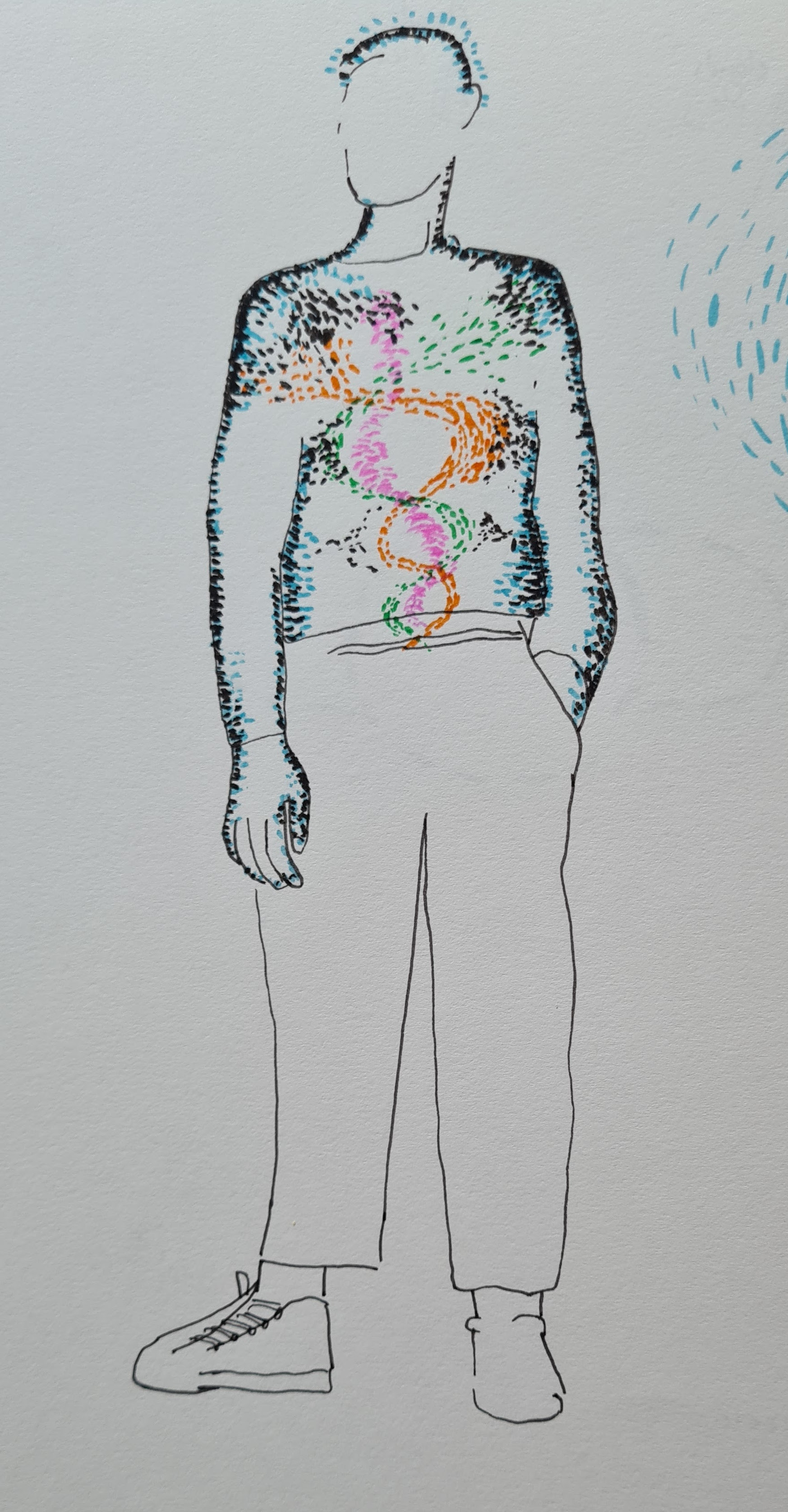
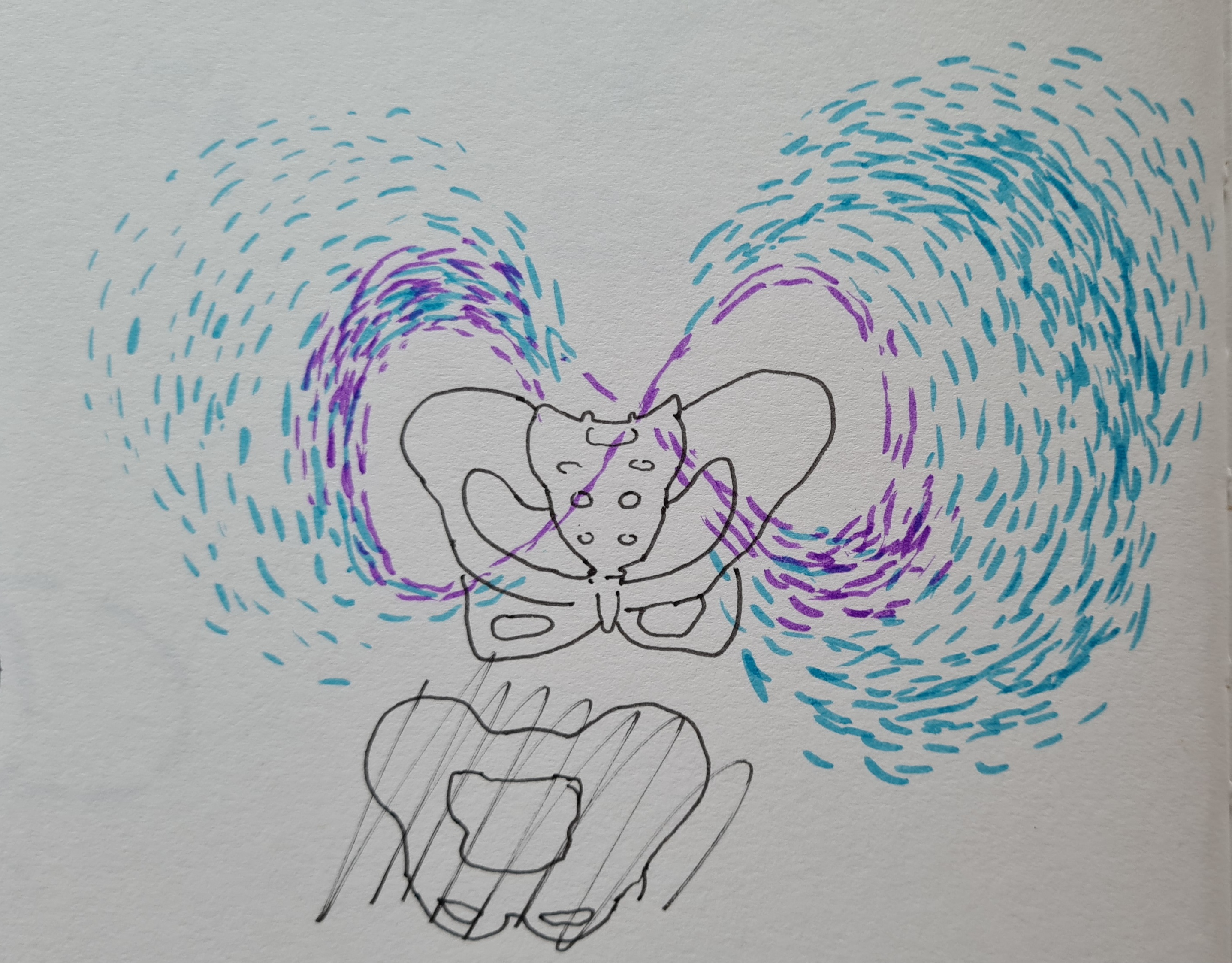
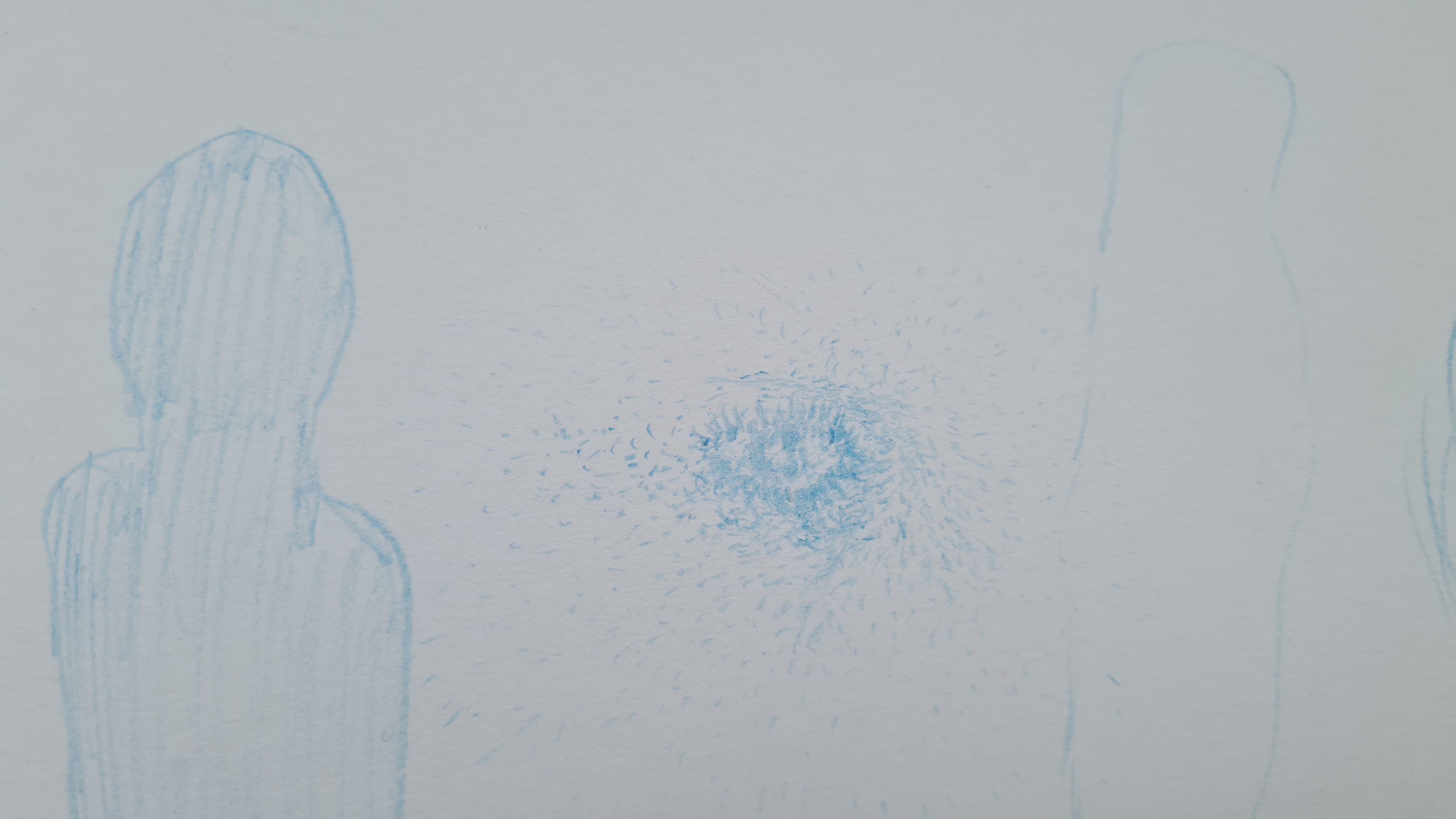
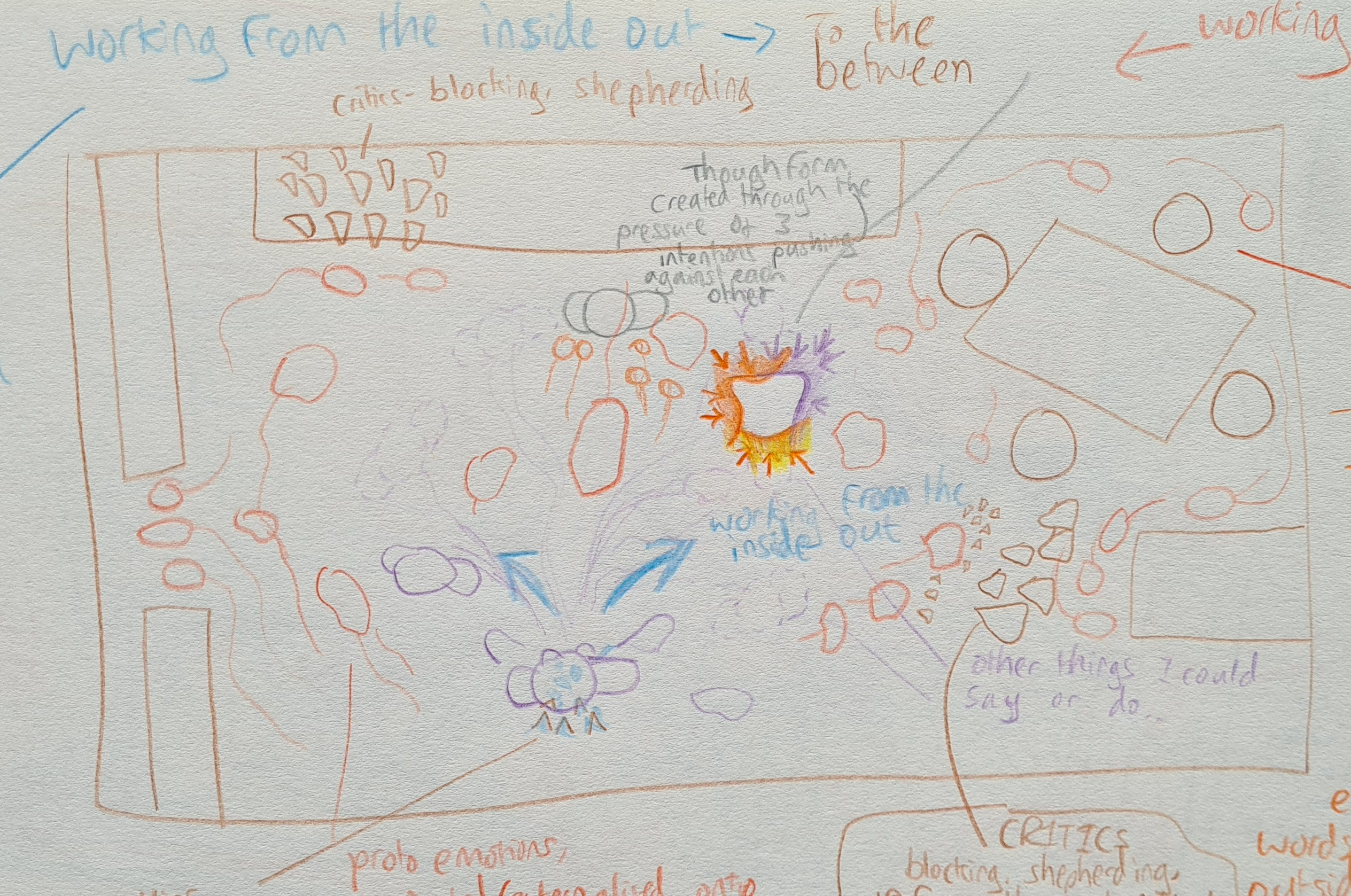
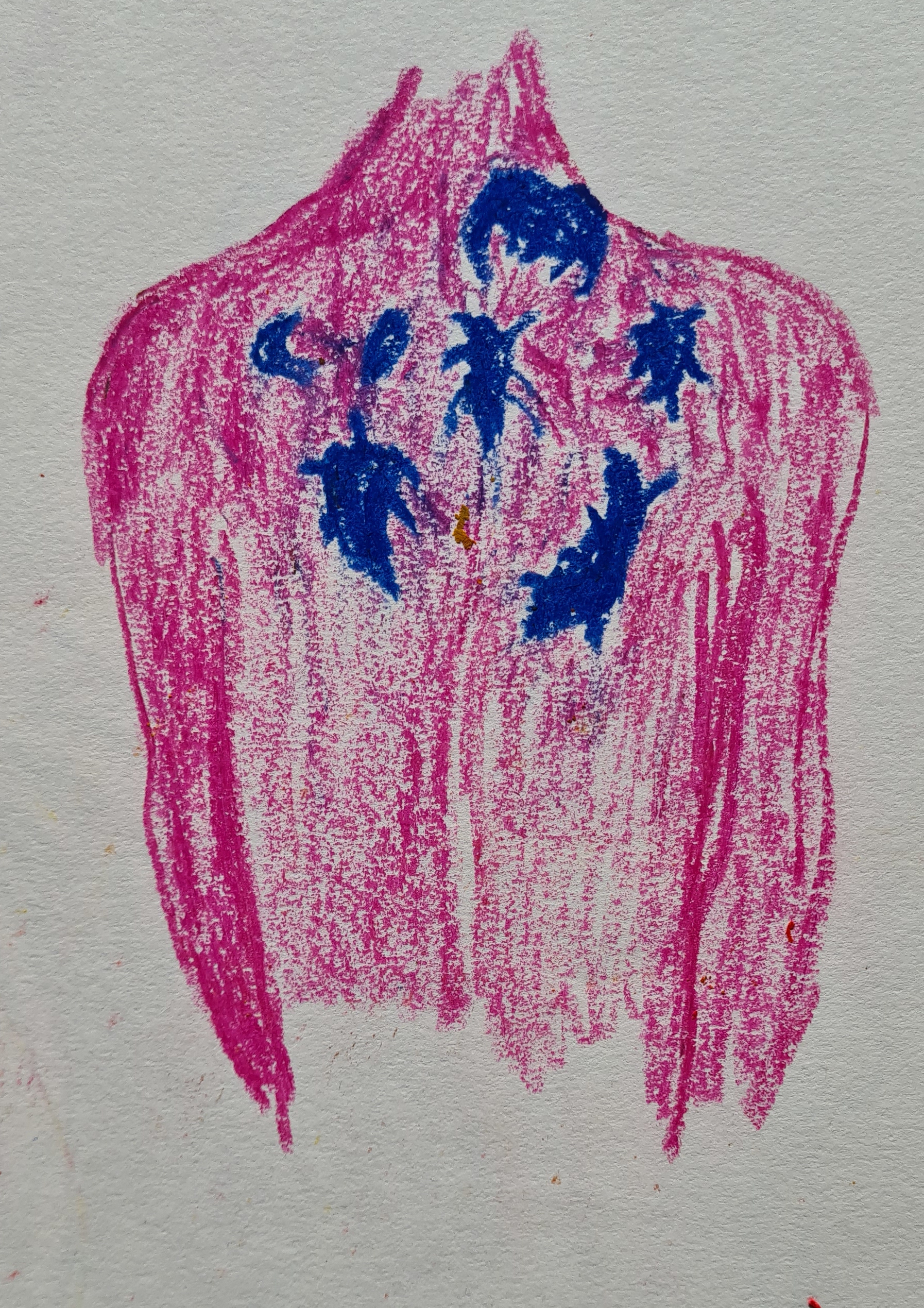
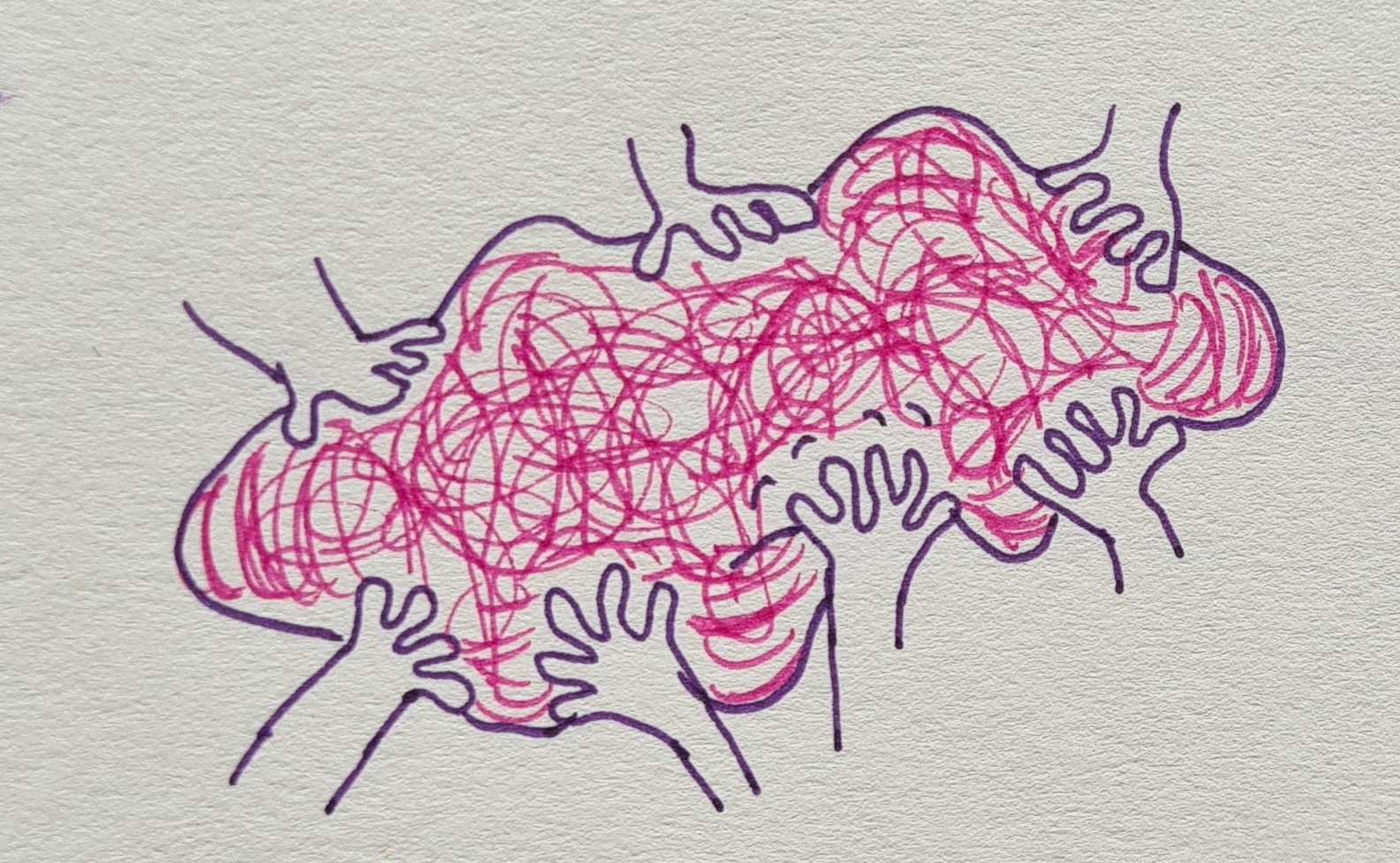
Often when I'm around people I get this feeling that things are moving invisibly, within, between and around us. Most of the art I make is responding to that feeling.

I'm navigating how to make art as a dad with a full time job. Though I have much less time these days, I'm feeling more connected to the liveness of my practice than I have in years.

This site is more about me trying to work out what I'm doing than trying to look like I'm more successful than I am.

I'm a co-director of artist collective Re-Dock.

I'm always learning in my work as an educator in the learning team at FACT Liverpool.

This site is...
I will be adding more writing to explain some of the artworks. I'll keep adding to the WIP blog.


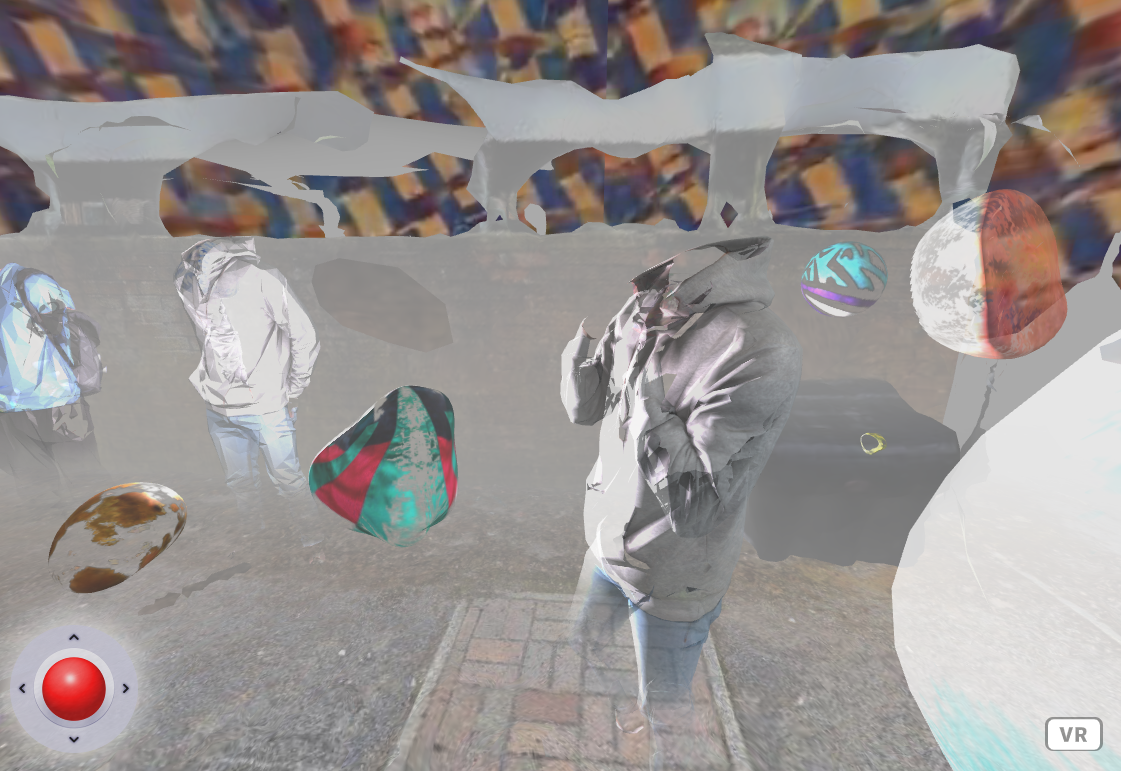
At the garages, 2025

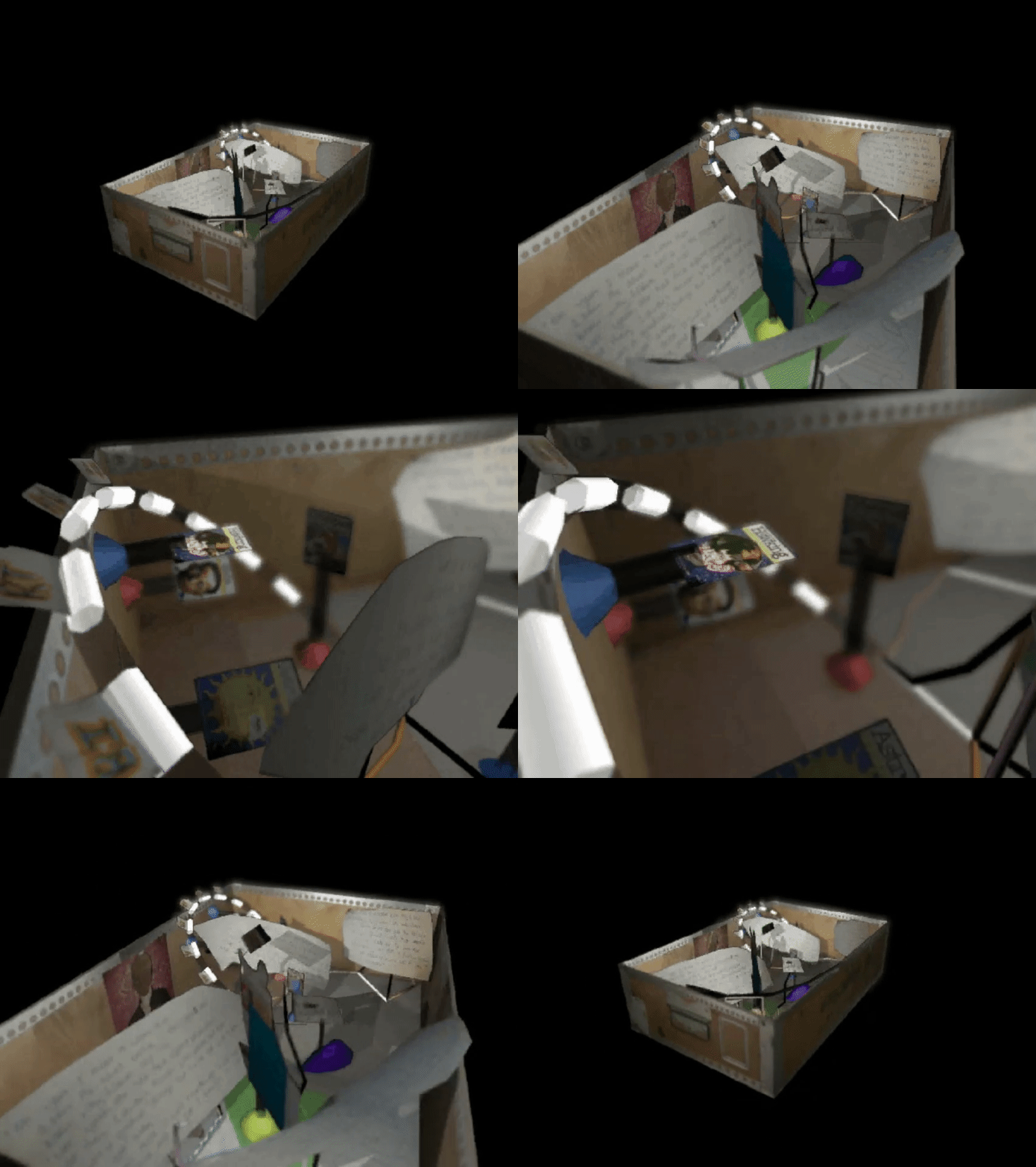
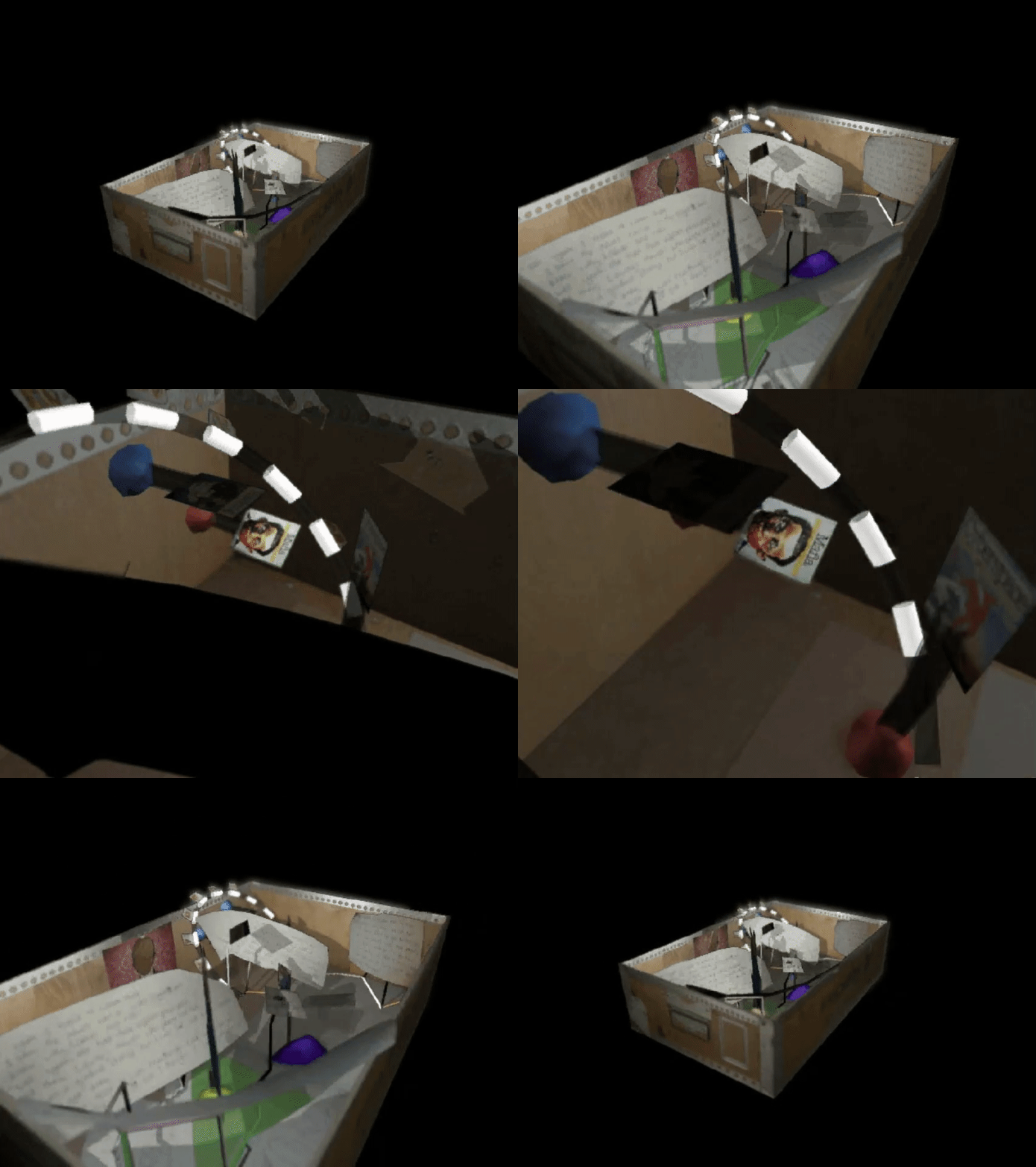
Use the joystick to move around, click and drag to look around or if your on your phone just look around.


Weatherhead Flunstellas, FACT Liverpool 2011

See more
swipe up to see other artworks.

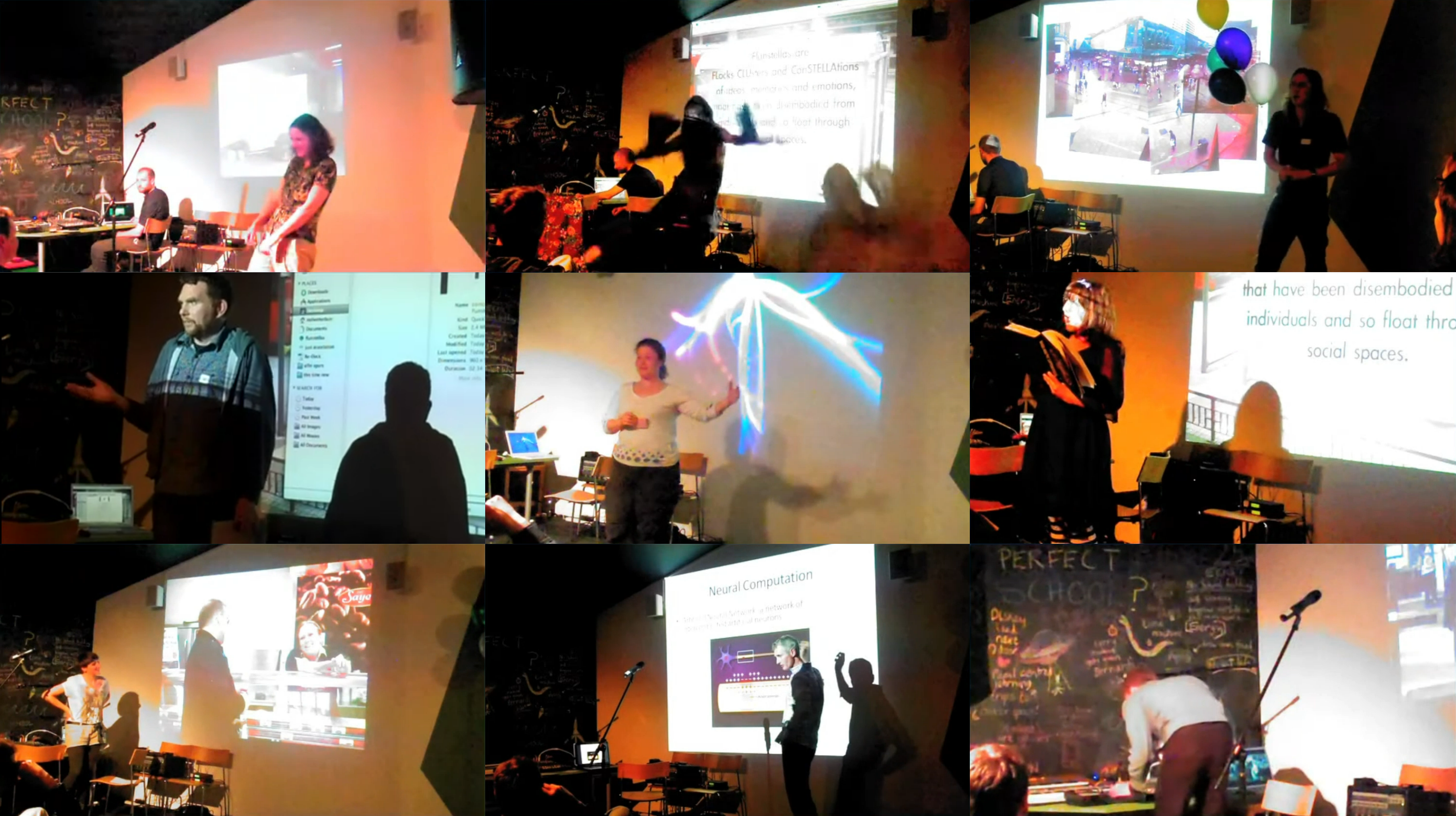
Flunstellas and the Future of Education, FACT 2011

See more

Flunstellas seen around Liverpool, 2008

See more

Part Blind Communication Game, game, 200?

See more

3D AtoZ,c d-rom, 2005

See more

Paaaarty, cd-rom, 2005

See more

Bluescreen, cd-rom, 2004

See more

Flunstellas with Nerve magazine, cd-rom, 2003

See more

Twee-Prototype, cd-rom, 2002

See more

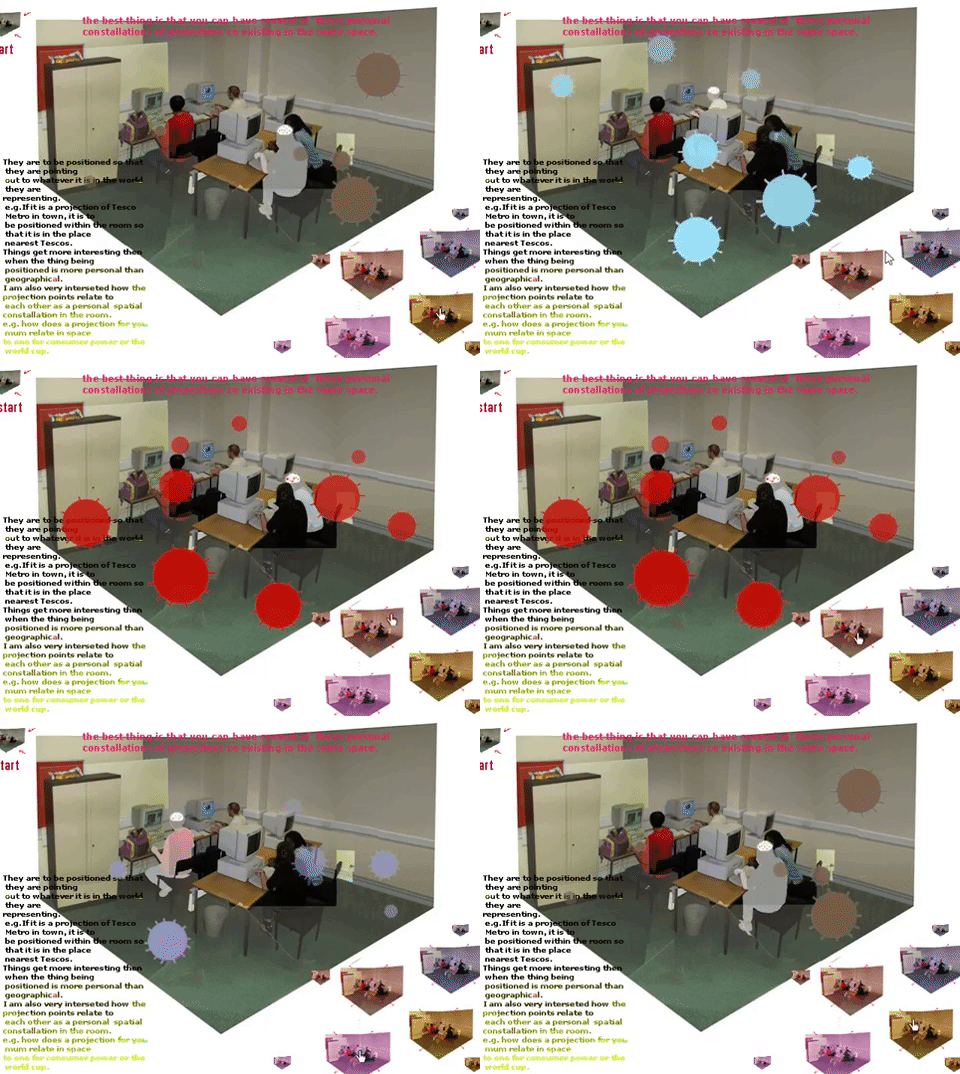
Projection Points, cd-rom, 2000

See more

Common Room, Installation, 1999

See more

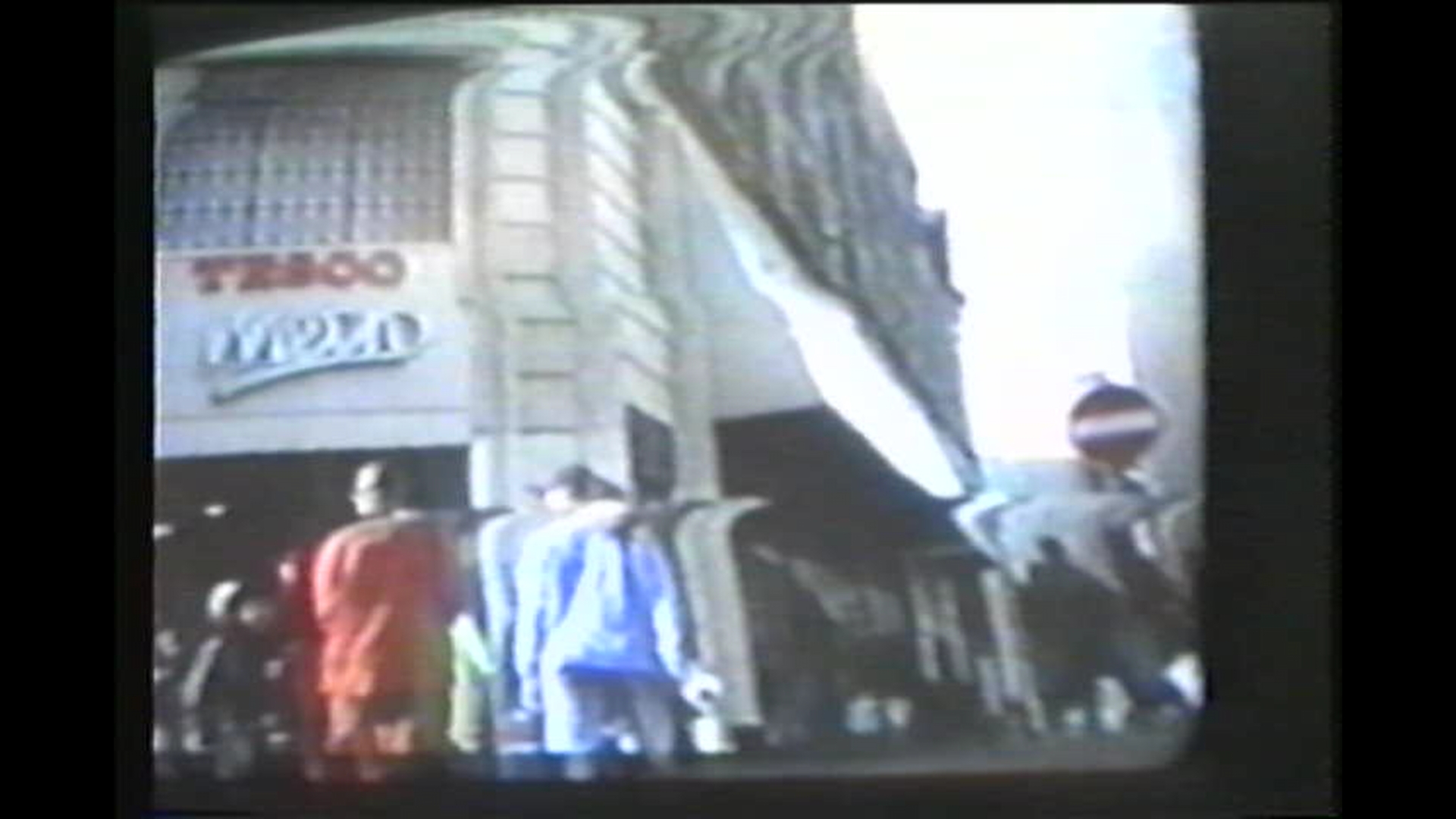
Hyperjourney, Video performance, 1999

See more

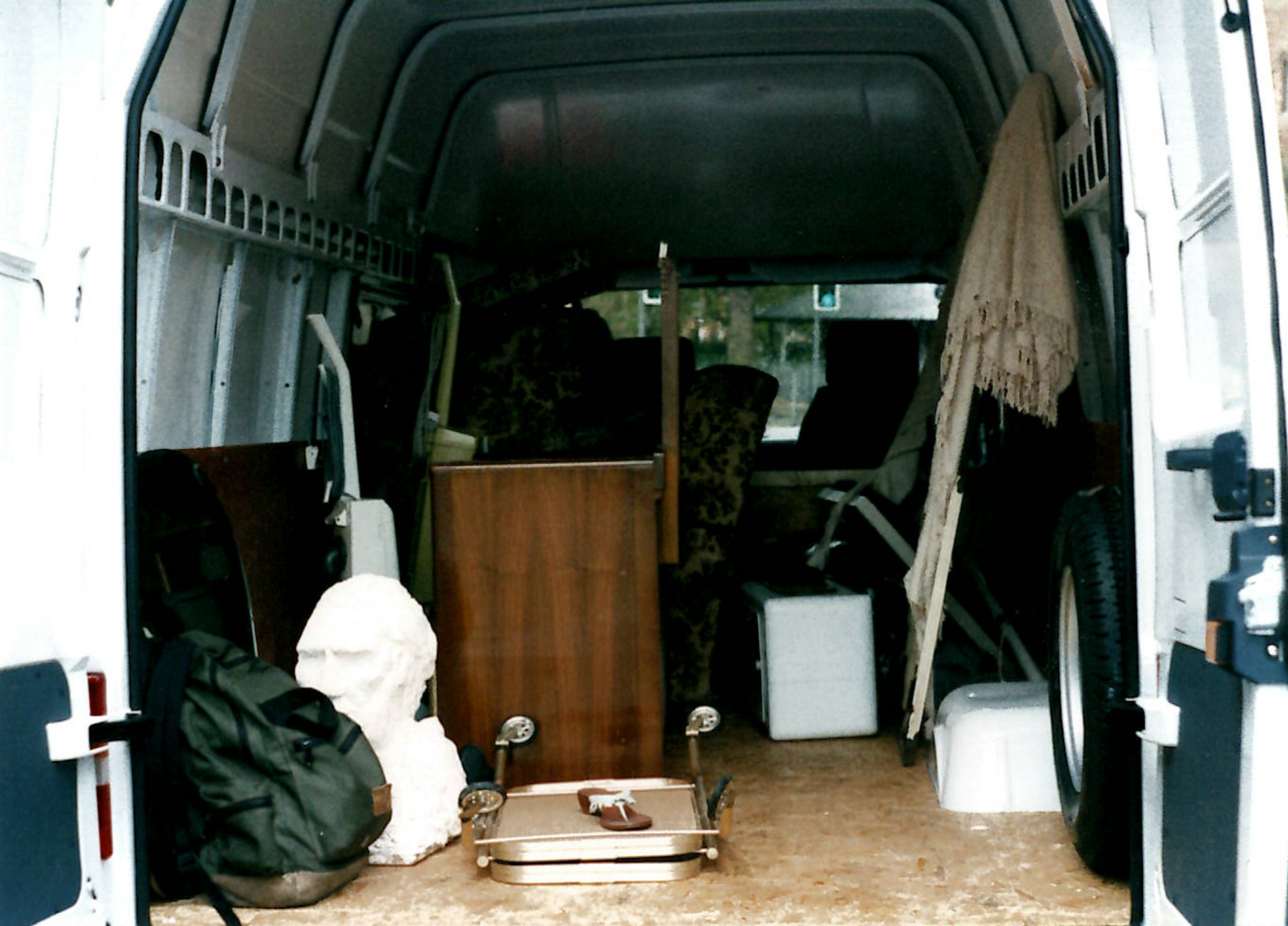
Furniture Party, 1998

See more

Move Something, 1998

See more

Hi thanks for looking at my portfolio site.

Often when I'm around people I get this strange sense of things moving invisibly, within, between and around us. I make art with people, trying to capture and share some of these experiences, always hoping that something beautiful emerges.


I'm a co-director of artist collective Re-Dock.


I work as an educator in the learning team at FACT Liverpool.


This site has a mixture of art I've made since growing up in York in the 80's and 90's. At the minute I'm rebuilding my art practice from the ground up, exploring masculinity, class, sexuality and desire through participatory scultpural games and shared augmented reality experiences. It is slow progress, but I feel more in contact with what is alive in my practice.

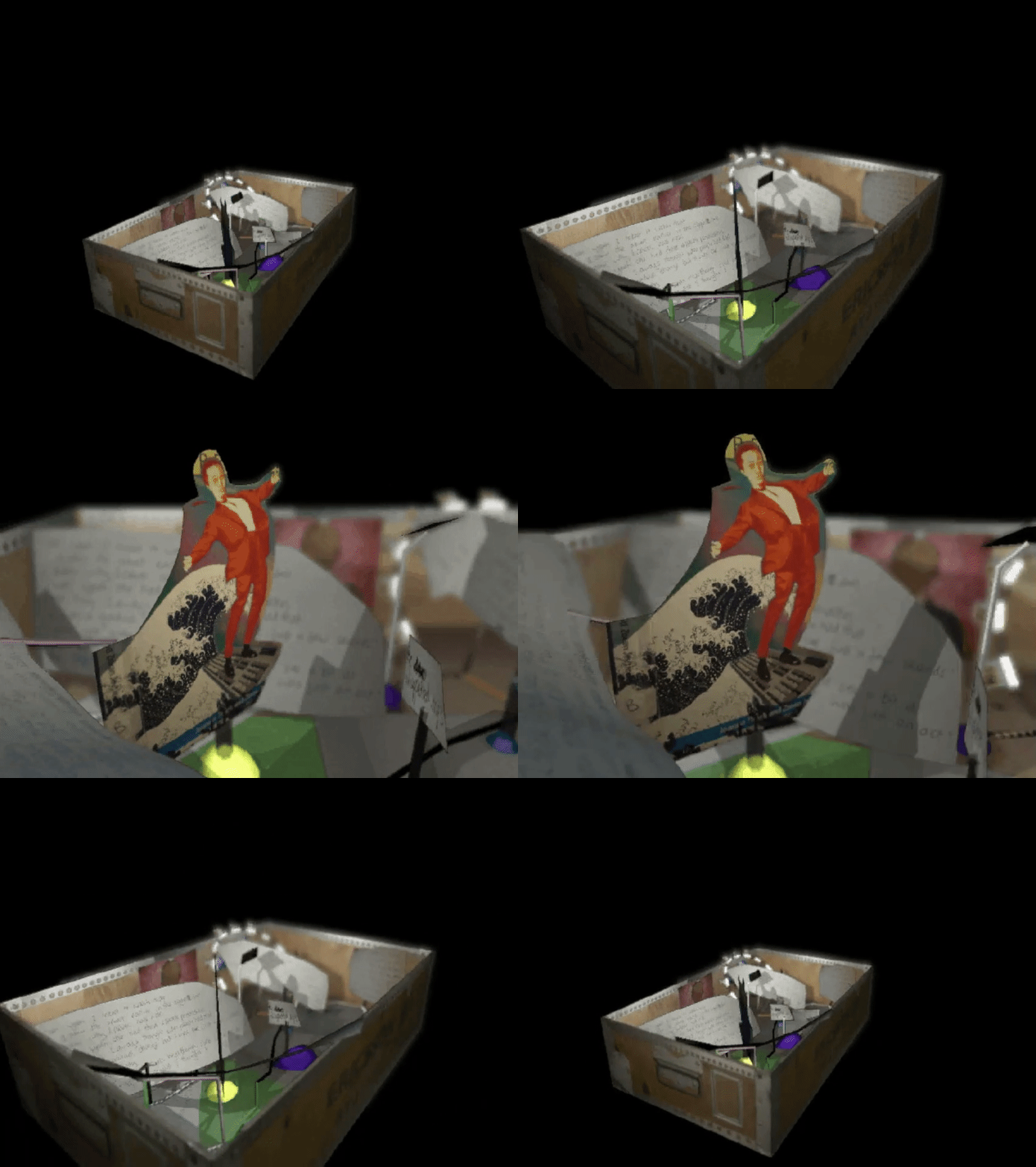
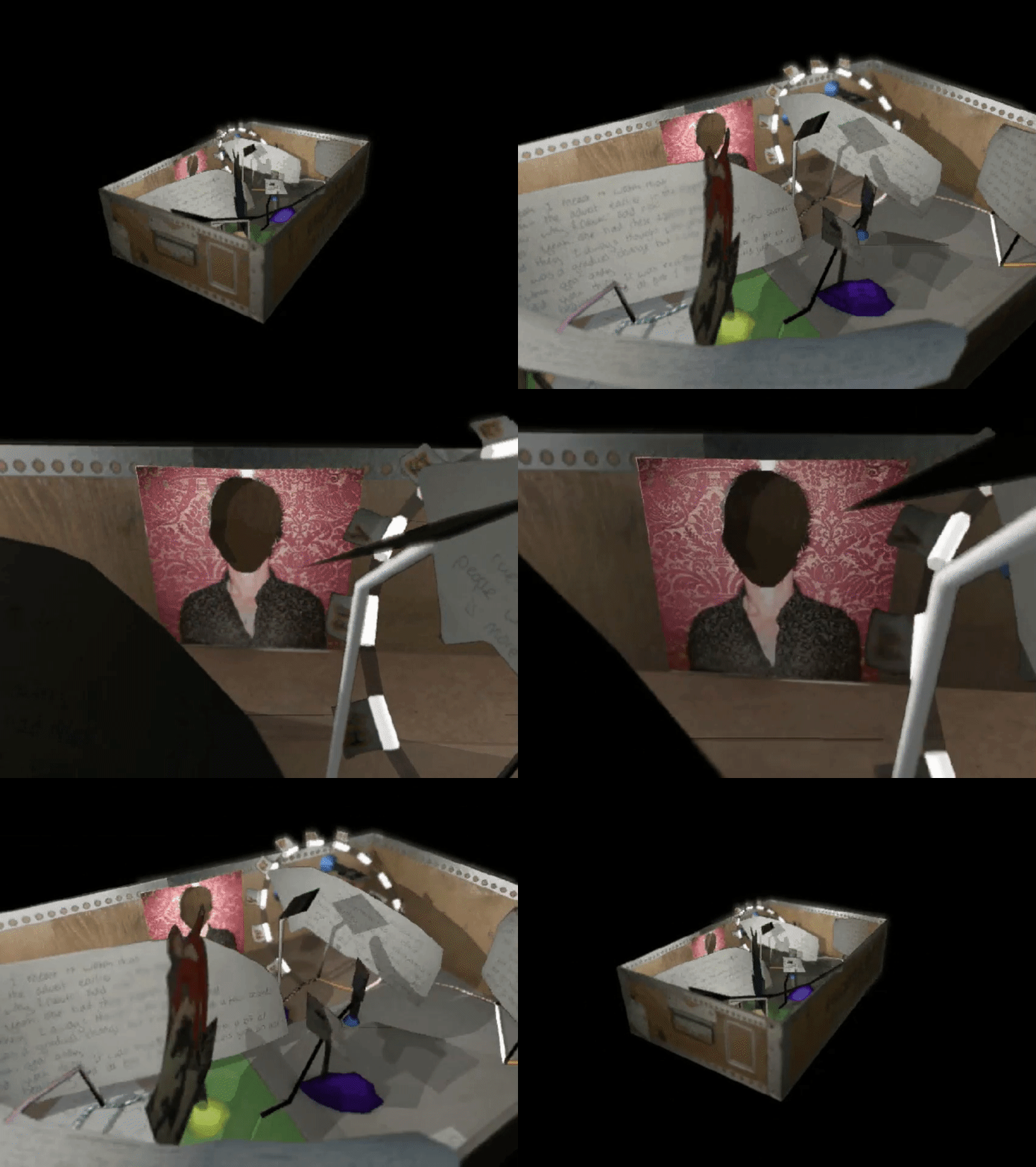
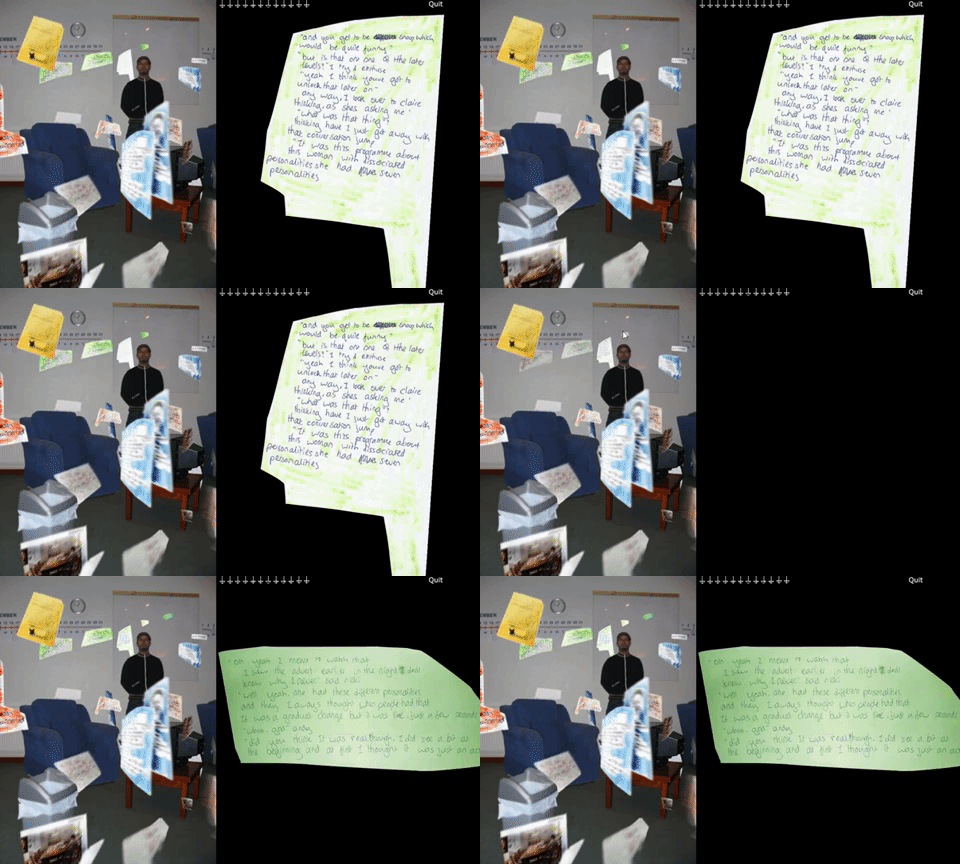
Awake It, WIP


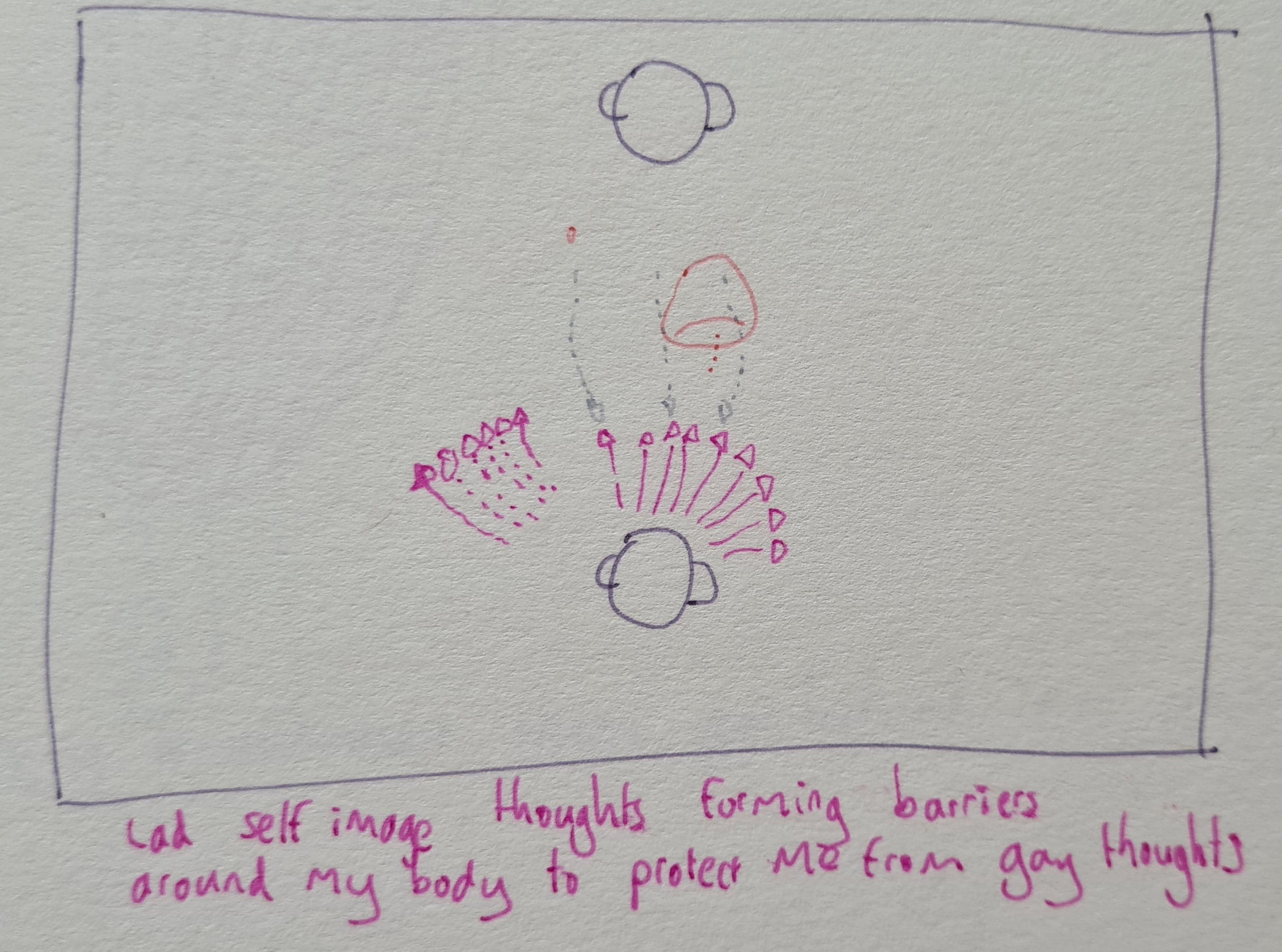
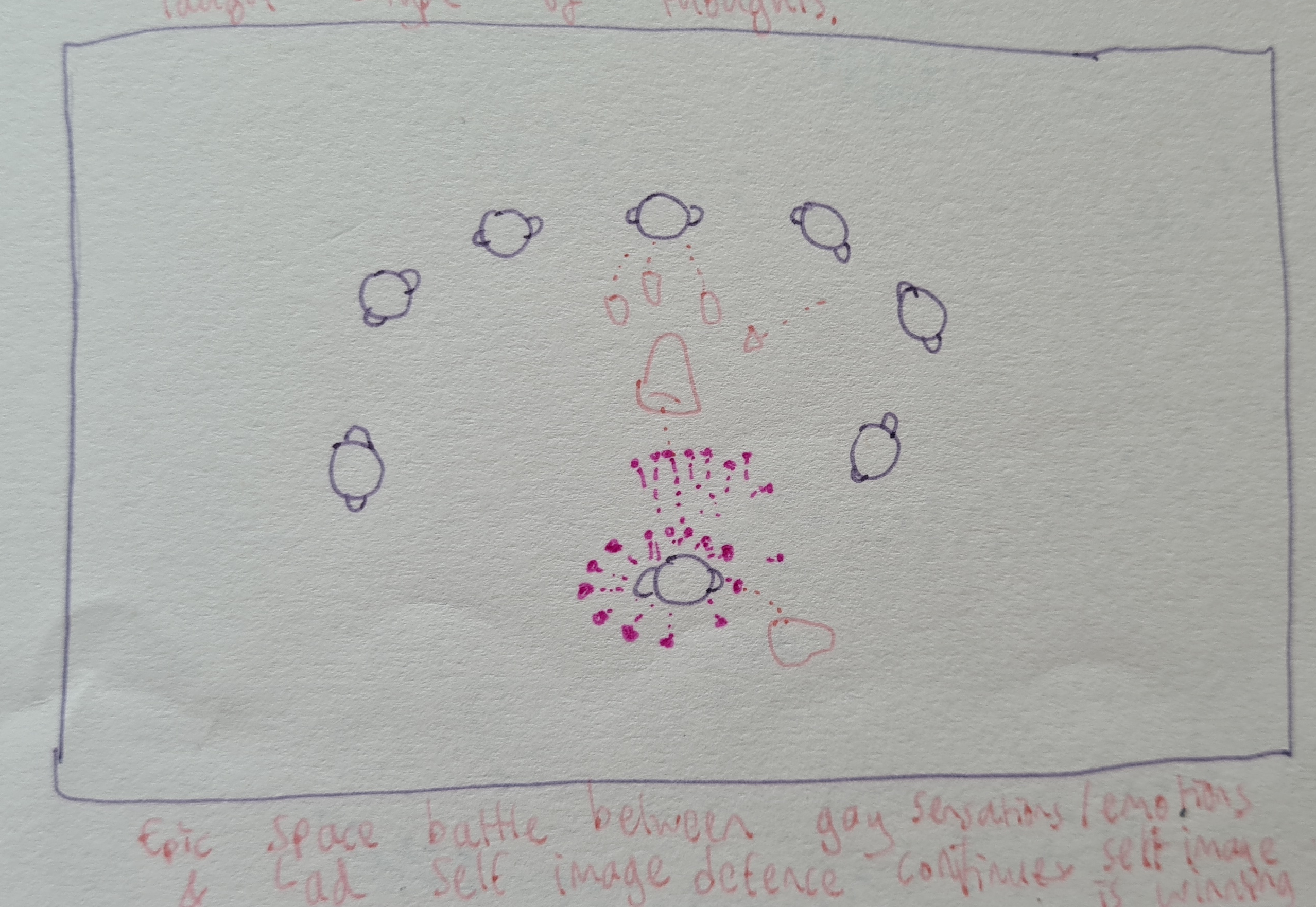
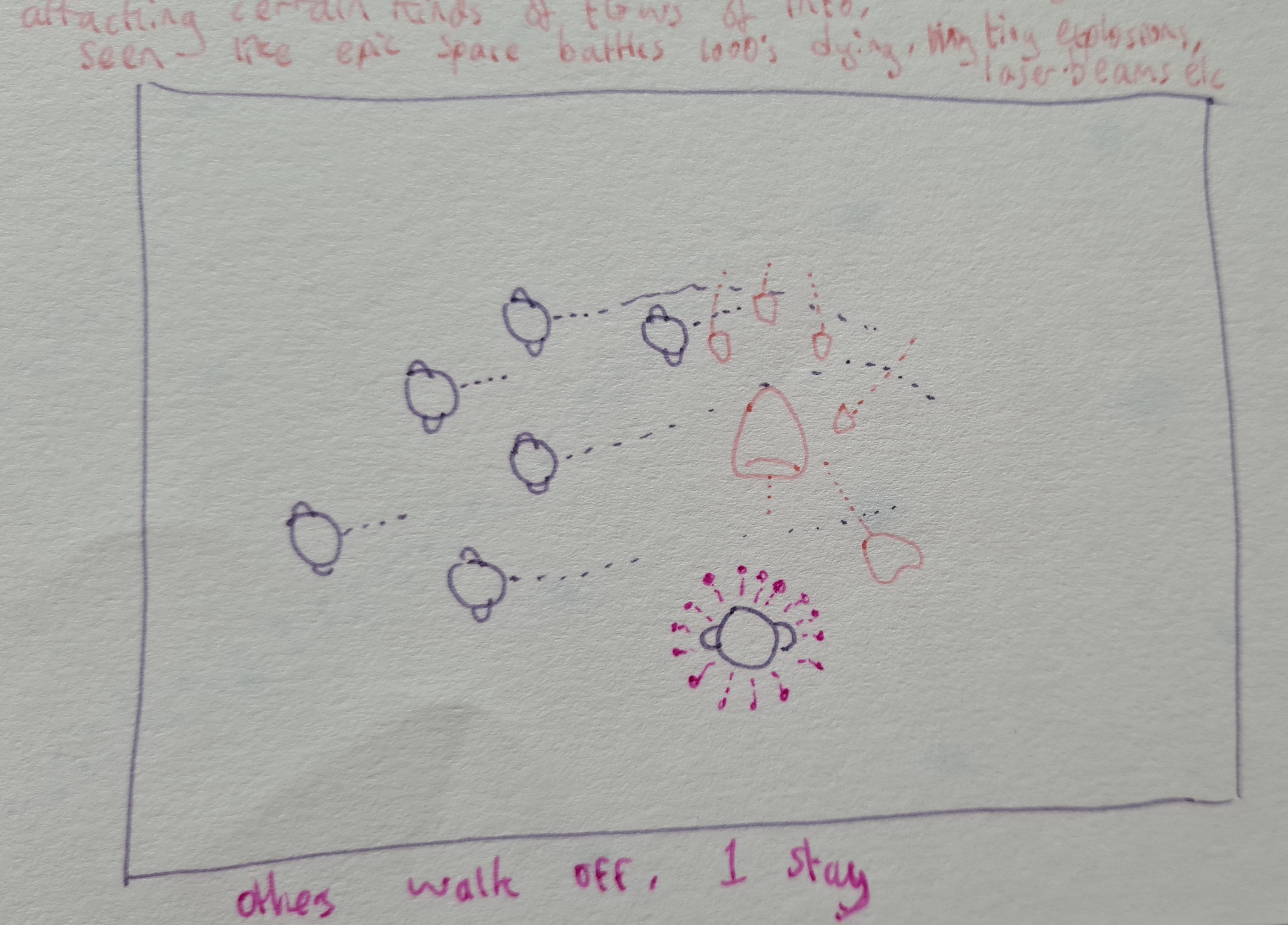
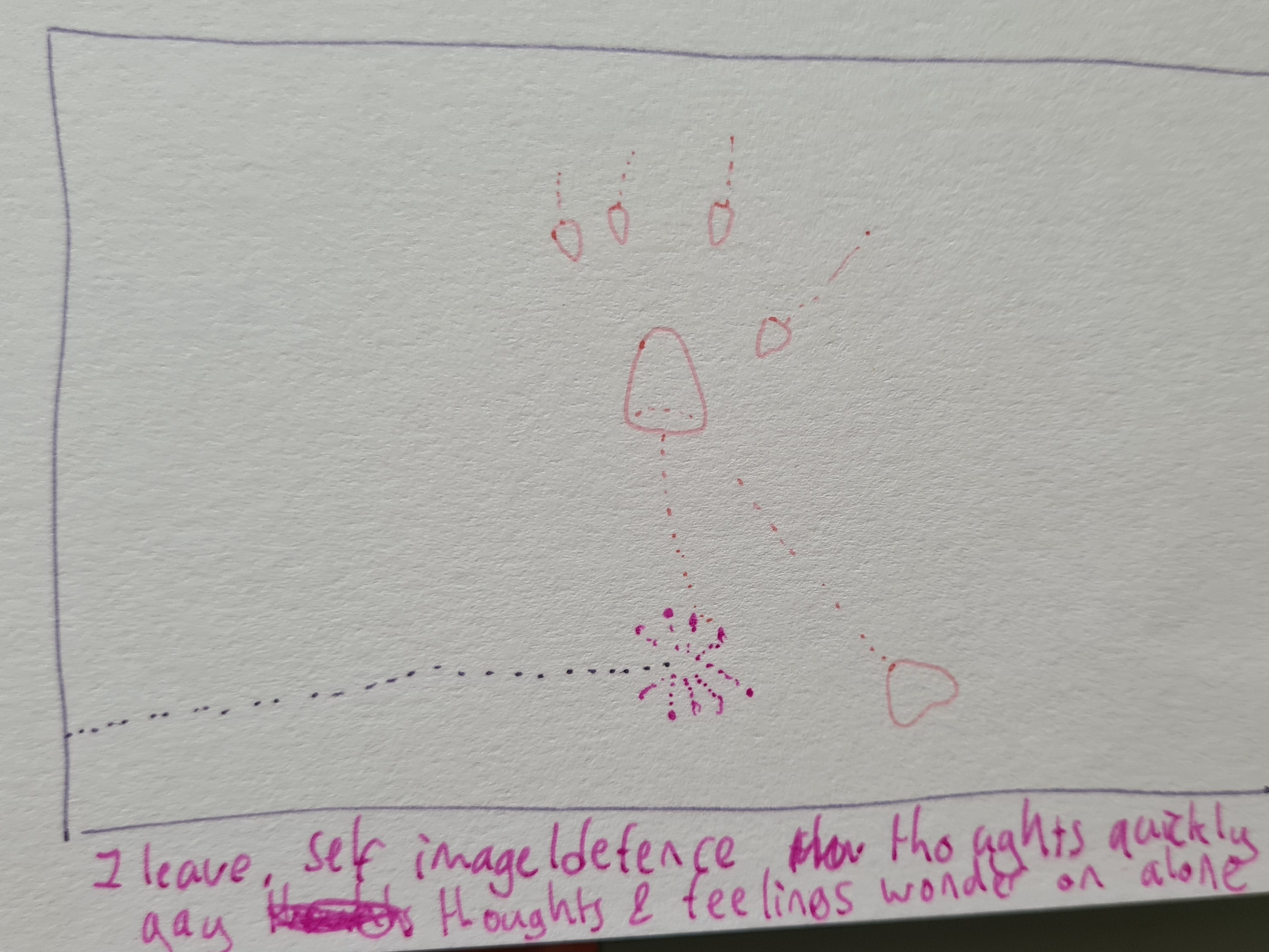
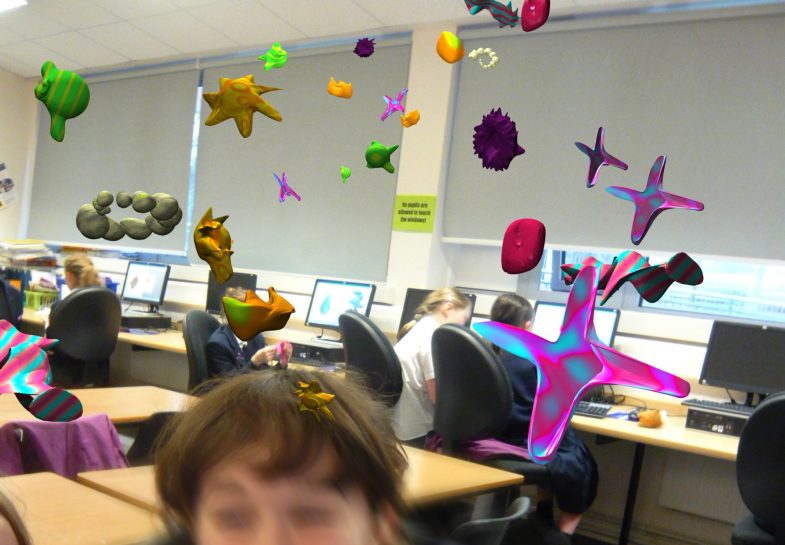
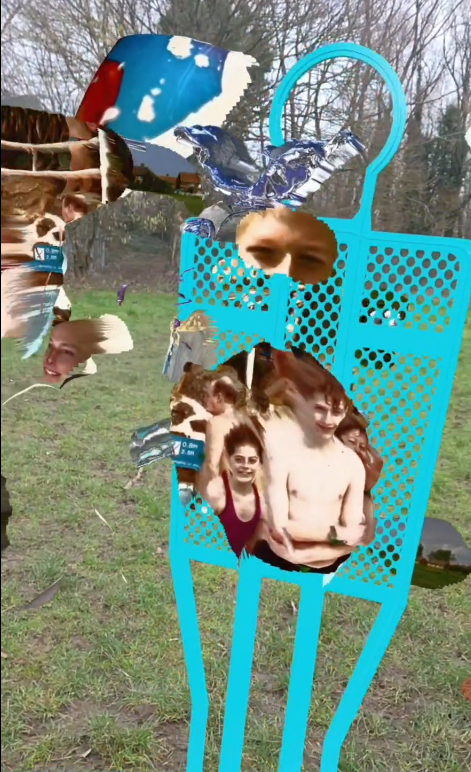
I’m starting a new body of work about lads, 90s footballkit culture, defence and desire in the field. The project is called Awake It.

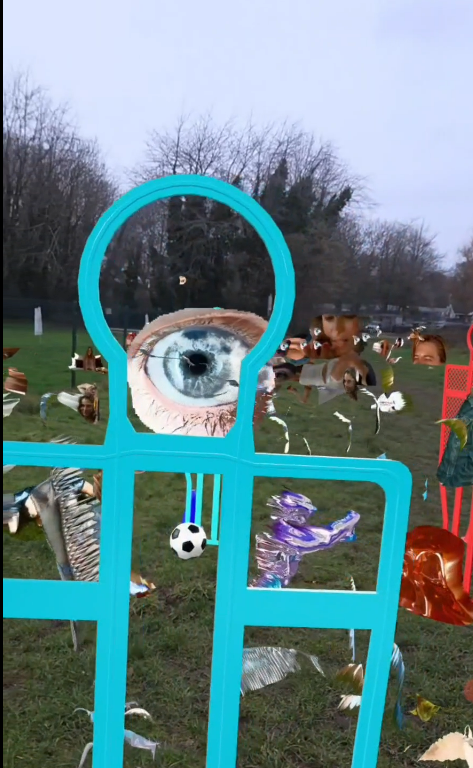
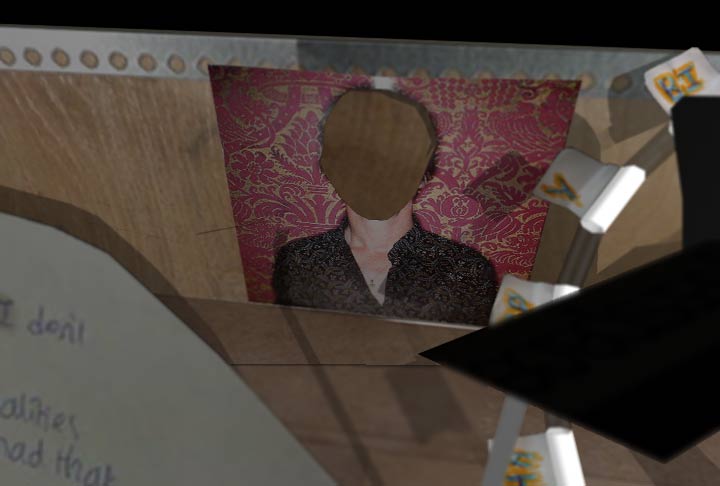
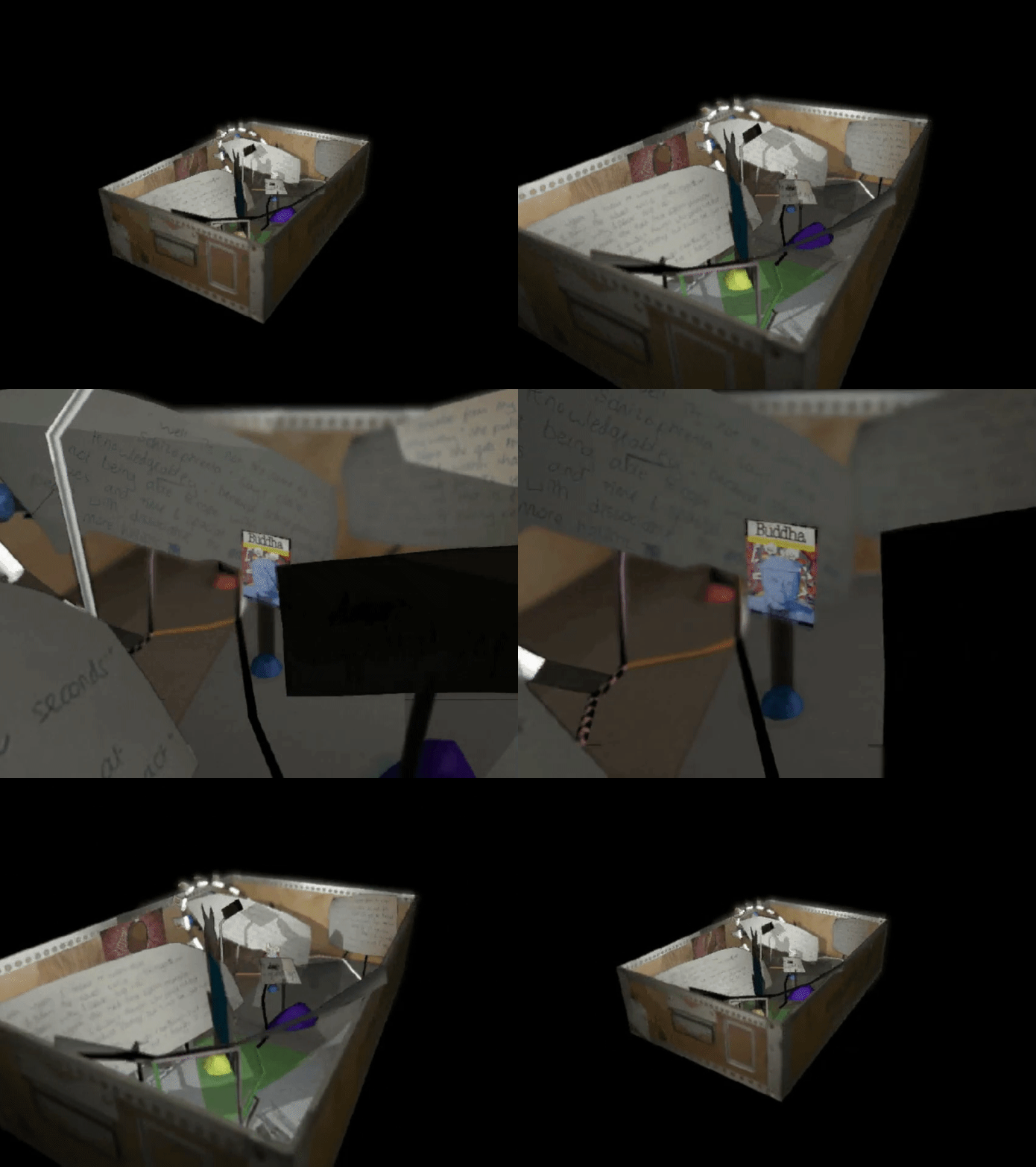
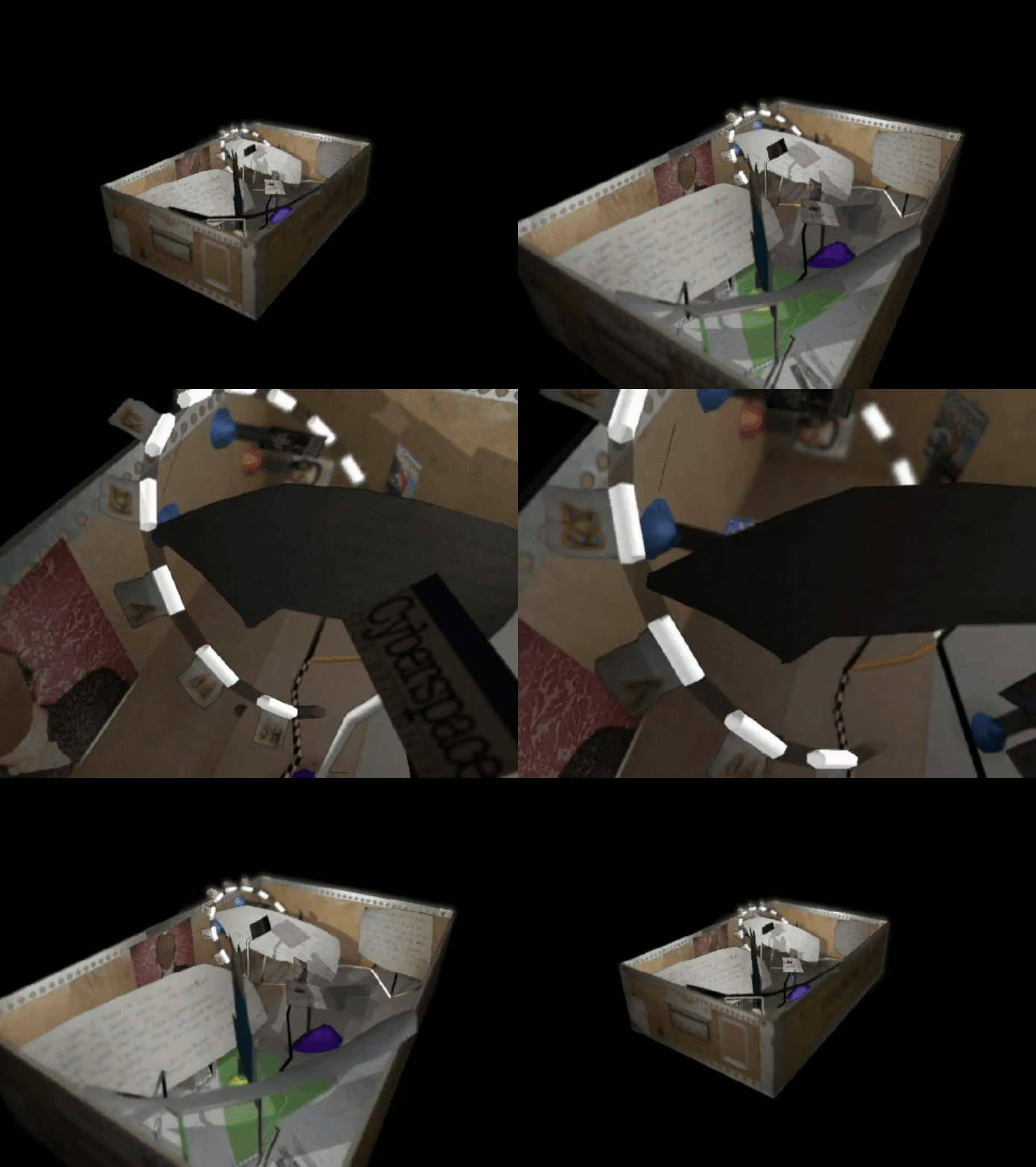
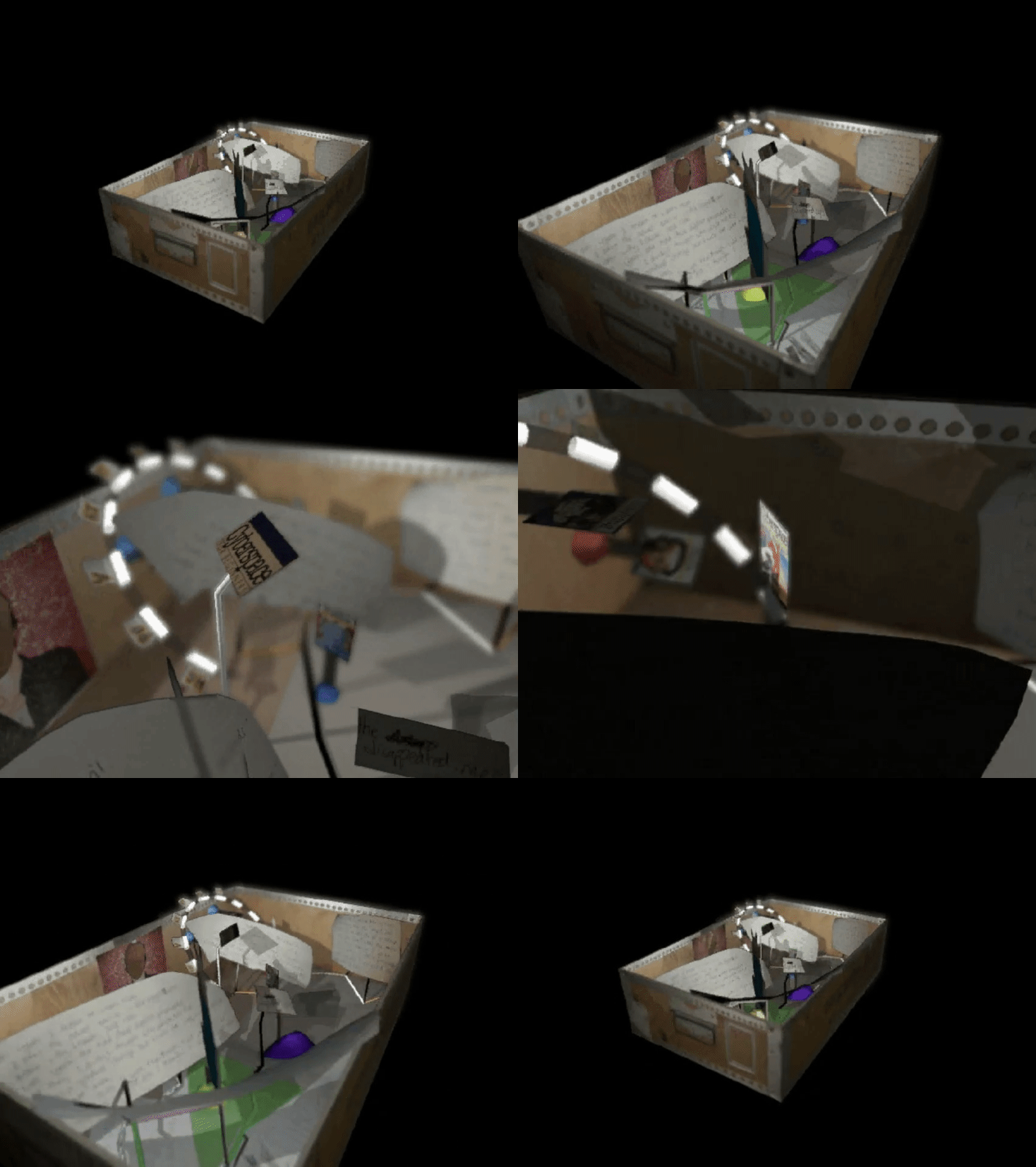
Screencapture of wip artwork augmented in playing field


Screencapture of wip artwork augmented in playing field


Screencapture of wip artwork augmented in playing field


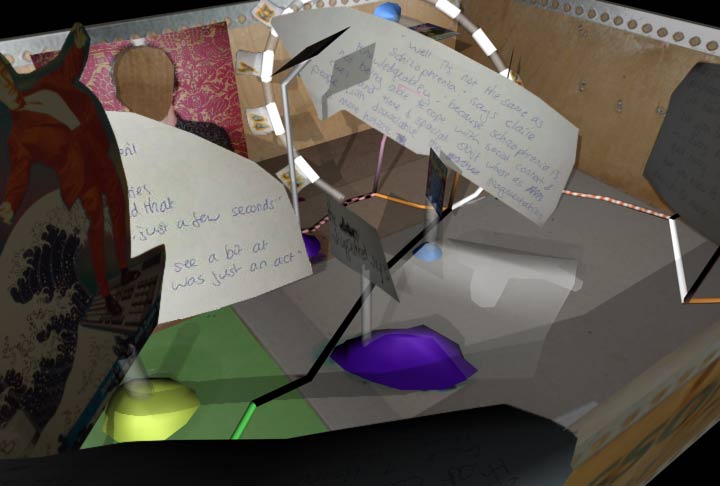
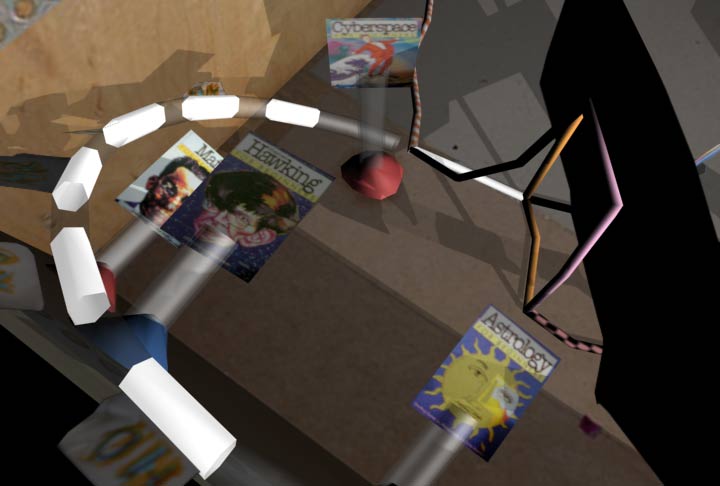
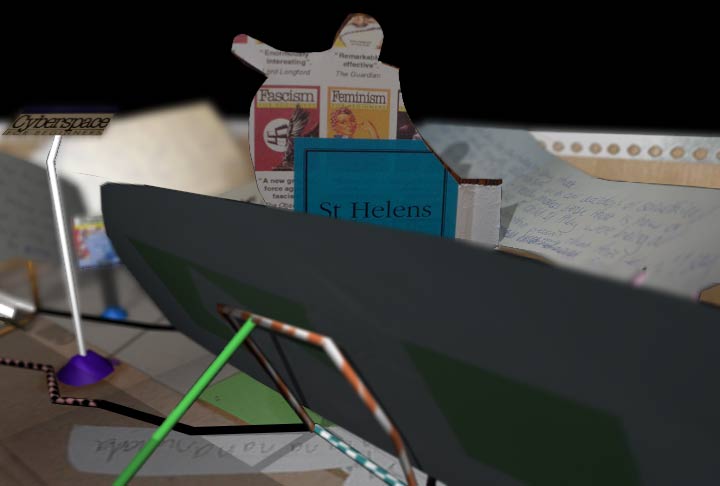
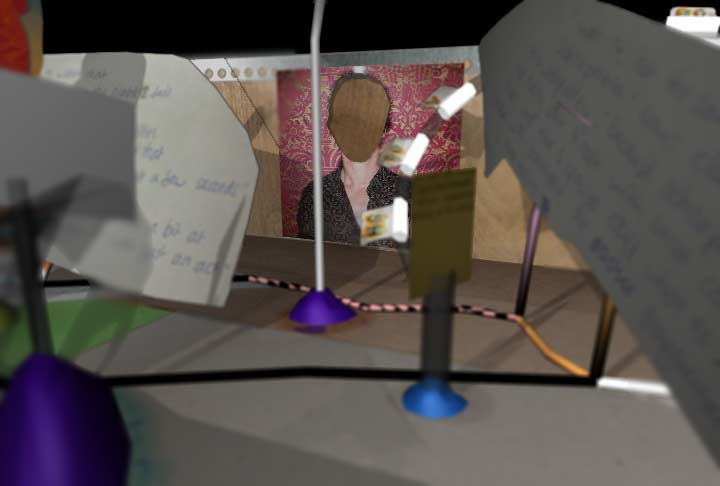
Awake It, WIP augmented reality artwork

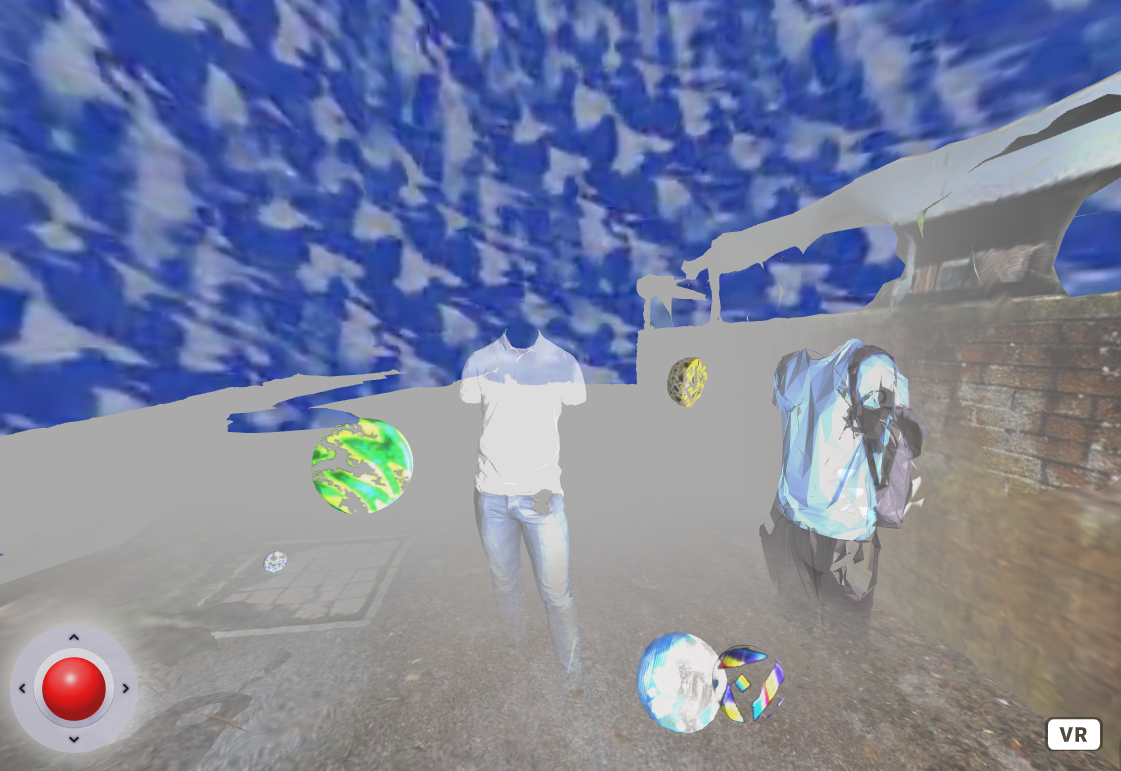
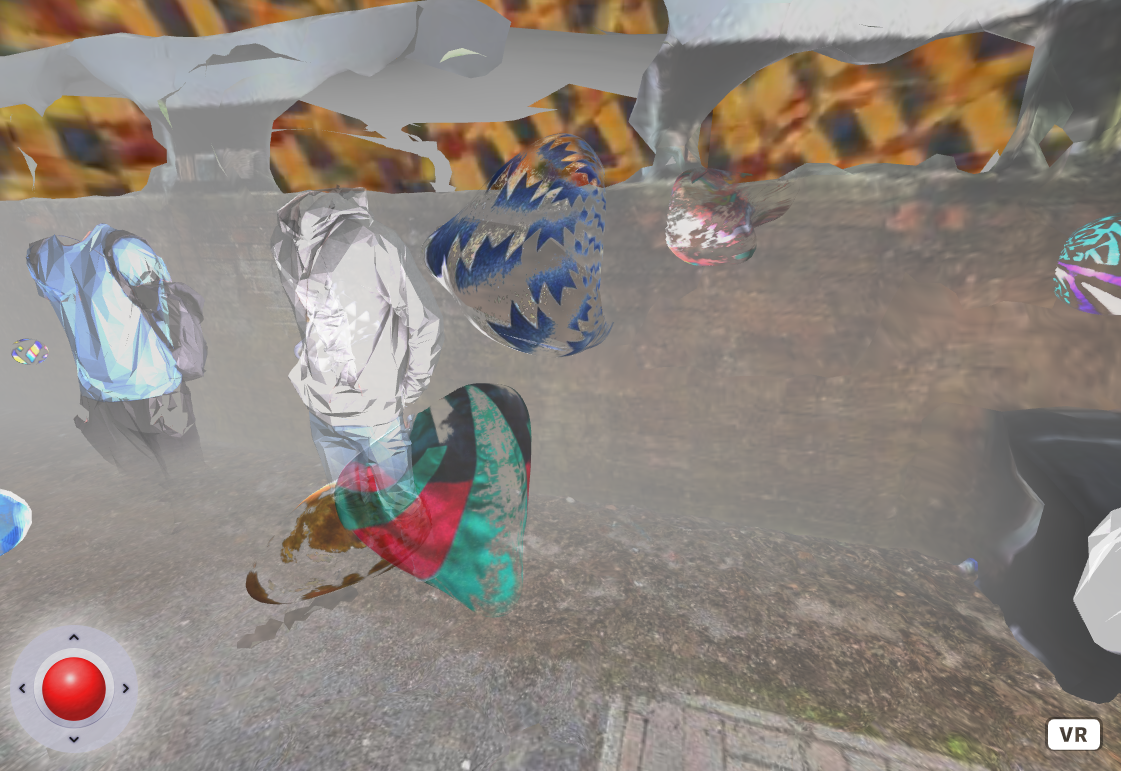
To look around my latest work in progress composititions, view below or go here to view in augmented reality in a space you choose on your phone.

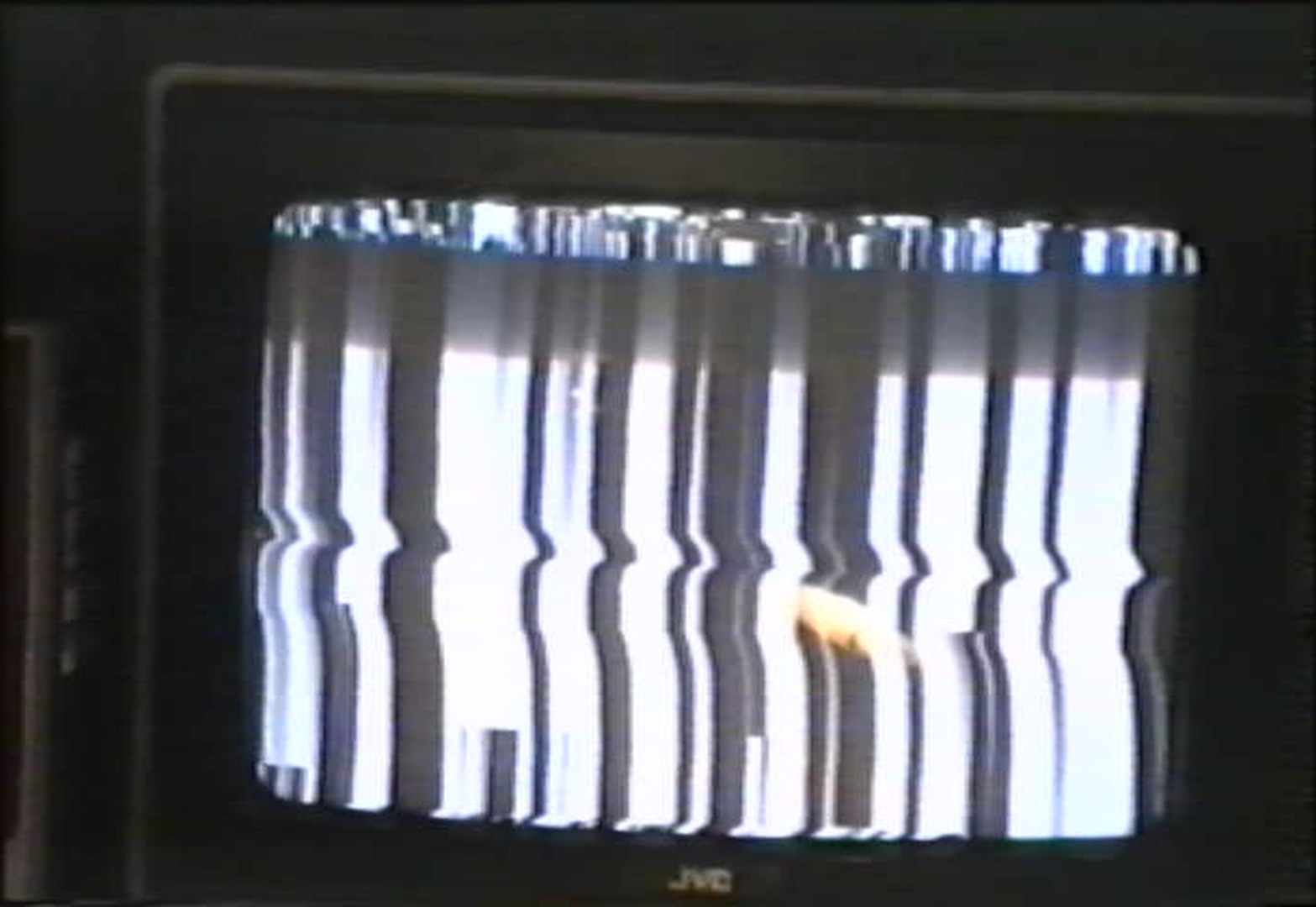
VHS Forms in the field, 2025

Video screengrab of Awake it AR test at sports field - Jan 2026

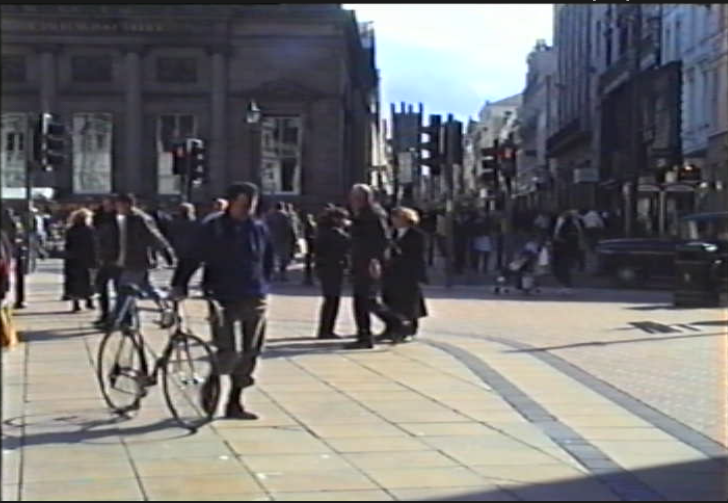
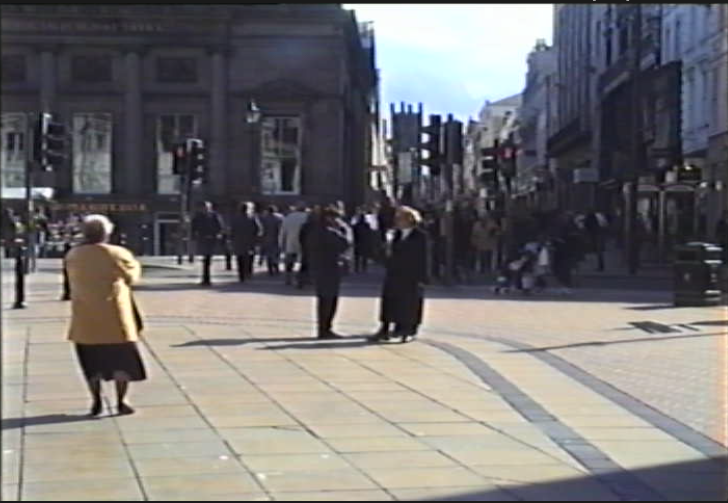
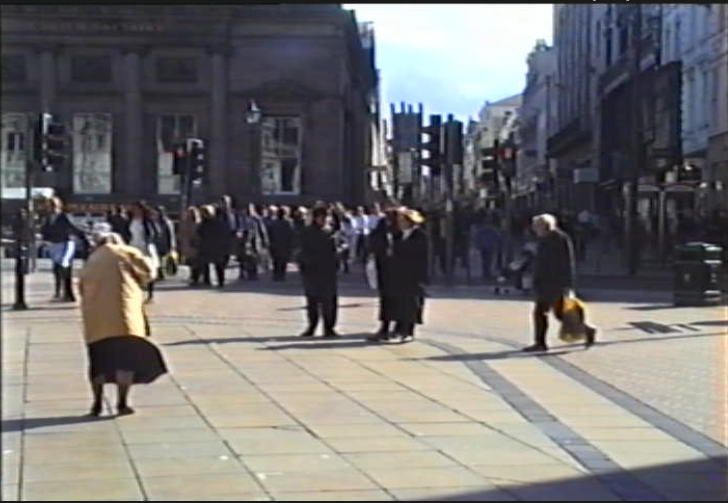
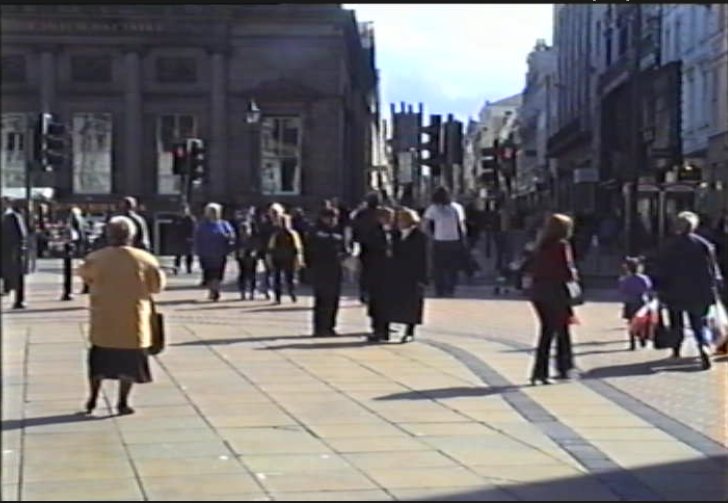
Awake it AR test Wood St Liverpool- Jan 2026

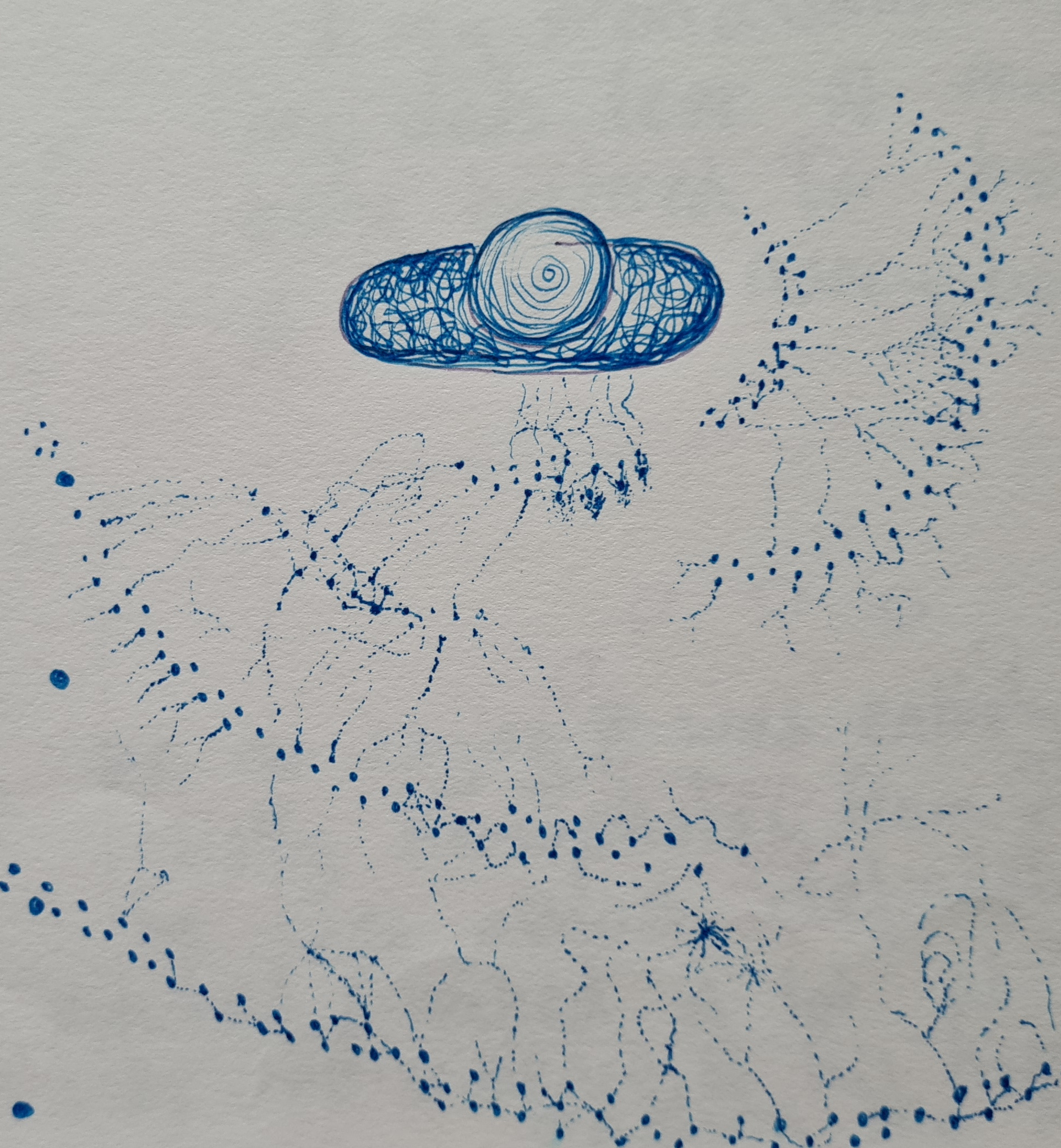
Feeling for - studio

Feeling for - studio chair

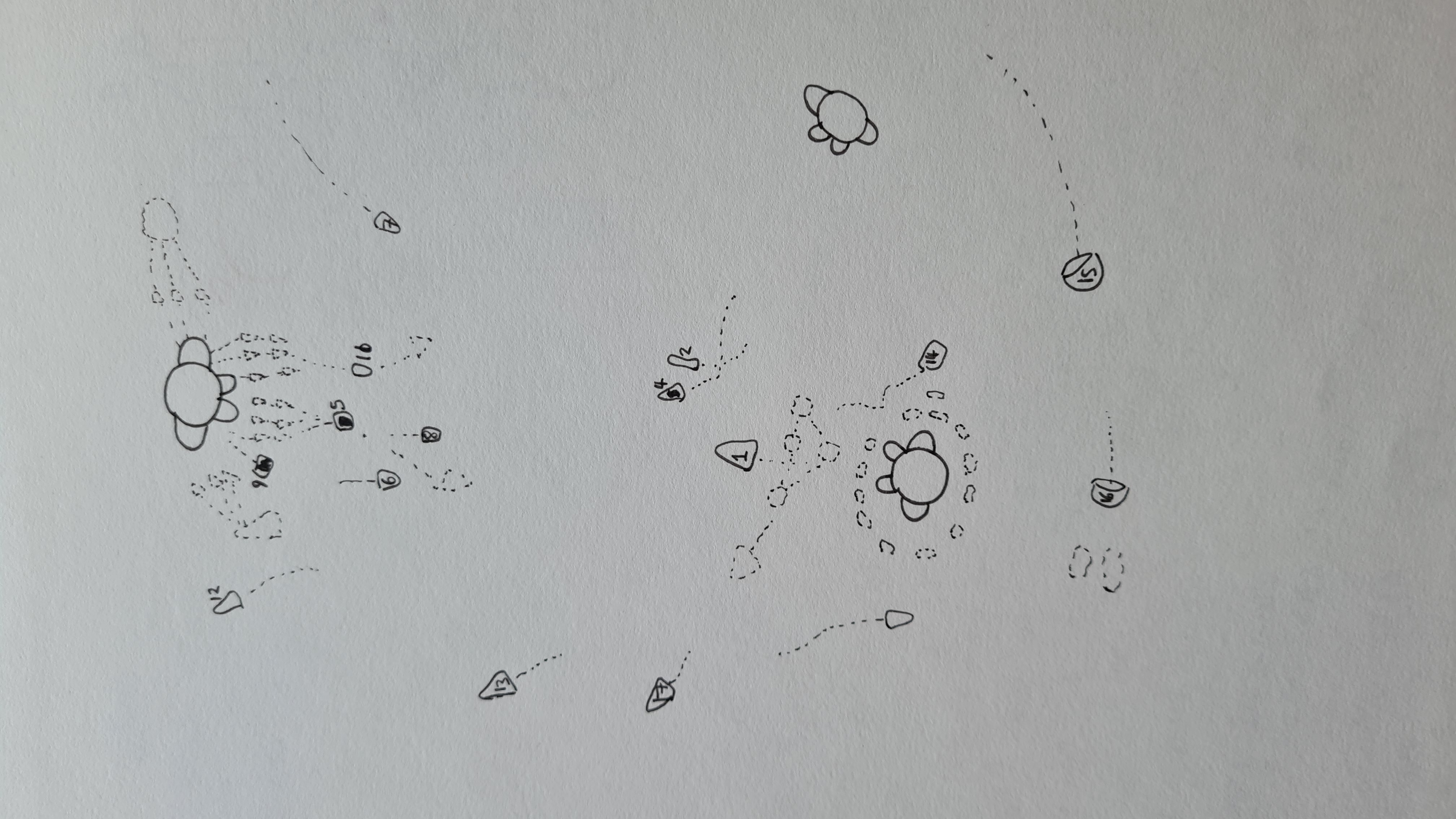
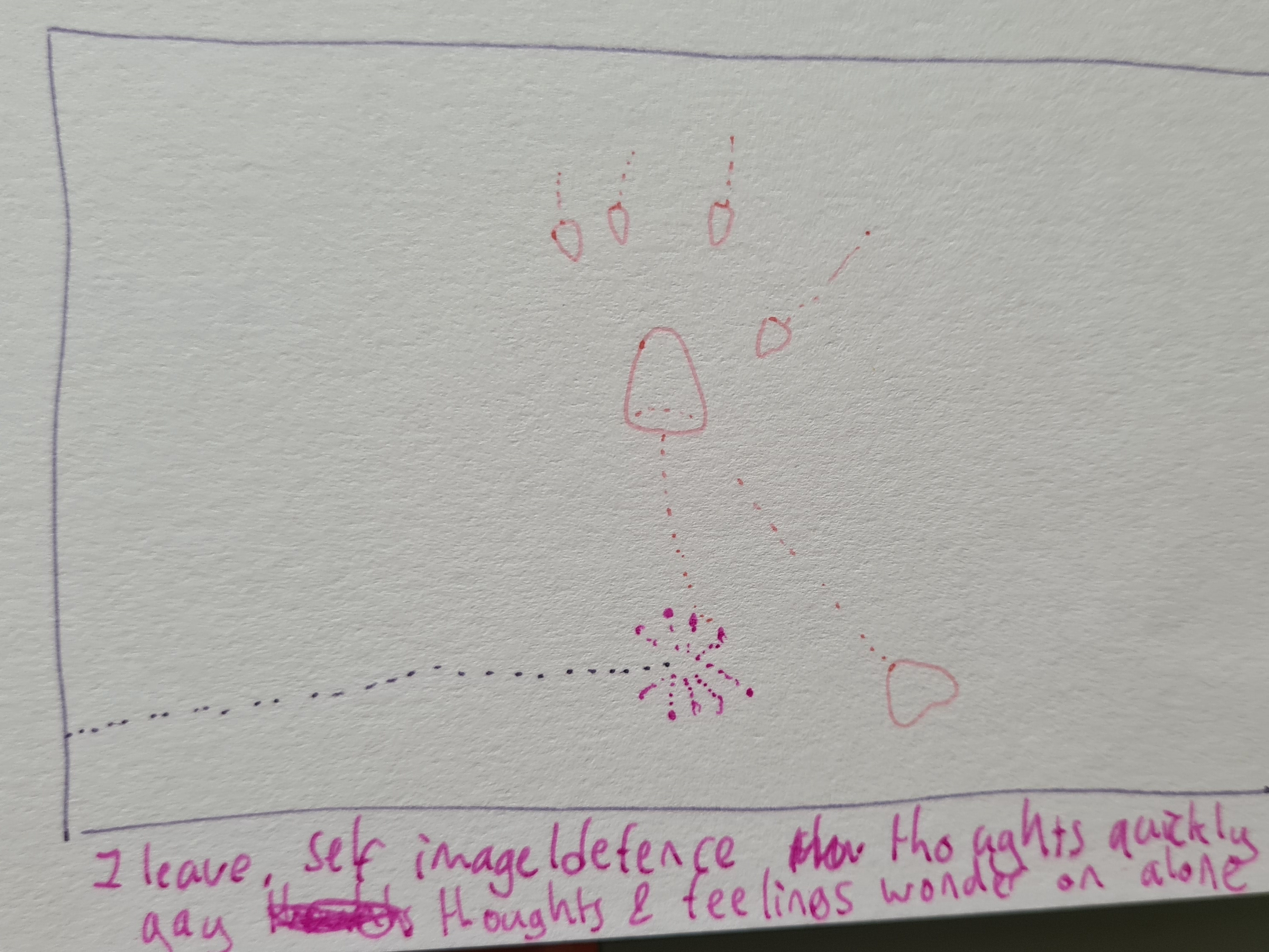
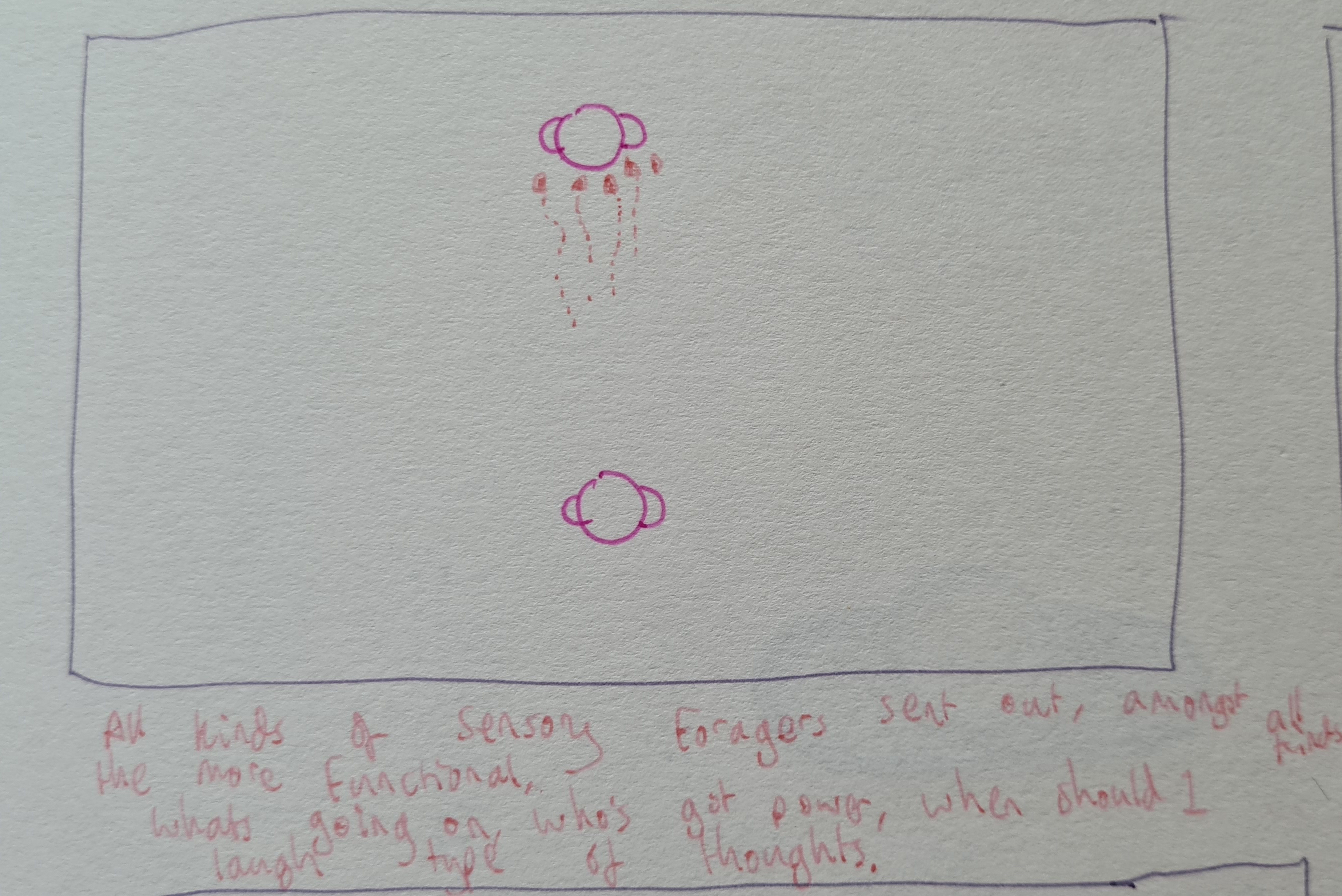
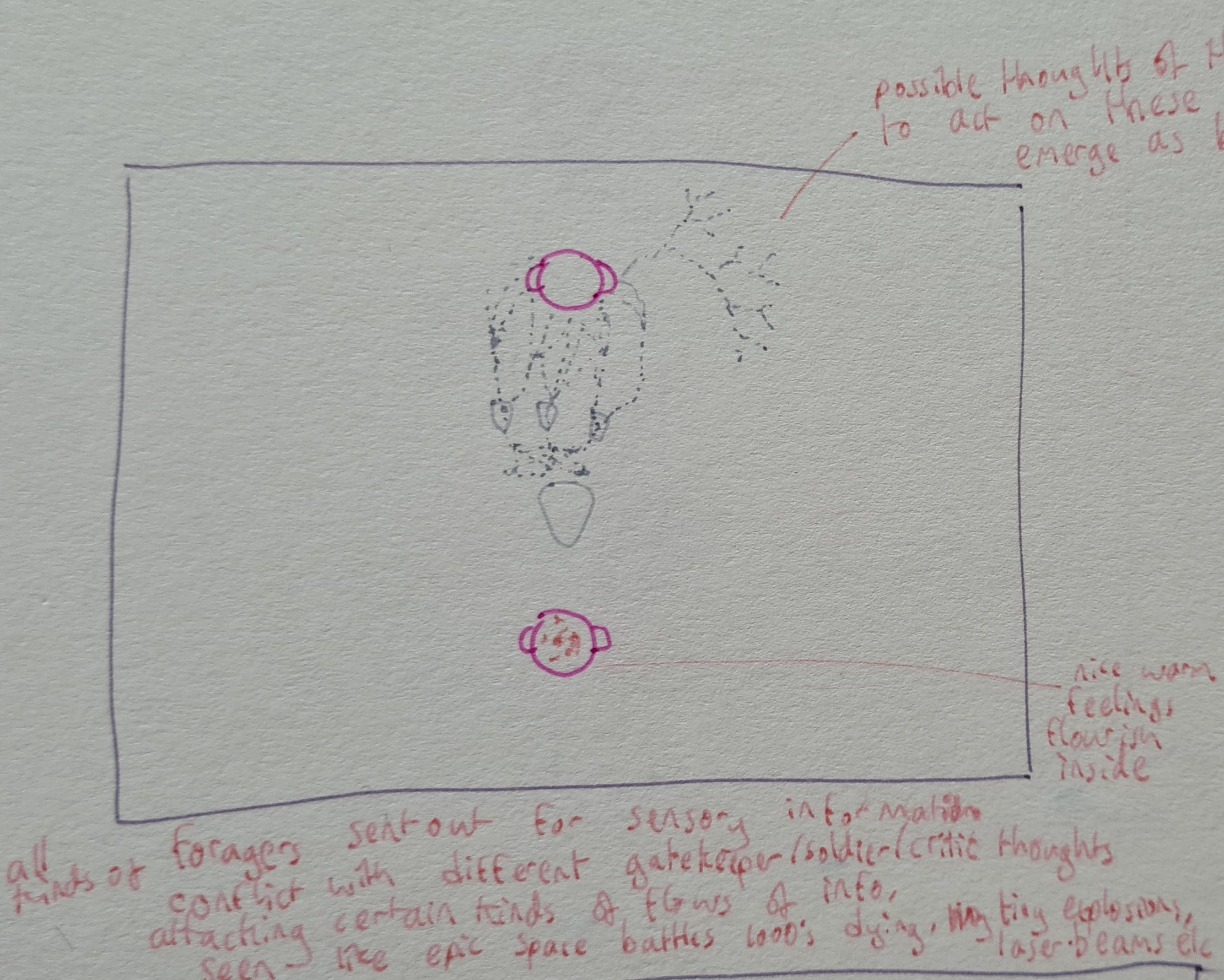
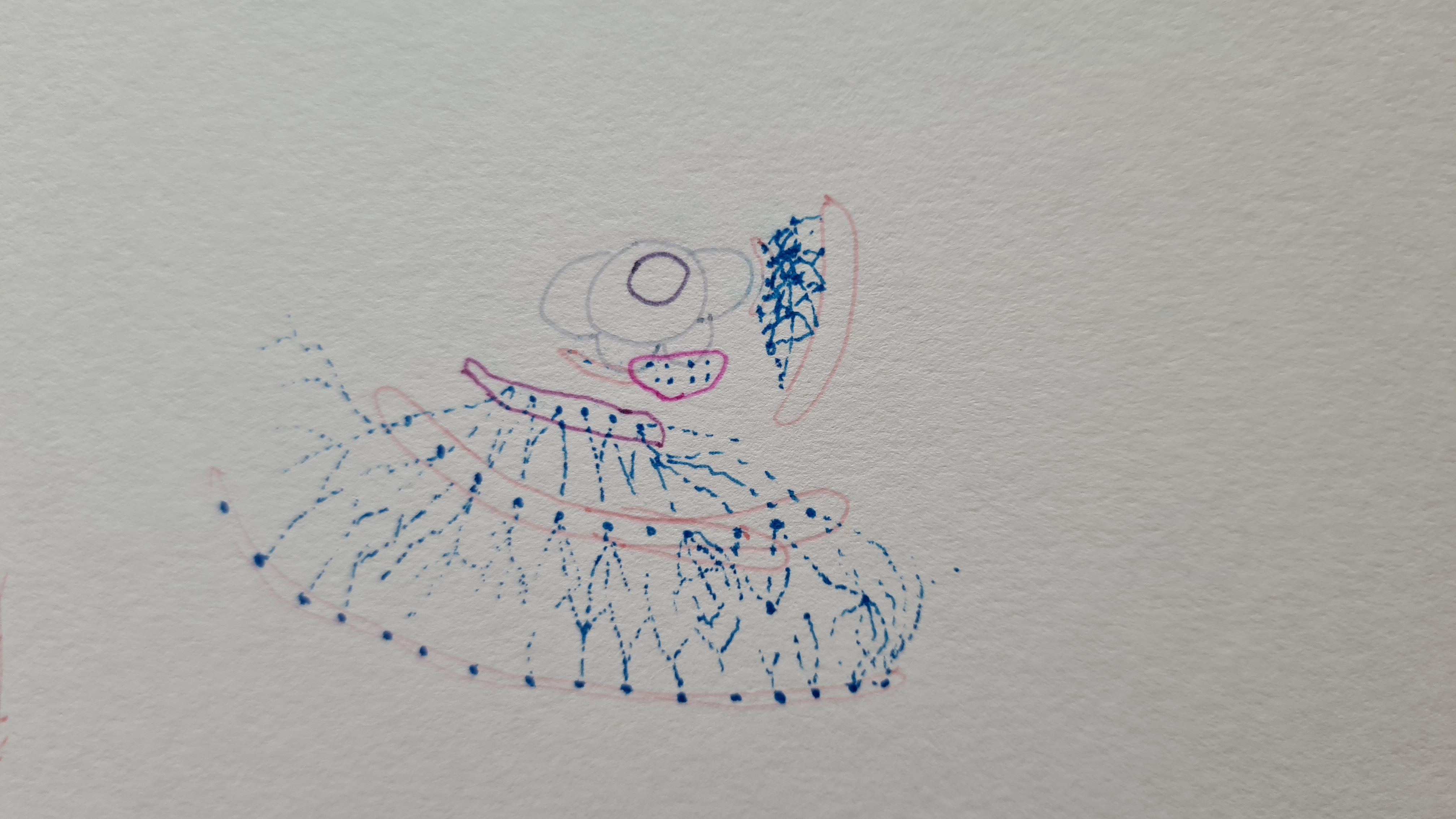
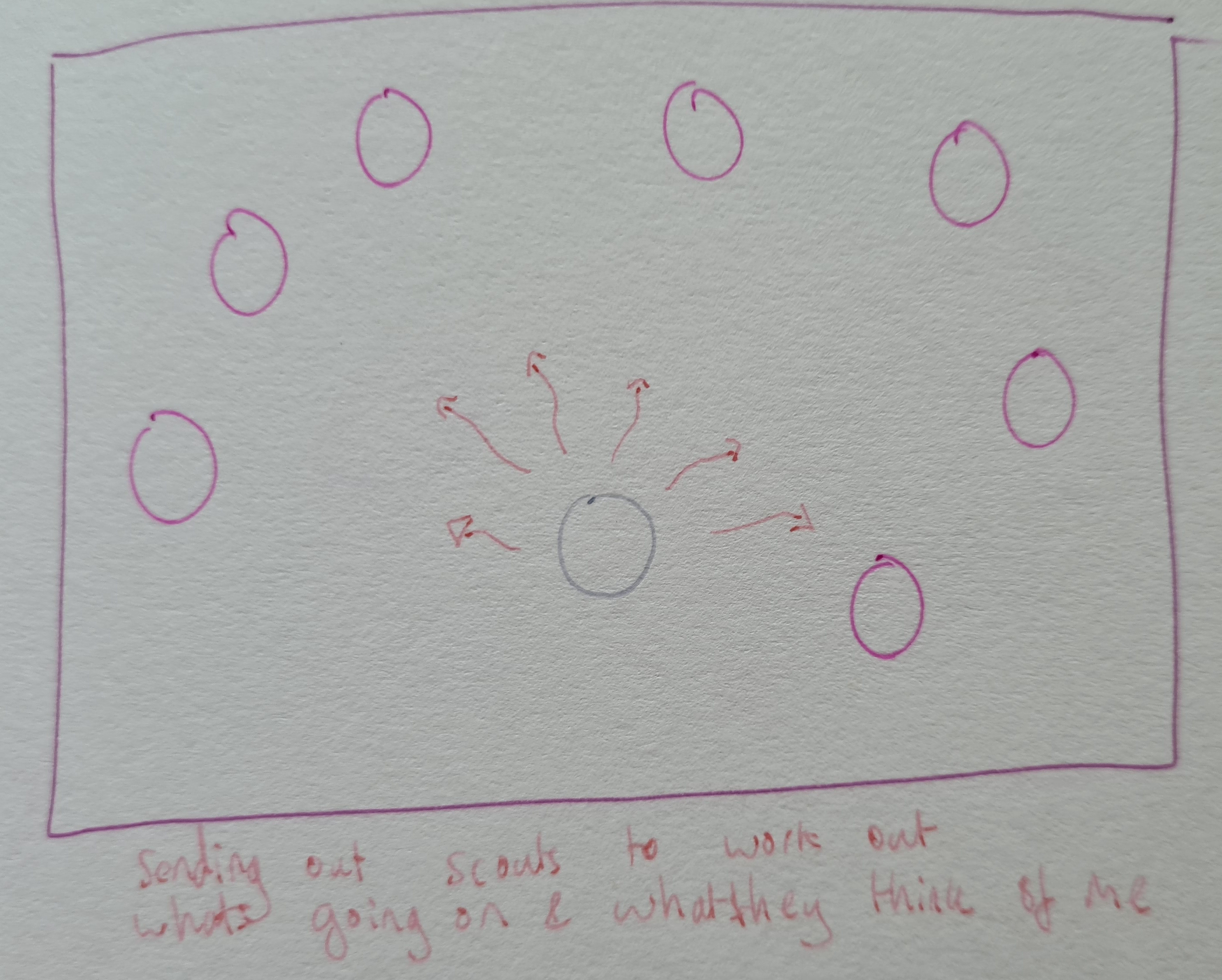
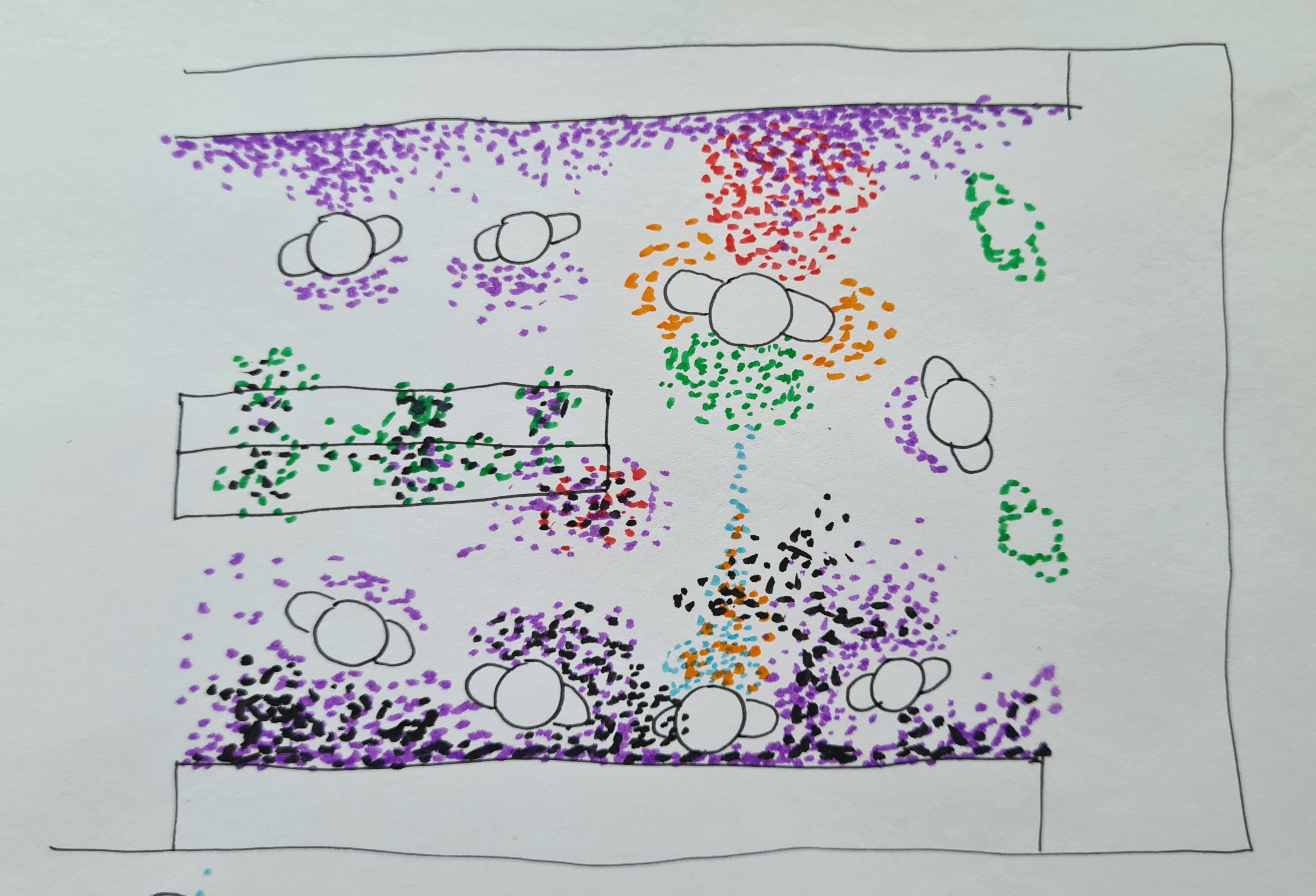
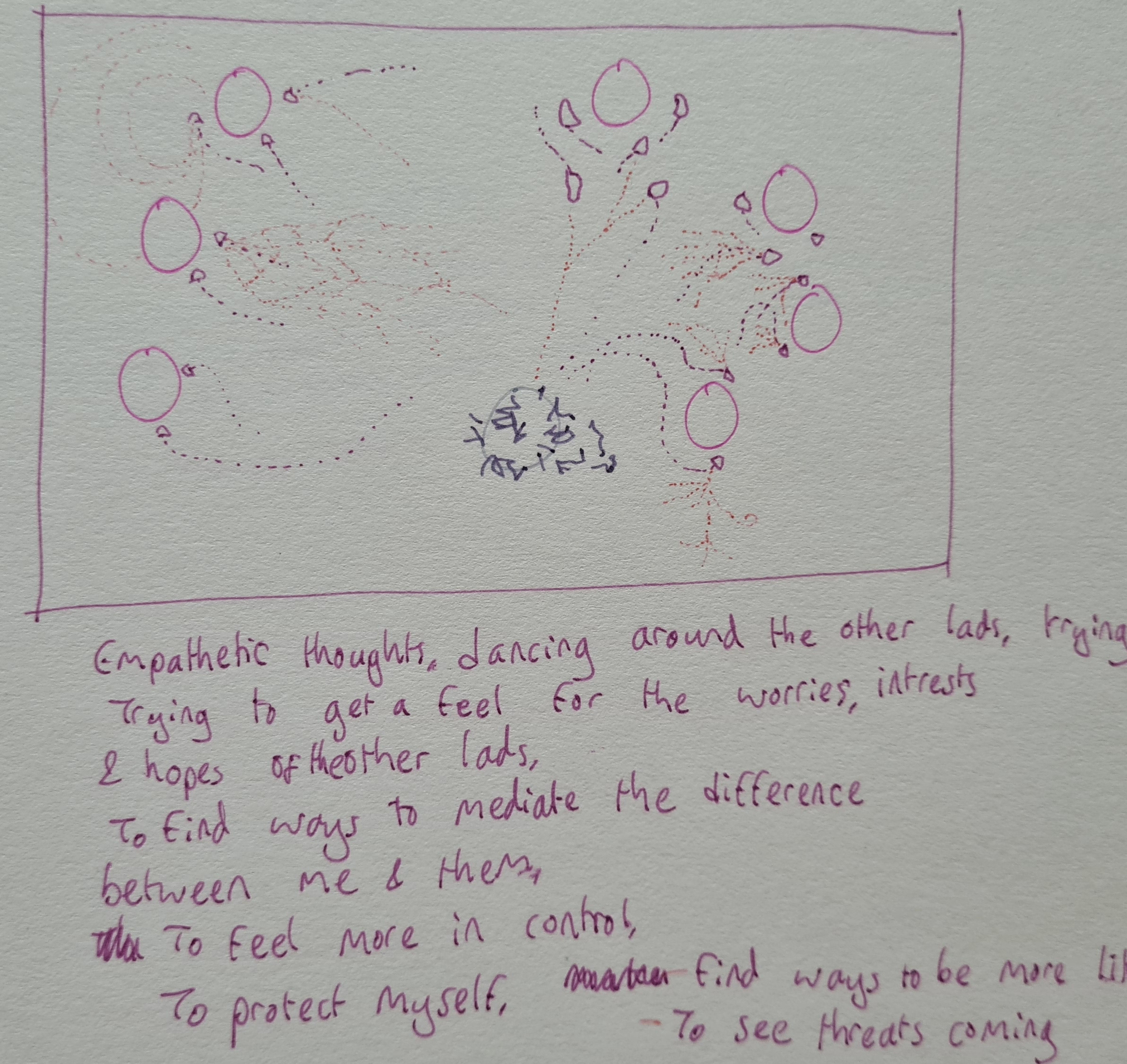
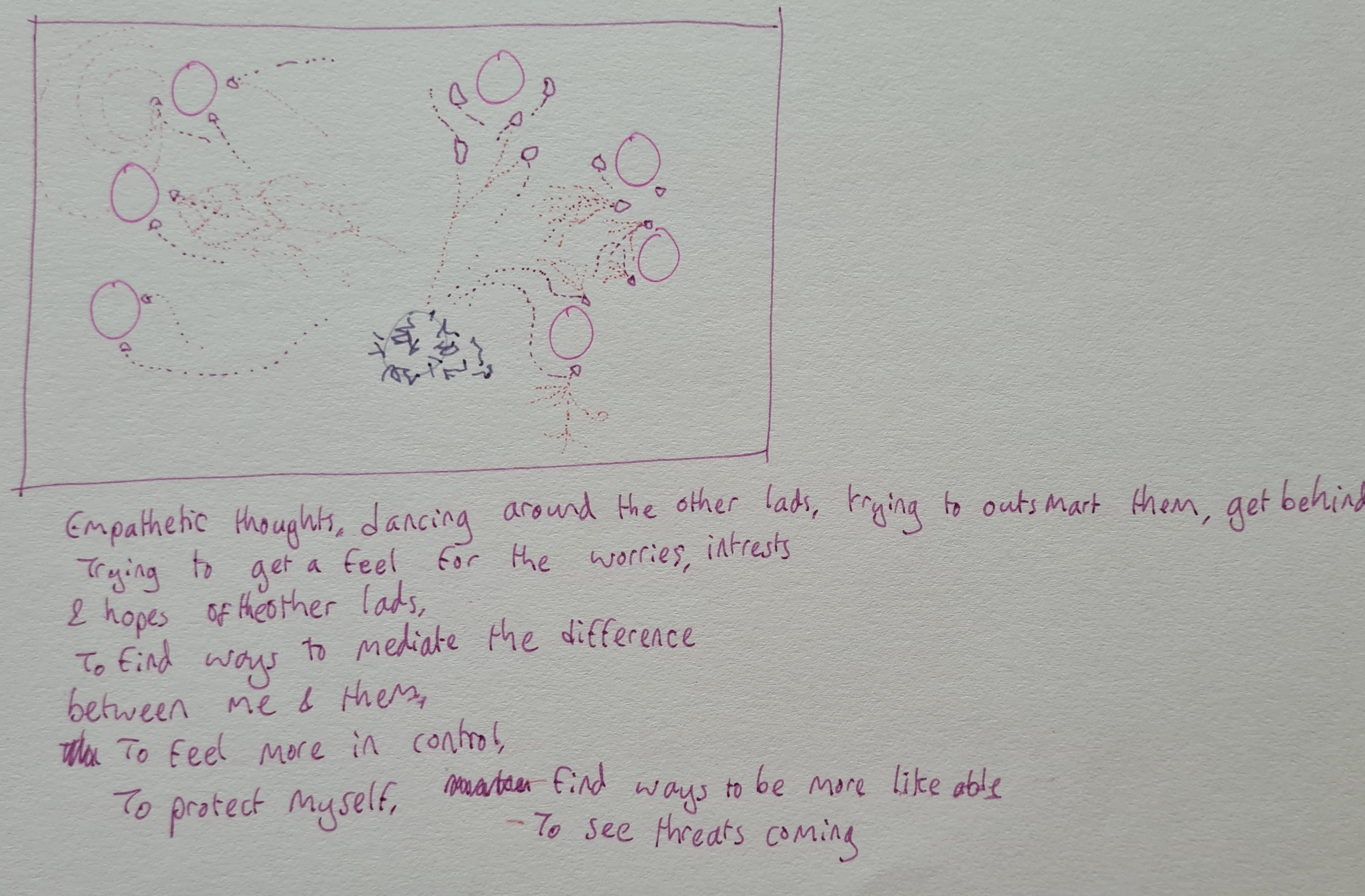
Composition score - Awareness of the image field - Sept 2025

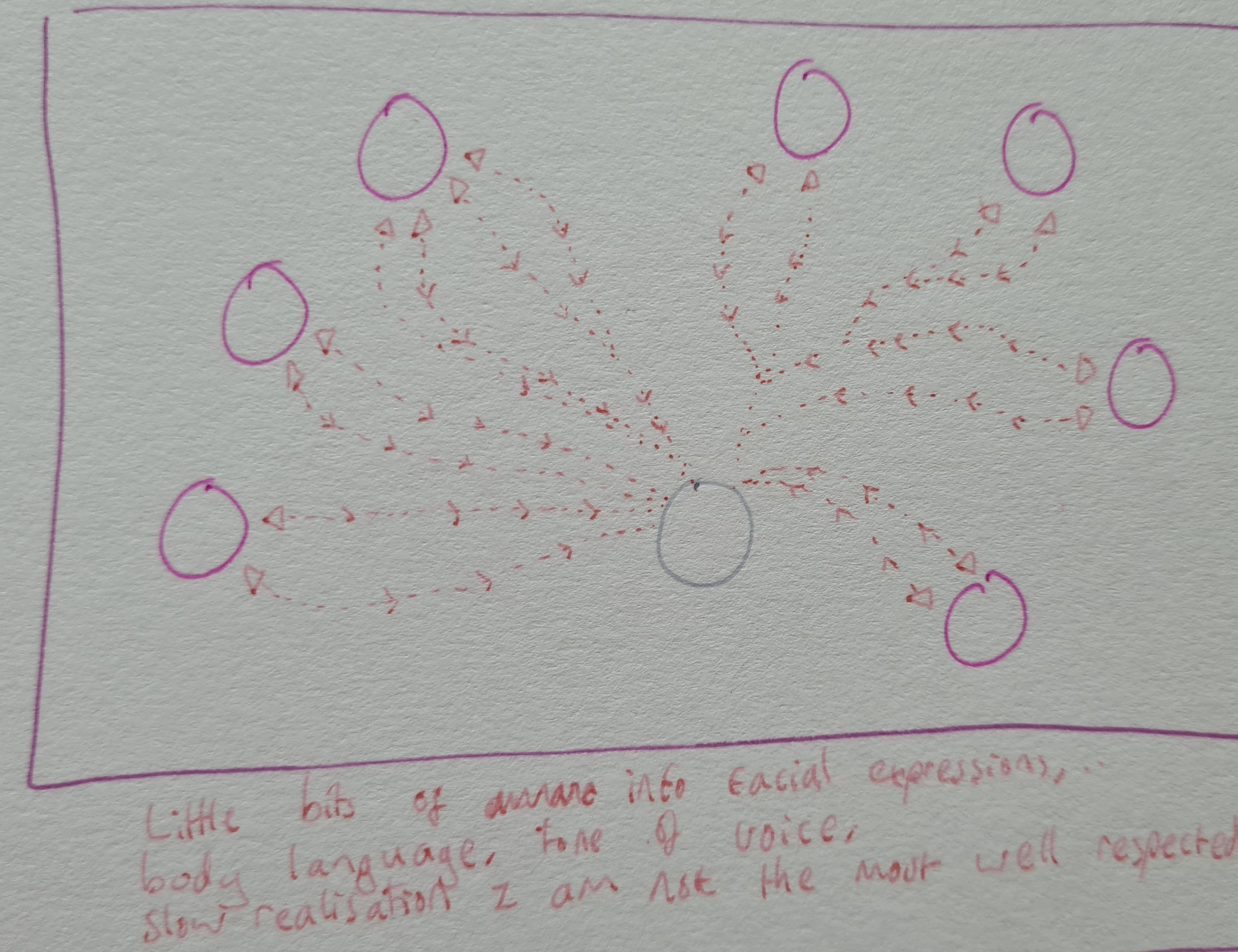
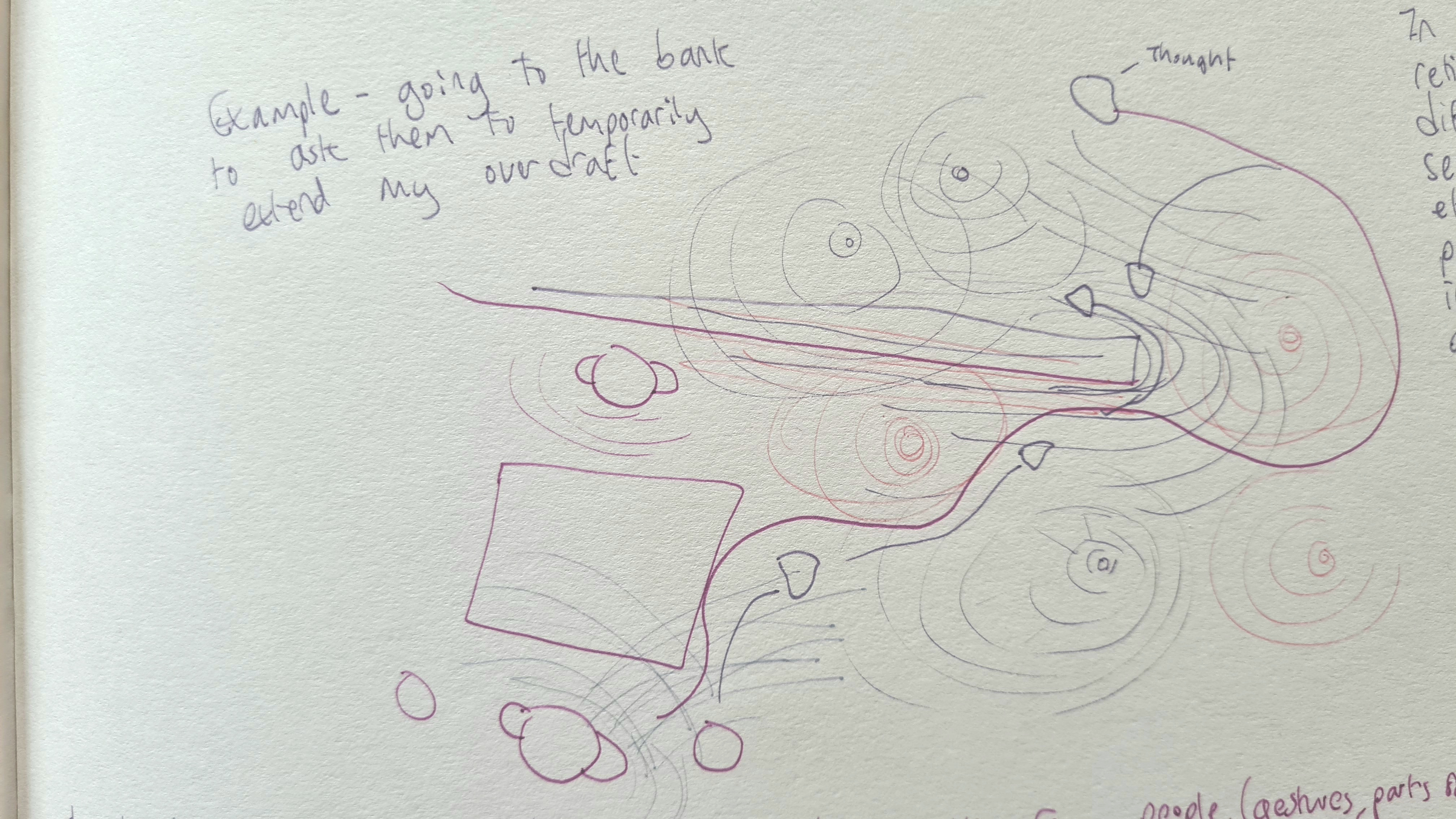
Composition score - Ways of communicating through the image field - Sept 2025

← back

Lads & thoughts augmented in Sefton Park

Lads & thoughts augmented in Sefton Park

Lads & thoughts augmented in Sefton Park

Lads & thoughts augmented in Sefton Park

Lads & thoughts augmented in Sefton Park

Away Kit Gan

United 92 away kit

Away Kit Gan

Away Kit Gan 03

Away Kit Gan 02

Away Kit Gan 01

Something surging in a mathsbook

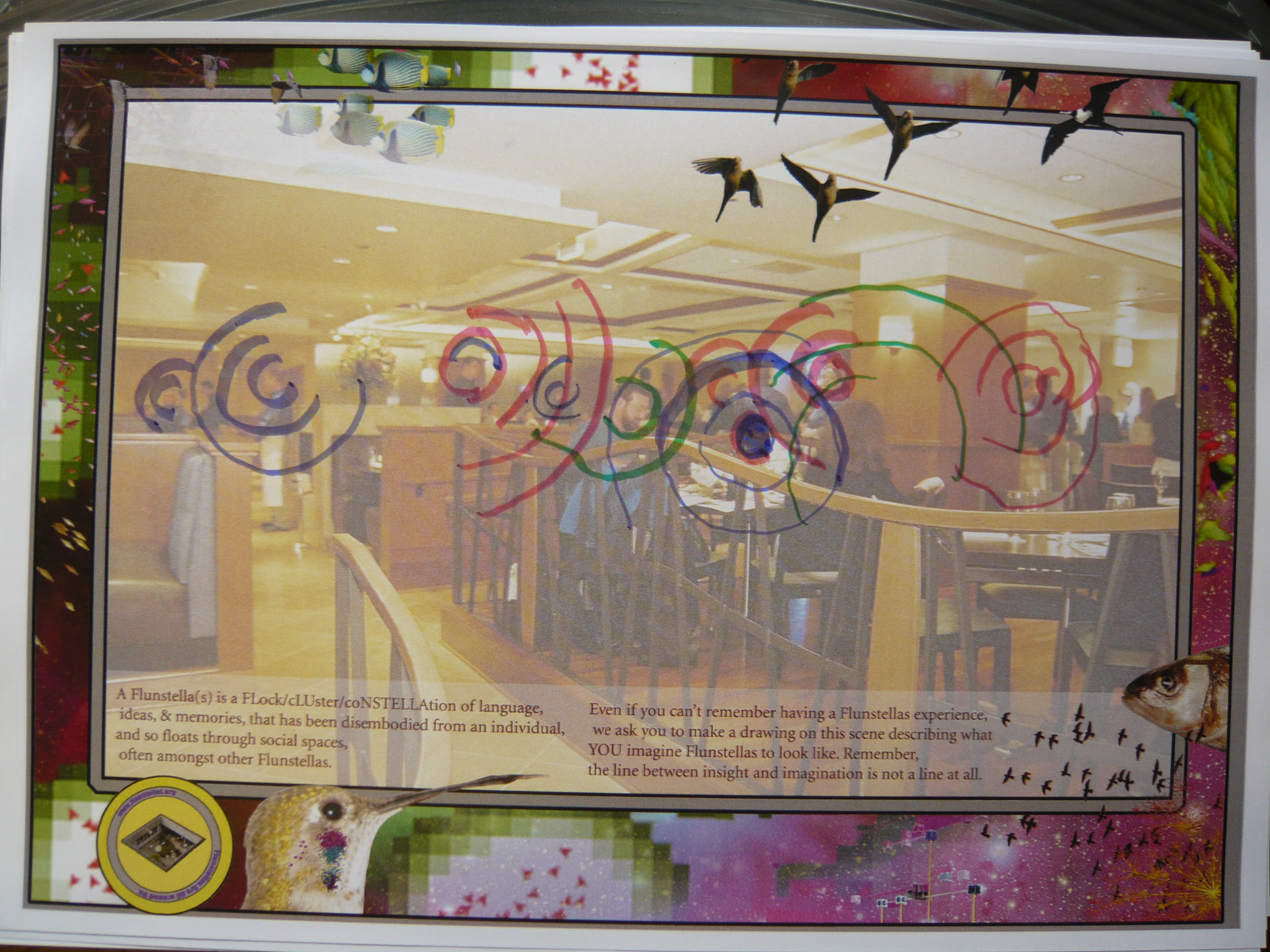
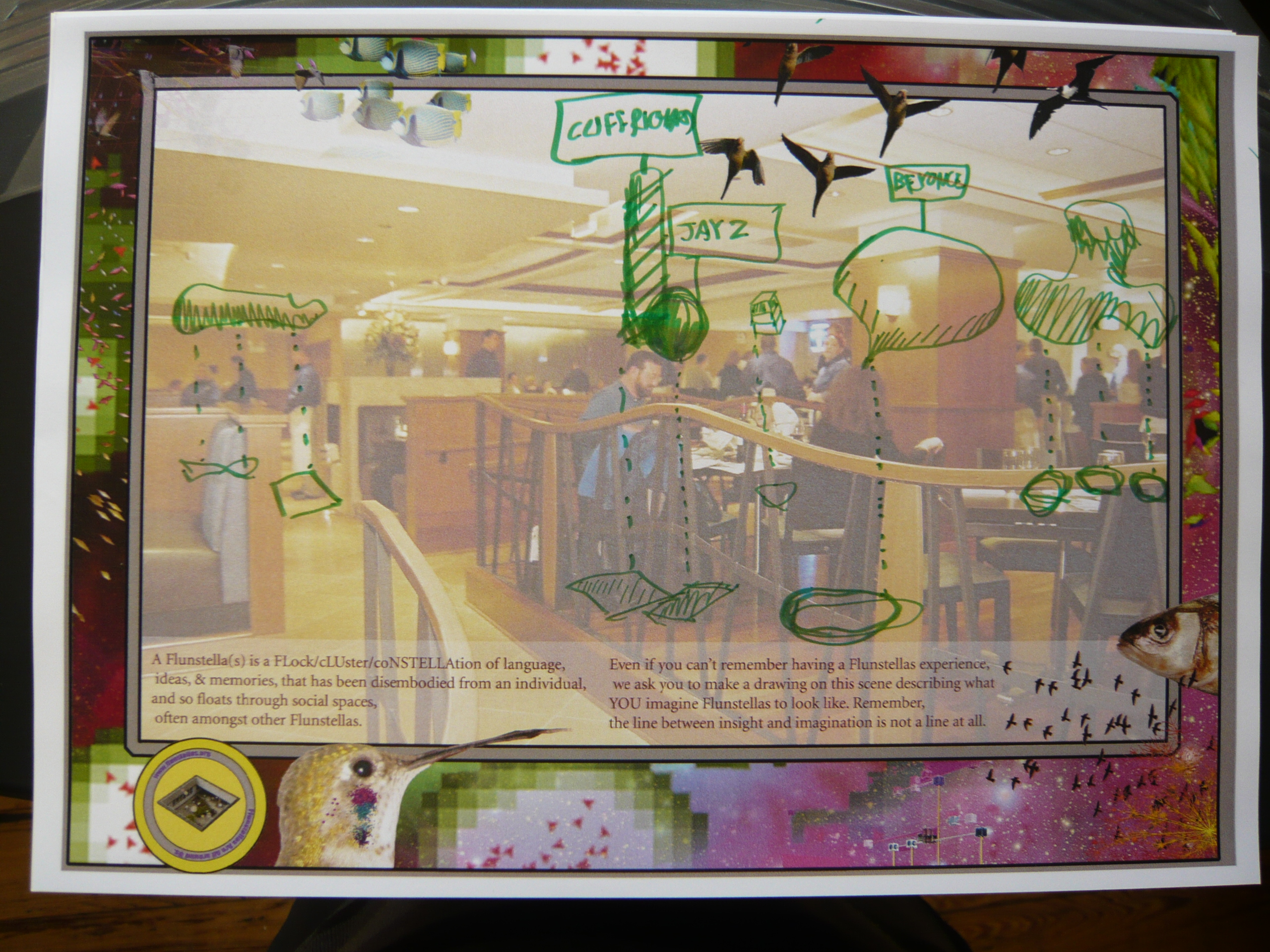
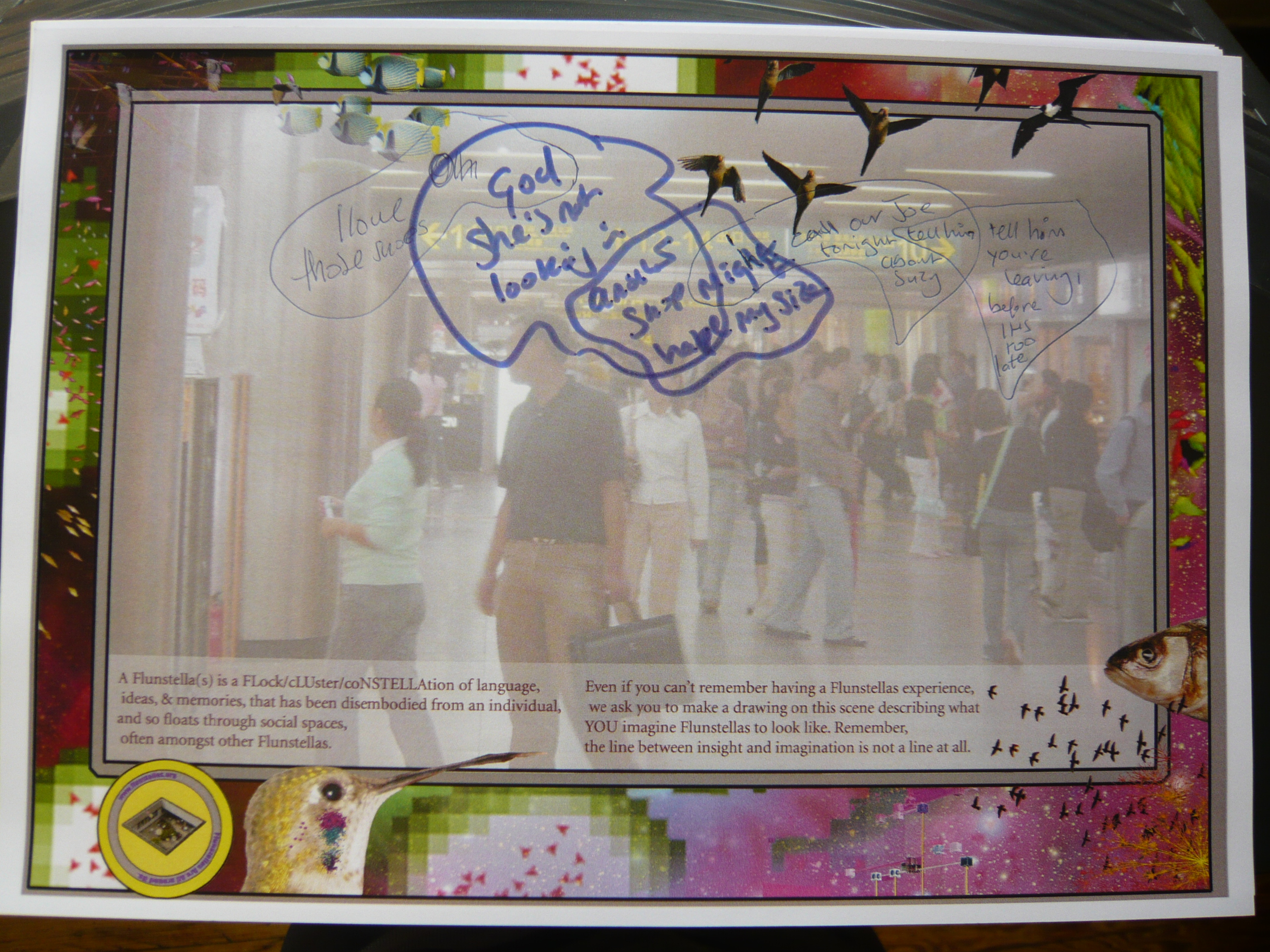
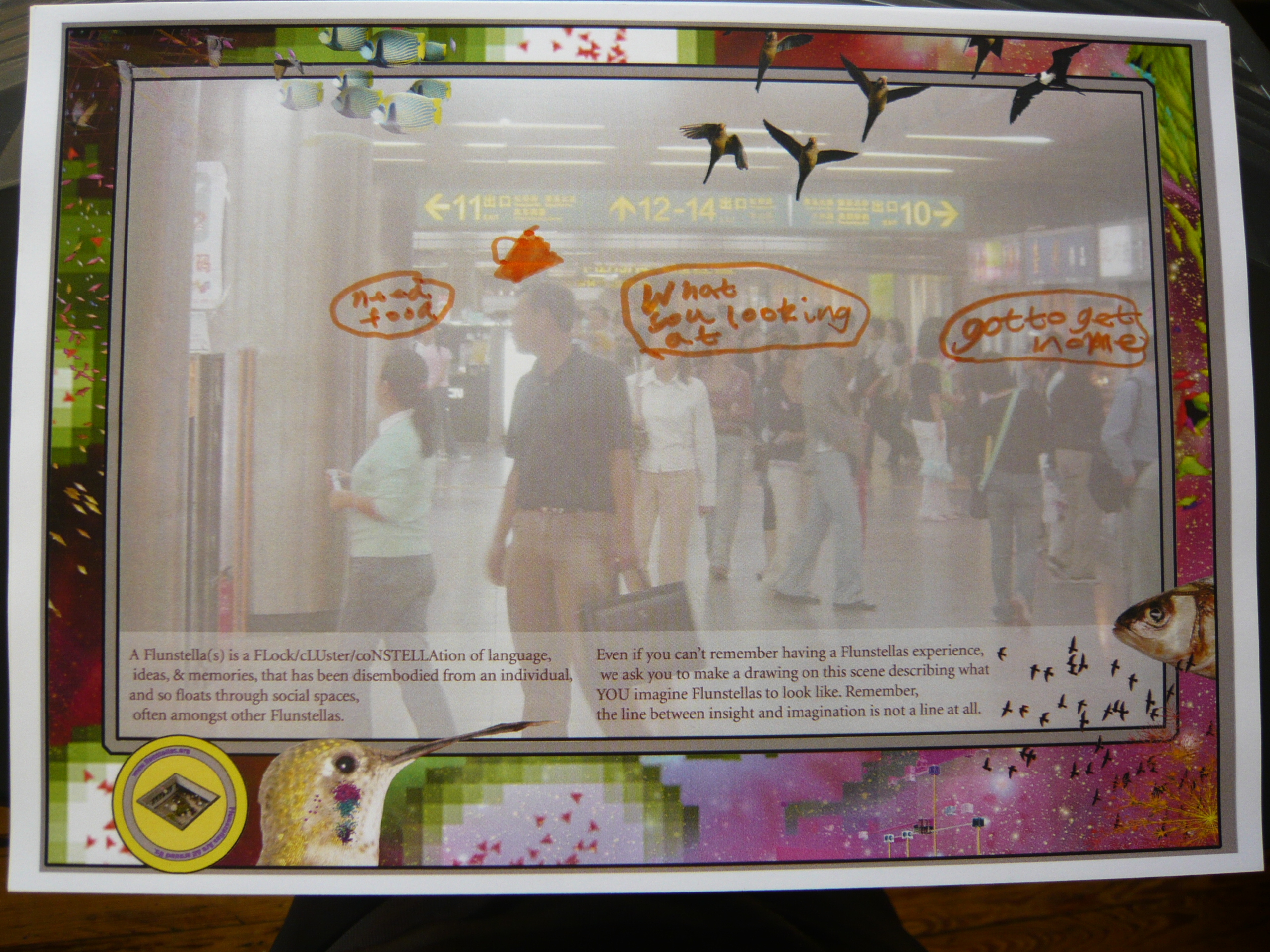
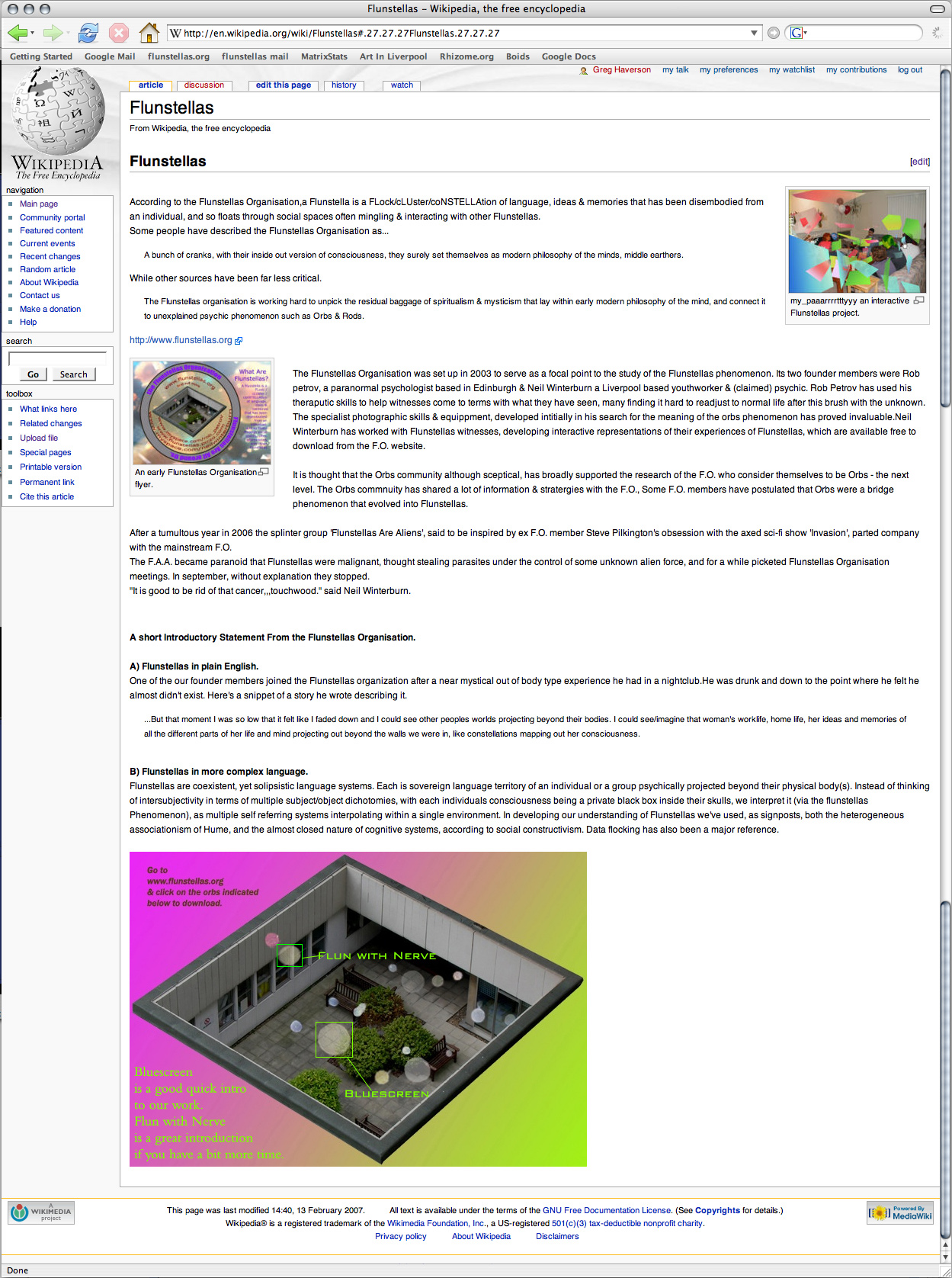
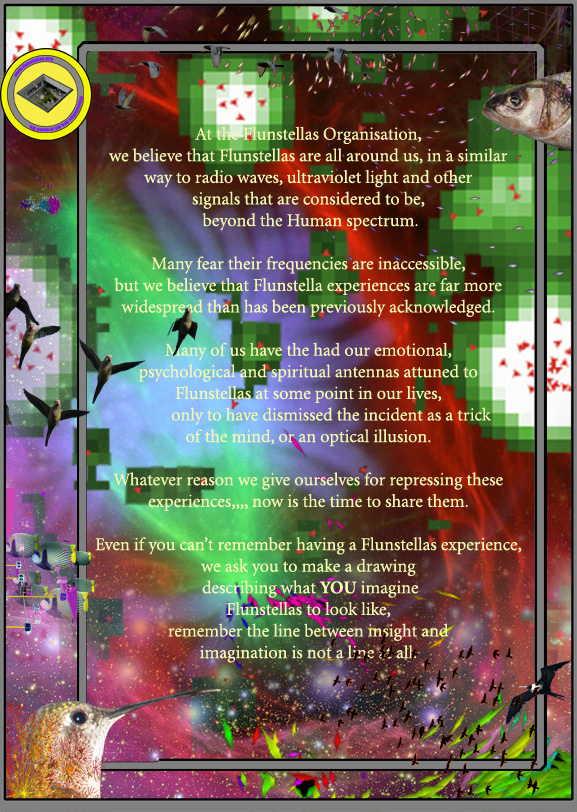
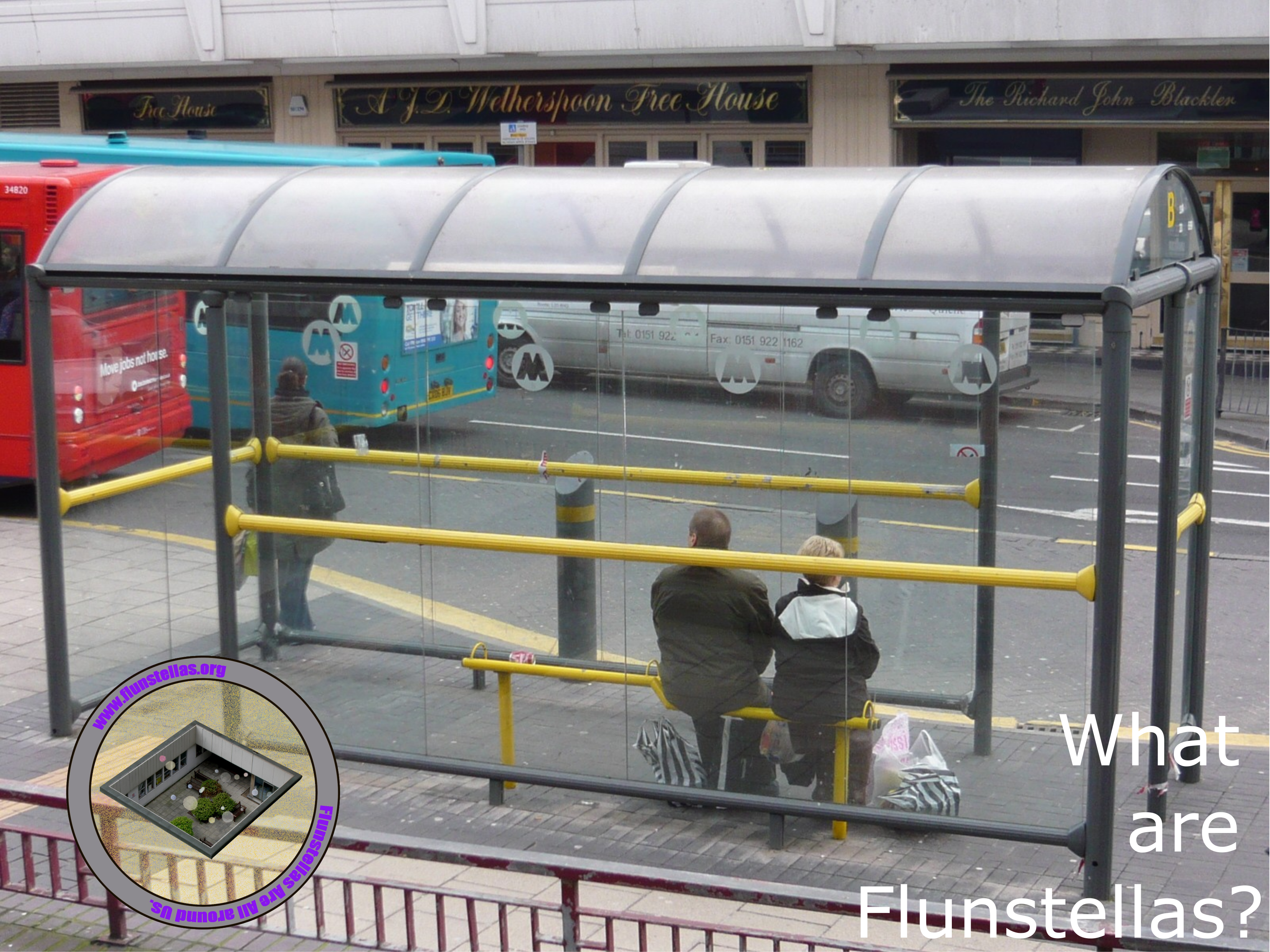
Flunstellas


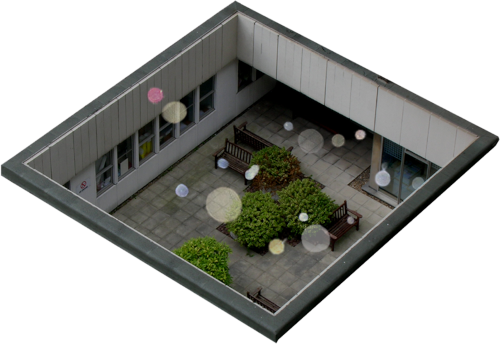
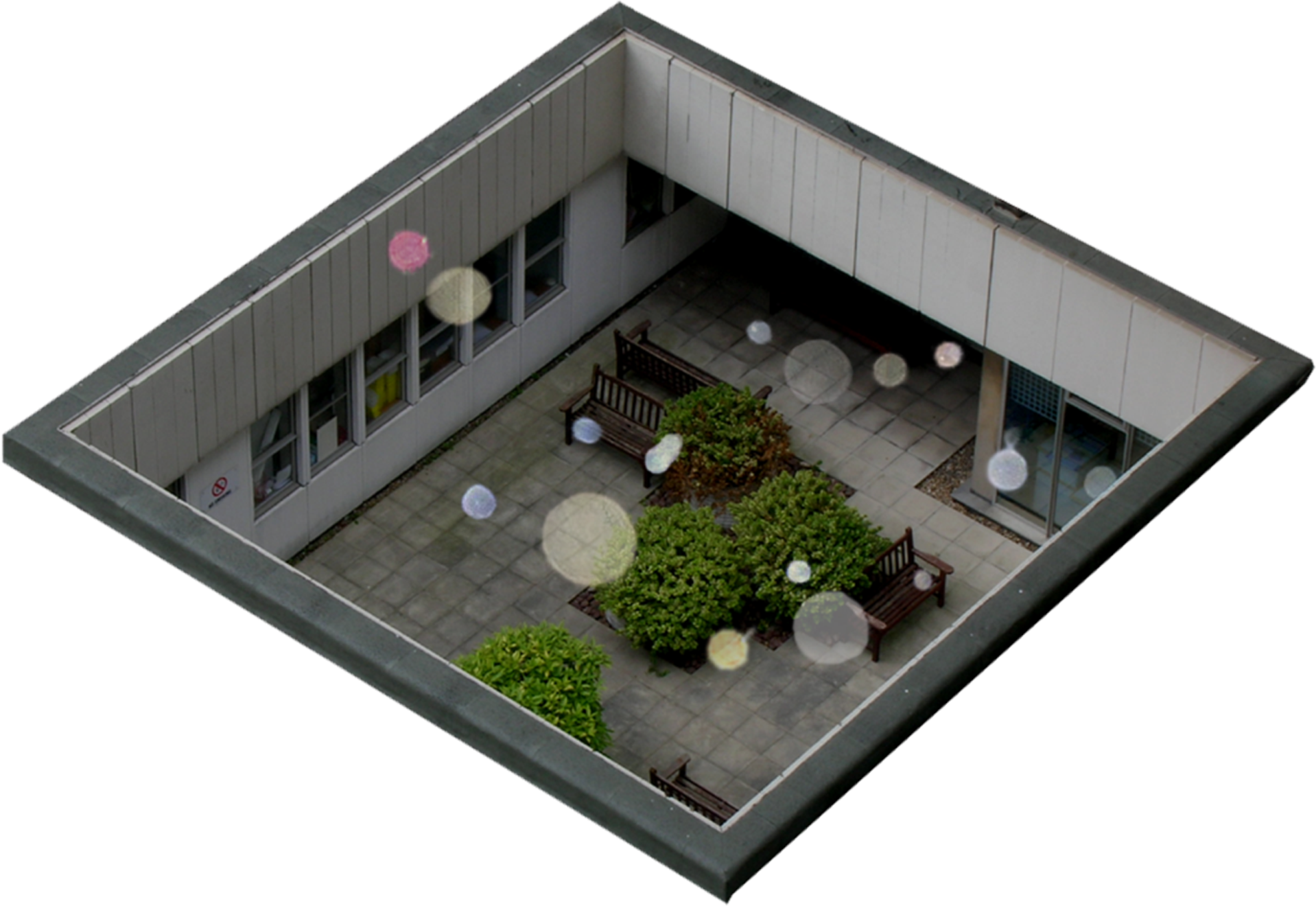
Flunstellas in the Royal Liverpool Hospital


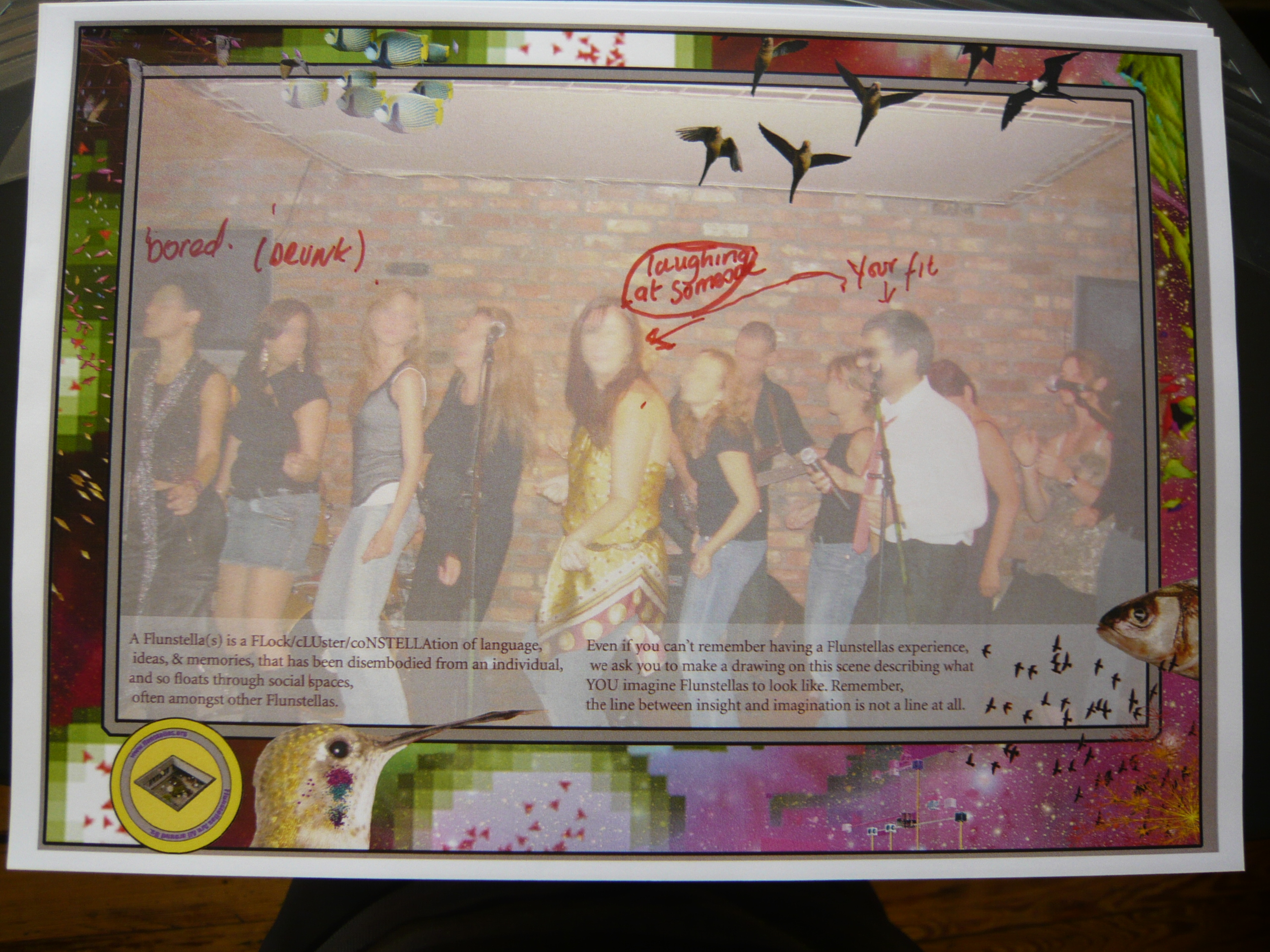
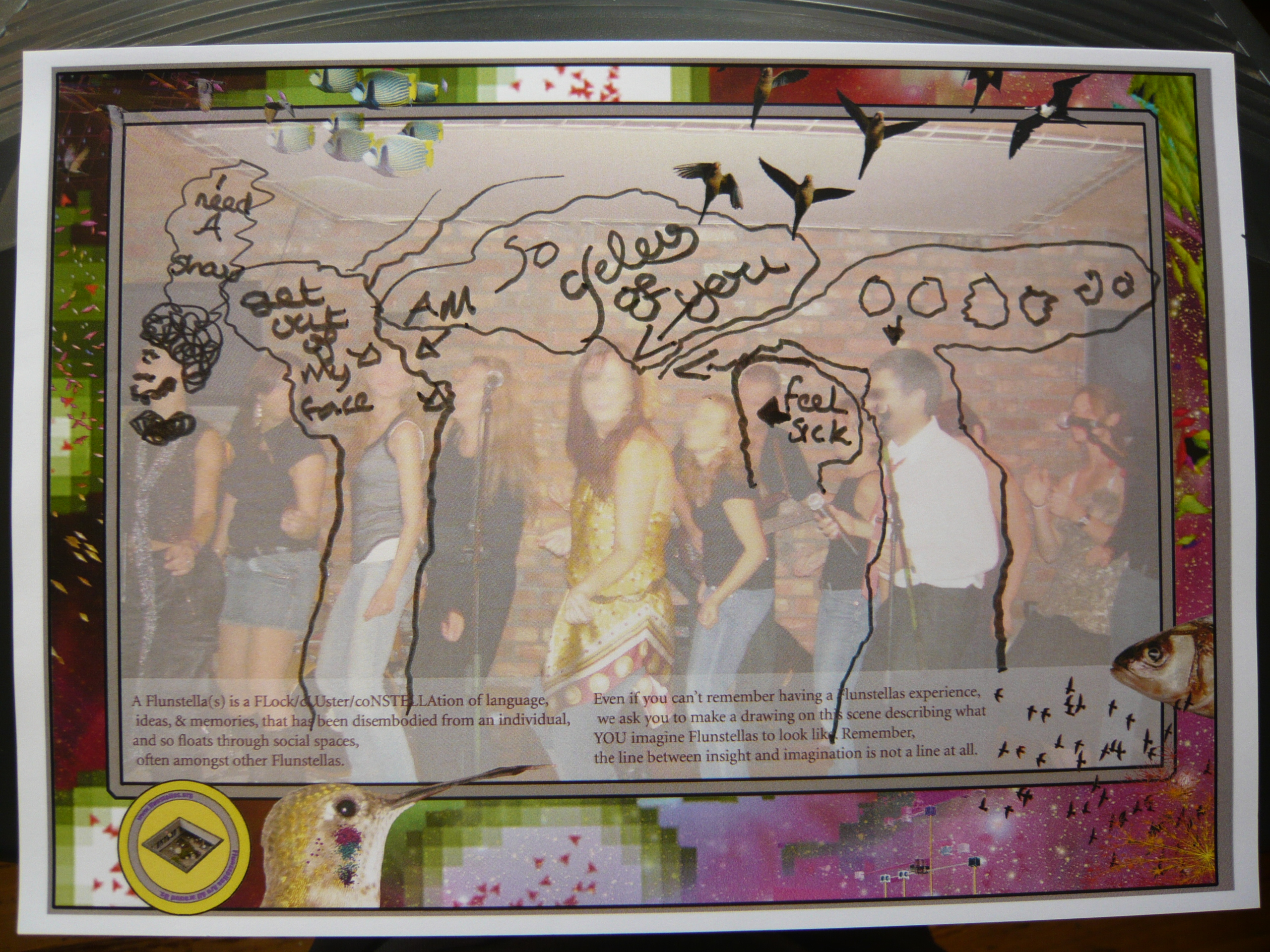
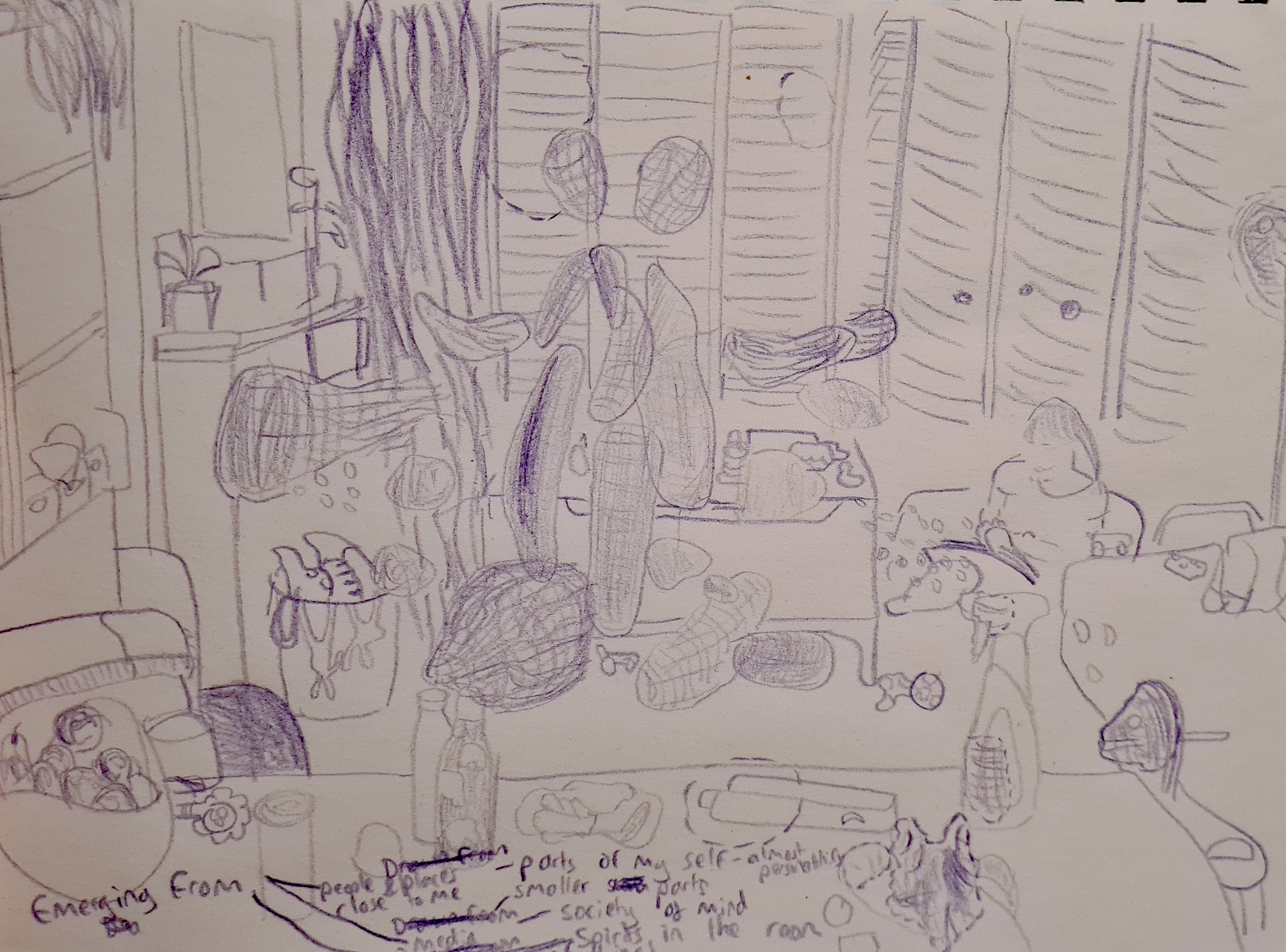
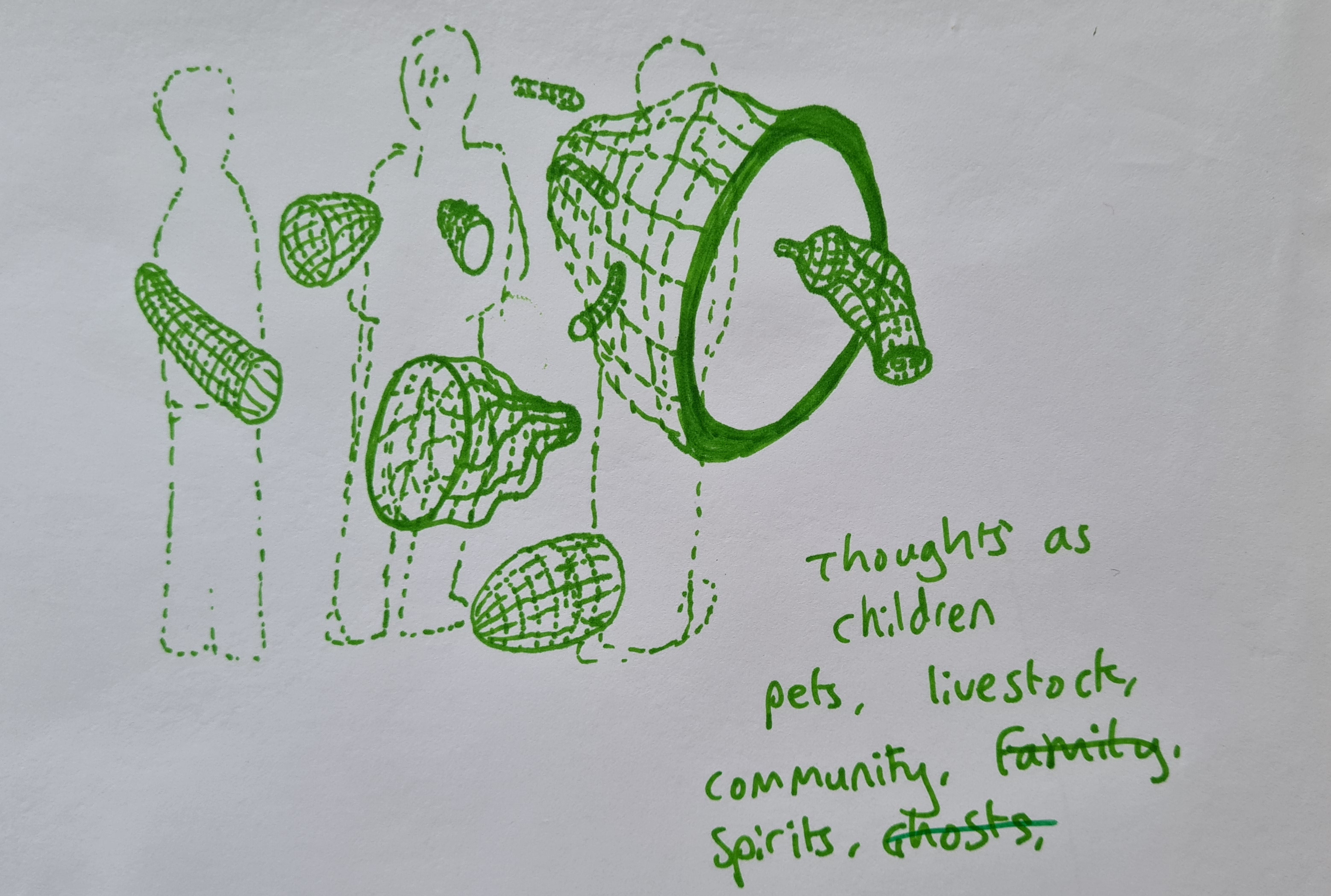
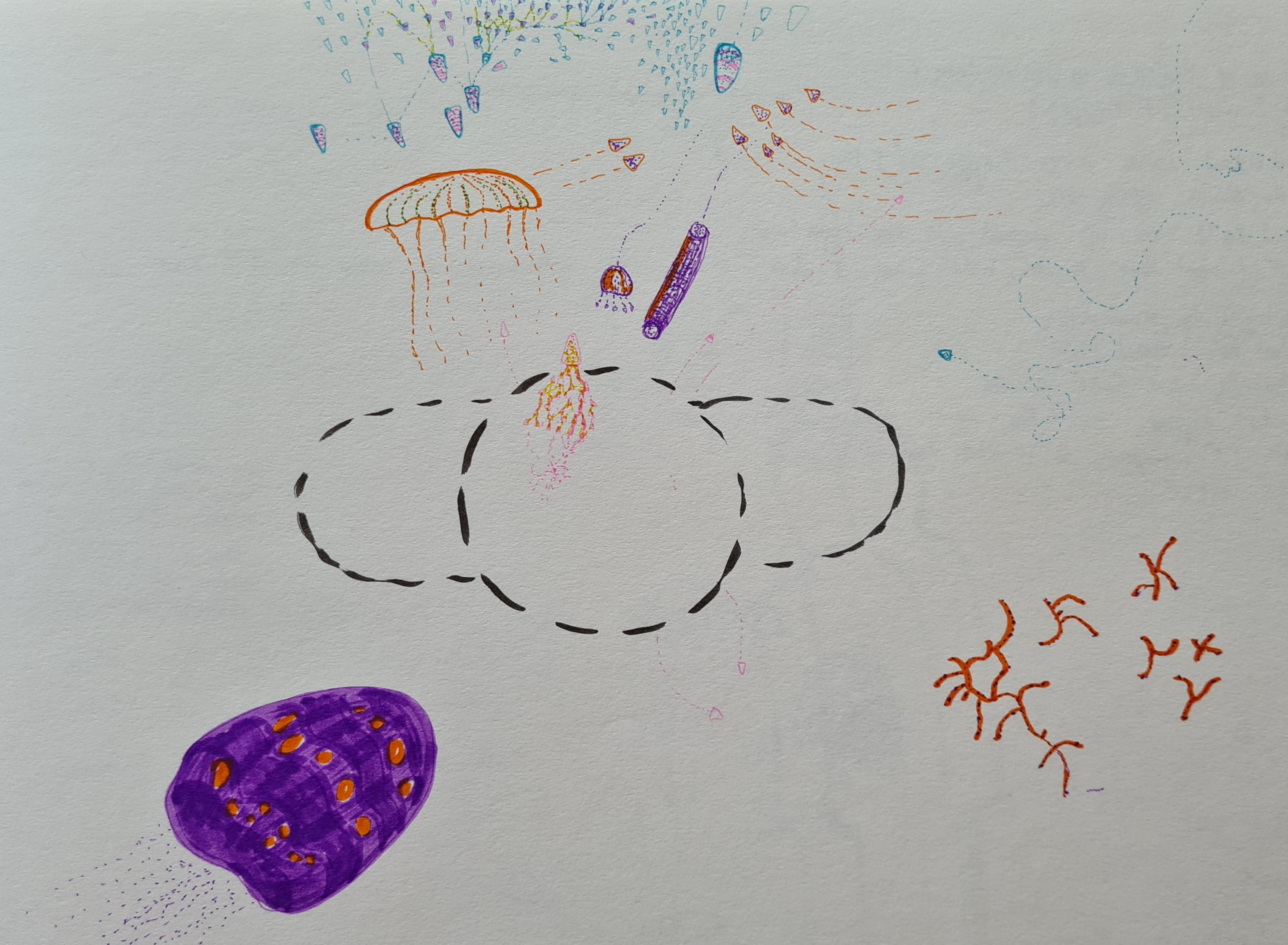
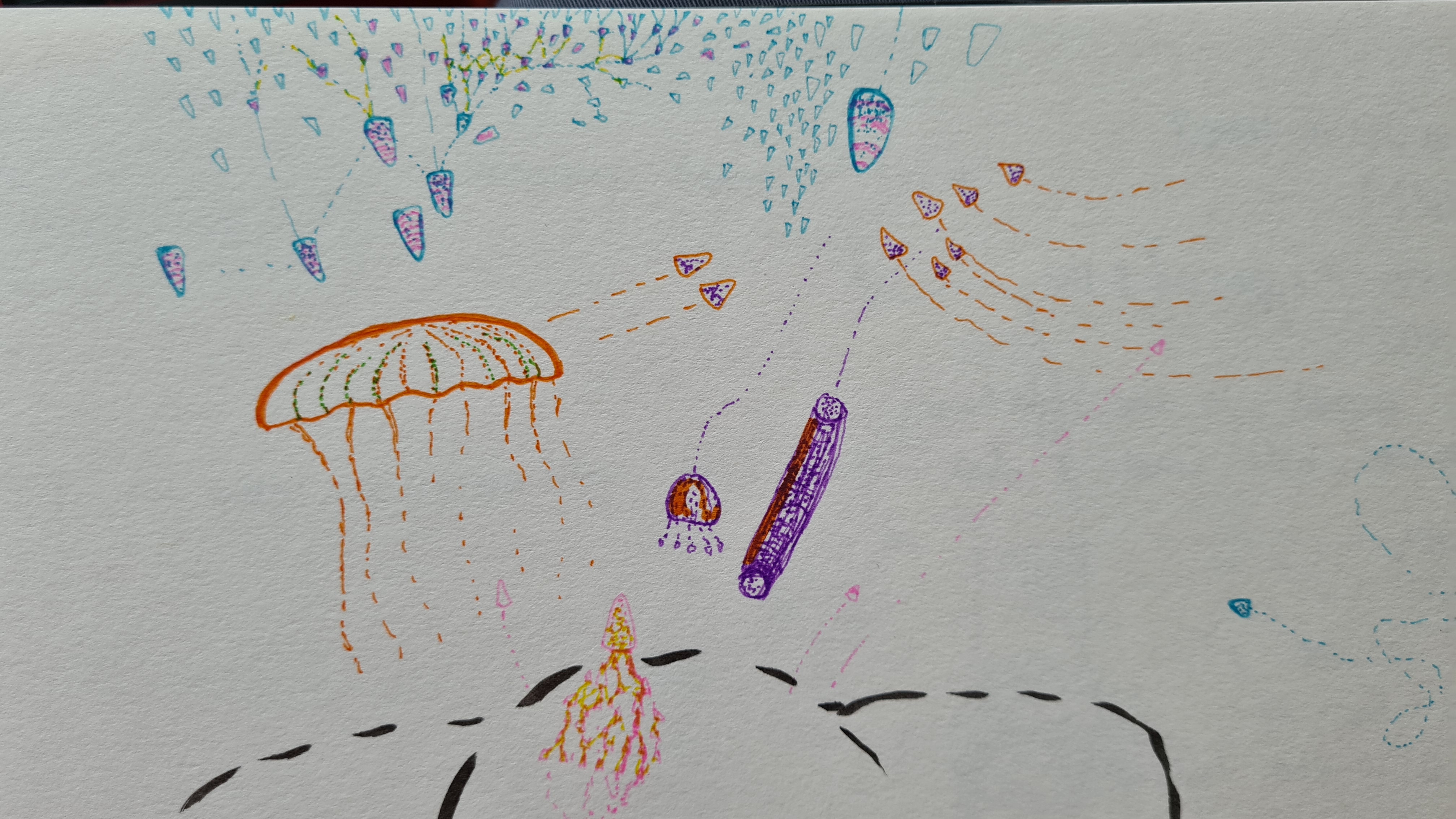
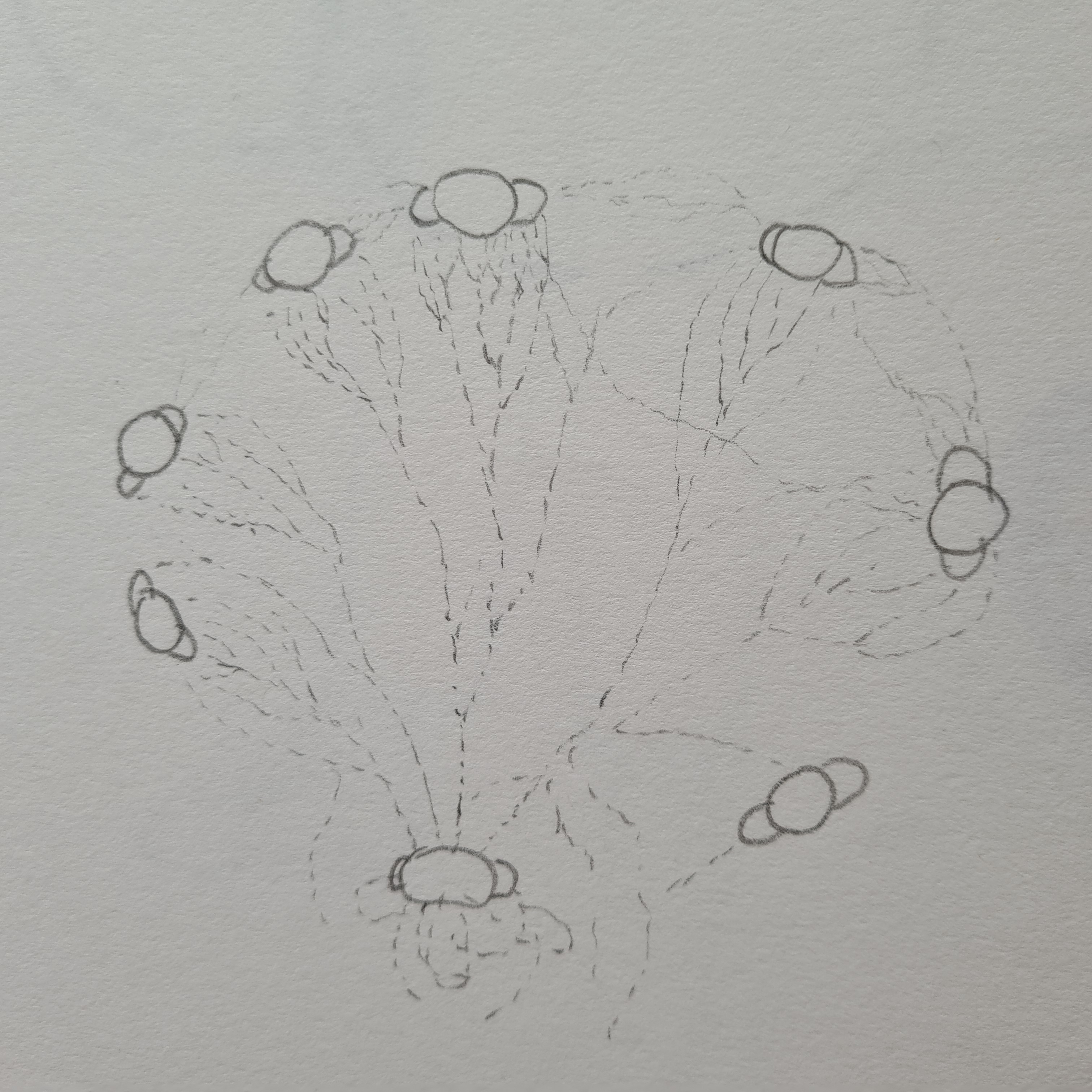
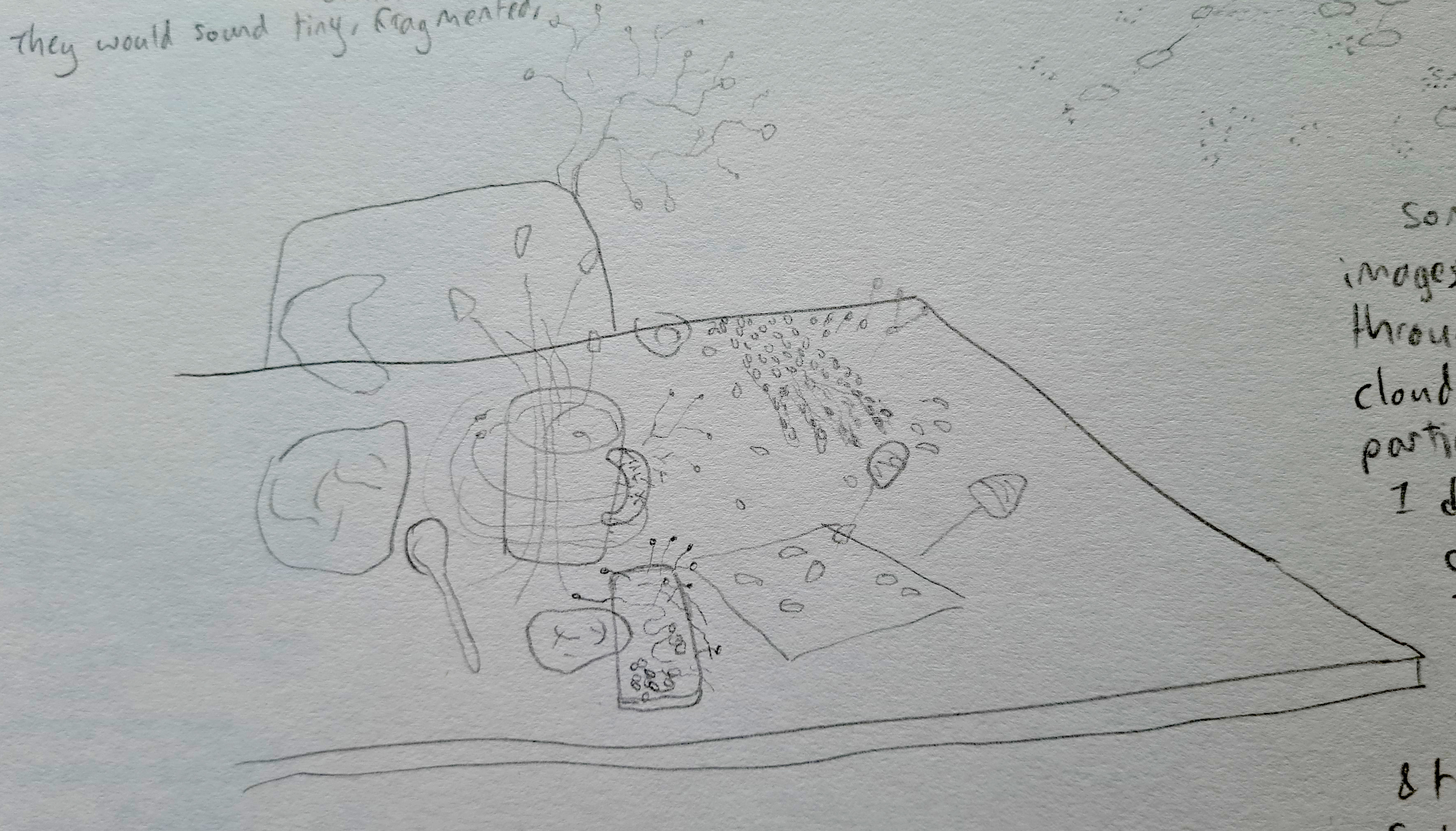
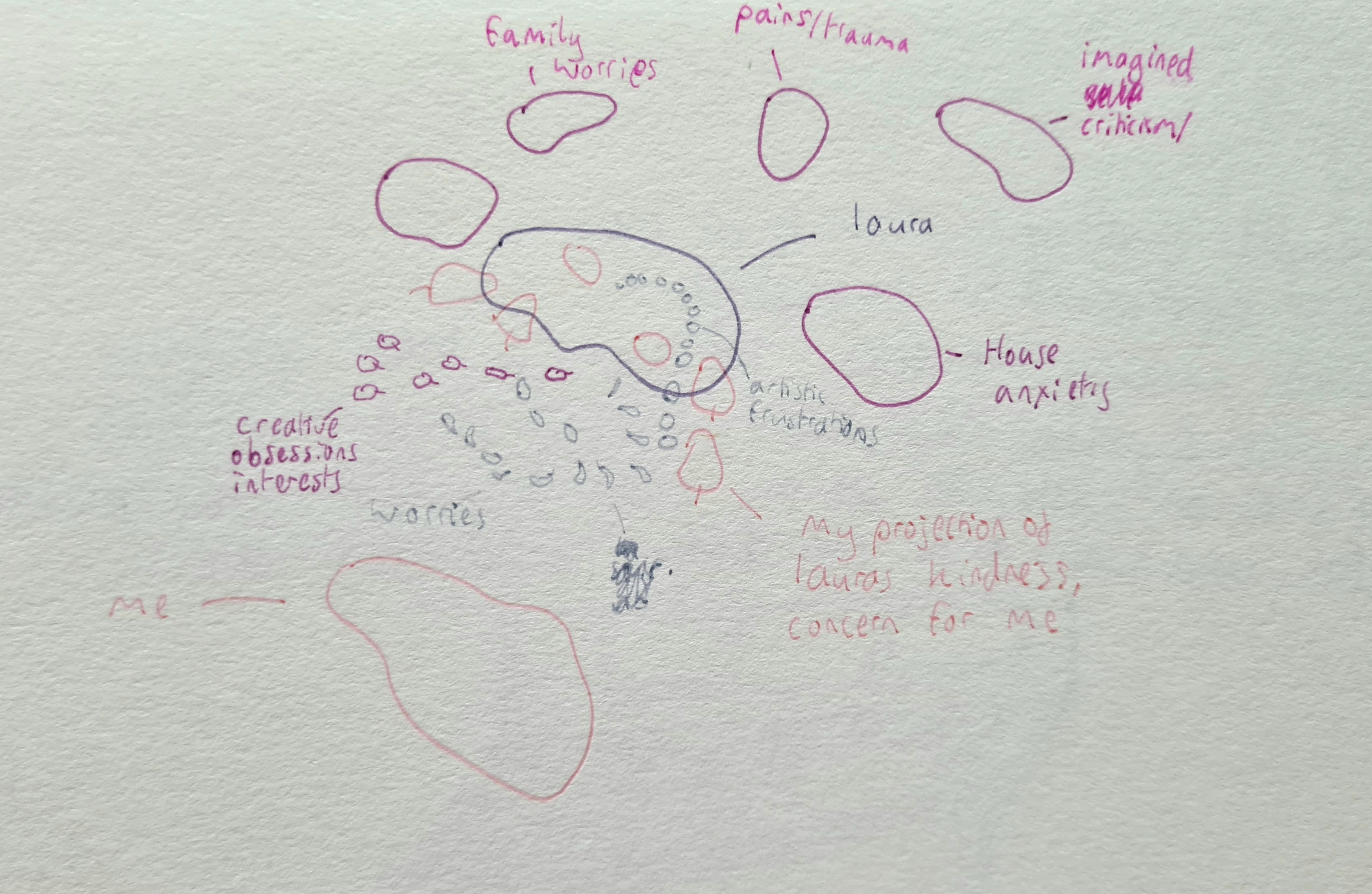
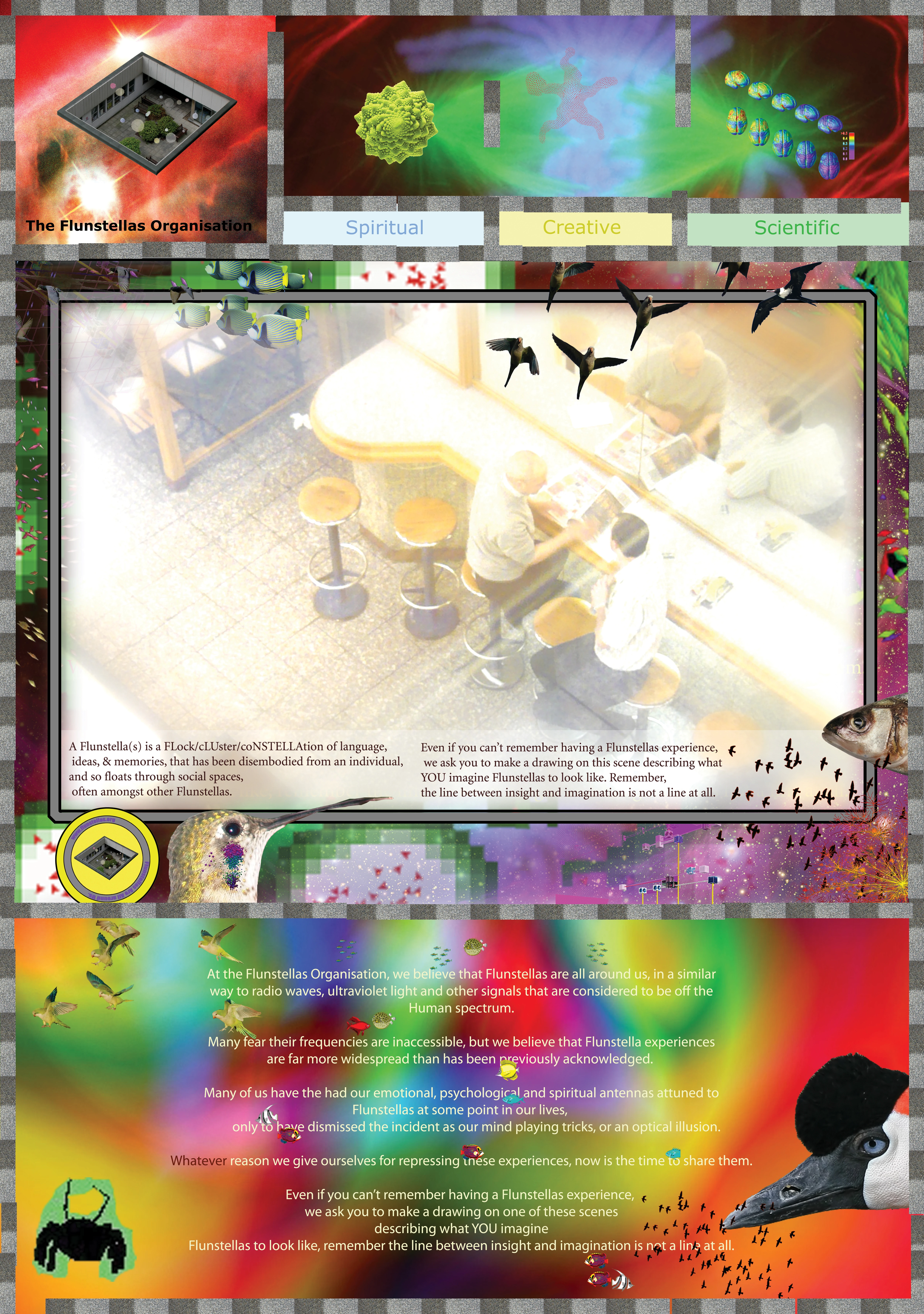
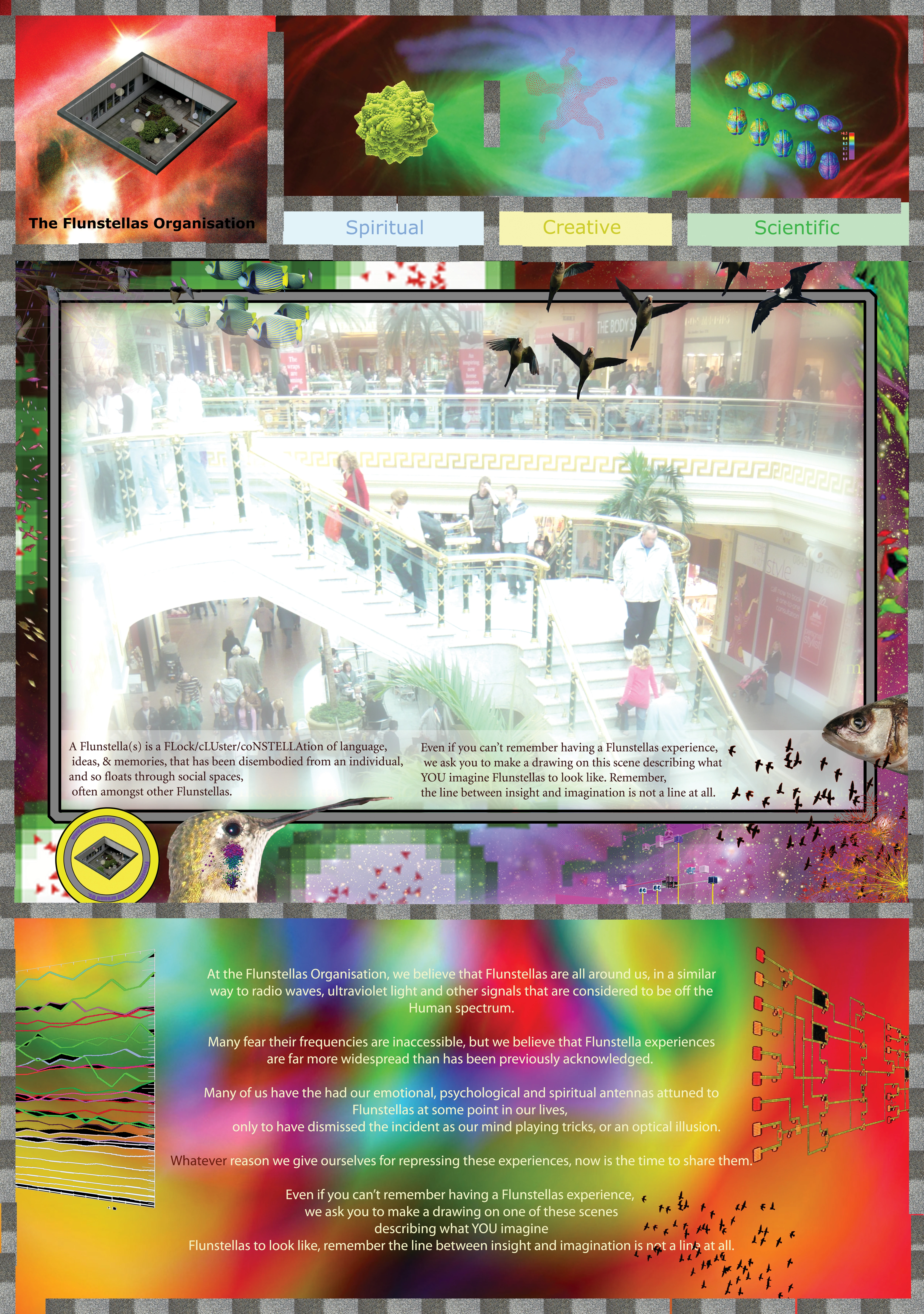
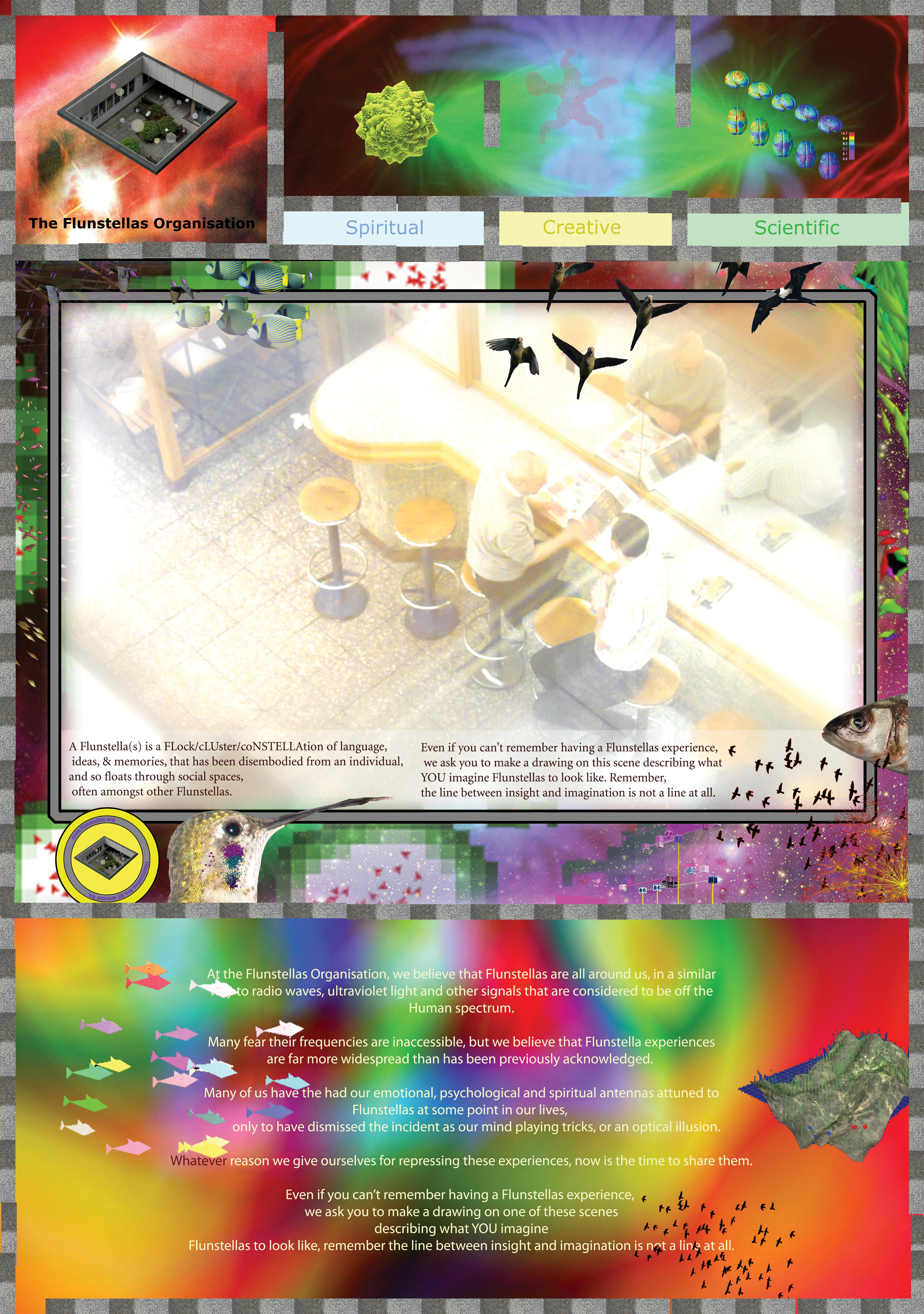
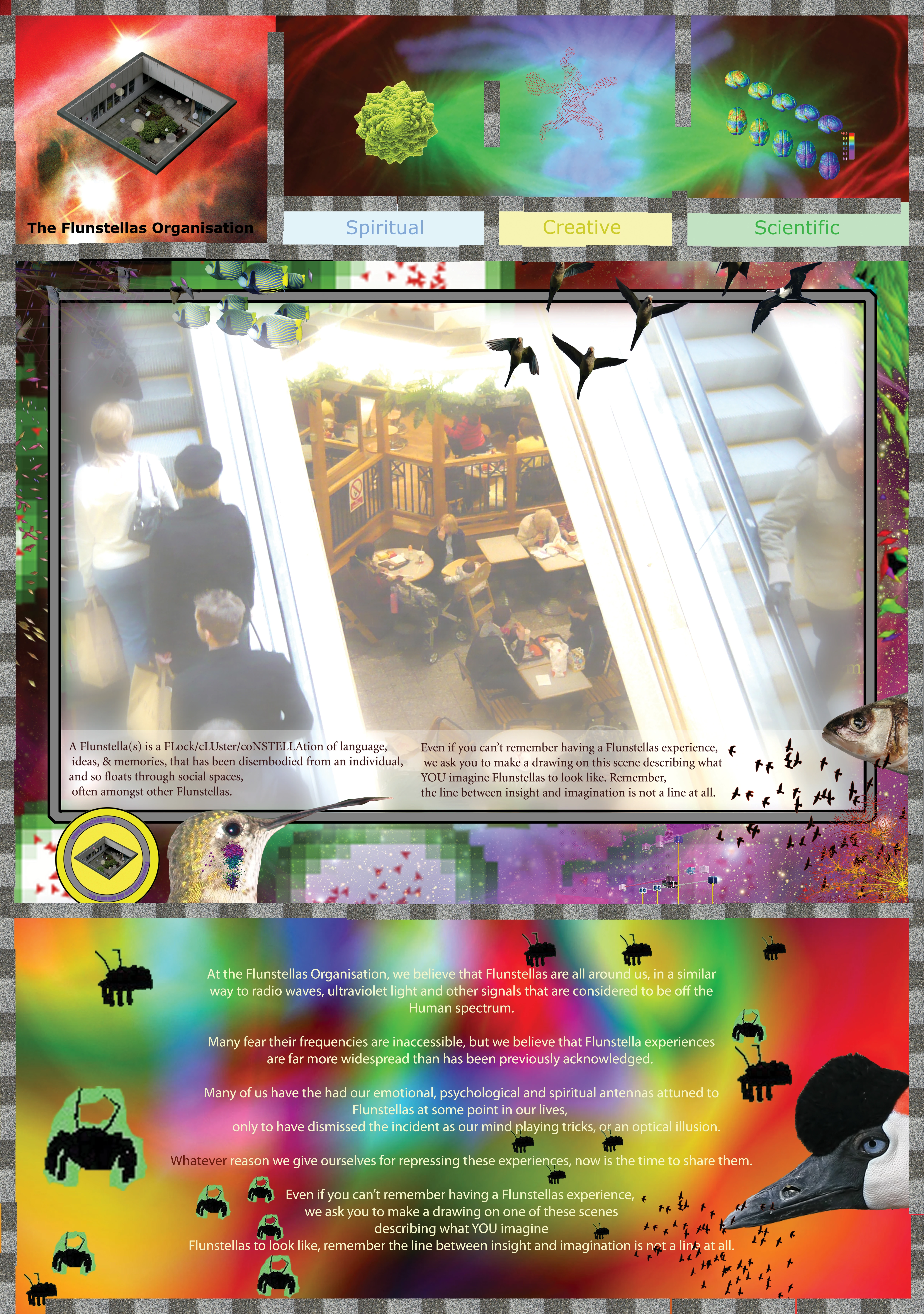
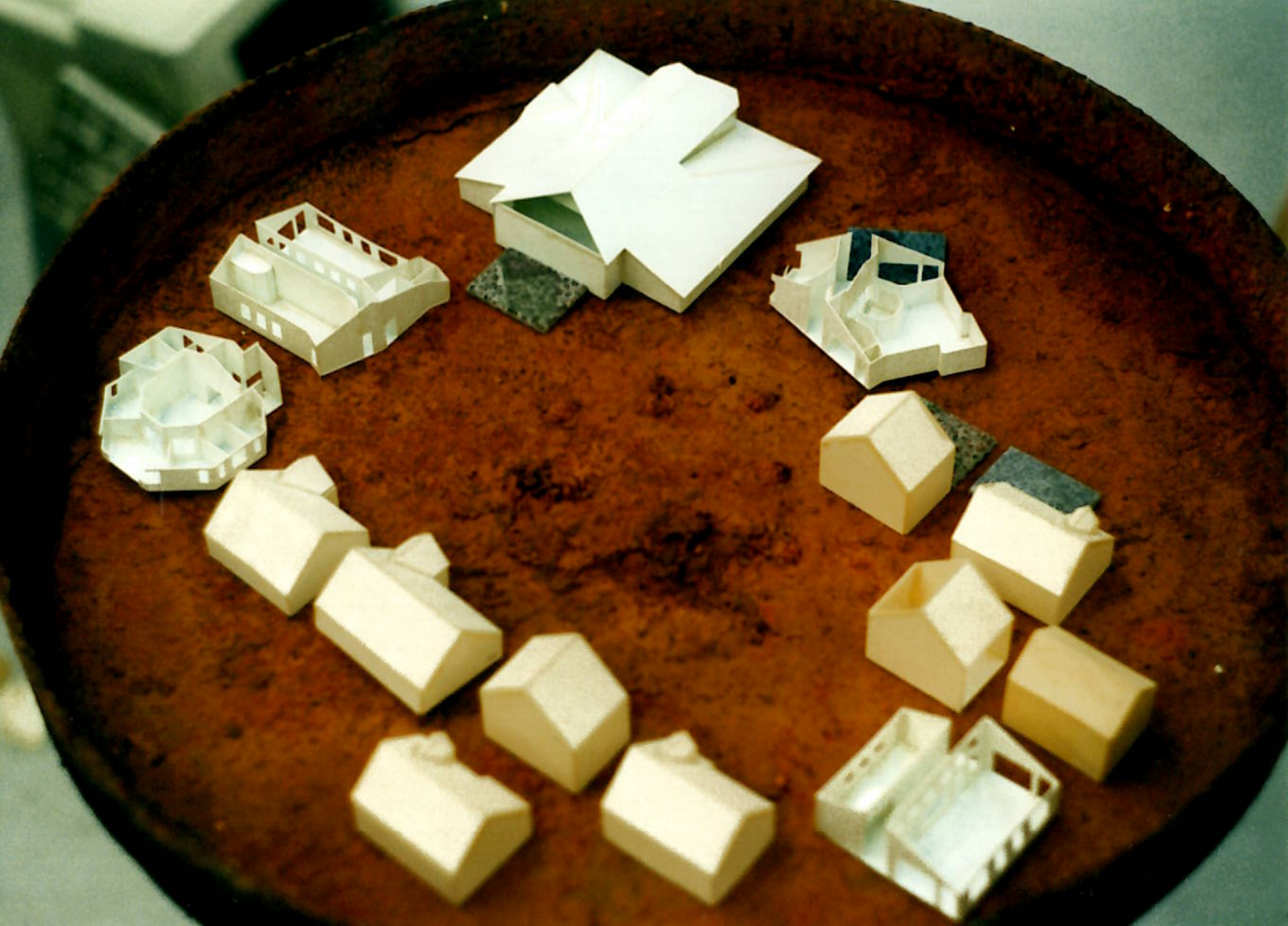
Flunstellas are flocks, clusters and constellations of ideas, emotions and memories that move through social spaces.

I make artworks to explore how Flunsetllas might appear. I have no idea what your ideas, memories or emotions might look like, so I'm always going to need to collaborate on this.

I collected witness report forms.


Here's Flunstellas I sensed around Liverpool.


Here's some I helped a group of teenagers make.


I created an exhibition at FACT with a group of teenagers.

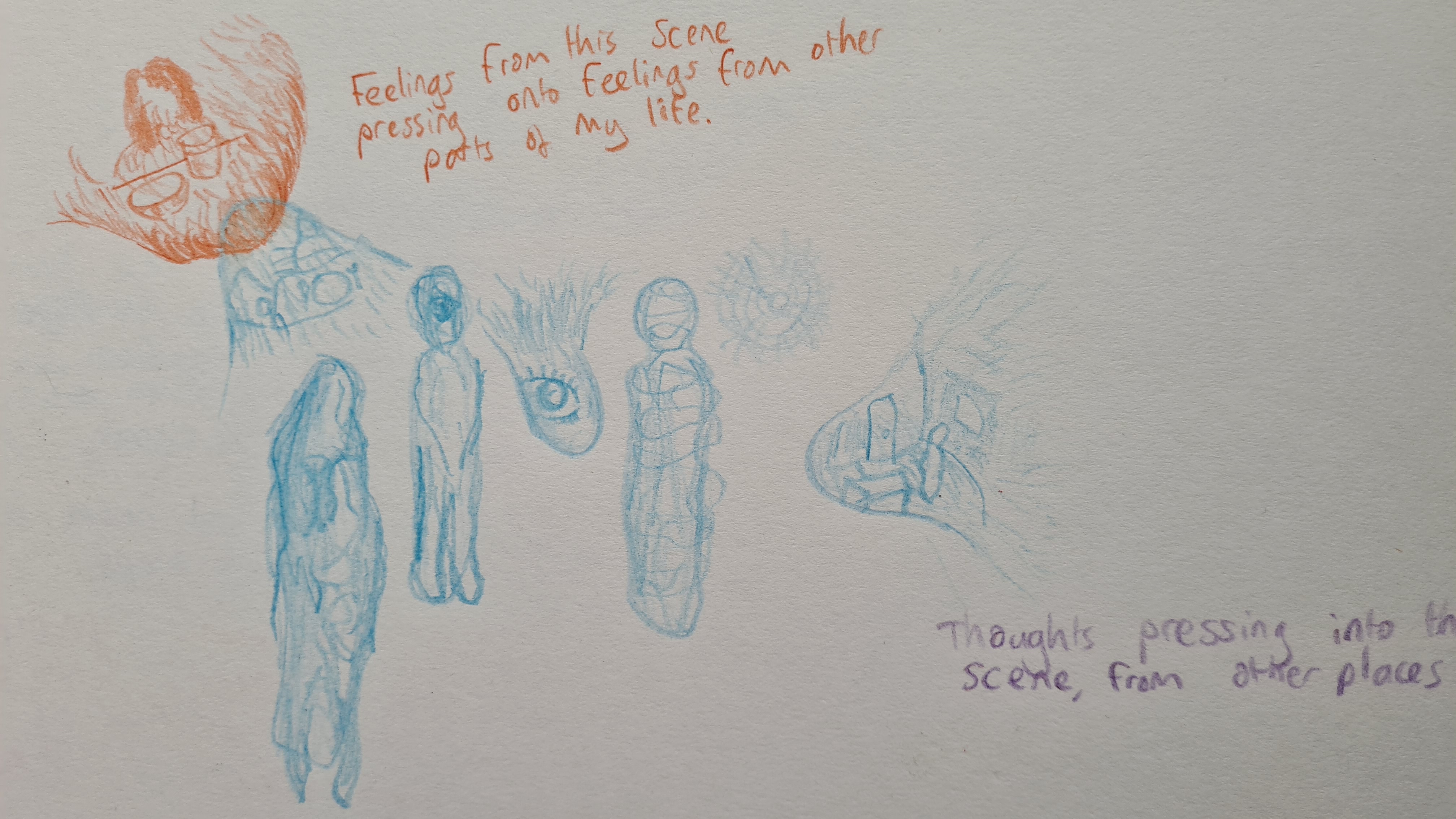
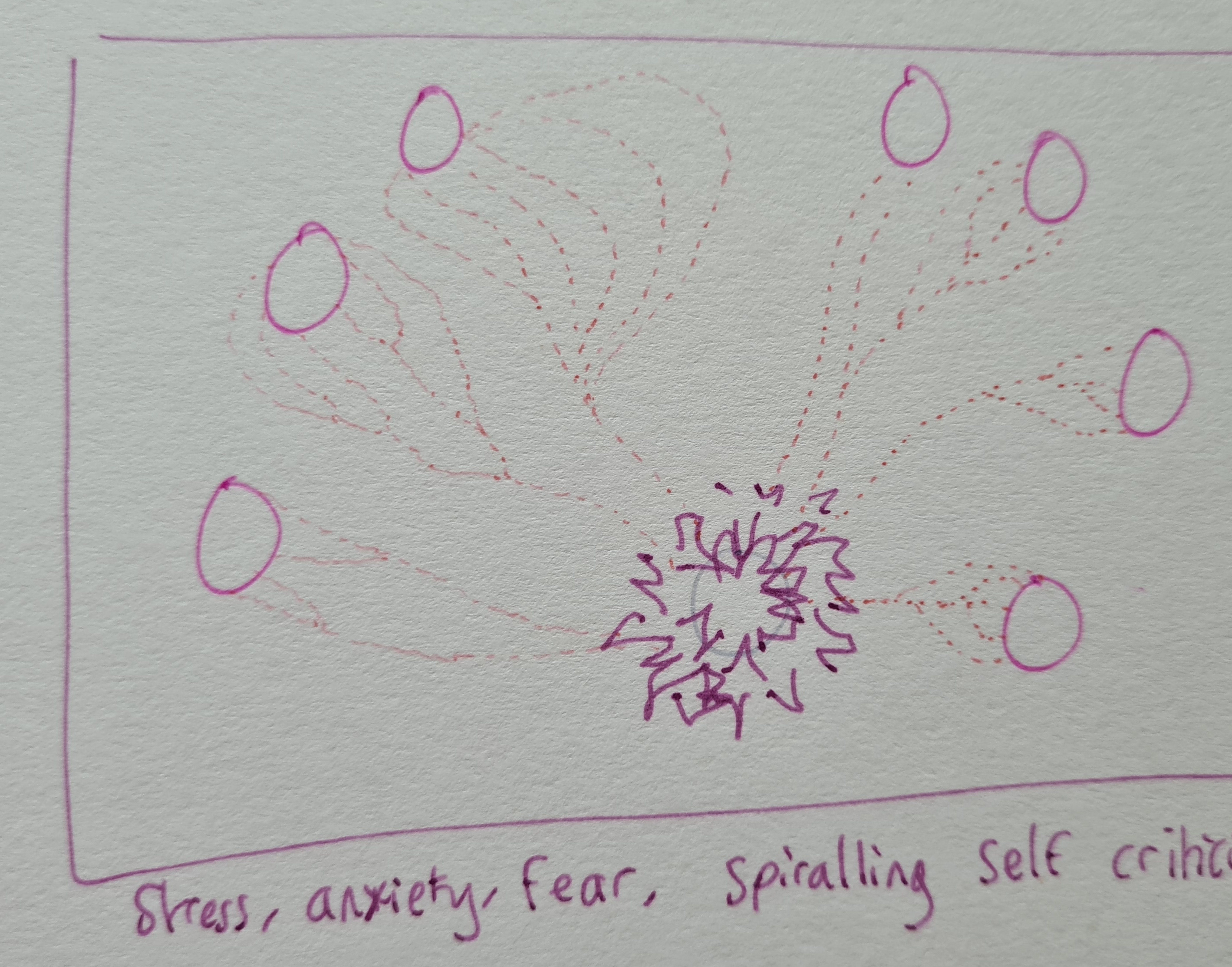
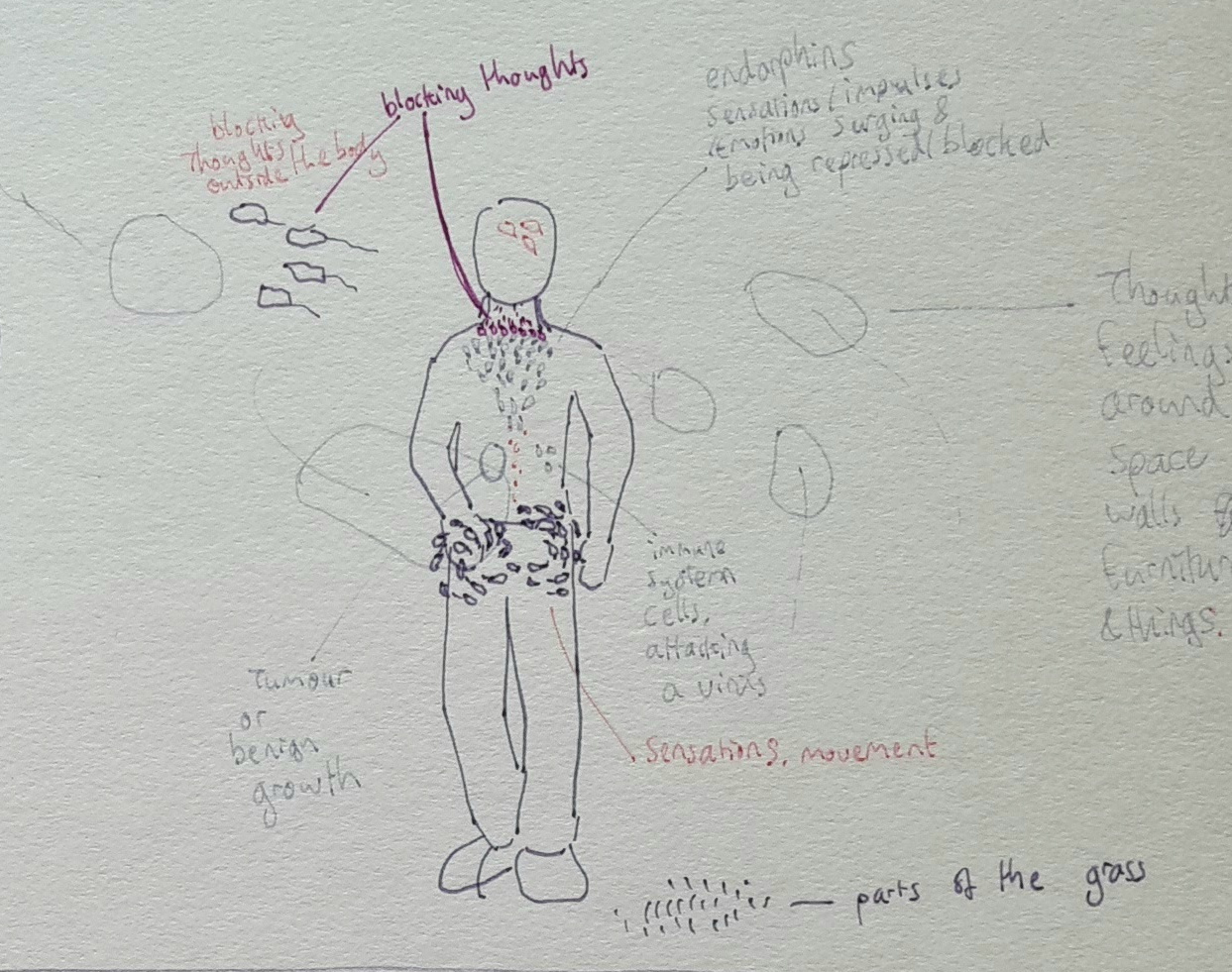
A lot of the time I get overwhelmed by the presence of other peoples thoughts and feelings, all these distortions in the space-time of the room emanating at me. Sometimes I get a sense of my thinking and feeling happening outside my body, moving around the room, communicating with other people's ideas, emotions and memories in ways I don’t understand. I used to think that was my super power, maybe it’s just anxiety. I think it’s double edged.
Multitudes of thoughts and feelings move within and between and all around us, reproducing in shop doorways, on the sofas we argue and make up on, the checkouts we queue at and the desks we work at. The fabric of places soak up things we try not to see. Emotions leak from our bodies, hanging mid-air or growing on the surface of things. The ways of thinking we feed with attention follow us around, showing us what we want to see, telling us what we want to hear and telling us off. Those we neglect grow wild, looking for safer habitats, attaching to other people, places and things instead of us. They arrive as ways snippets of being from other people, social media or TV shows from different times and places in my live, bringing needs of their own.

I try to stay in control, choosing which to hide or show, containing them or keeping them well away, but I can’t stop what I can’t feel. I keep a lot of my thinking trained, but I have this feeling that most pass between the layers of our skin, clothes, bones and walls.

See the Flunstellas website for more.


Led by artists Hwa Young Jung, Tim Brunsden, Colette Whittington & Neil Winterburn, Re-Dock supports artists and creatives to enrich their art/tech practice through exchange with communities and places, throughout the North of England and beyond. Previous directors include Sam Meech & John O’Shea (co-founding directors).
My role in the collective is to support artists to open out their practice to collaborate with others, especially young people. Swipe up to see some of the project I was lead artist on.

See the Re-Dock website for more.

Critical Kits, Symposium, book and card game, 2017

See more

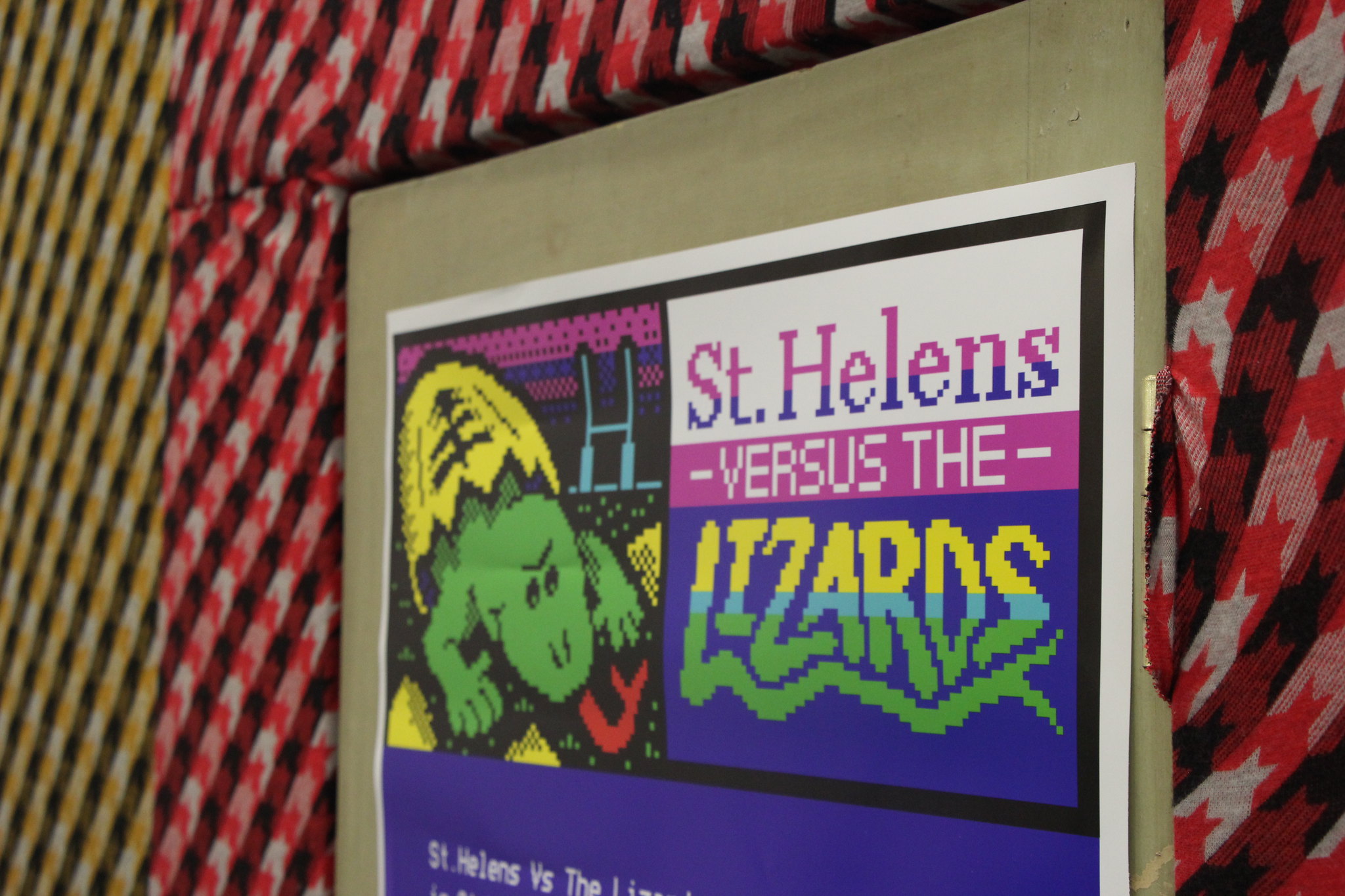
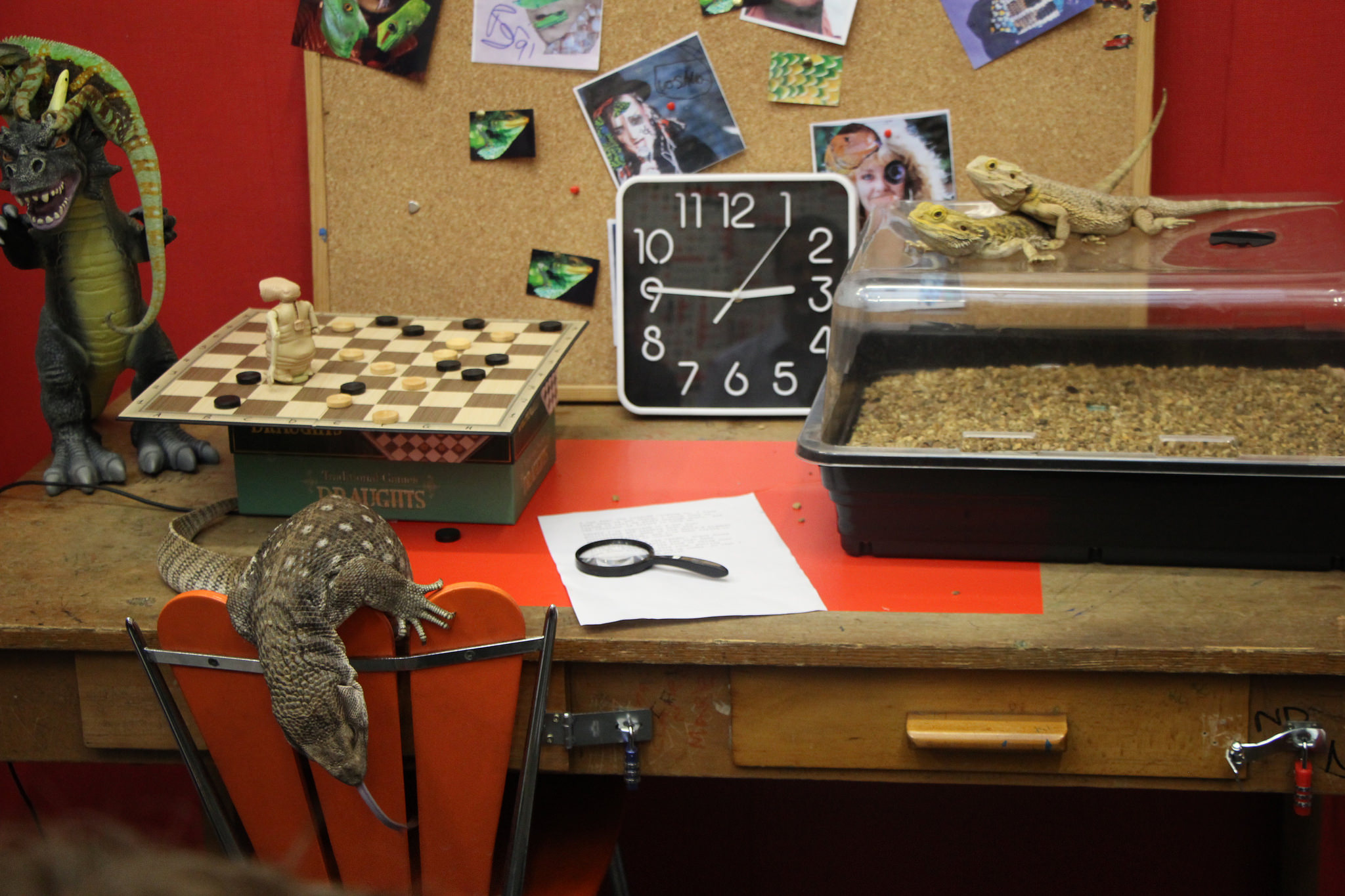
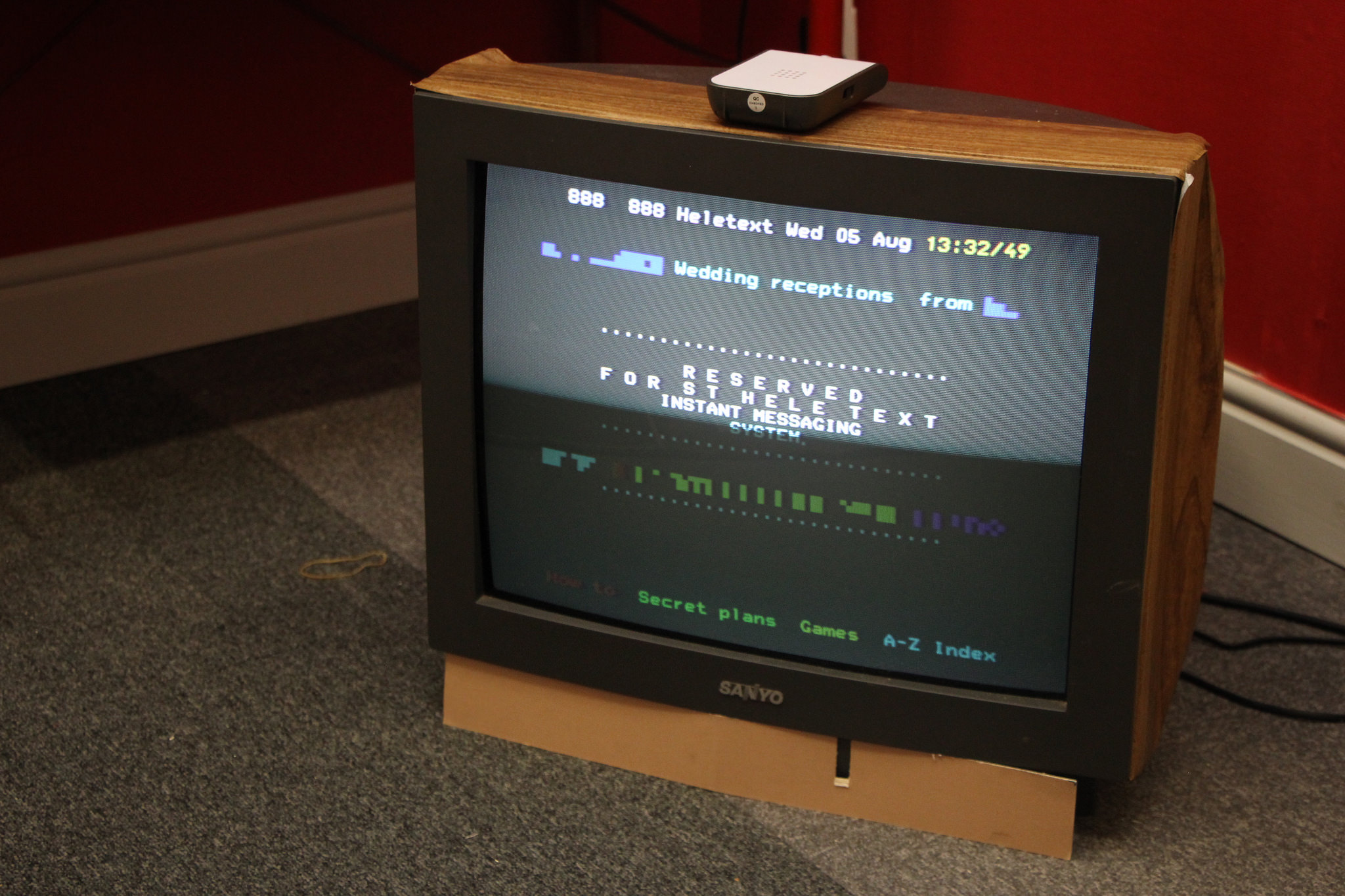
St.Helens' Vs the Lizards, Escape room at St.Helen's Library, 2014

See more

Thought Blobs, Slime & RFID based communication system, St.Helen's Library, 2014

See more

30 Years of, exhibition, 2013

See more

The Loop, computer game, 2009

See more

Critical Kits and How We Use Them


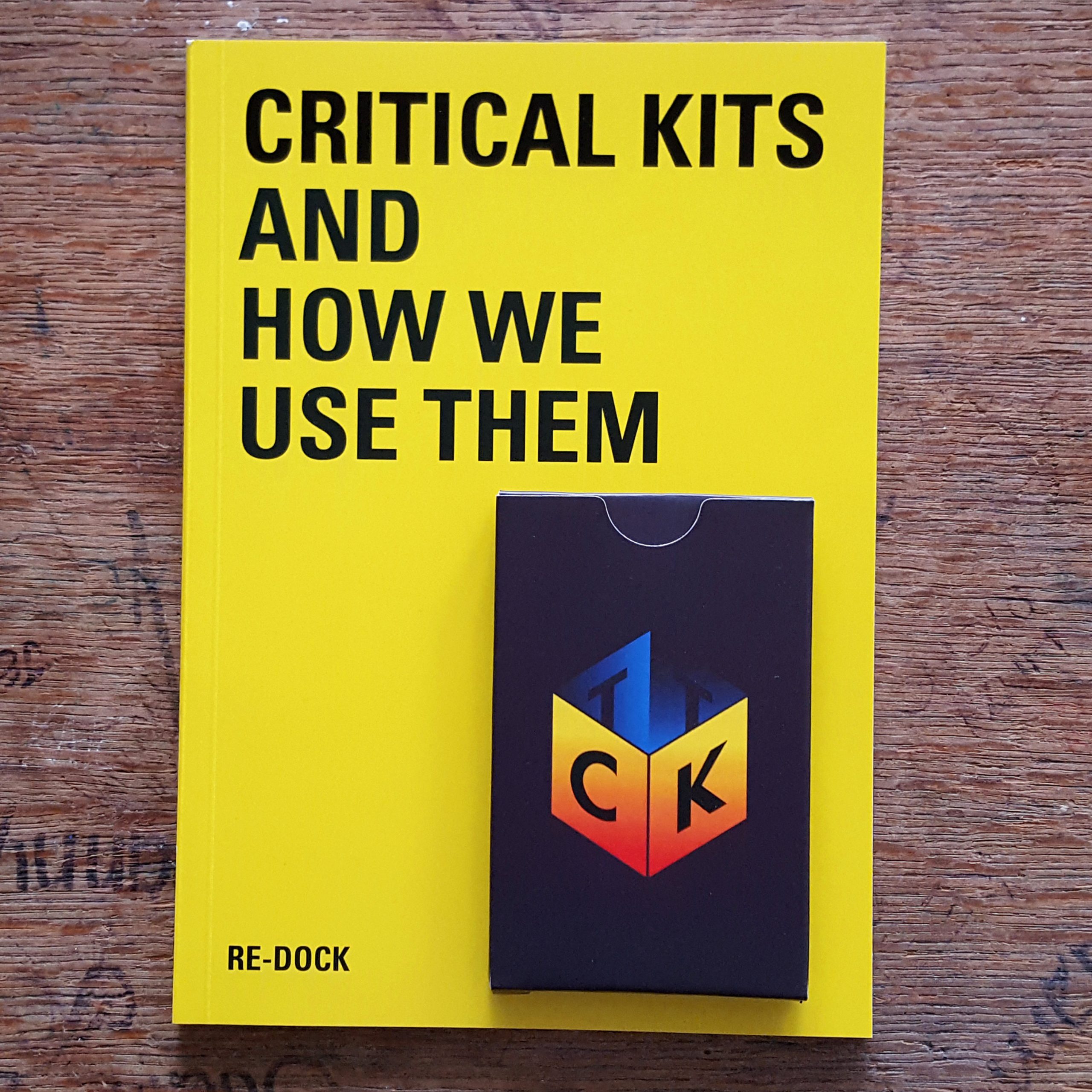
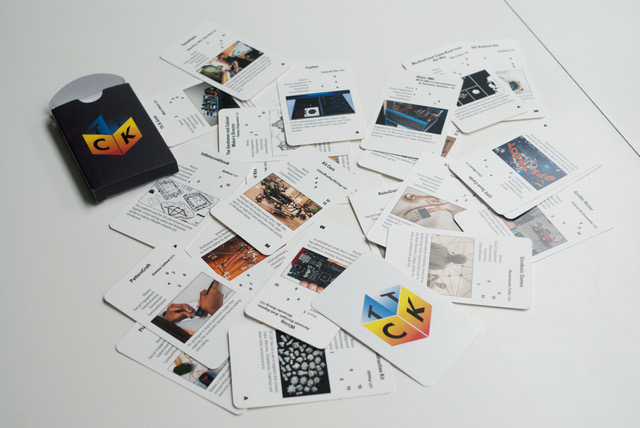
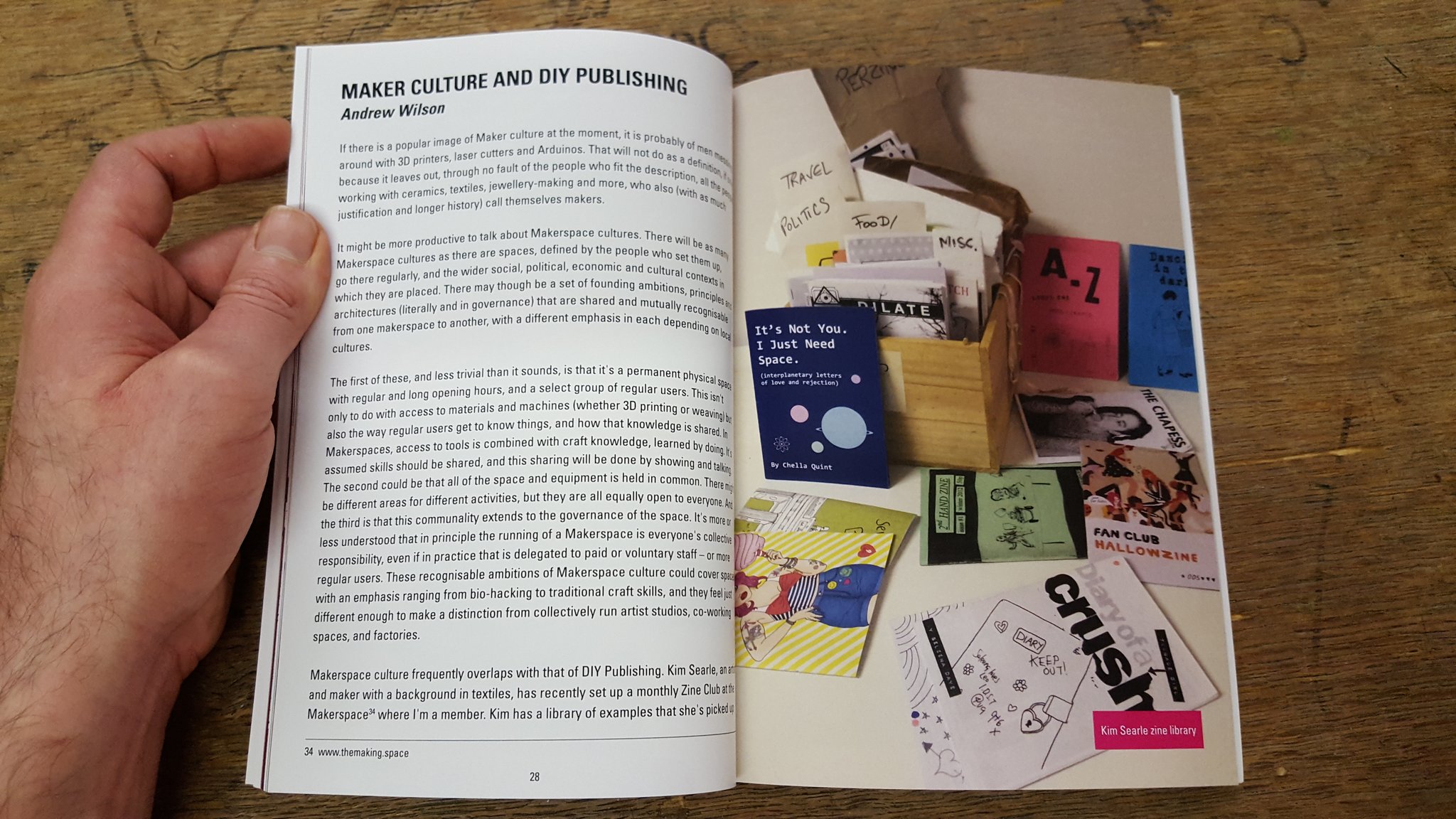
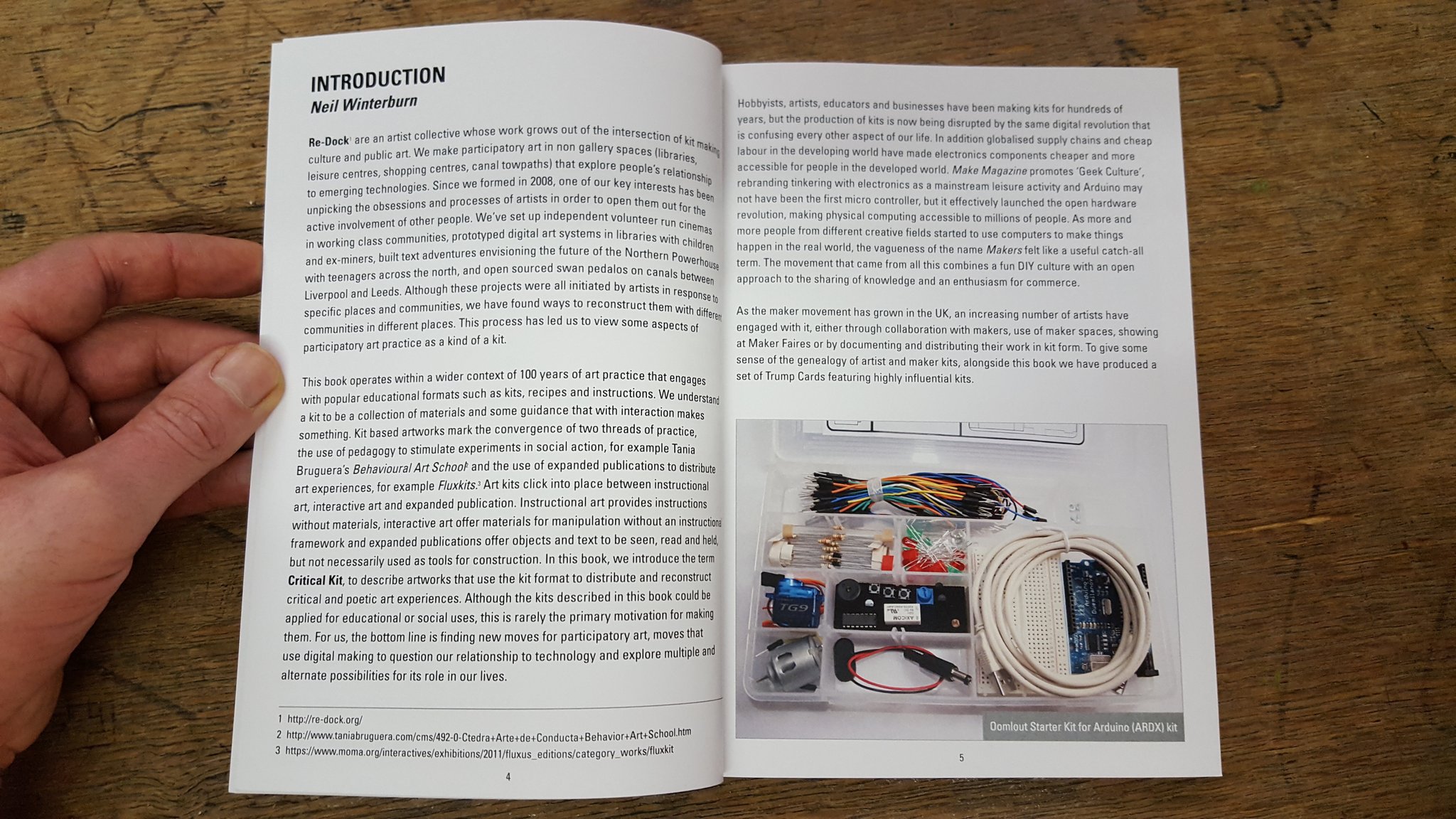
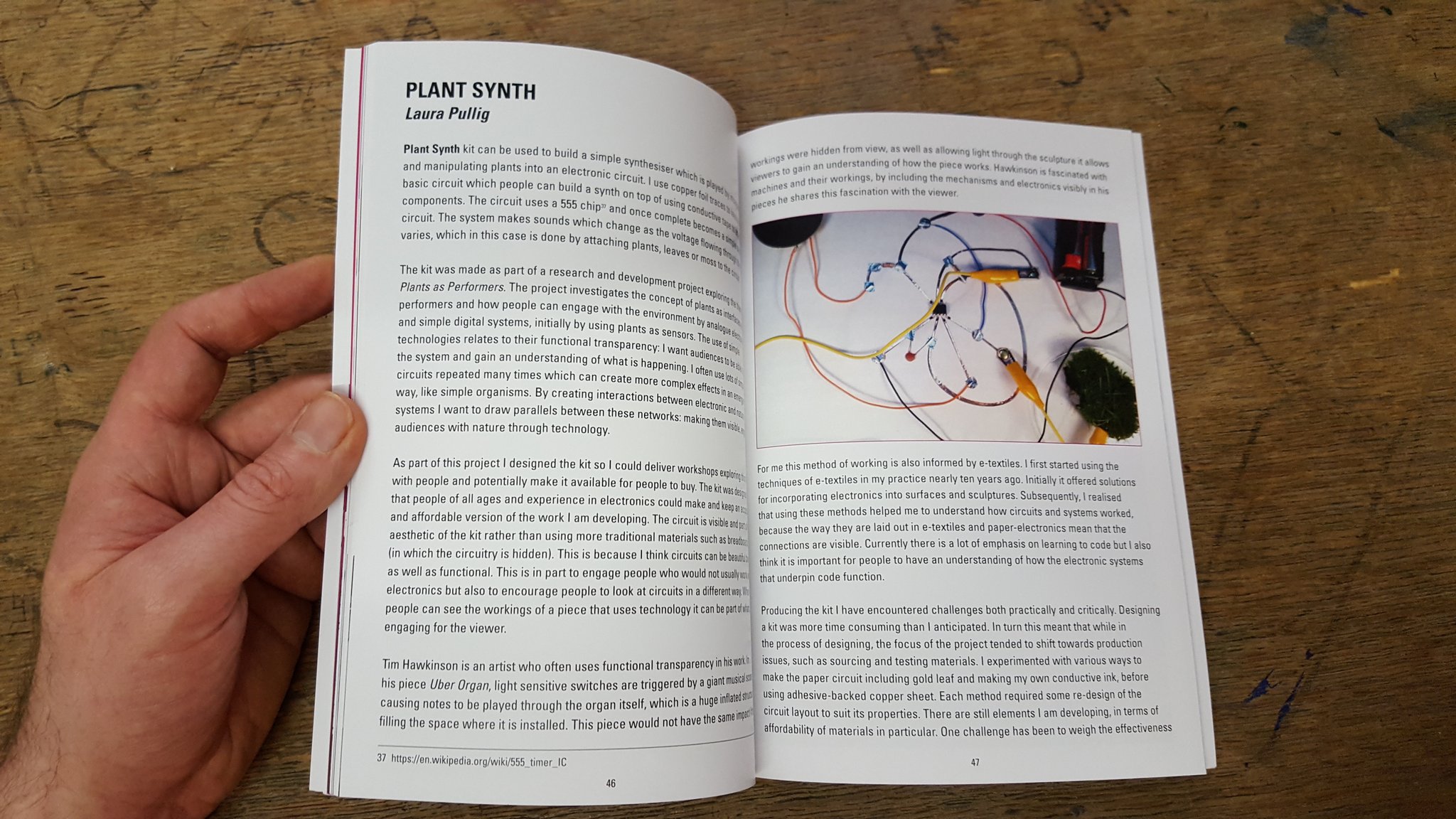
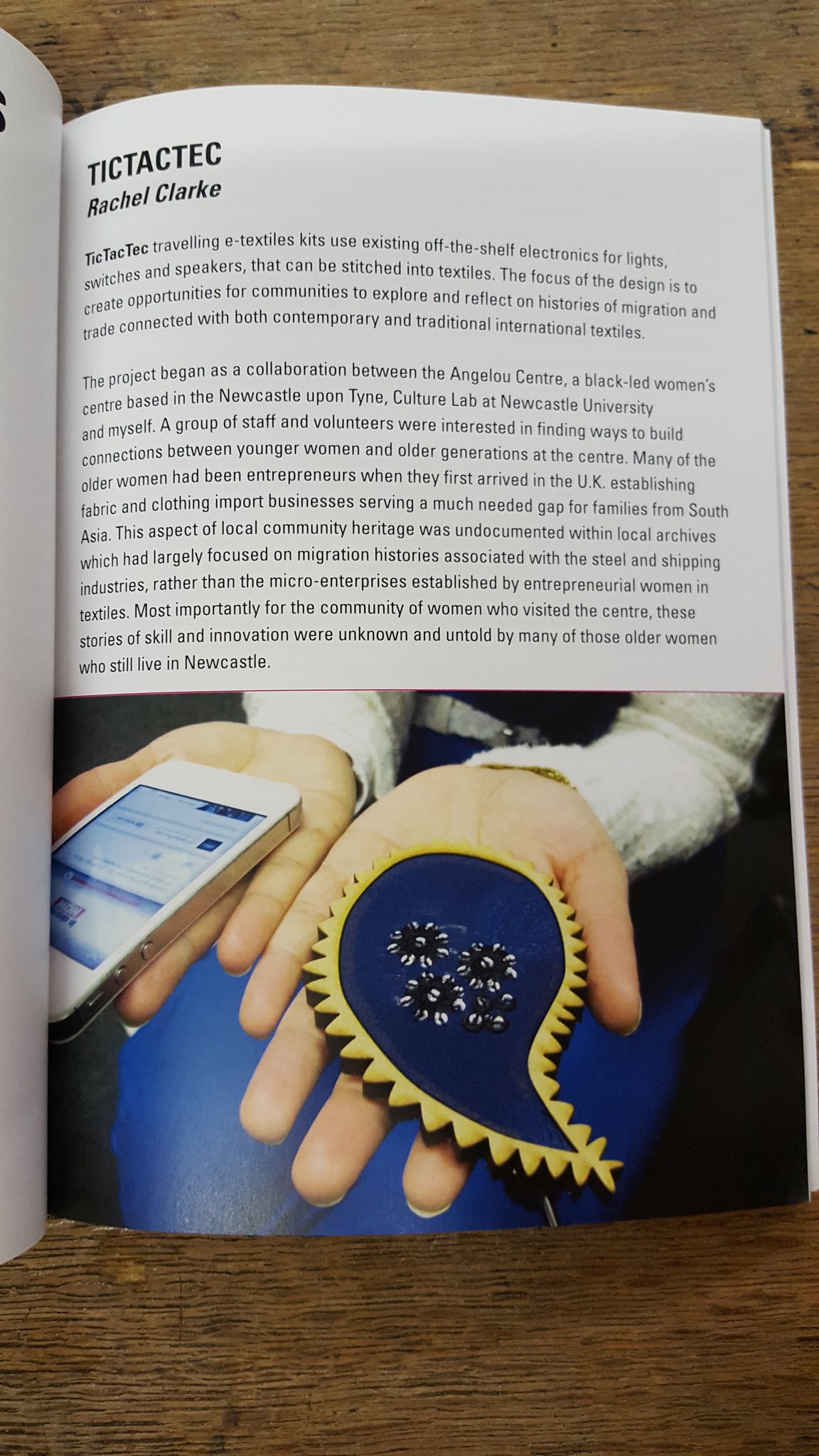
‘Critical Kits and How We Use Them’ is a book exploring artistic approaches to the production and distribution of kits. It was produced by Re-Dock, Torque publications and artists from across the North of England. I wrote the introduction to the book, chapters on prototyping digital art with young people and created the Critical Kits card game with Ross Dalziel & Hwa Young Jung. You can read & download the digital edition of the book here.

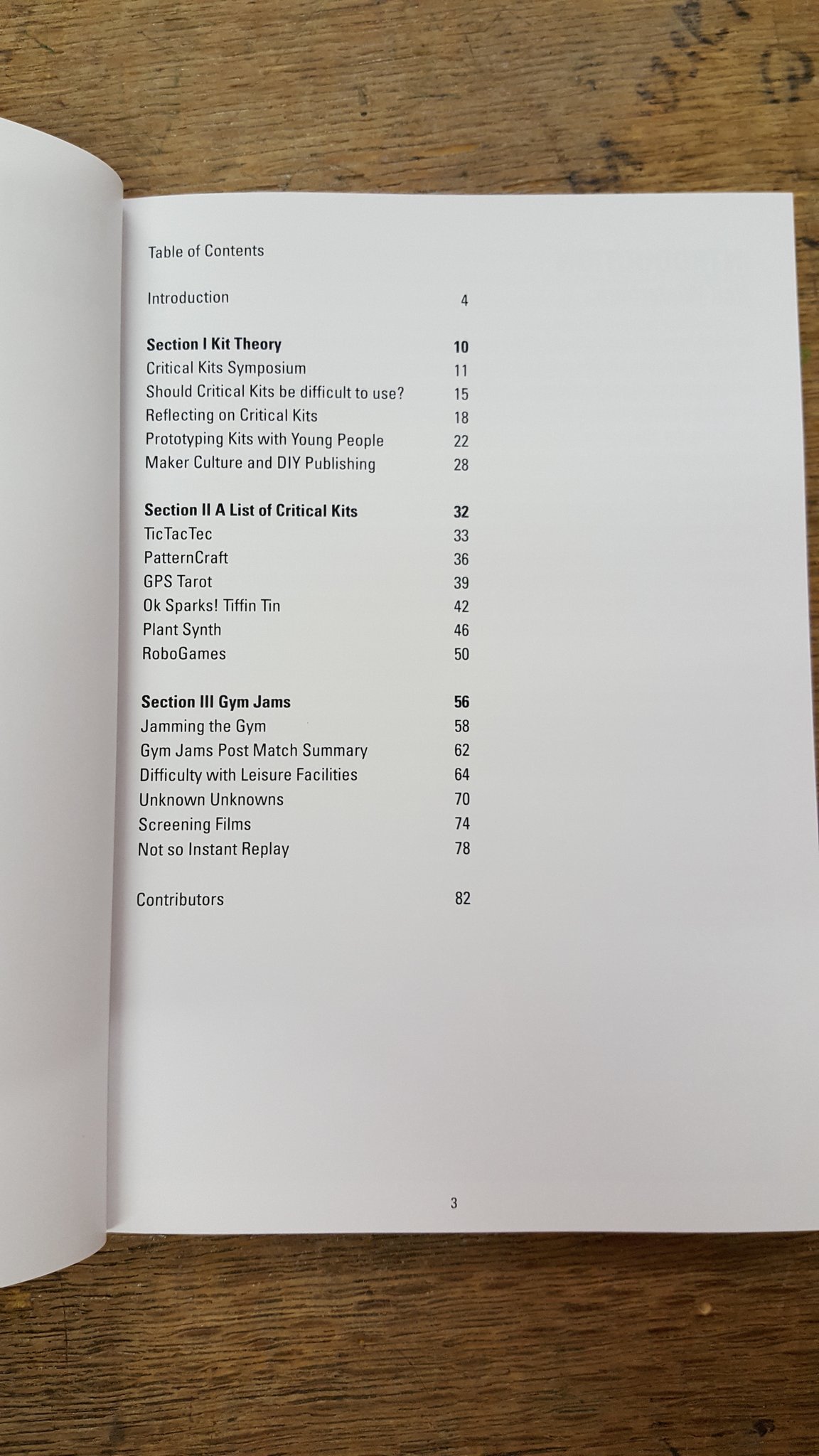
‘This book is about DIY culture and how it meets participatory, inclusive and community-based forms of creative practice. Critical kits are toolboxes, resources, instructions for how to make great, or simply interesting, things happen with technology. But they also ask that we question why, and to be aware of the network of effects technologies participate in. Critical Kits includes a selection of case studies from artists and makers working in the kit form, a series of essays on the theory, historical and contemporary contexts for kit making and distribution, and an in depth look Gym Jams, a kit-based project which took place in a public leisure centre. It is designed to be useful for artists, makers, students of art-tech work, and anyone interested in current participatory and technology practices.’

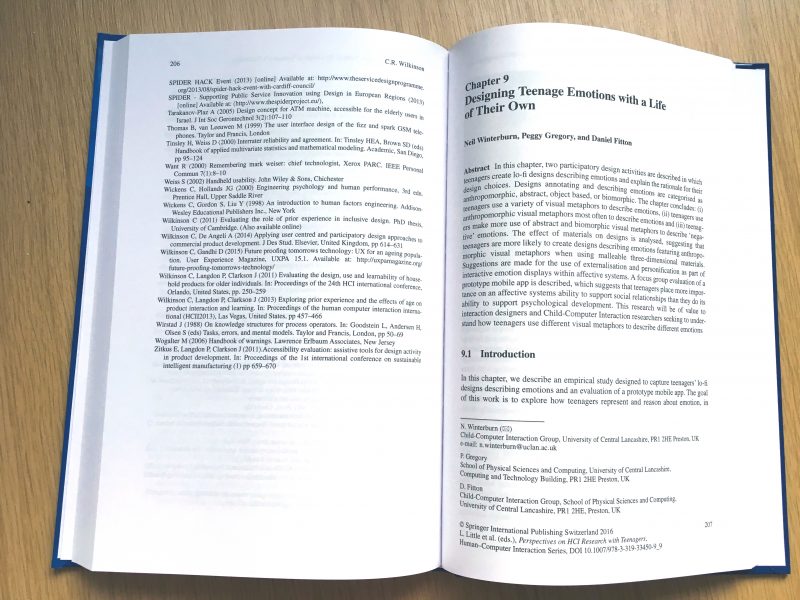
Designing Teenage Emotions with a Life of Their Own - Chapter in the Springer book, Perspectives on HCI research with teenagers.

photo of a a books pages
You can find the chapter here

"In this chapter, two participatory design activities are described in which teenagers create lo-fi designs describing emotions and explain the rationale for their design choices. Designs annotating and describing emotions are categorised as anthropomorphic, abstract, object based, or biomorphic. The chapter concludes: (i) teenagers use a variety of visual metaphors to describe emotions, (ii) teenagers use anthropomorphic visual metaphors most often to describe emotions and (iii) teenagers make more use of abstract and biomorphic visual metaphors to describe ‘negative’ emotions."

Winterburn, N., Gregory, P., Fitton, D. (2016). Designing Teenage Emotions with a Life of Their Own. In: Little, L., Fitton, D., Bell, B., Toth, N. (eds) Perspectives on HCI Research with Teenagers. Human–Computer Interaction Series. Springer, Cham. https://doi.org/10.1007/978-3-319-33450-9_9

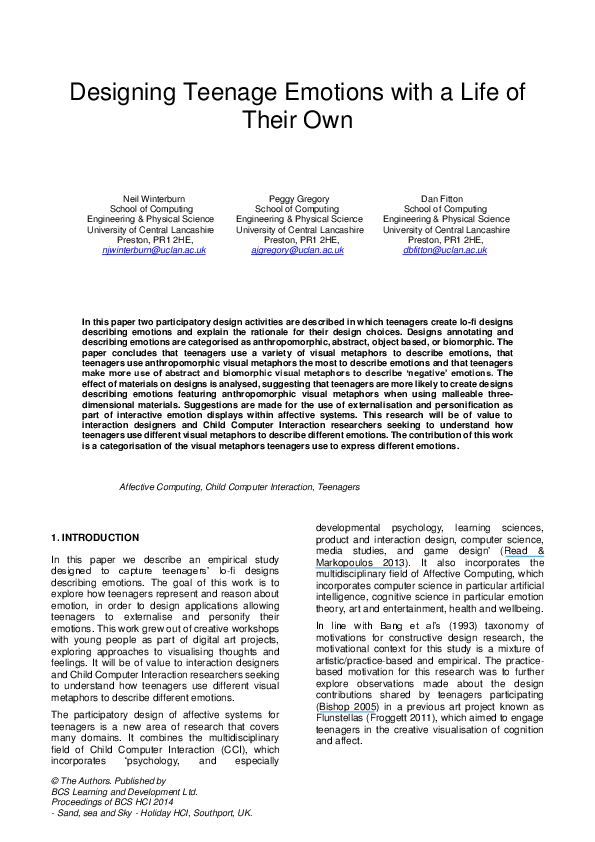
Designing Teenage Emotions with a Life of Their Own - article

academic article screenshot of first page
I was 1st author on a full paper describing the participatory design of emotion displays with teenagers. The paper titled ‘Teenage Emotions with a Life of Their Own’ was published and presented at the British Human Computer Interaction Conference 2014.

View the paper on the ACM Digital Library.

Download Teenage Emotions With a Life of Their Own as .pdf .

← back


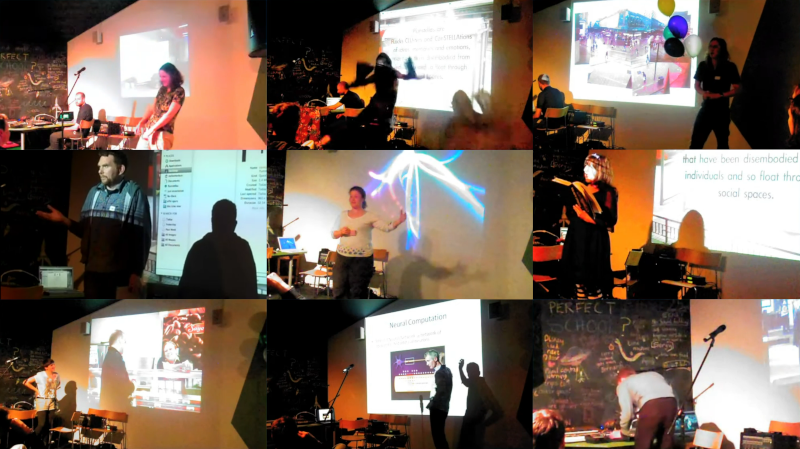
Flunstellas and the future of Education


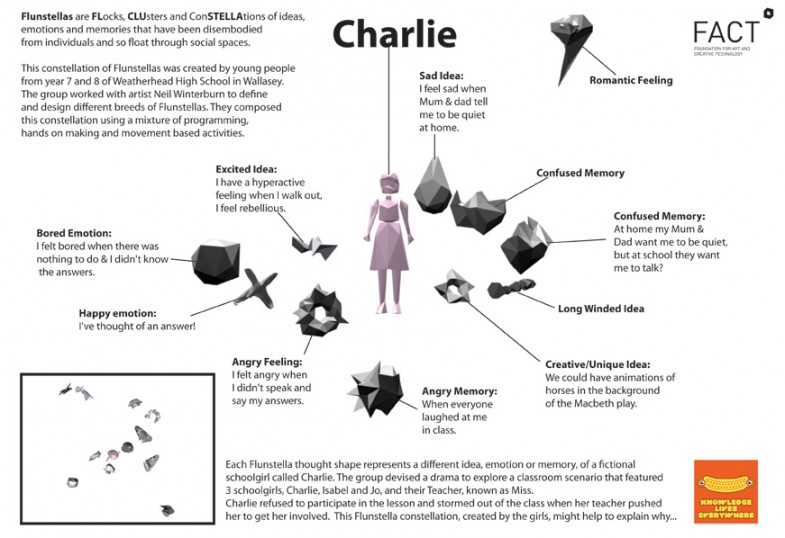
Charlies Thought Constellation sculpture at FACT made with young people from Weatherhead High School.


Charlies Flunstellas constellation diagram.

More about Flunstellas models

← back

Example of an image with a link to a larger version.

More about Flunstellas the starter set models

← back

Example of an image with a link to a larger version.

← back


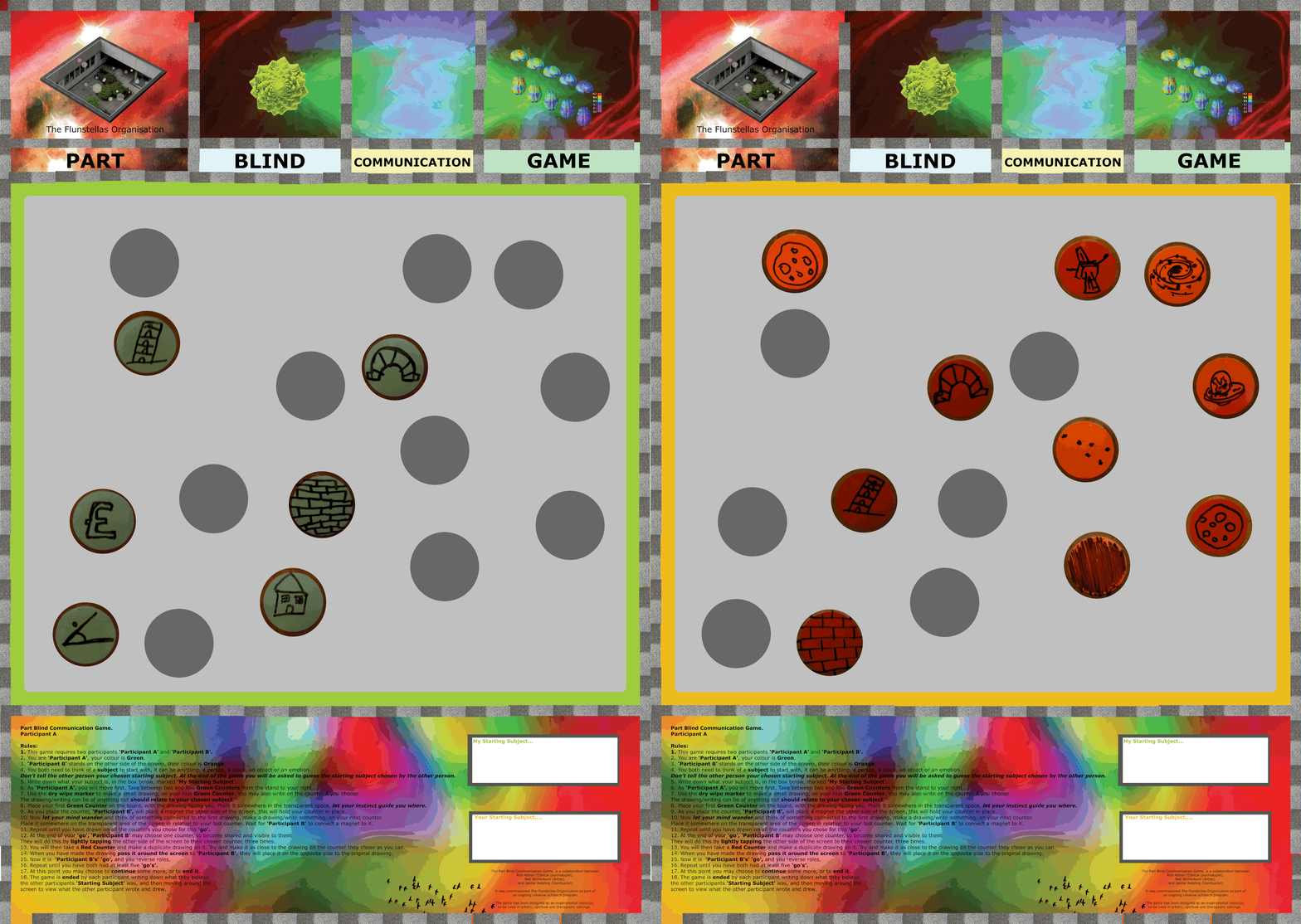
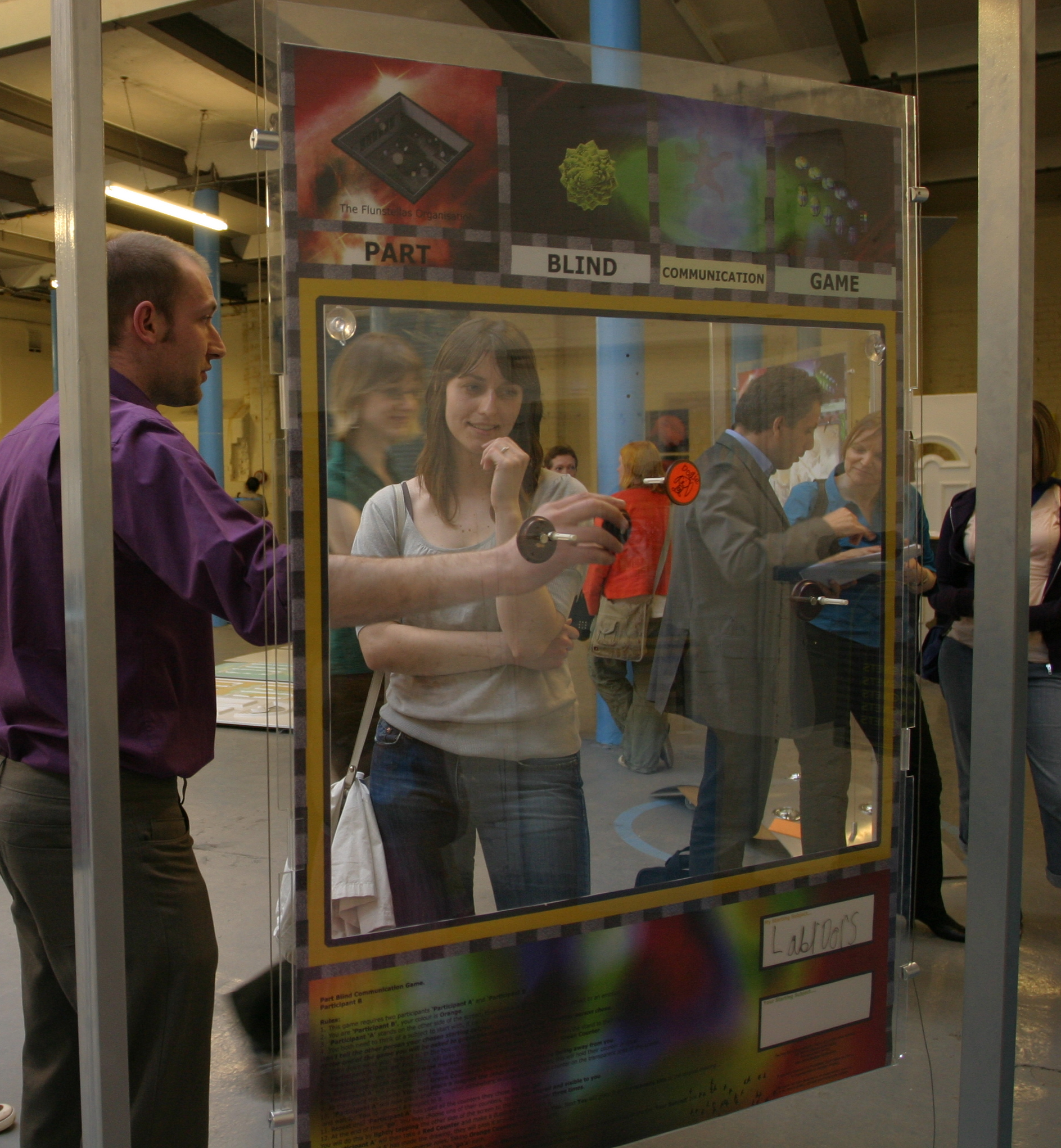
Part Blind Communication Game


Part Blind Communication Game plays with what we do and don't share when we're talking to each other.


Rules
1) Each player stands either side of the plexiglass
2) Each player picks a colour of counters to use
3) Each player thinks of a secret - the aim of the game is to guess the other persons secret.
4) Player 1 picks up 3 counters & makes a drawing on each counter of something they asociate with their secret and uses magnets to place them on the plexiglass with the drawings facing themselves.
5) Player 2 points to one of the counters, player 1 turns the counter around to reveal the drawing.
6) Player 2 makes 3 drawings, player 1 points to 1 & player 2 reveals it.
7) Players repeat the process, chatting as they go.
8) Players can guess the other persons secret as many times as they like.
9) Keep going until either a player correctly guesses the others secret or you run out of counters.

The idea is to make the unsaids visible.


More about Chemo Cards

← back

Example of an image with a link to a larger version.

More about Paaaarty

← back

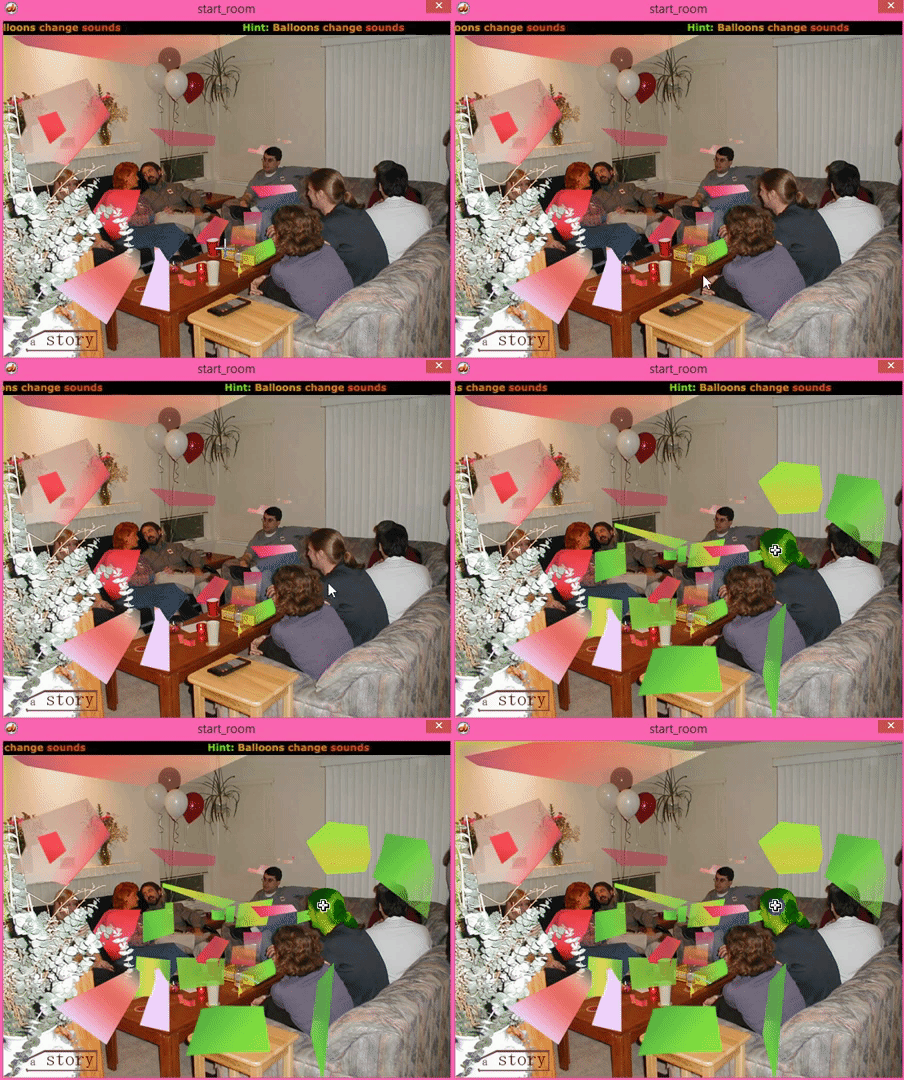
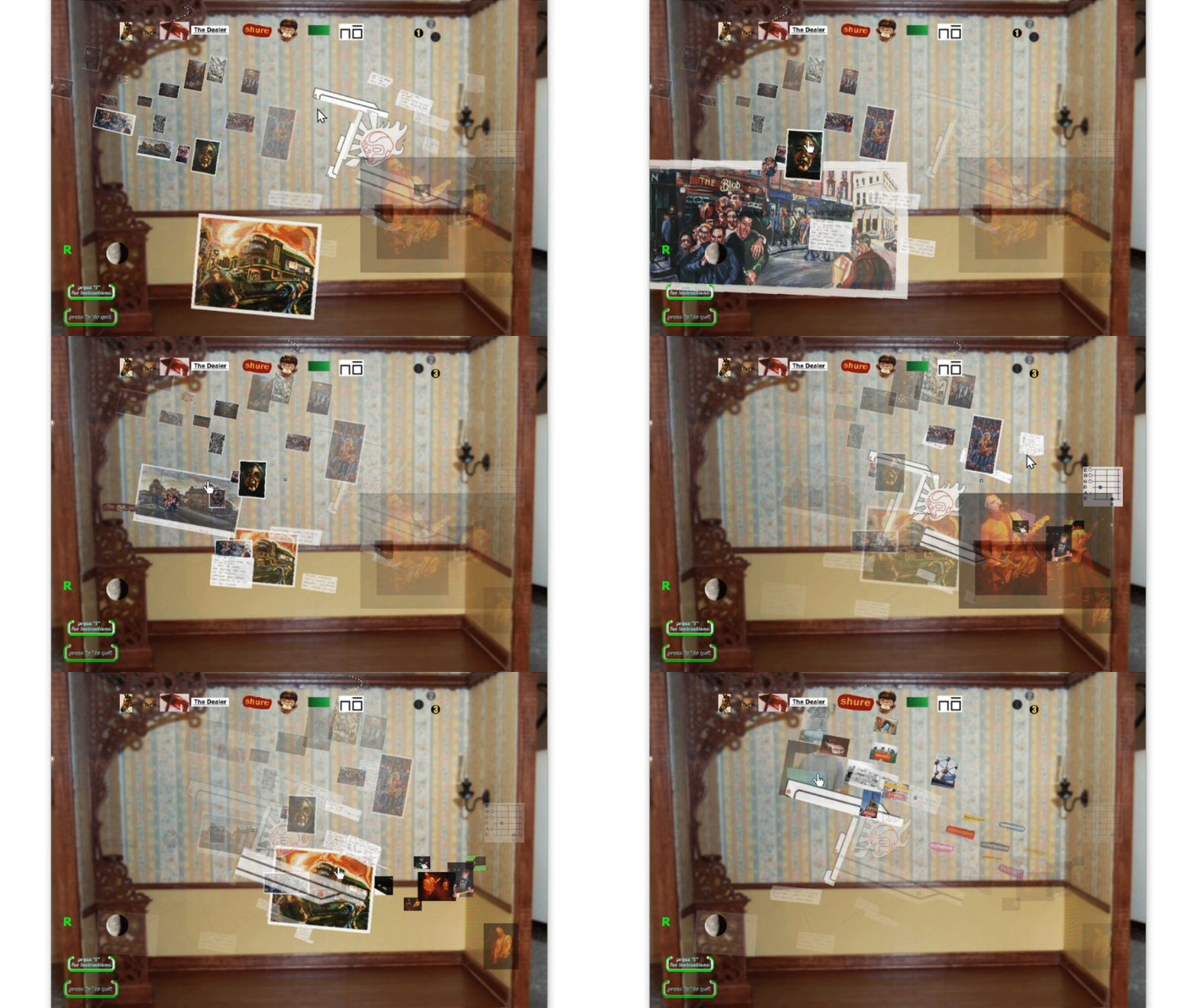
Screencapture of Paaaarty - this part has a story about an out of body experience I had in an indieclub after watching a band.

More about Why Don't You?

← back

Interactive cd-rom screenshot


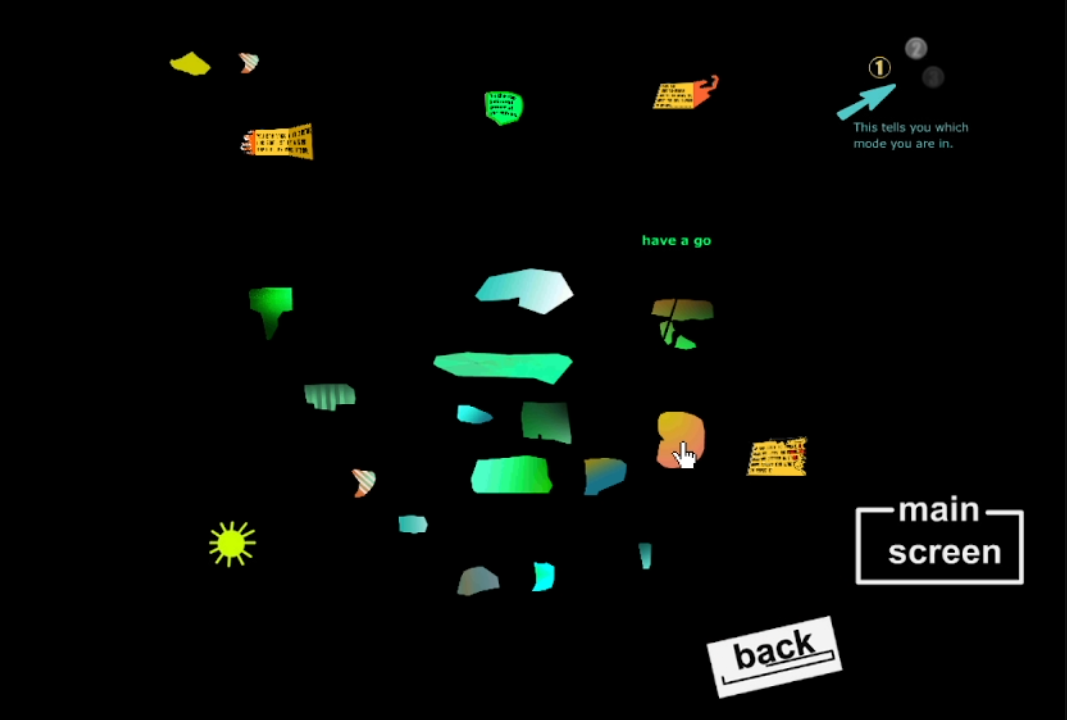
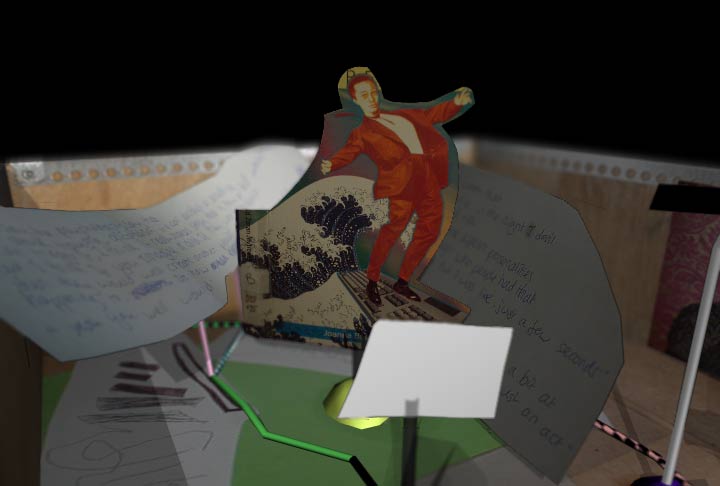
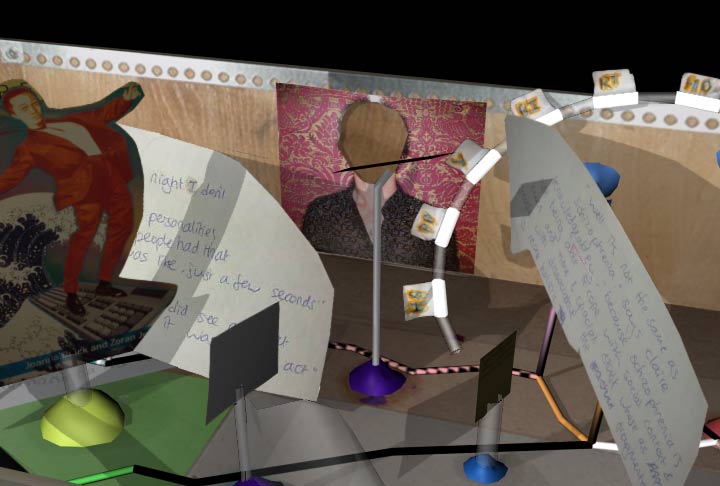
Why don't you? allows users to investigate and remix documentation of an art game played by me and 3 friends.
The digital interface for the cd-rom has a ring of thumbnails that you can drag and drop organically shaped video clips into. There is a large video in the middle that loops playing the videos dropped onto the thumbnails. You can edit and remix the video by dragging new clips onto screens. You can click on each of the players heads to look through their drawings.

Game instructions.

You will need.
  • Pieces of paper
  • Pens
  • Blu Tac
  • Tape
  • String
  • A TV
  • A camera with a flash

Setting up
  • Cut up 50 pieces of string at random lengths between 1m and 2m
  • Attach the pieces string to the ceilling so it dangles down. Position the string randomly

Rules
  • Each person write 3 themes on 3 pieces of paper & stick them to the tv
  • When the game starts each person starts drawing or writing in reponse to a theme on the tv.
  • When a drawing is finnished it can be hung on a piece of string
  • Anyone can trigger the flash
  • If the flash goes then change themes themes

More about Bluescreen

← back

← back


Flunstellas with Nerve, cd-rom, 2003.


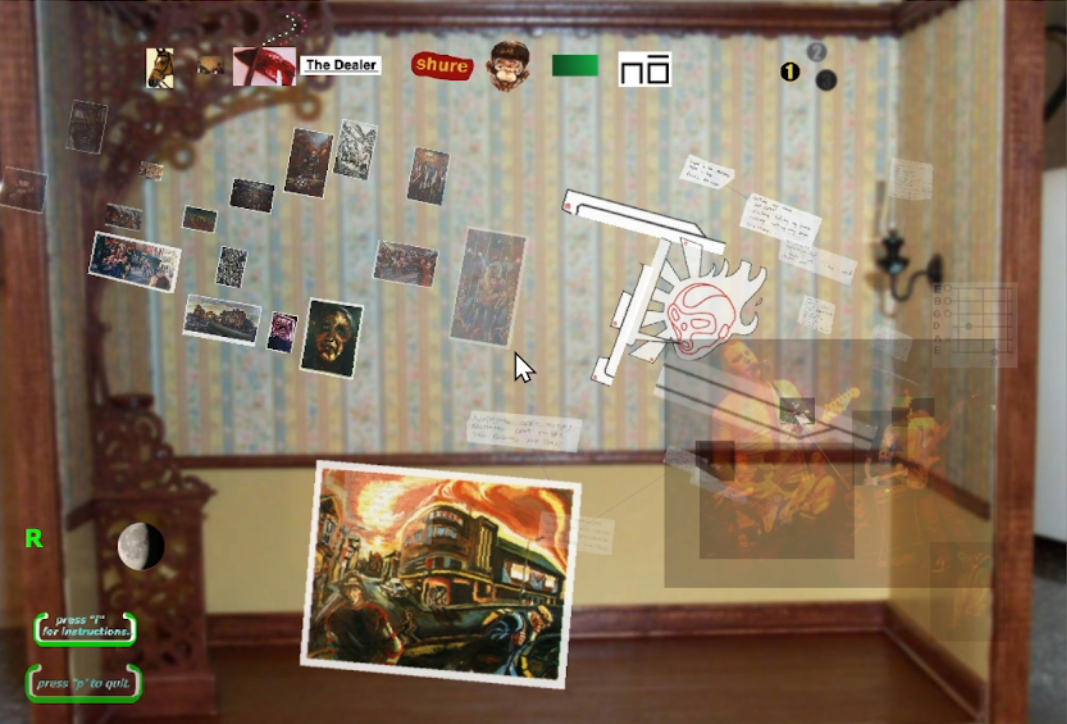
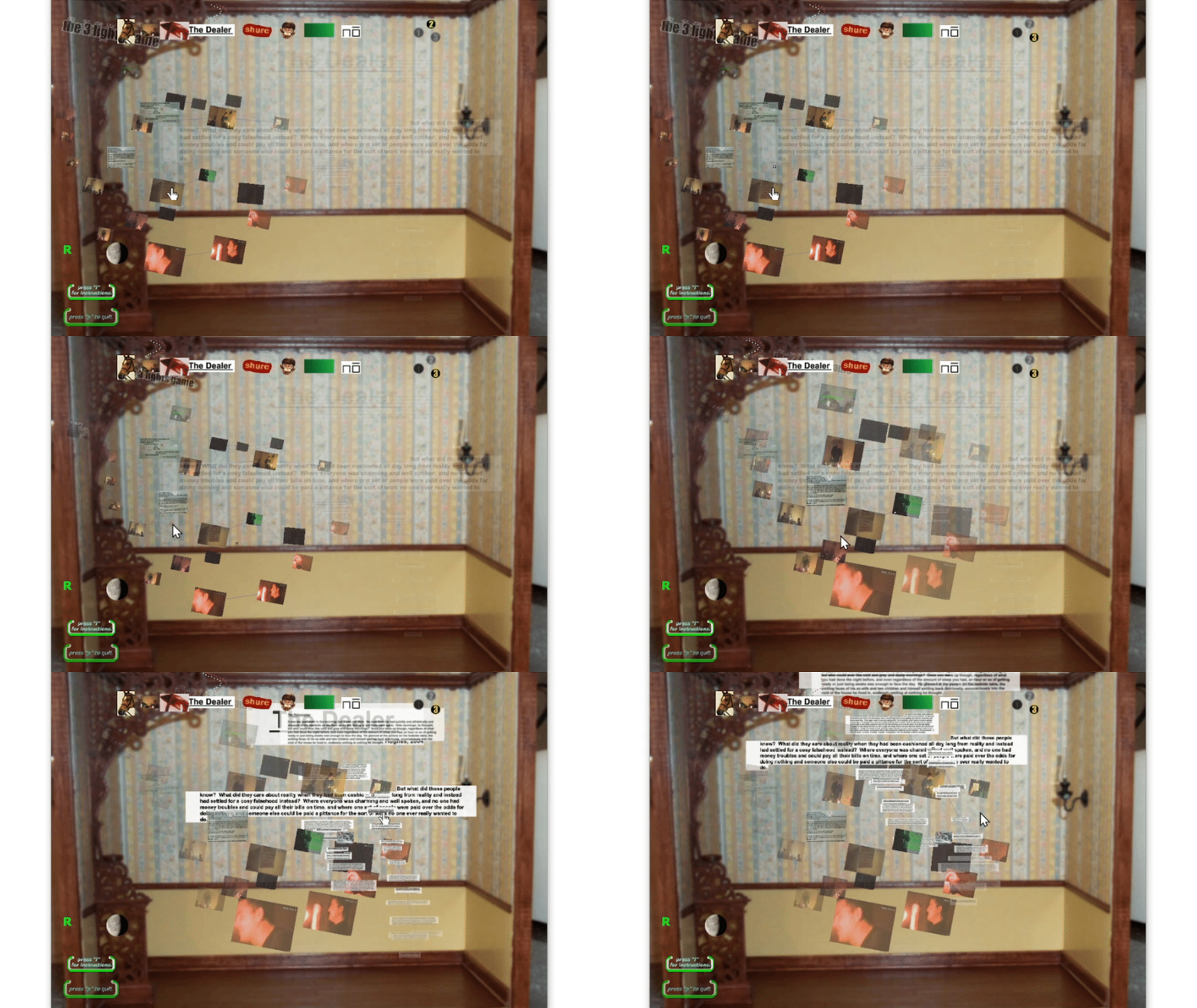
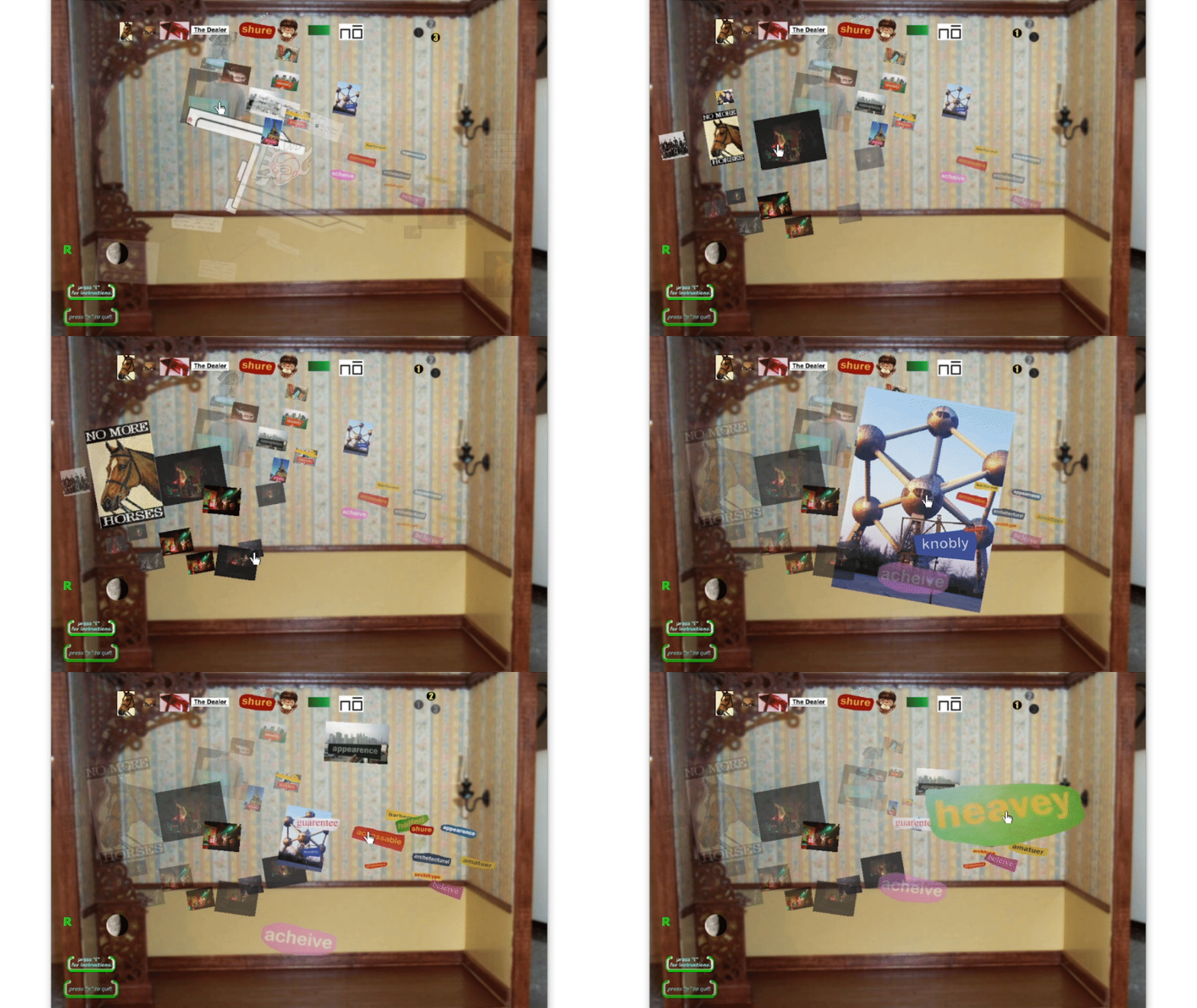
Screenshot showing clusters of media float across the screen.
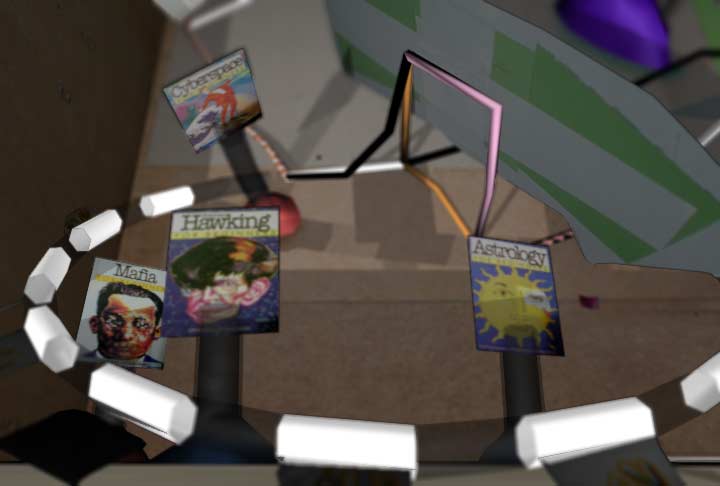
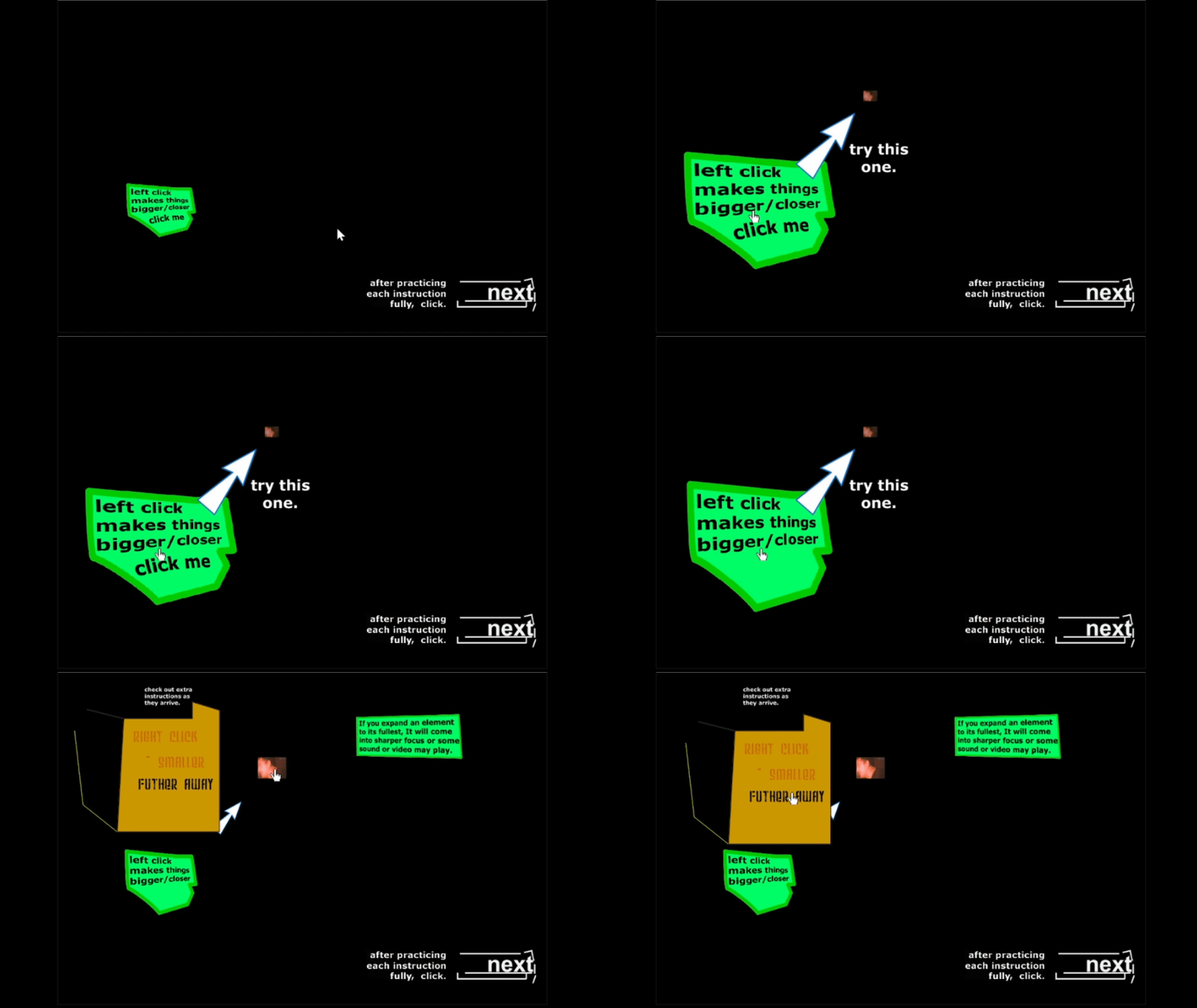
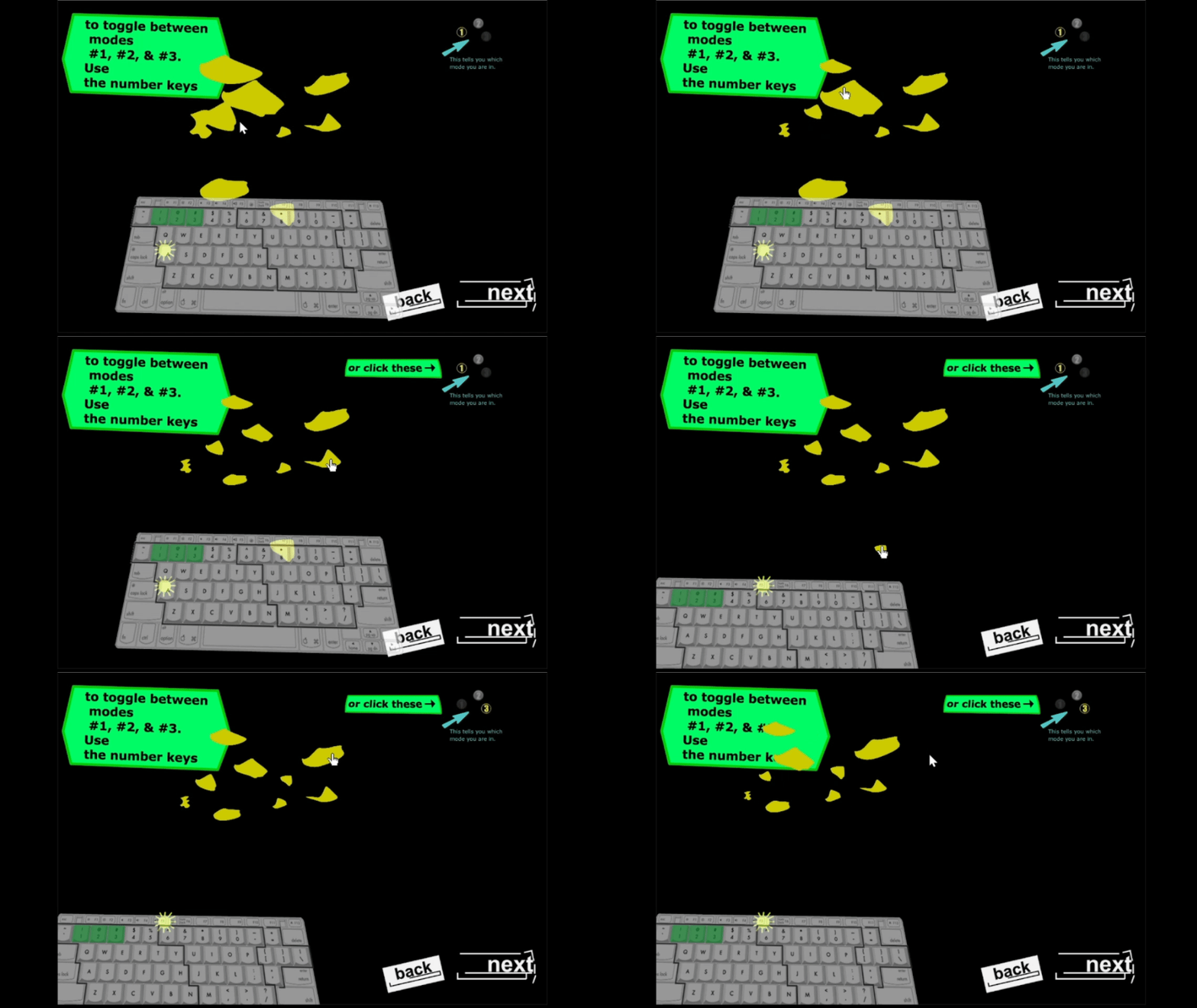
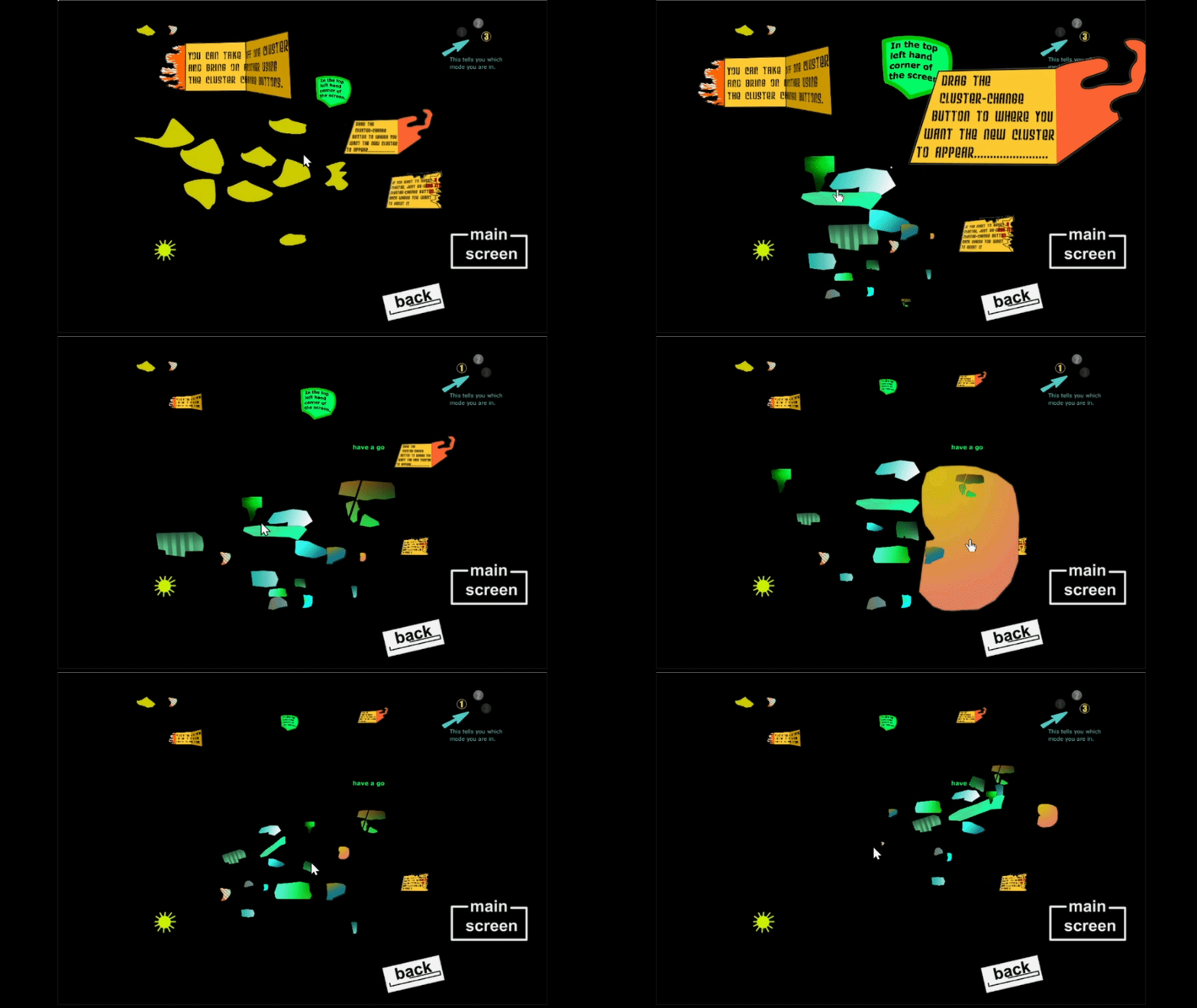
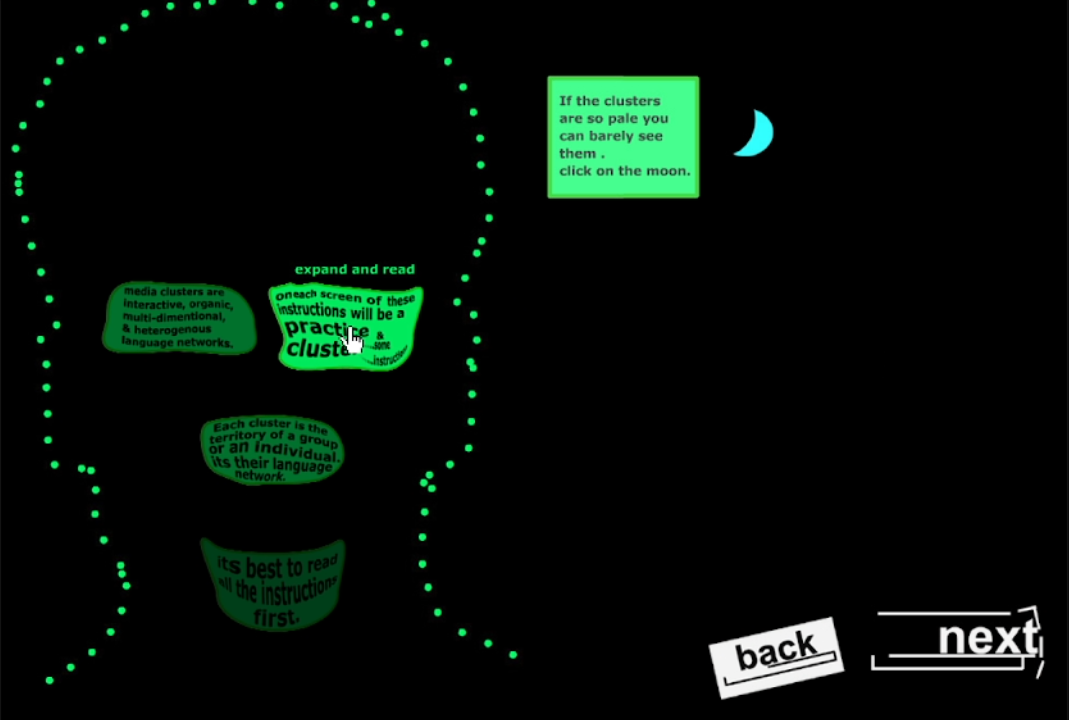
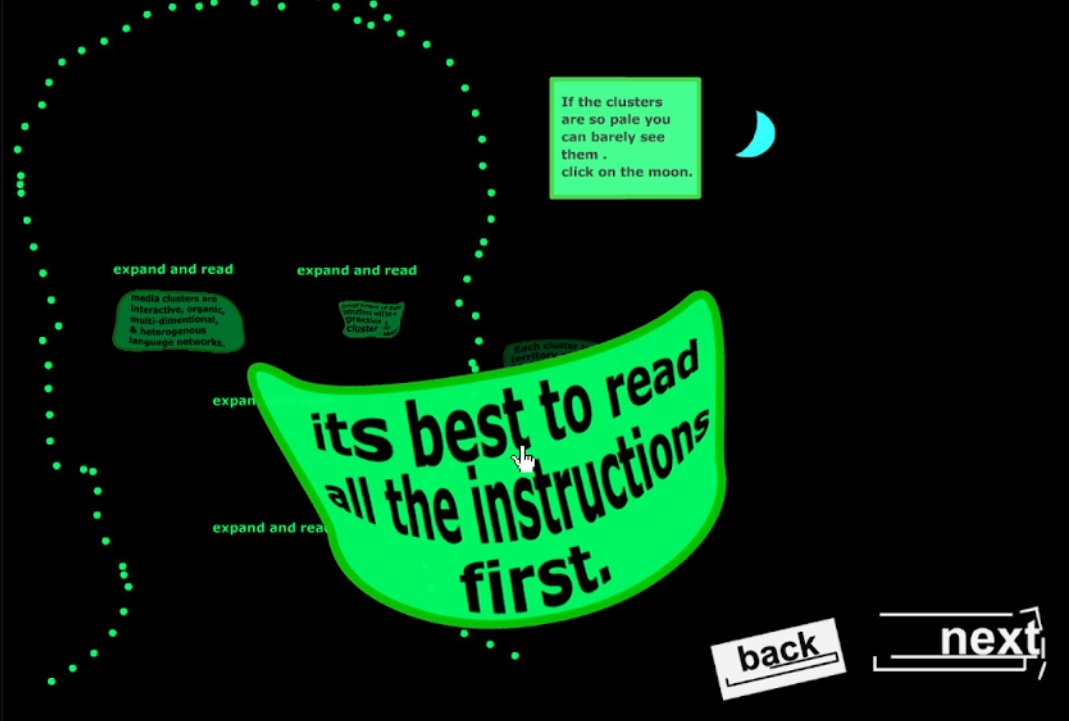
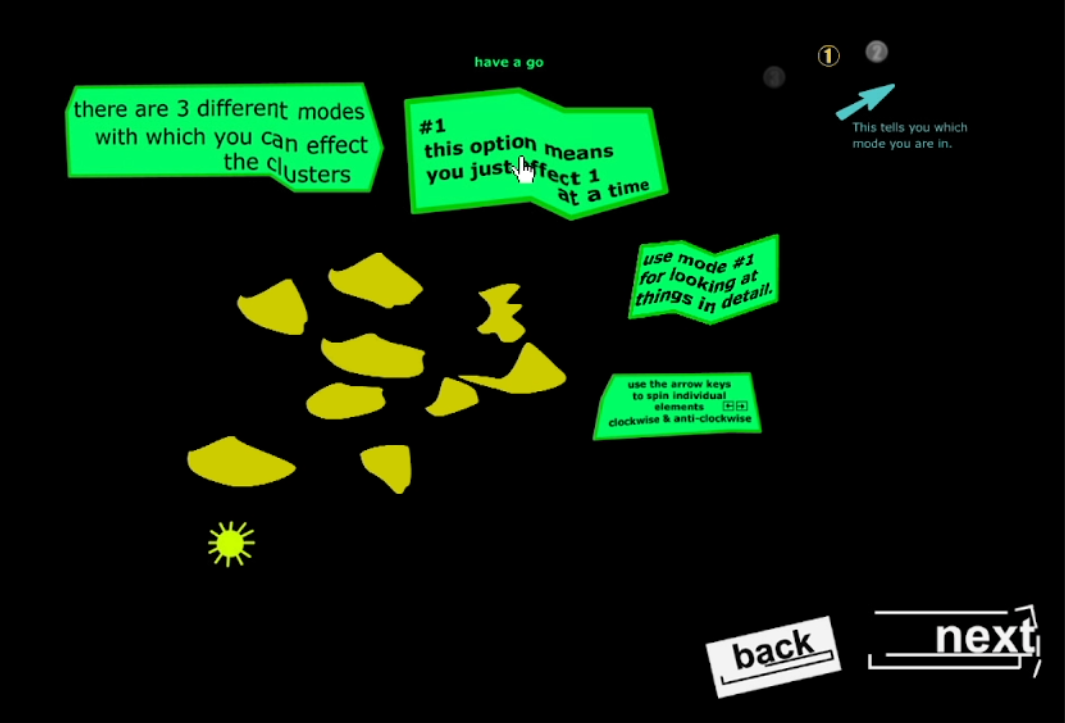
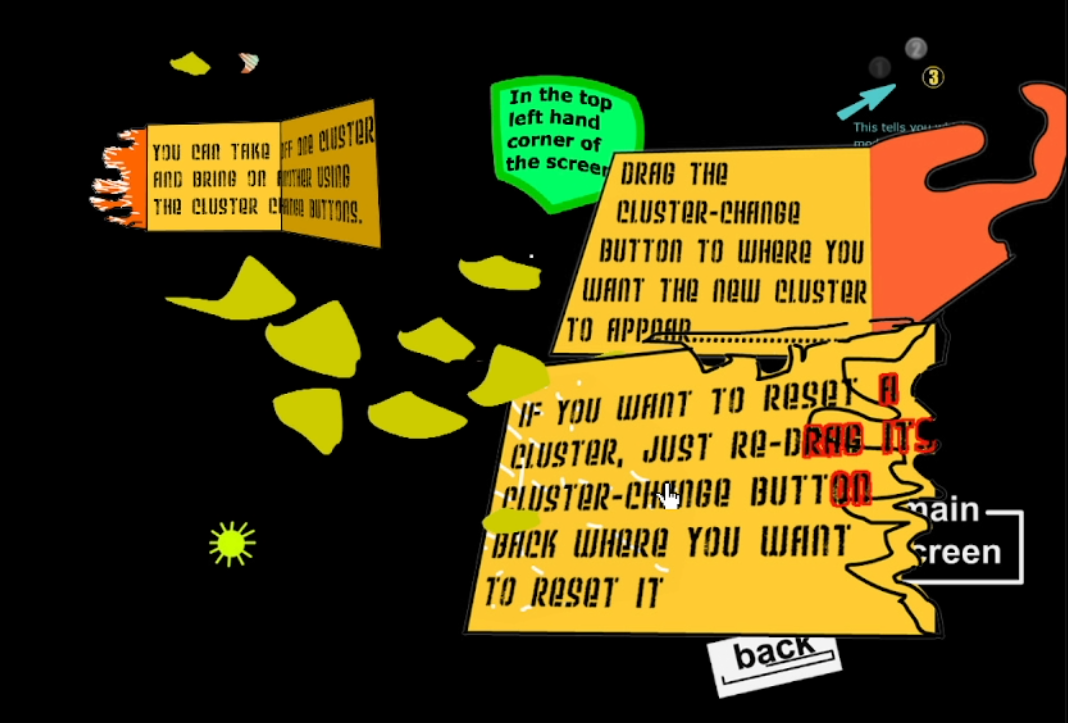
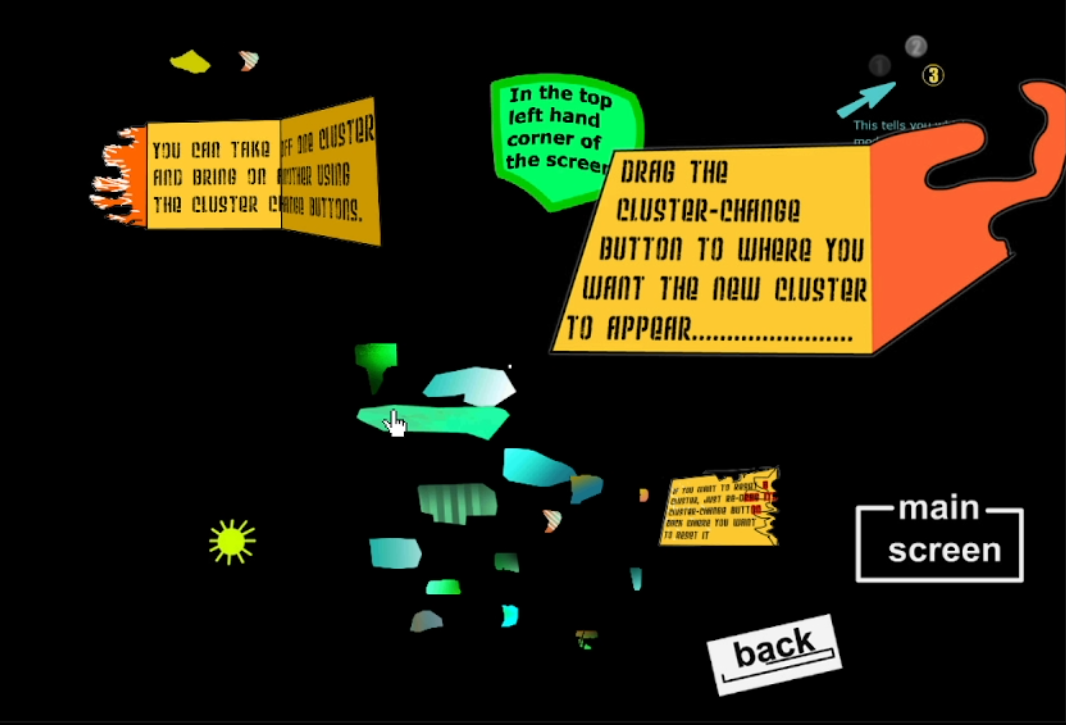
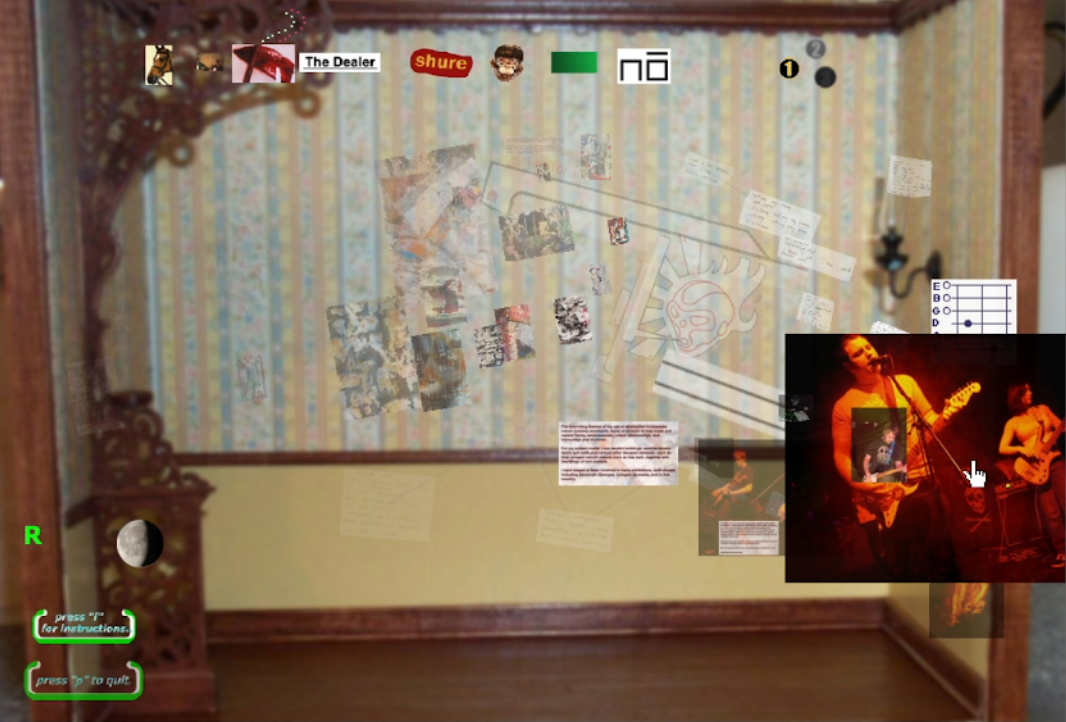
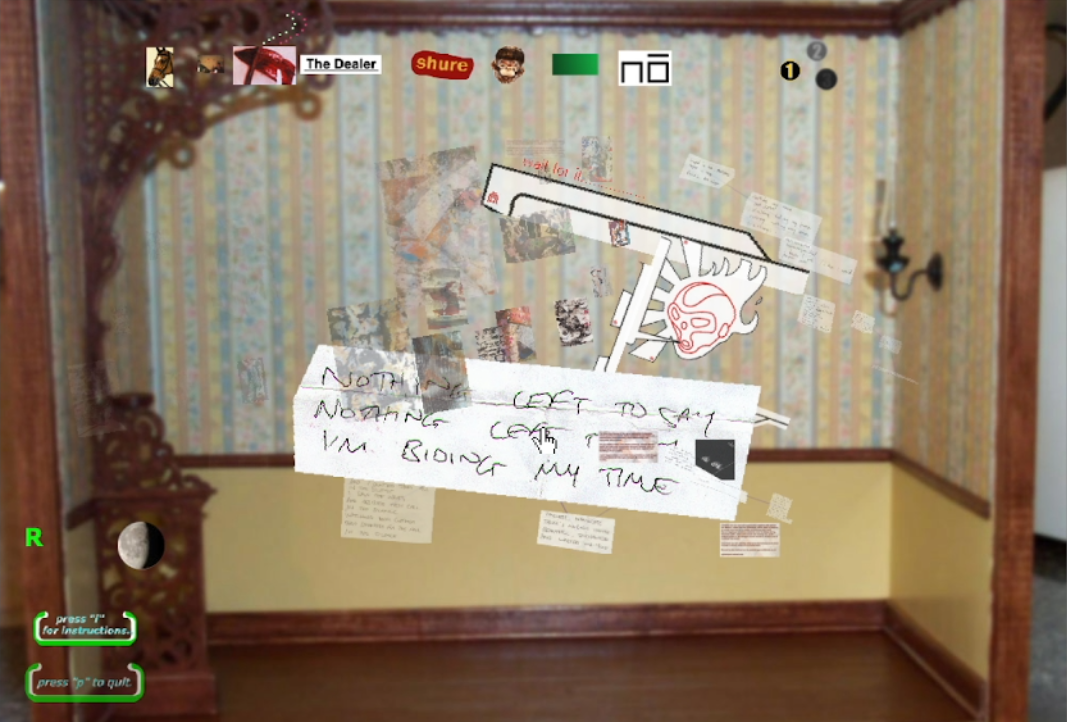
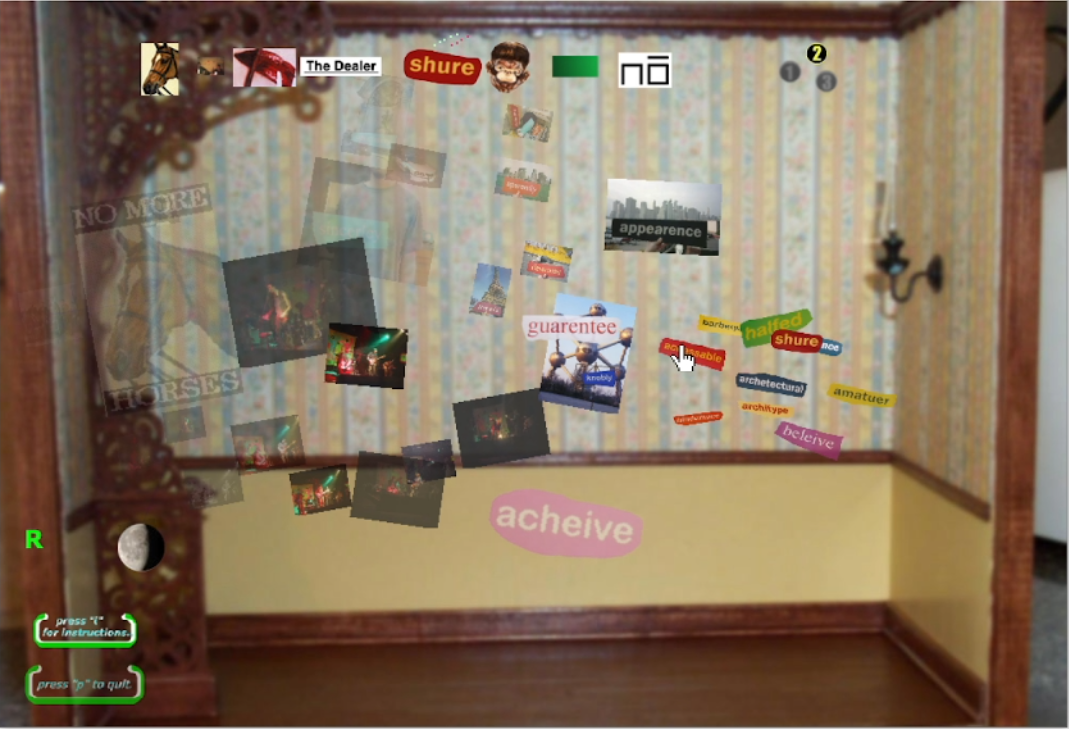
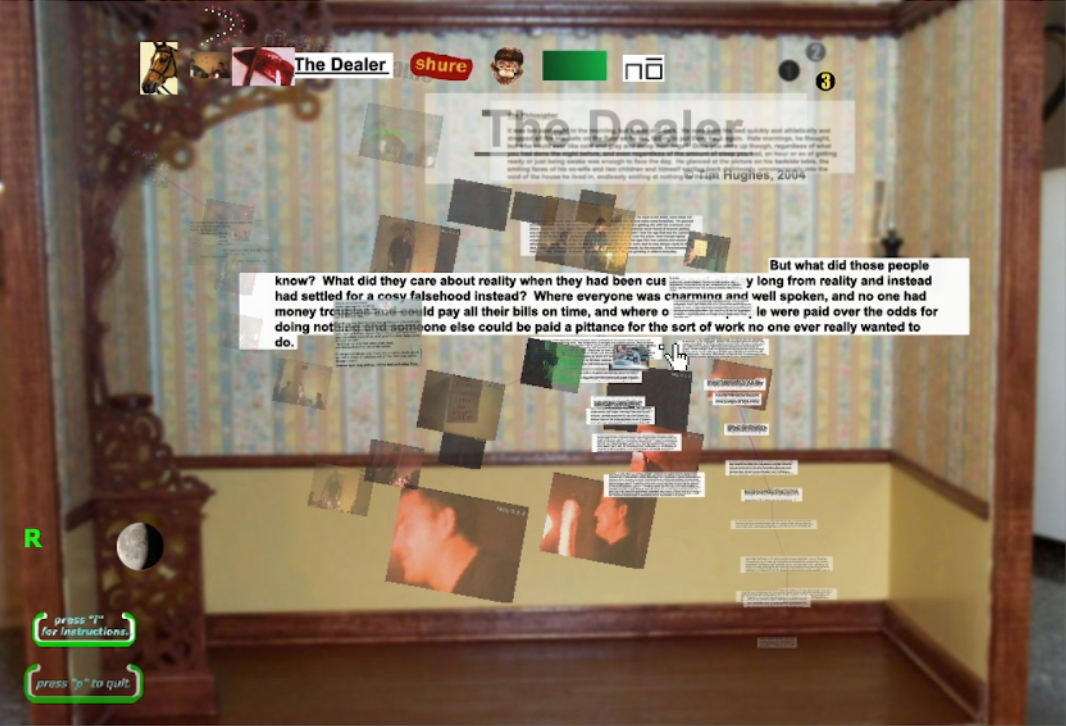
Flunstellas with Nerve was a hopeful vision for shared digital spaces imagined from the indymedia scene of the early 2000's. The cd-rom was distributed as a free supplement to 1000 copies of NERVE, a grassroots arts and culture magazine central to Liverpool art and politics at the time. The digital space of the was populated by transluscent flocks, clusters and constellations of fragmented media, cocreated with artists, musicians and writers. Users could inspect individual fragments by moving and resizing them or choose different modes to blow, shepherd or squidge them around the screen. Clicking on fragments reveals others to explore. Contributing artists included bands The Cubicle & No, photographer Colin Serjent, painter John O'Neil, artist Dave Mcewen and writer Tim.

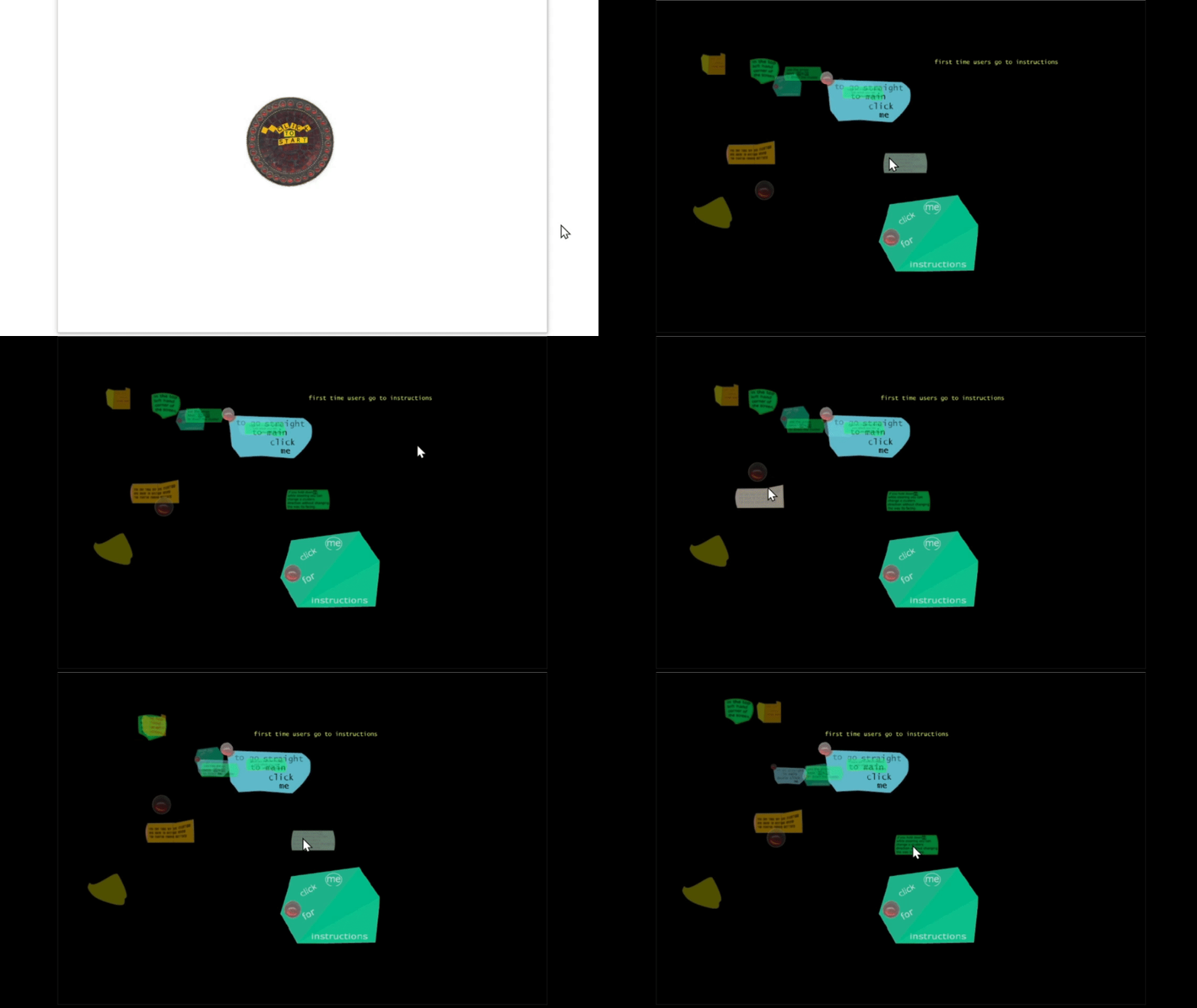
Interactive tutorial


Digital space


← back


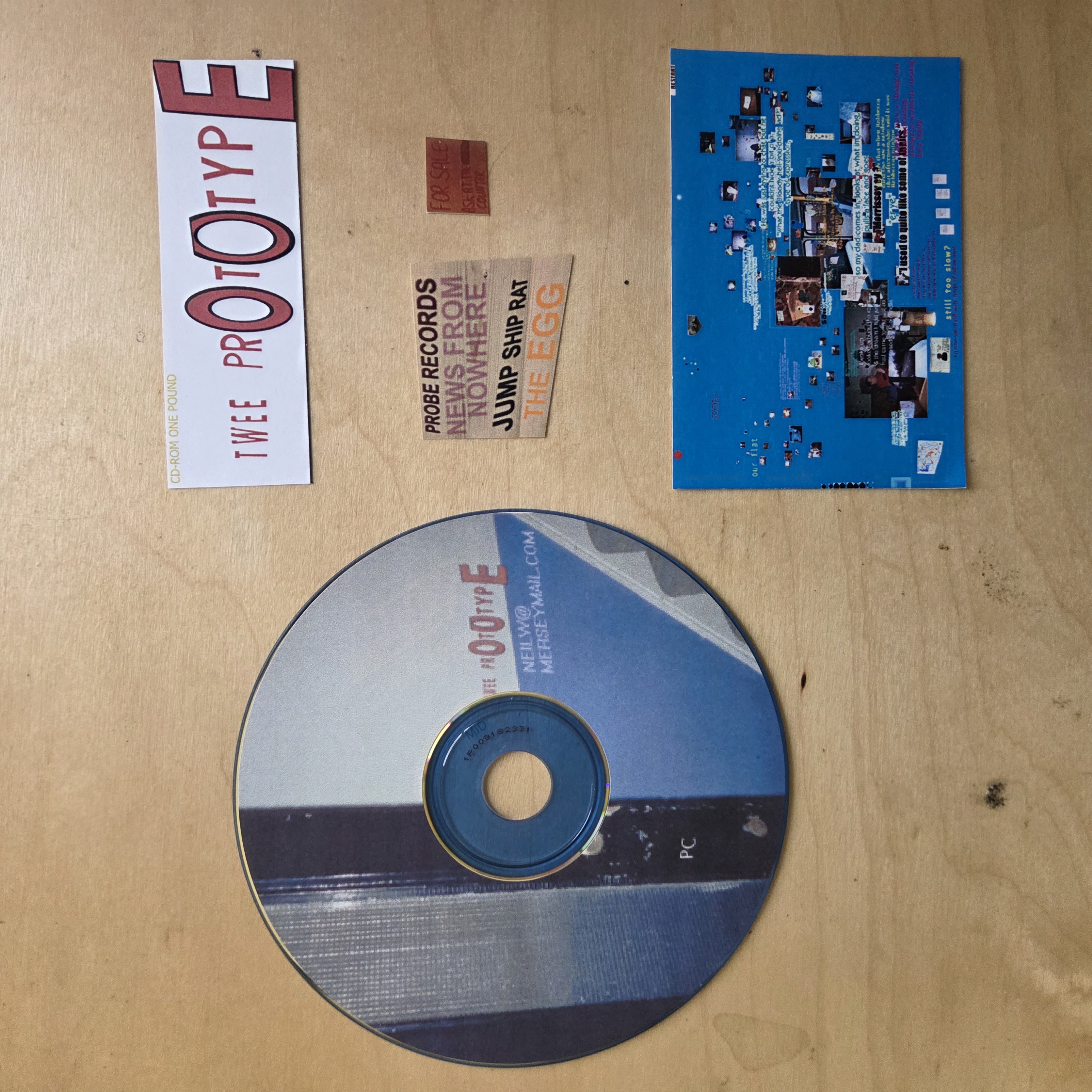
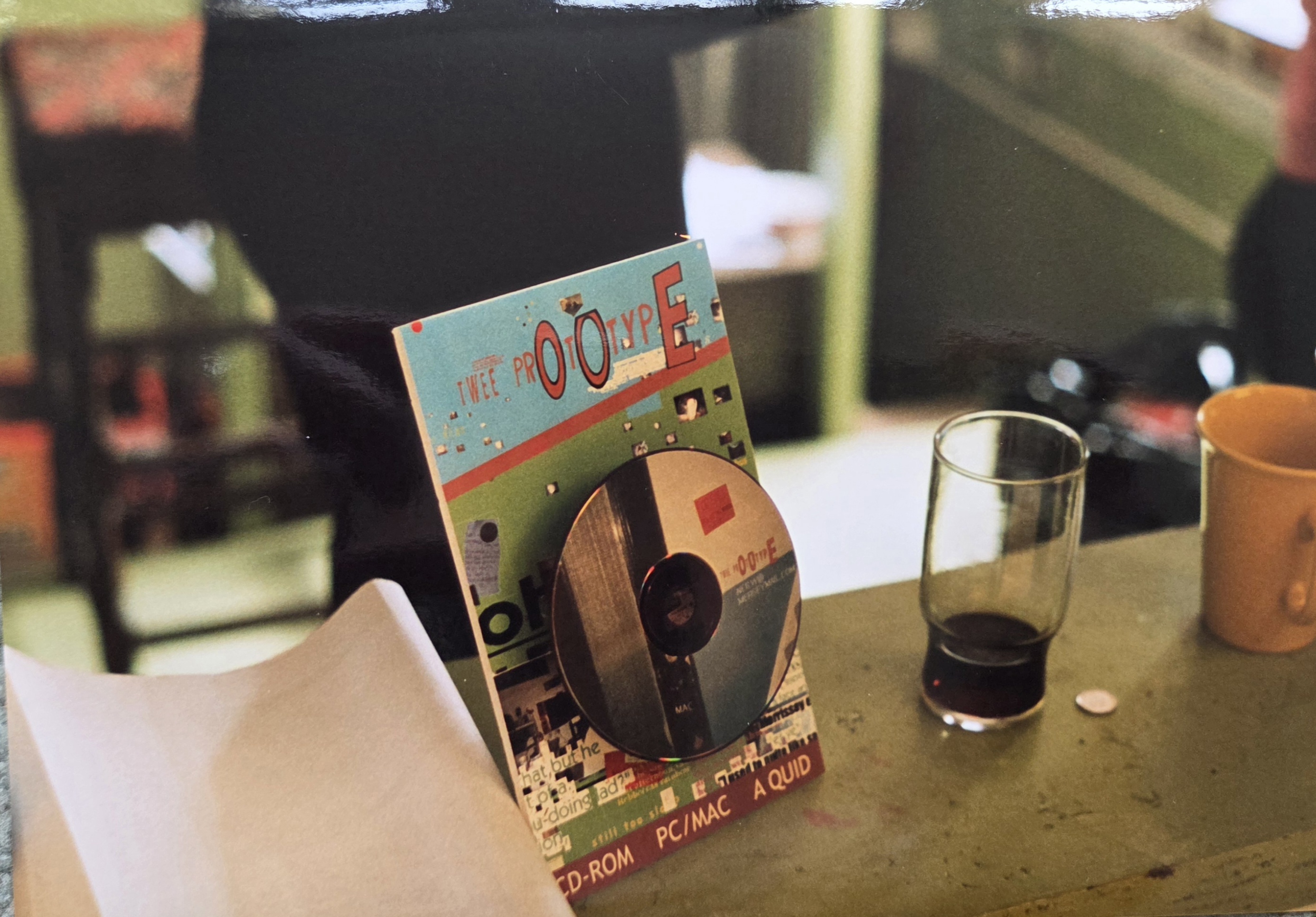
Twee-Prototype, cd-rom, 2001


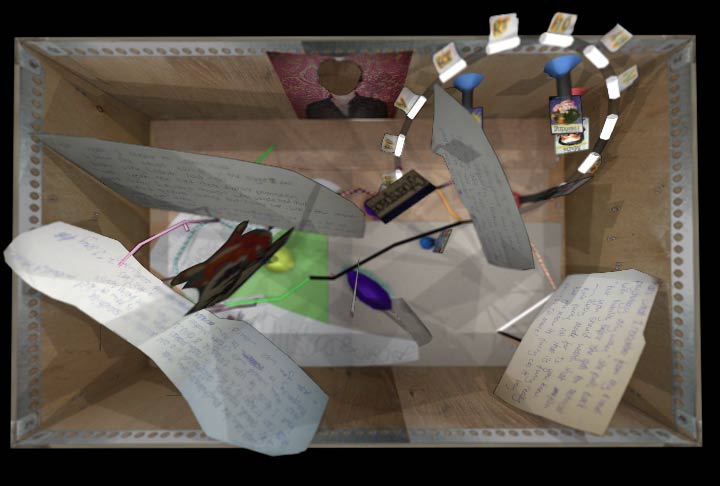
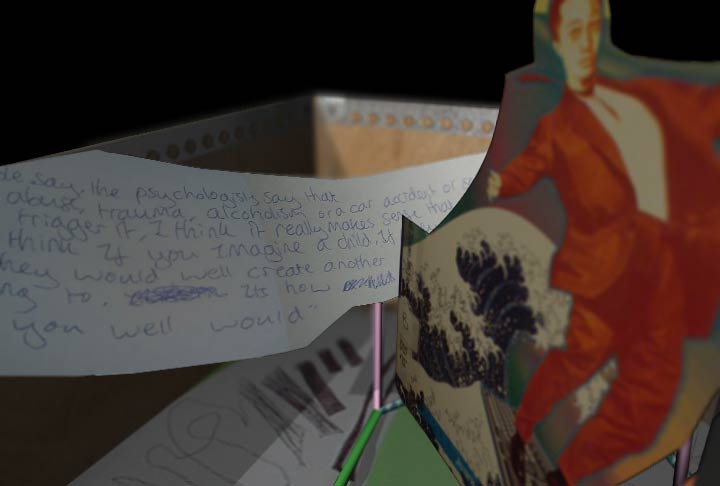
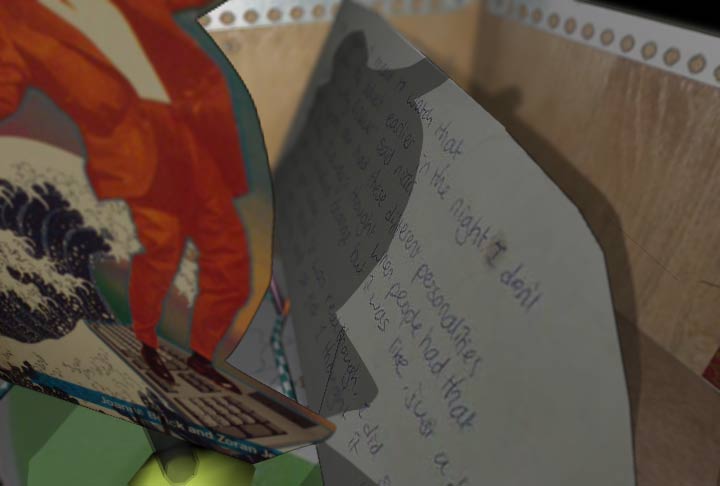
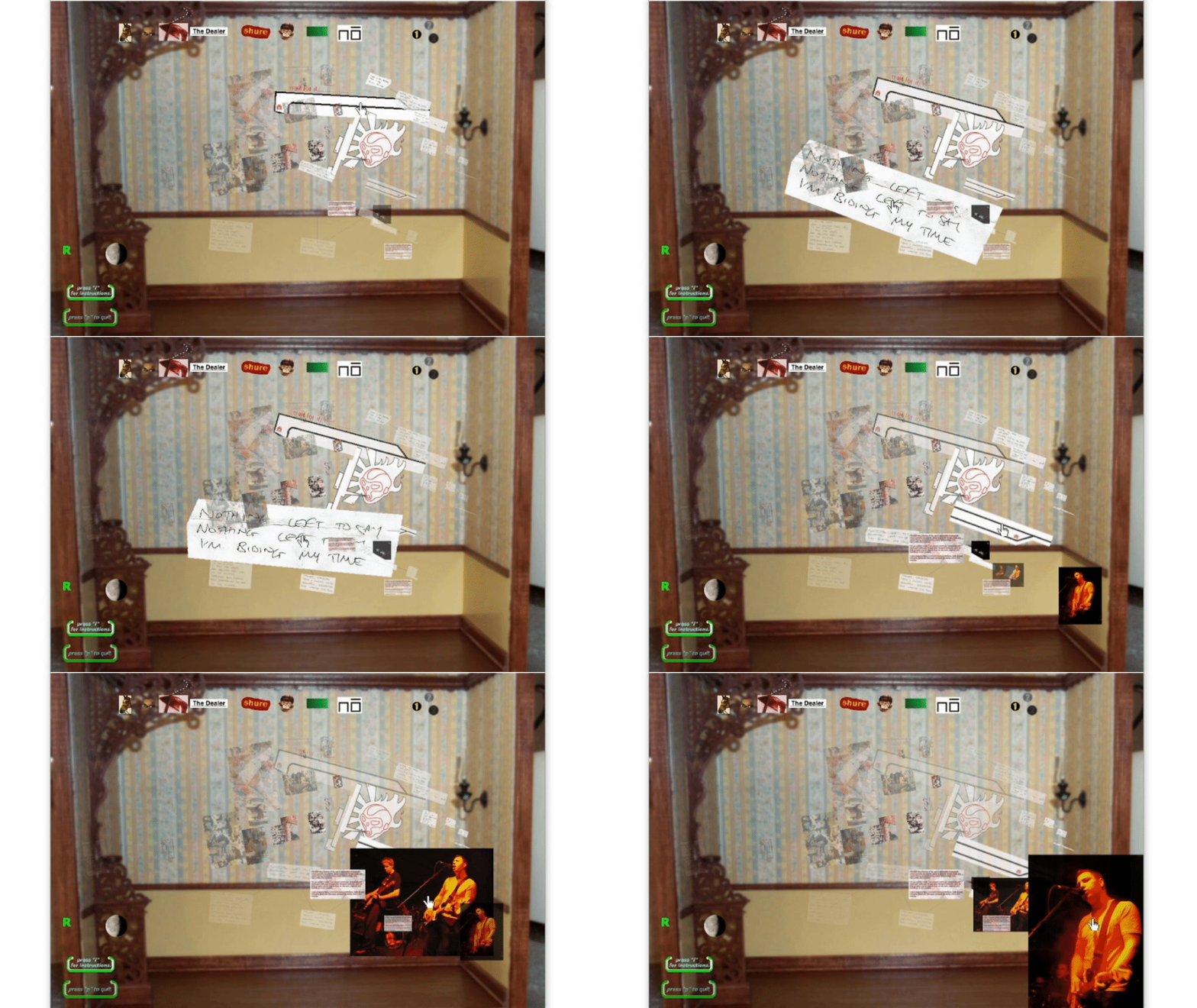
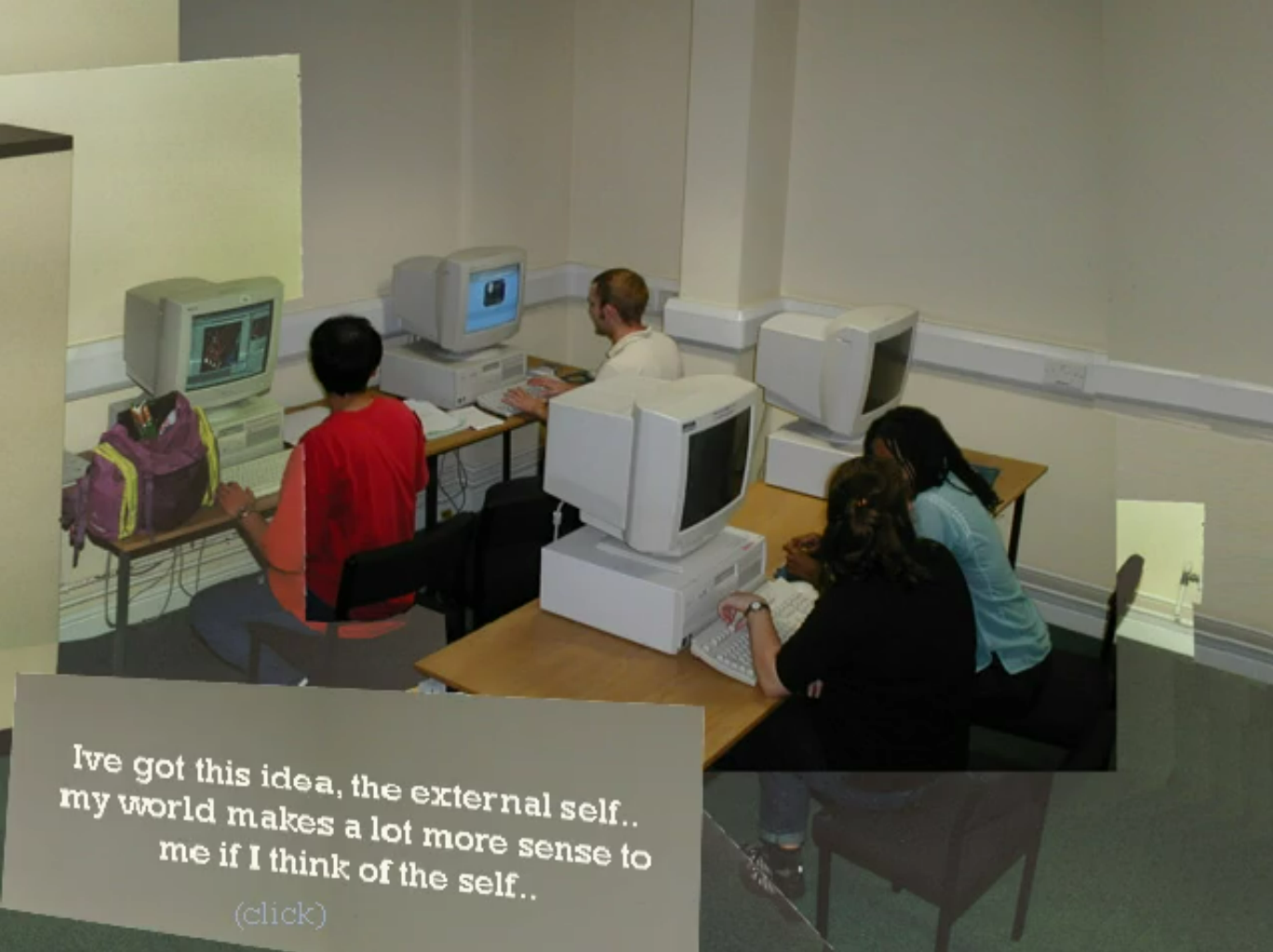
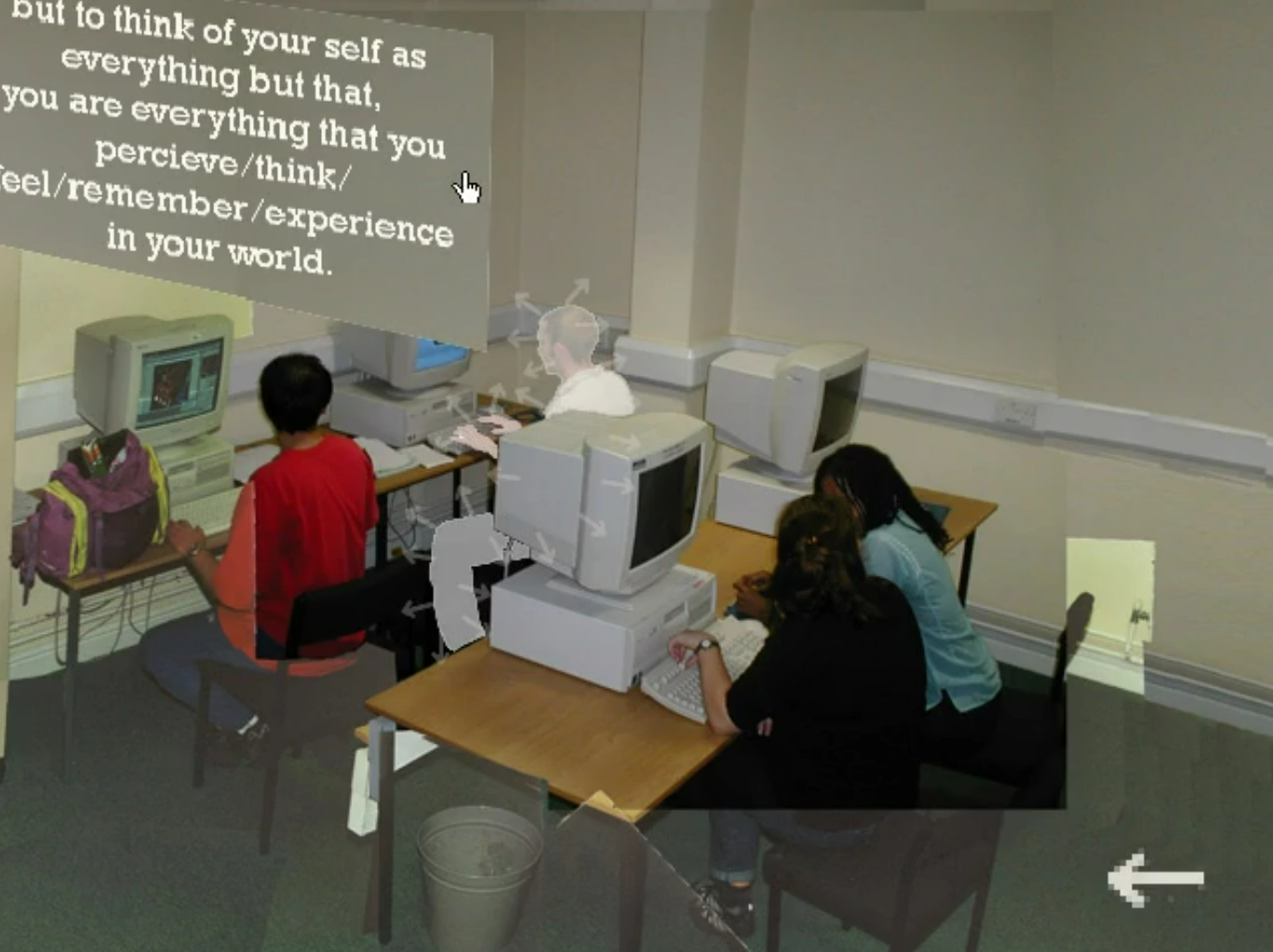
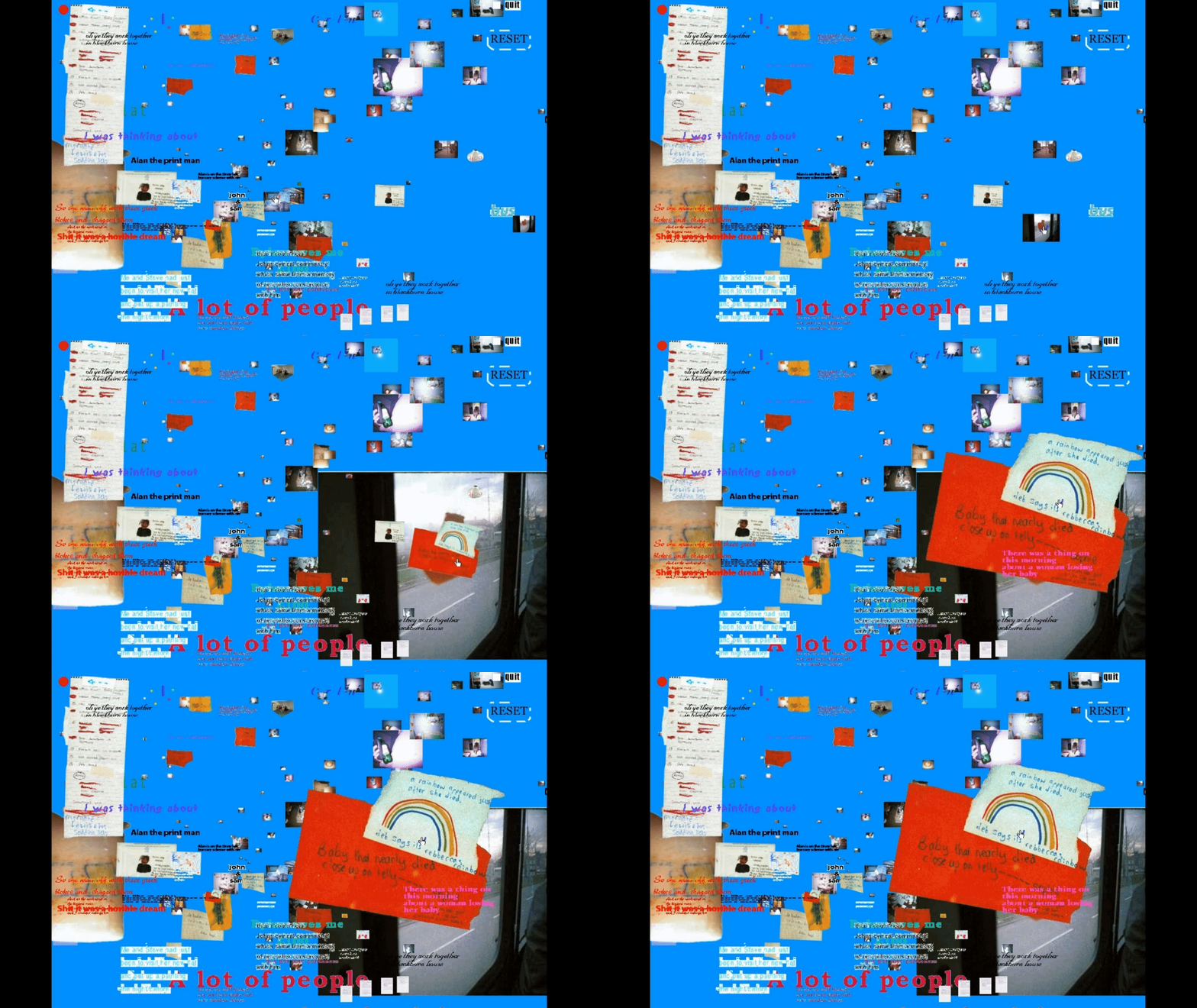
Interactive artwork through which you sift through constellations of photos, documenting a day in which I wrote and drew thoughts on scraps of paper as they occured to me and stuck them around me. I placed the thoughts where I felt they belonged in relation to my body and other peoples in the space. I carried out this practice as I went about my day geting ready for work getting the bus from Toxteth in Liverpool to work on a residency in St.Helen's college and then going to see my girlfriends at her mum and dads house. As you sort through the images from my journey, the photos take on a life of their own, fidgeting and moving together, drawn to or avoiding the mouse. As you click to expand and investigate the drawings and writings, more and more writing and sounds emerge.


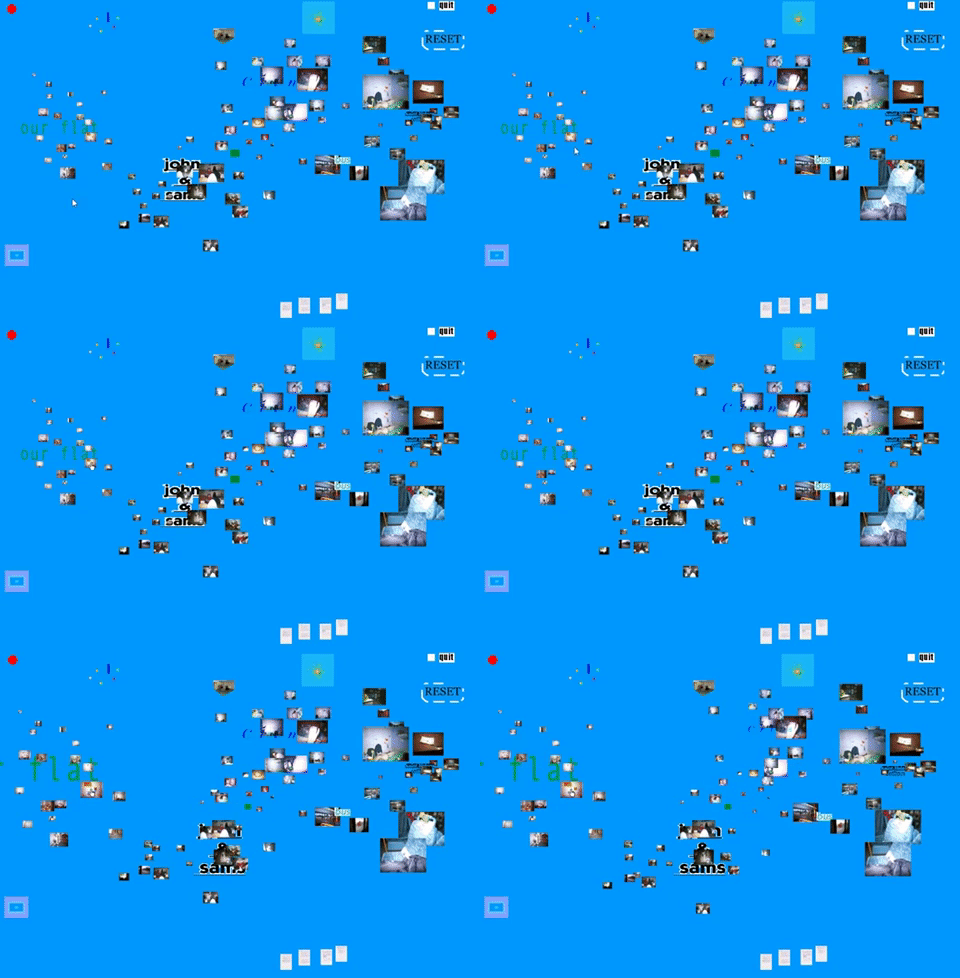
Screencapture of TweePrototype at 6x speed.
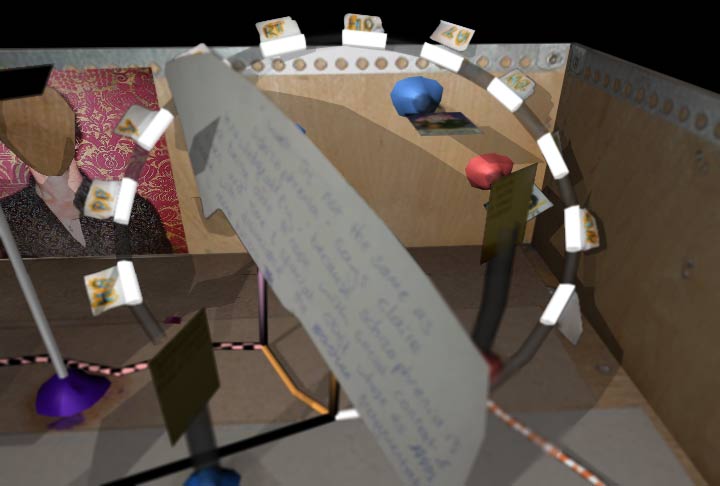
Screencapture of drawings placed on the number 10A bus.
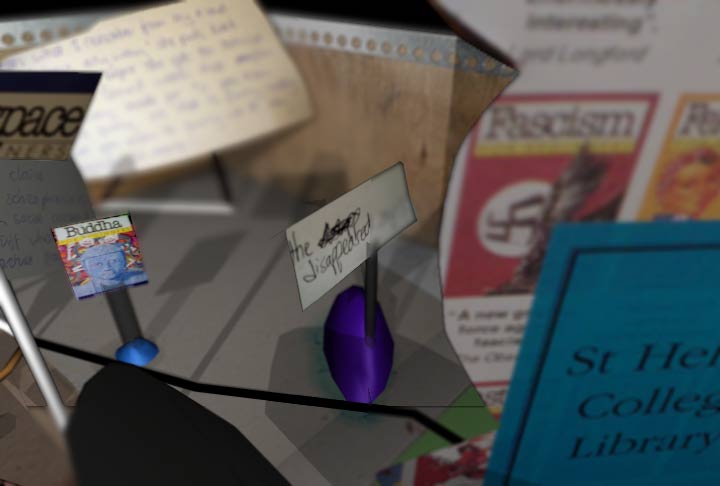
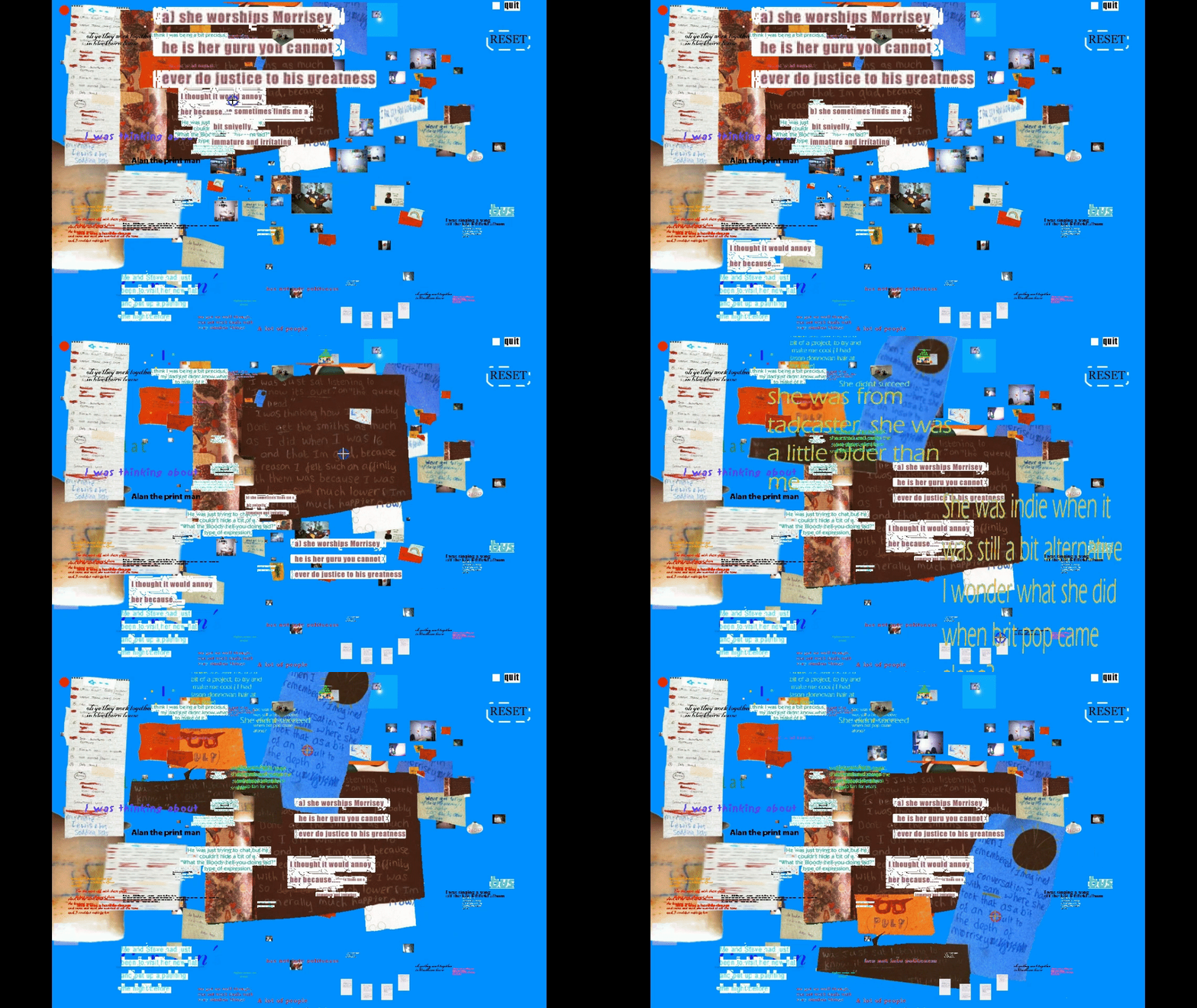
Screencapture - drawings and writing about a chat with my dad about Morissey.

Distribution


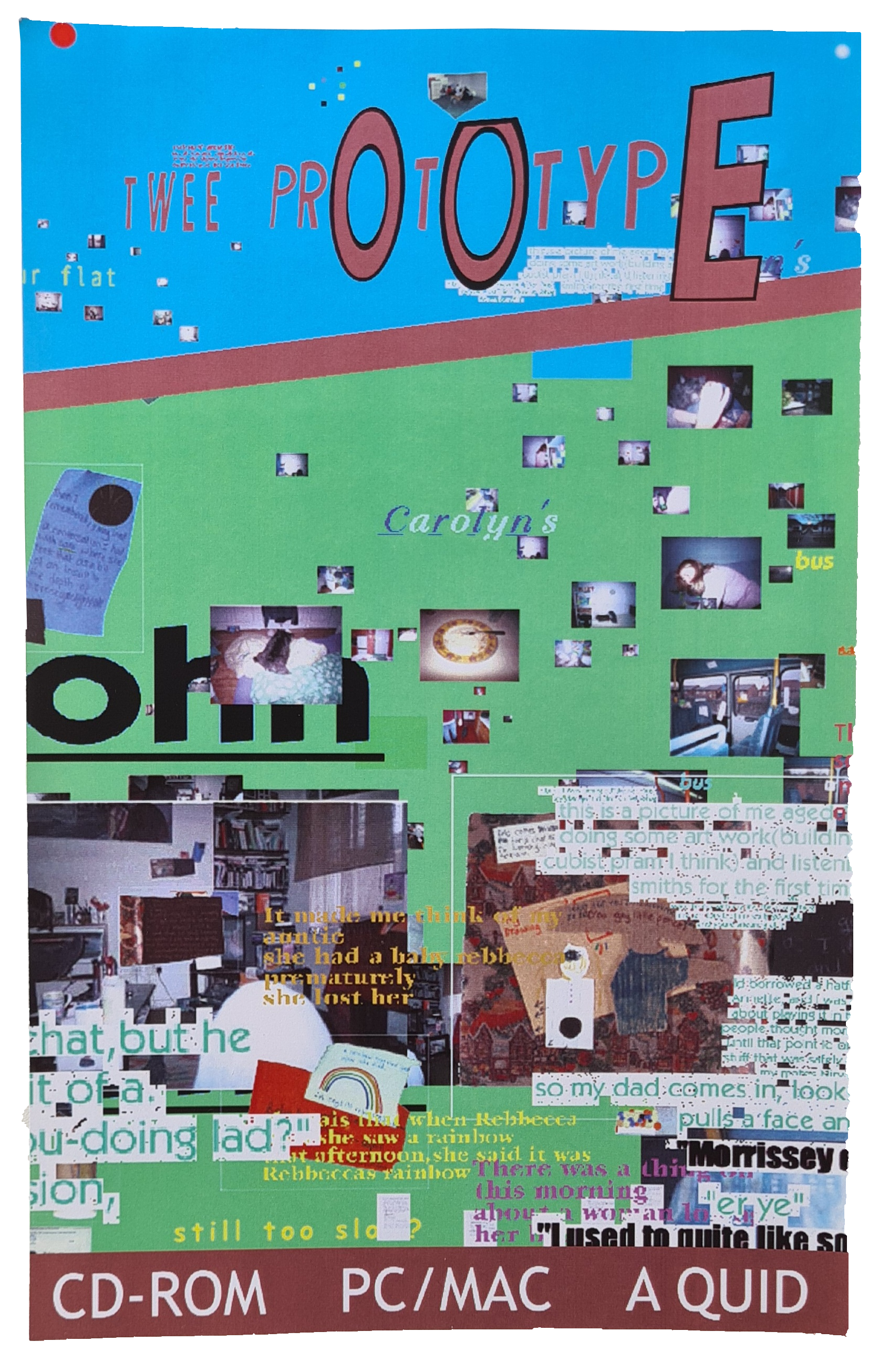
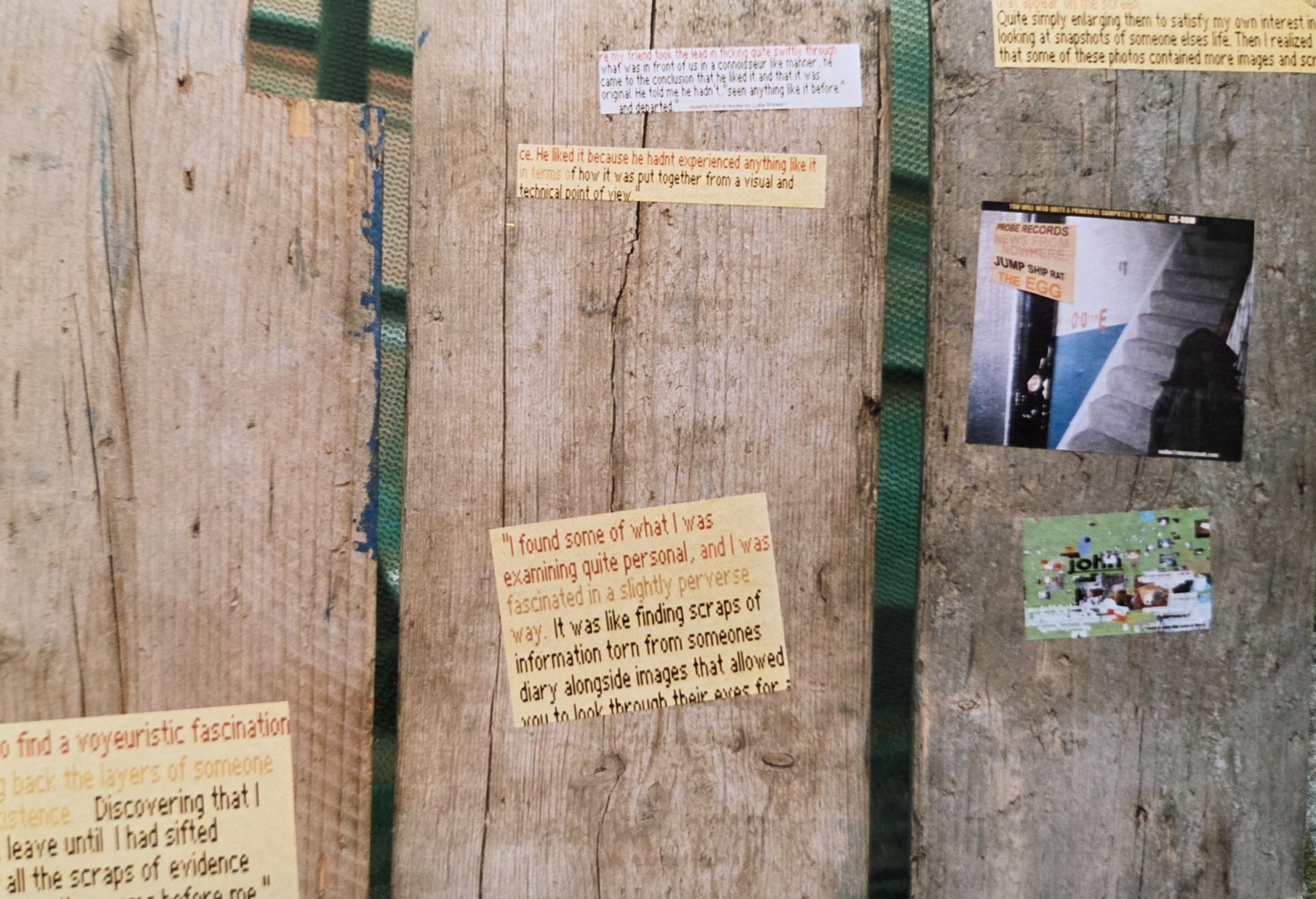
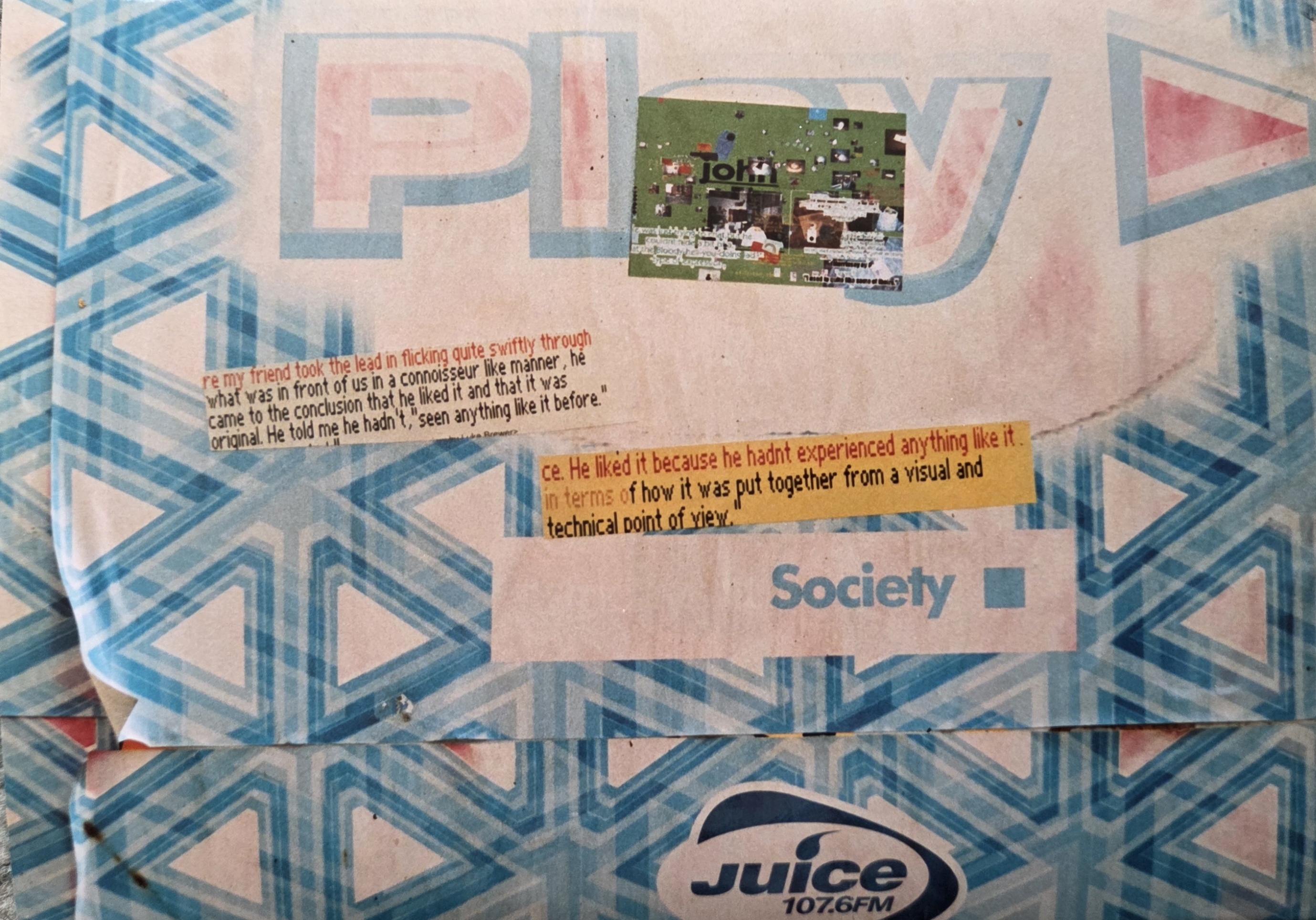
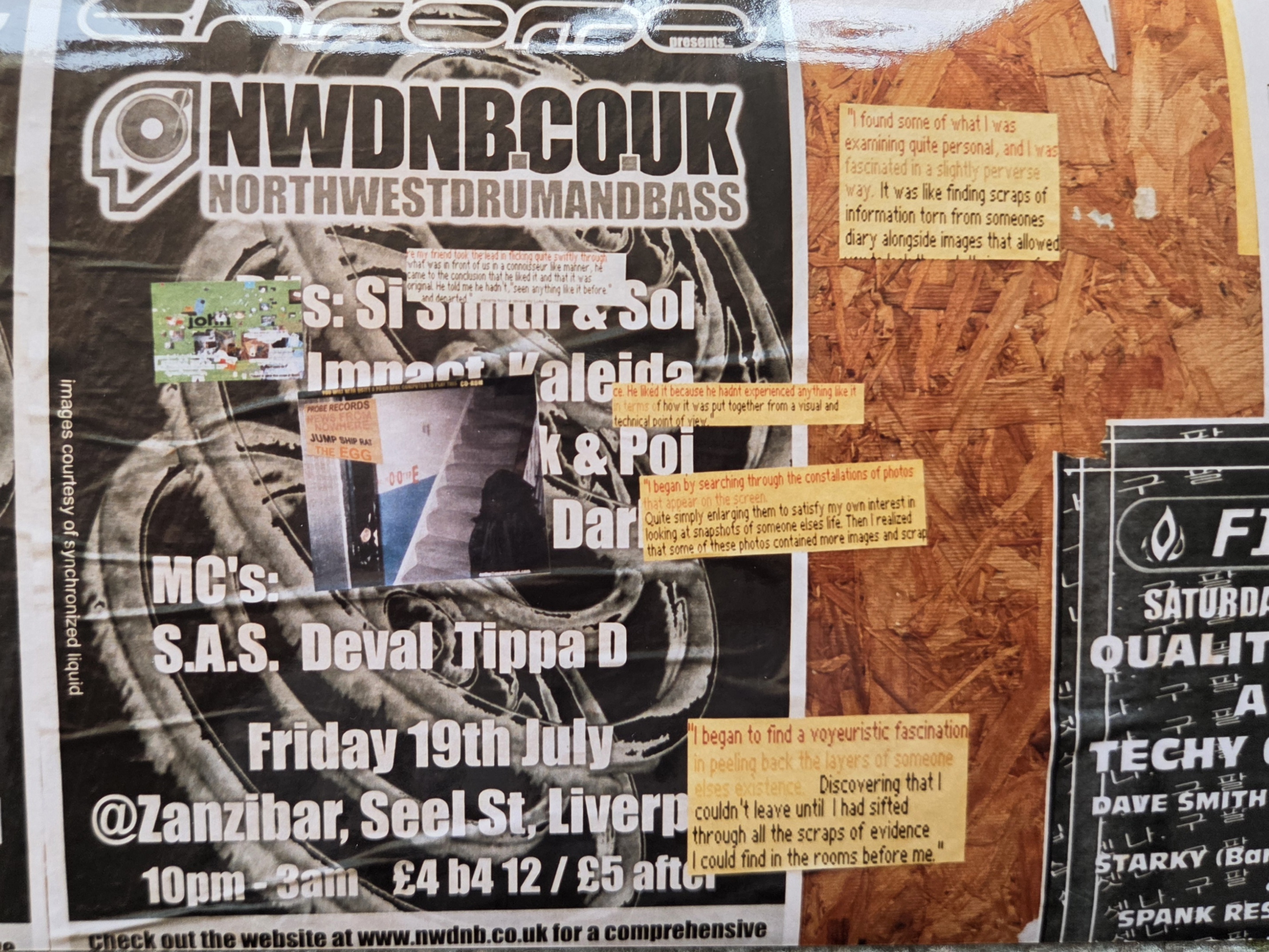
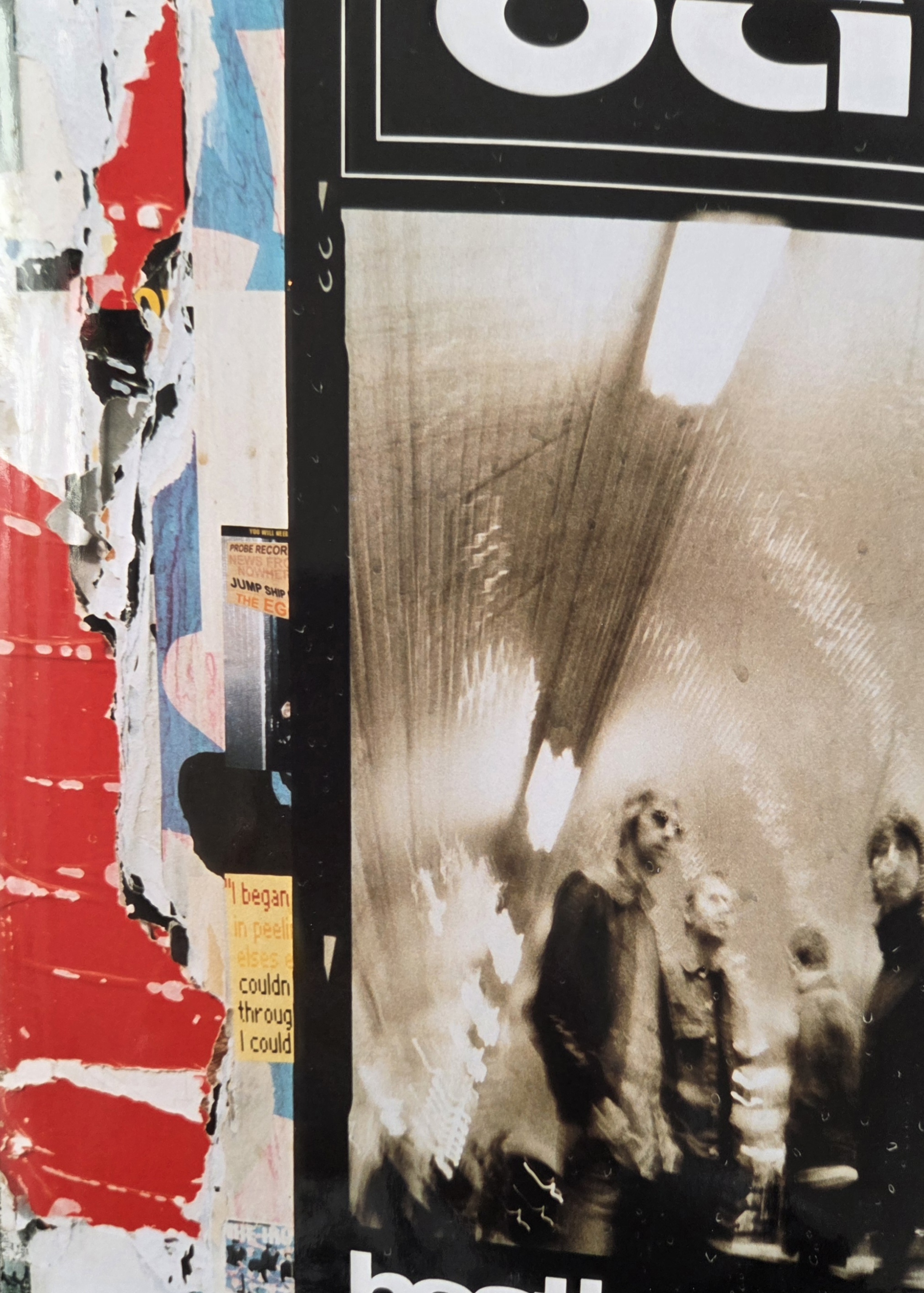
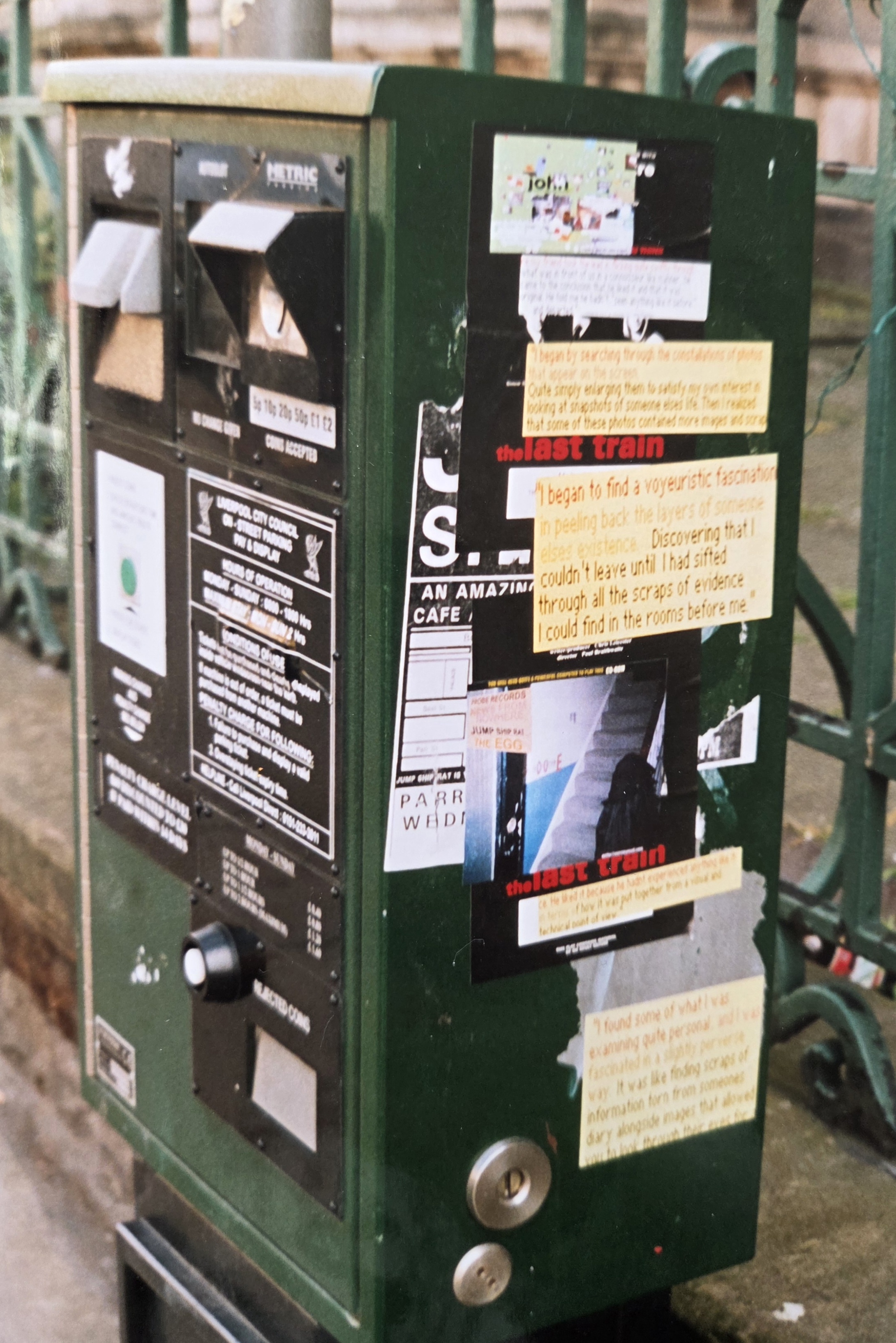
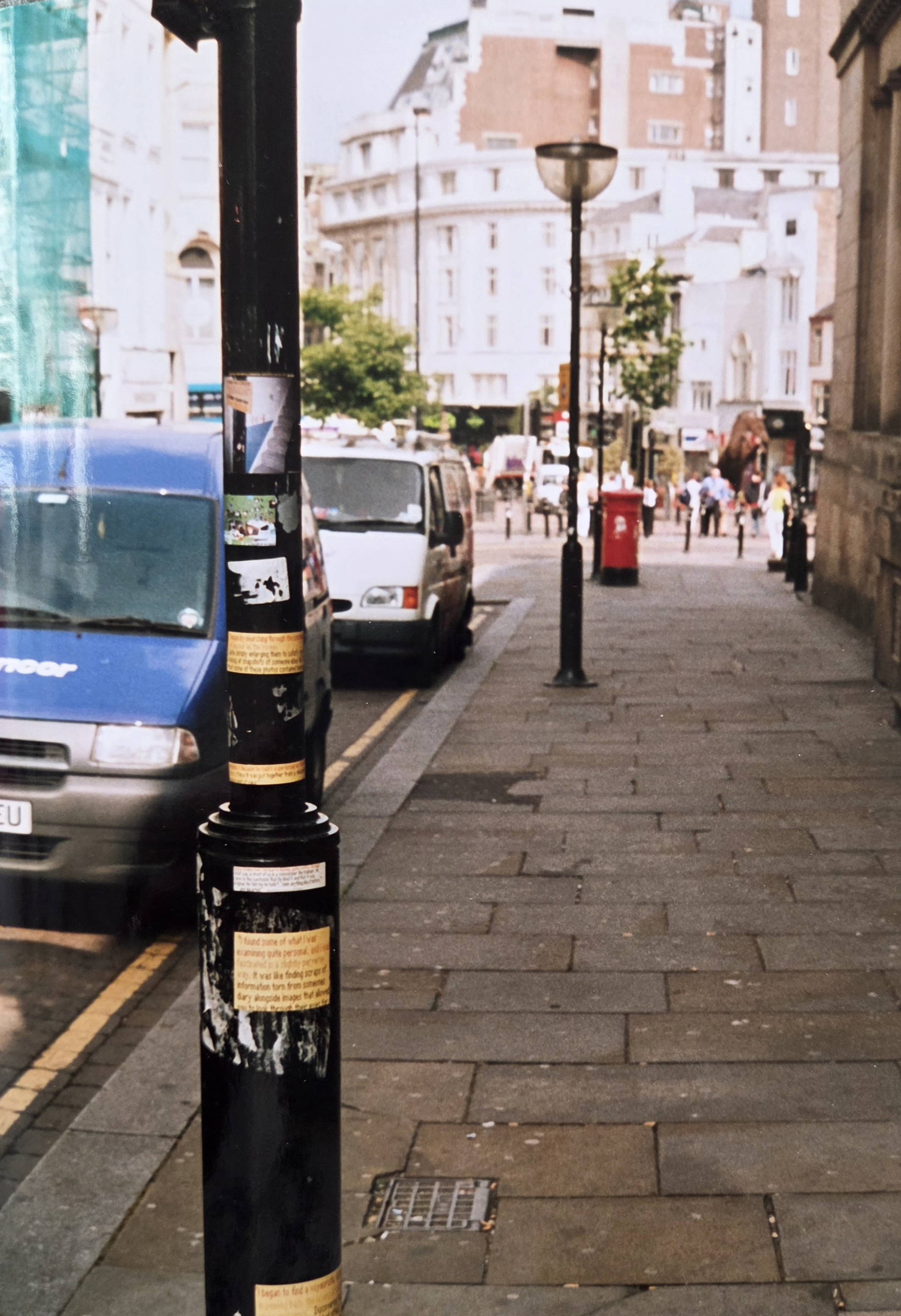
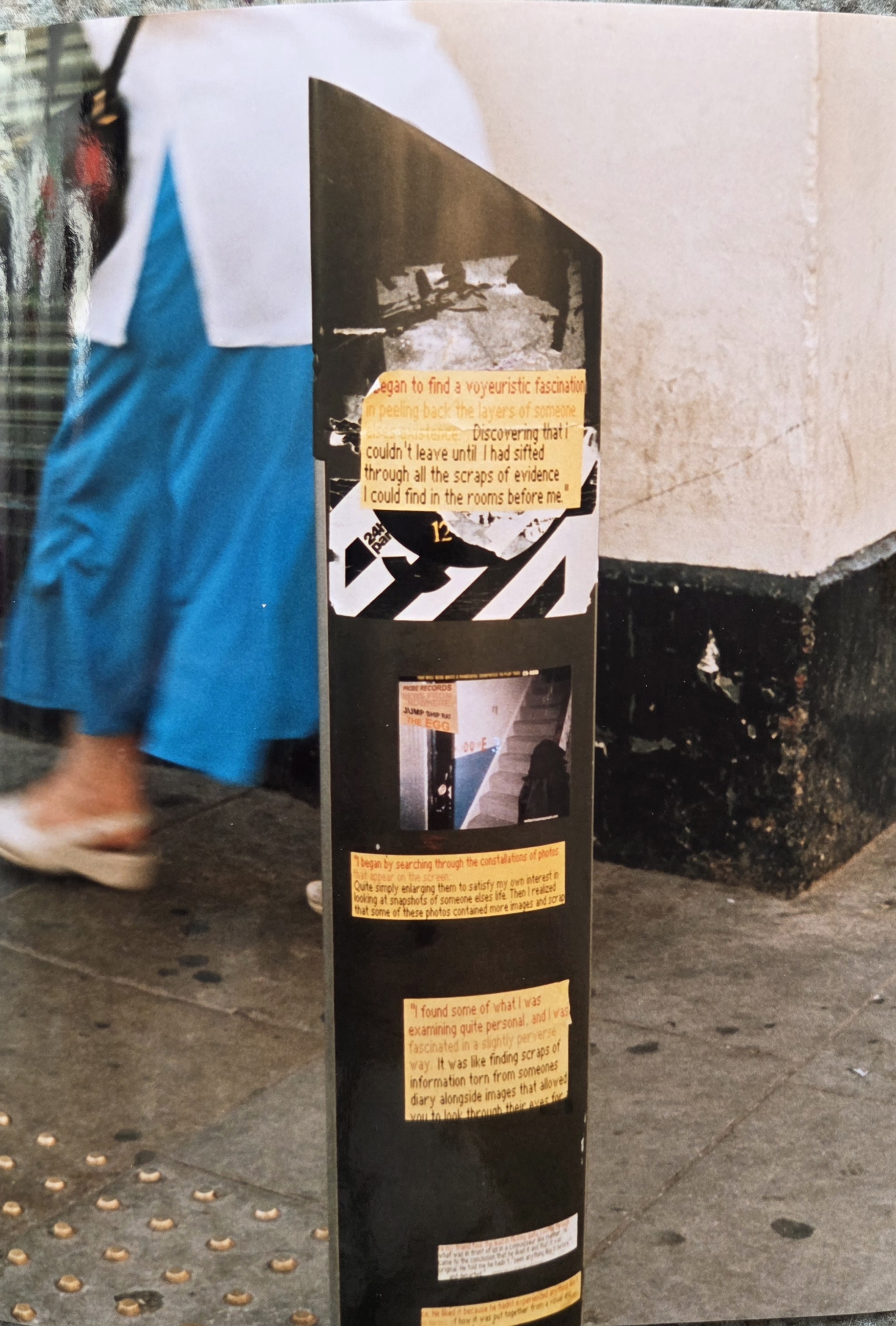
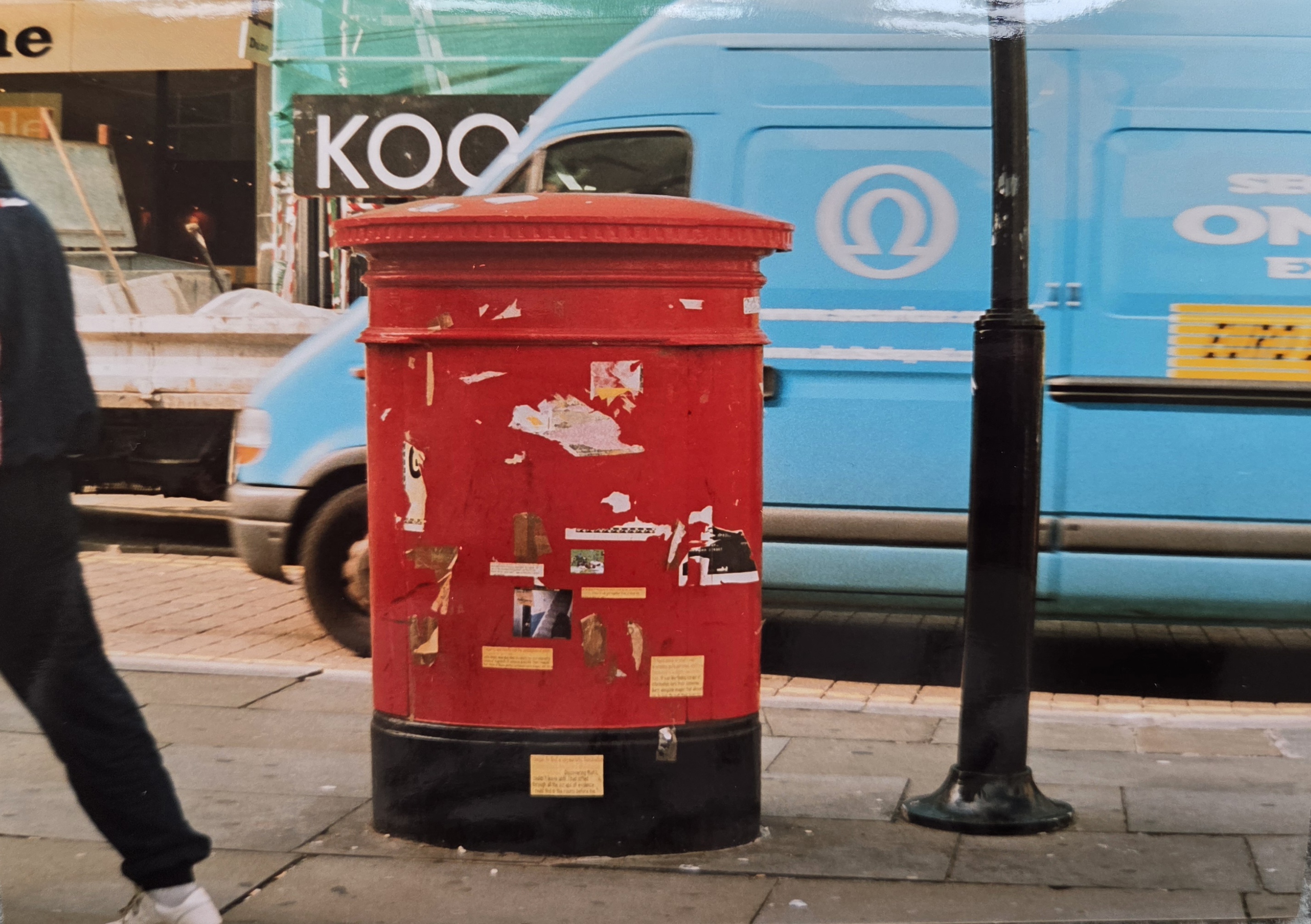
I designed a deconstructed poster and fly posted it around Liverpool city centre.


The cd-rom was sold at News From Nowhere, Jump Ship Rat & Probe Records.


Screencapture of interactive map of promo and distribution sites.

News From Nowhere.

Probe Records.

Jump Ship Rat.


← back


More about 3 Lights Experiment

← back

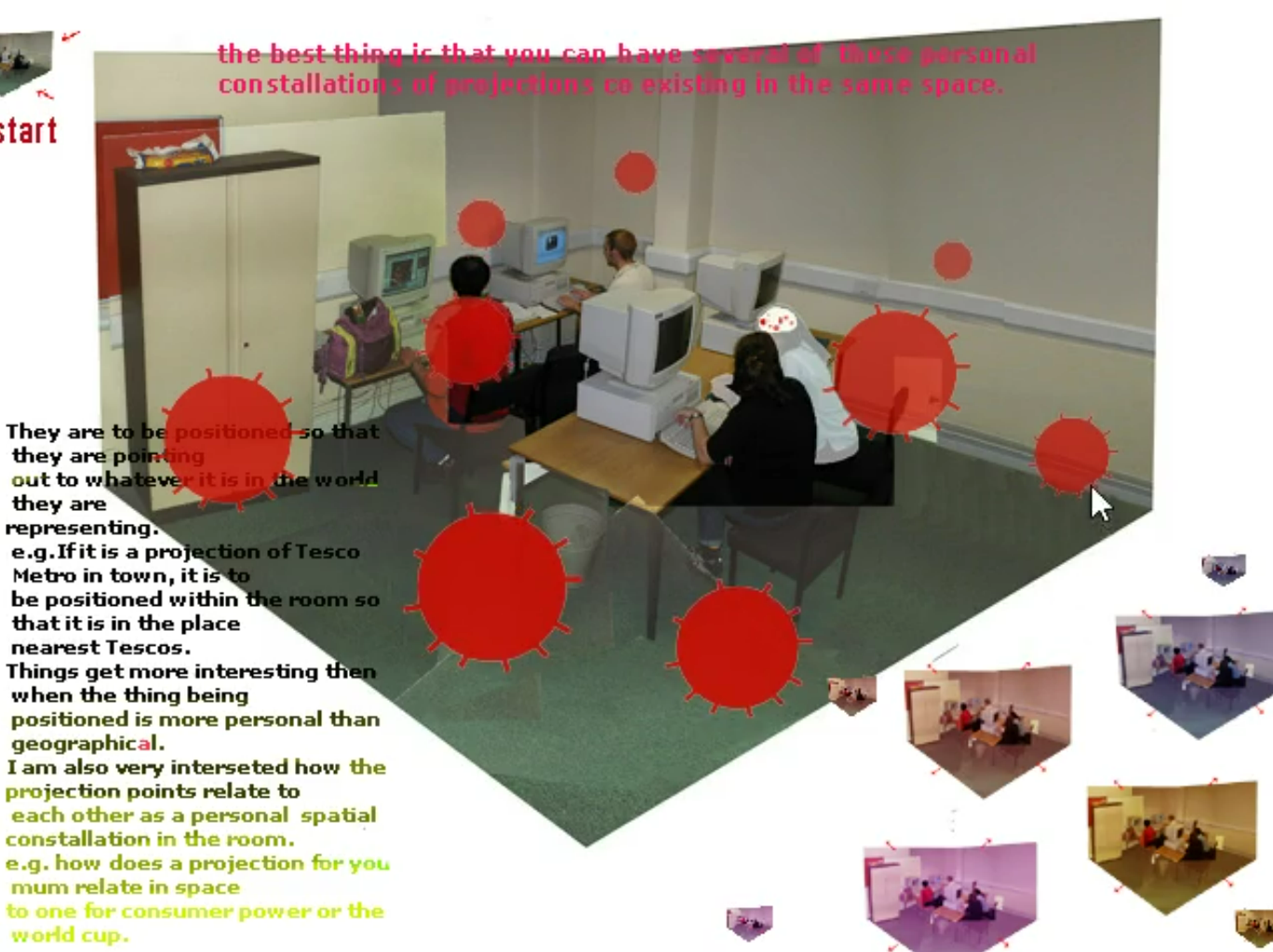
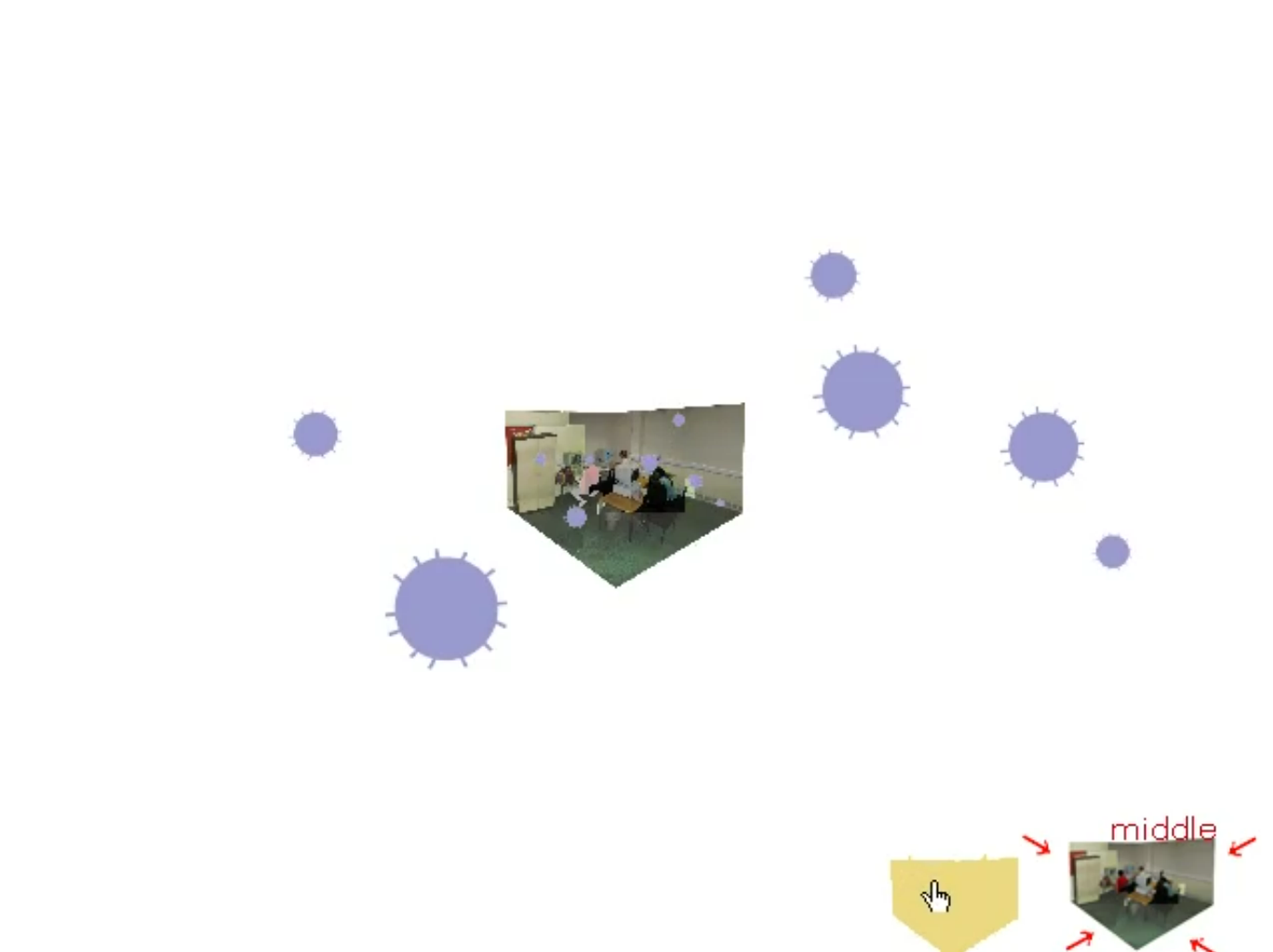
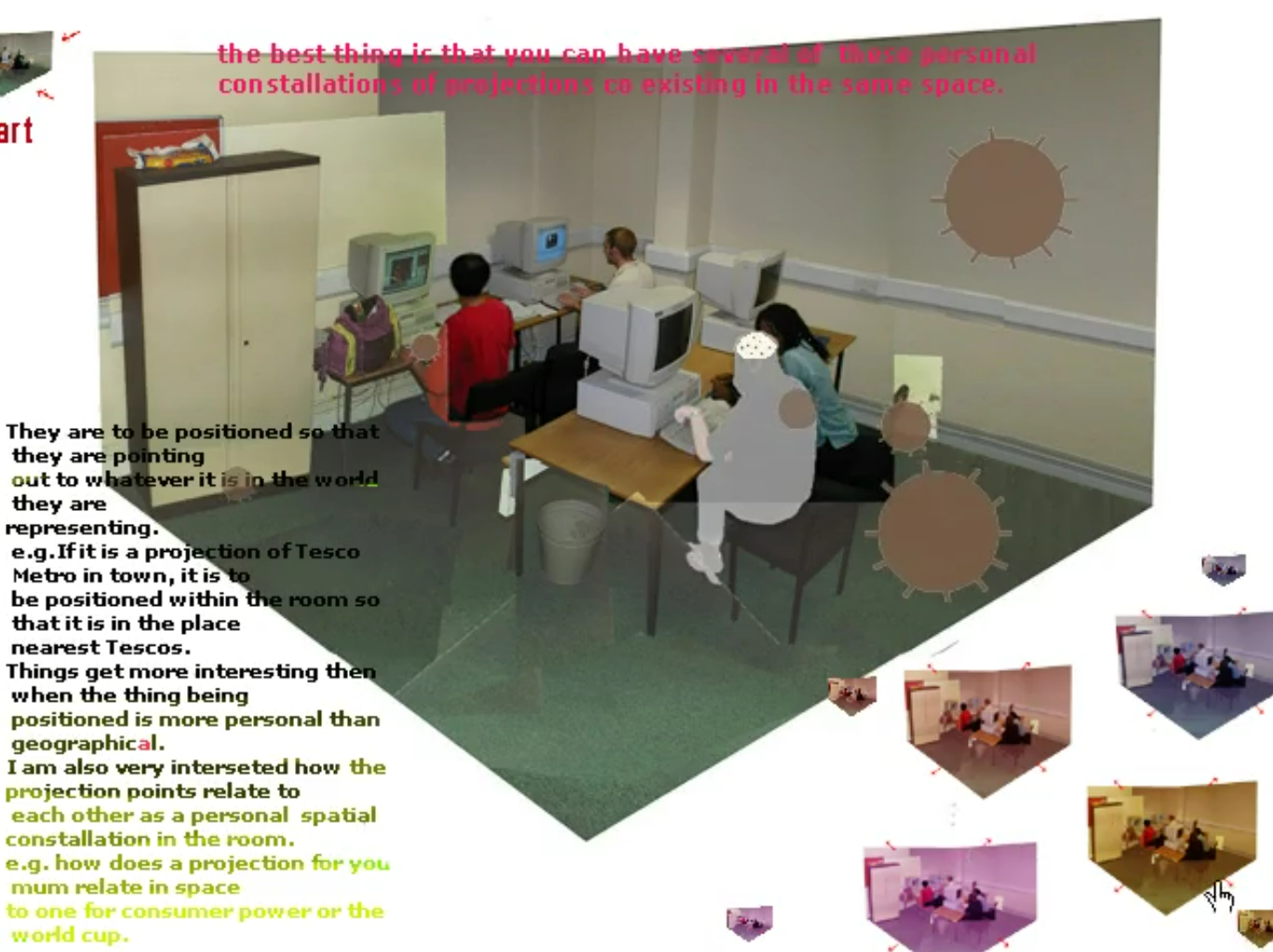
More about Projection Point

← back


← back


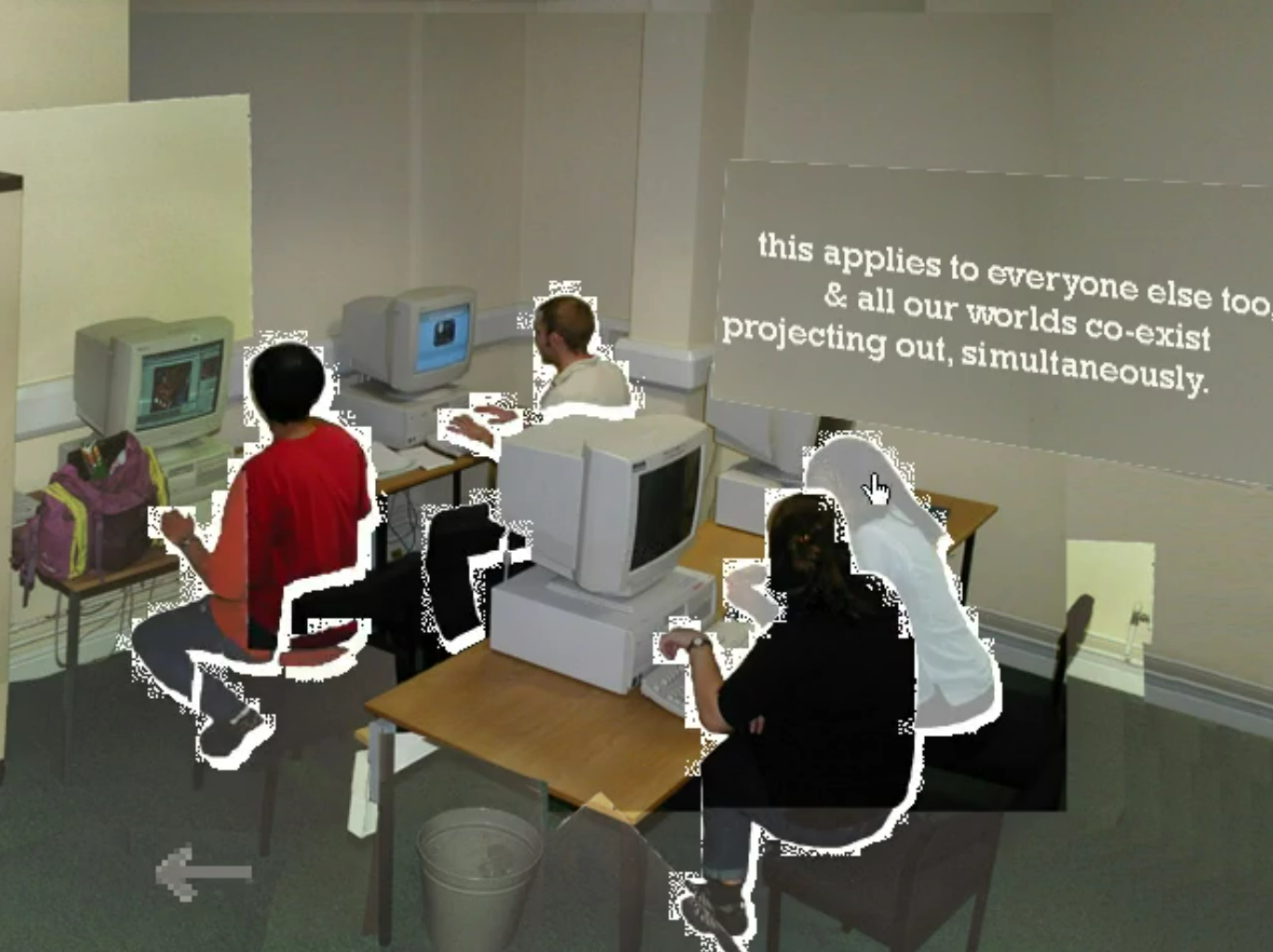
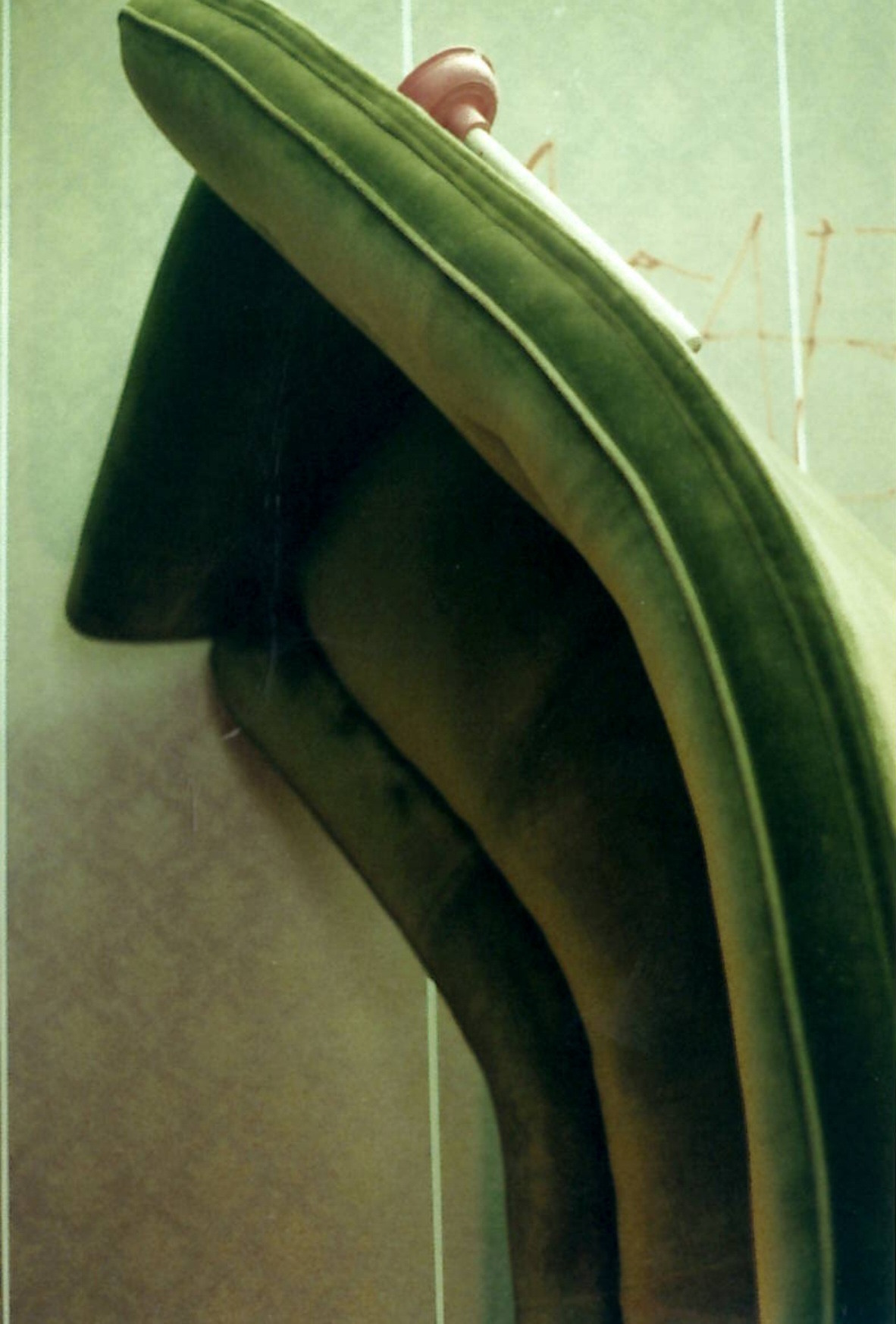
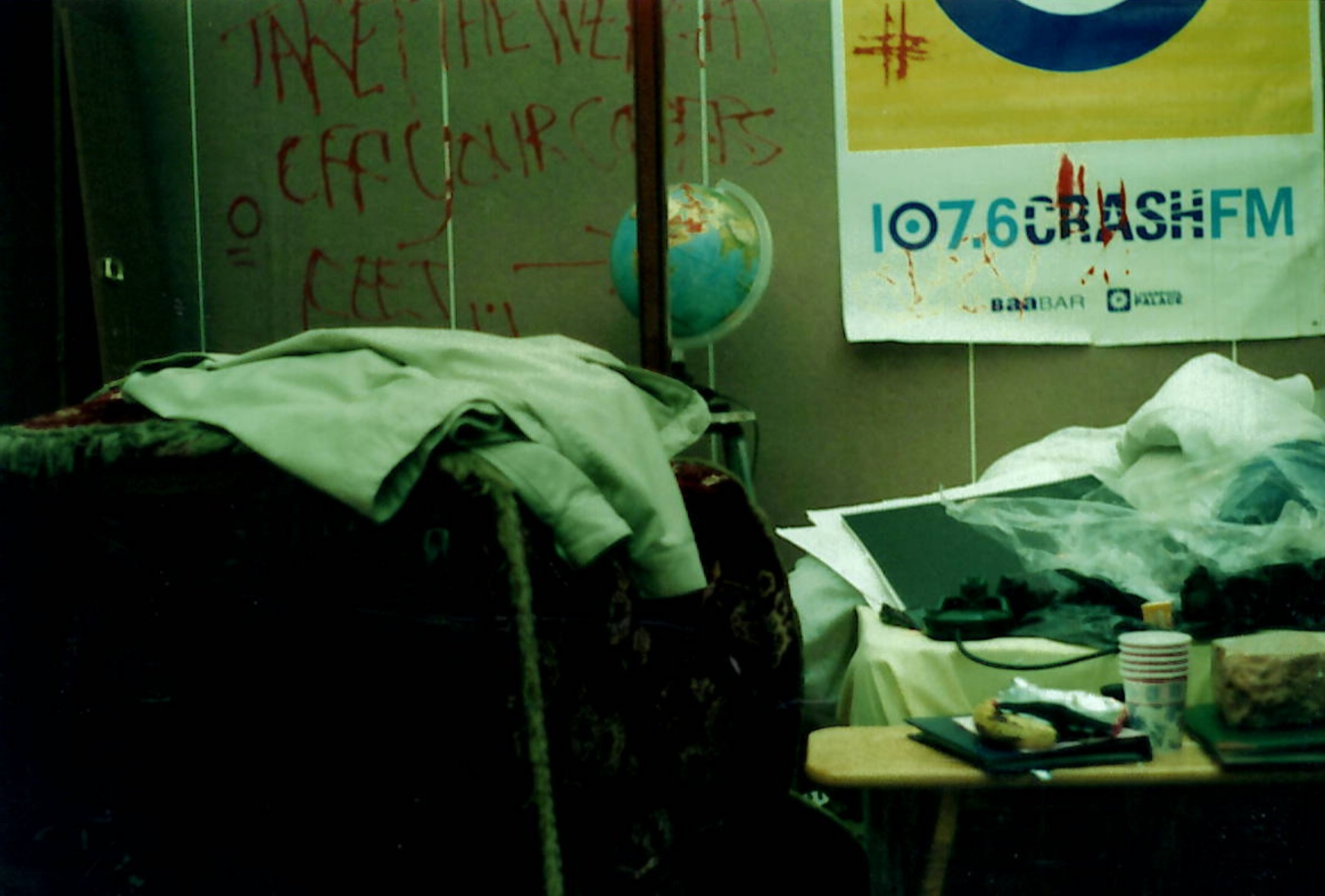
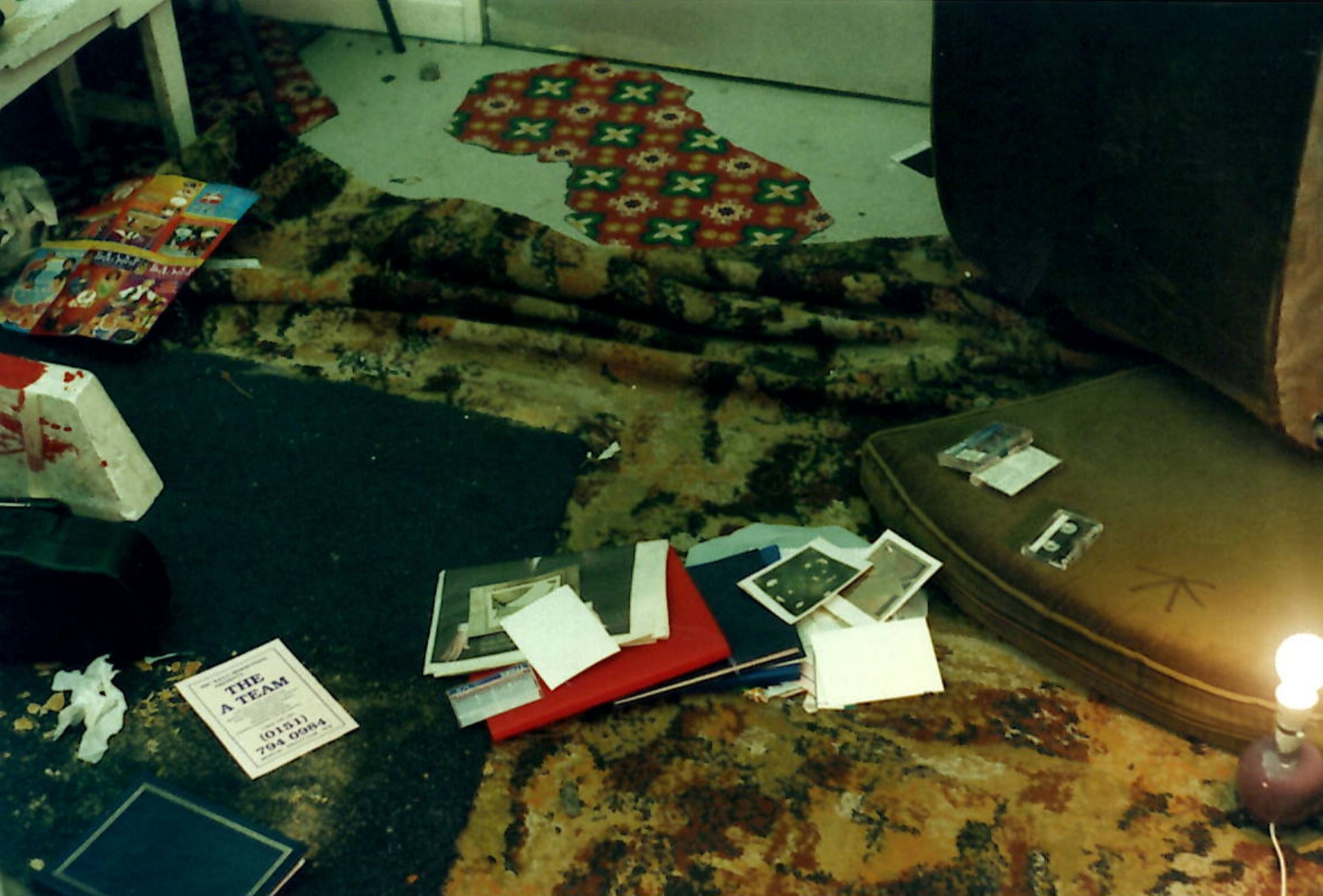
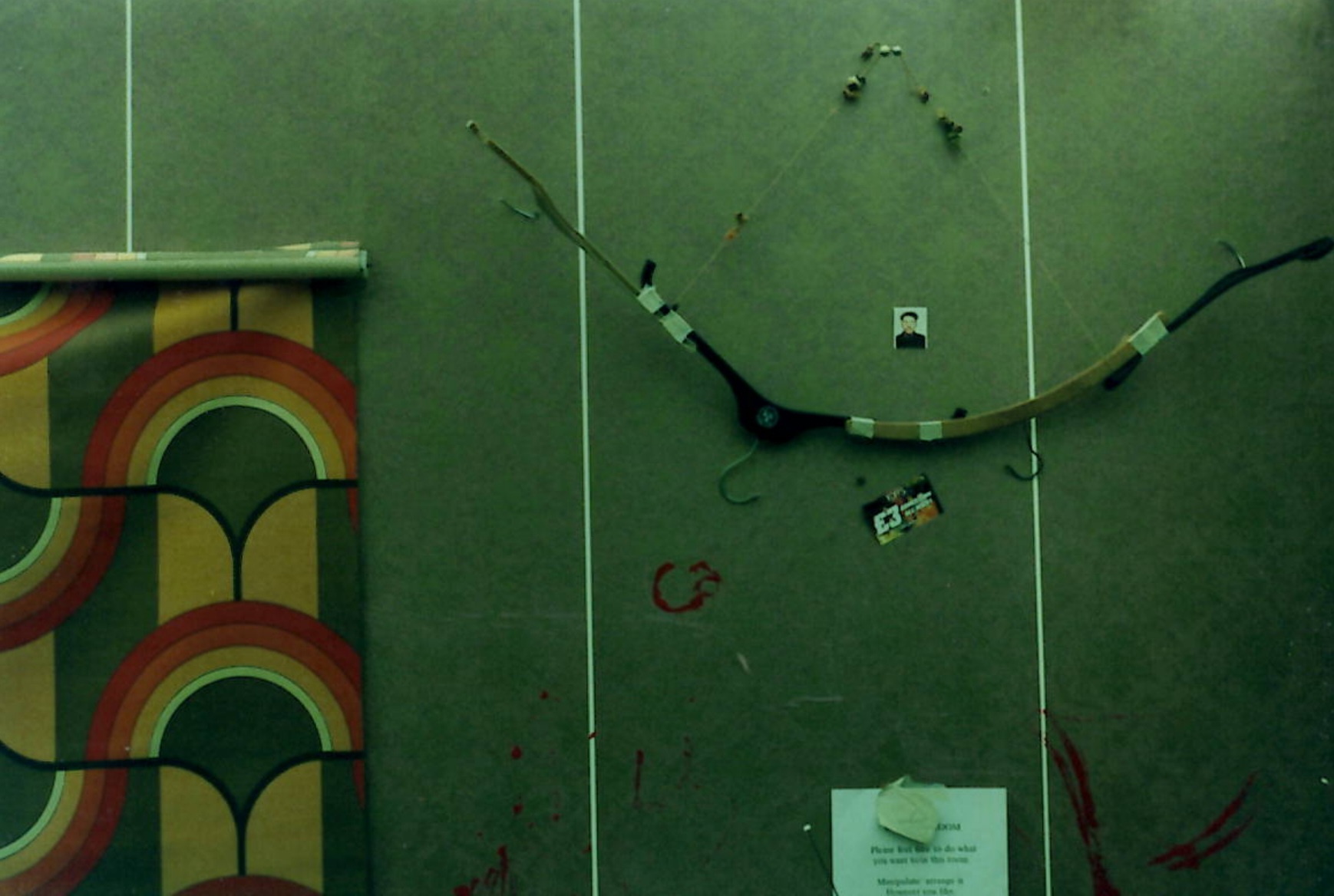
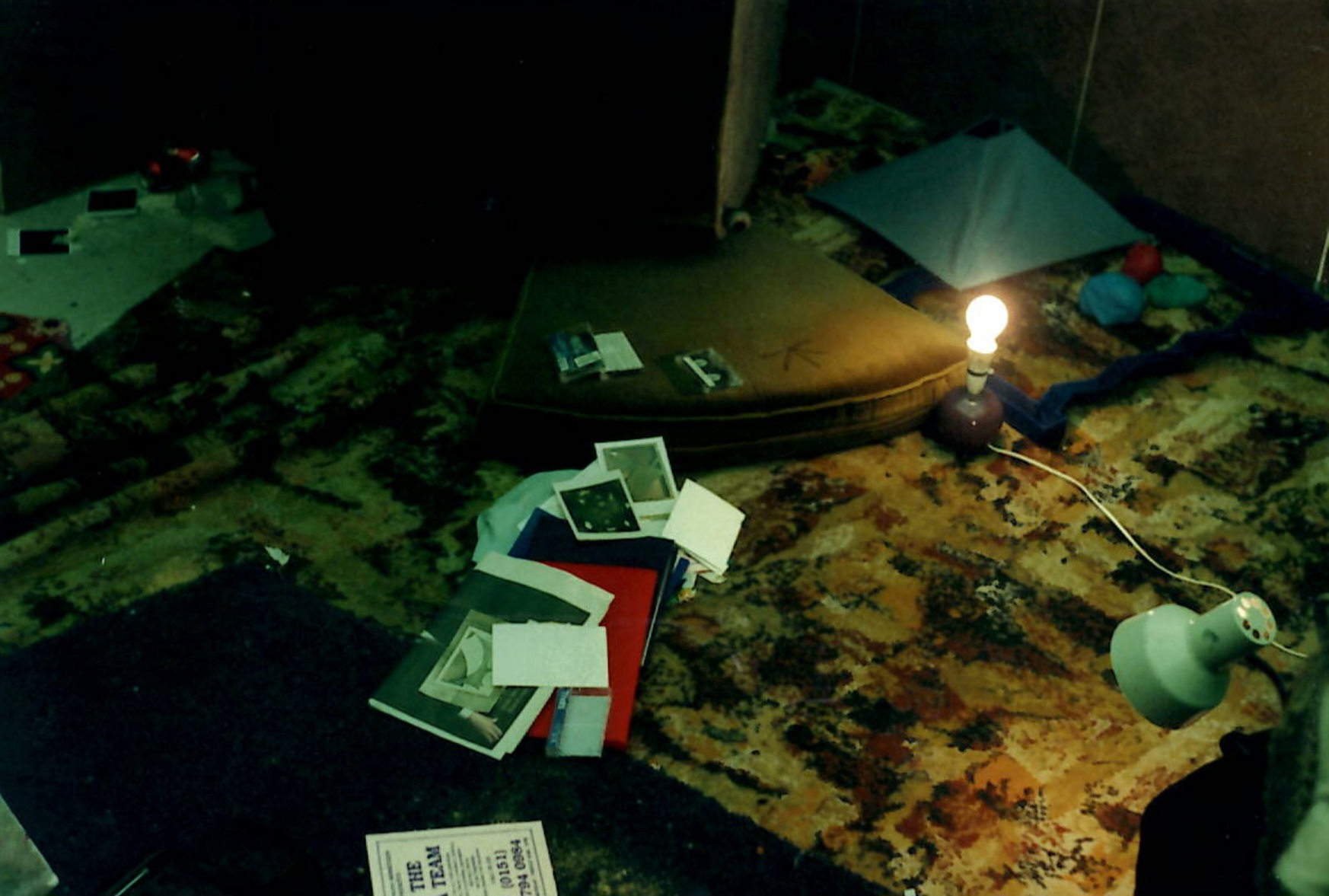
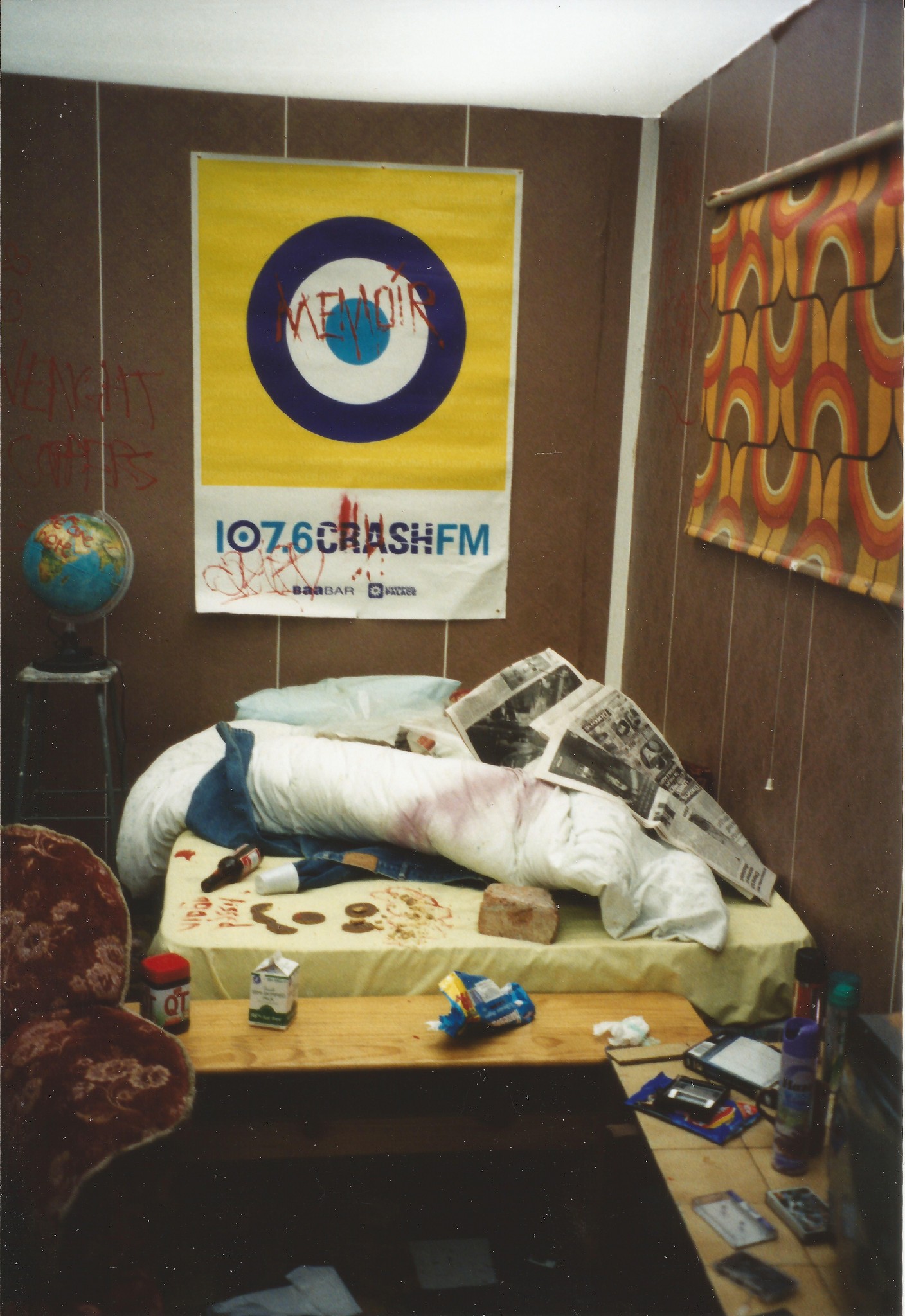
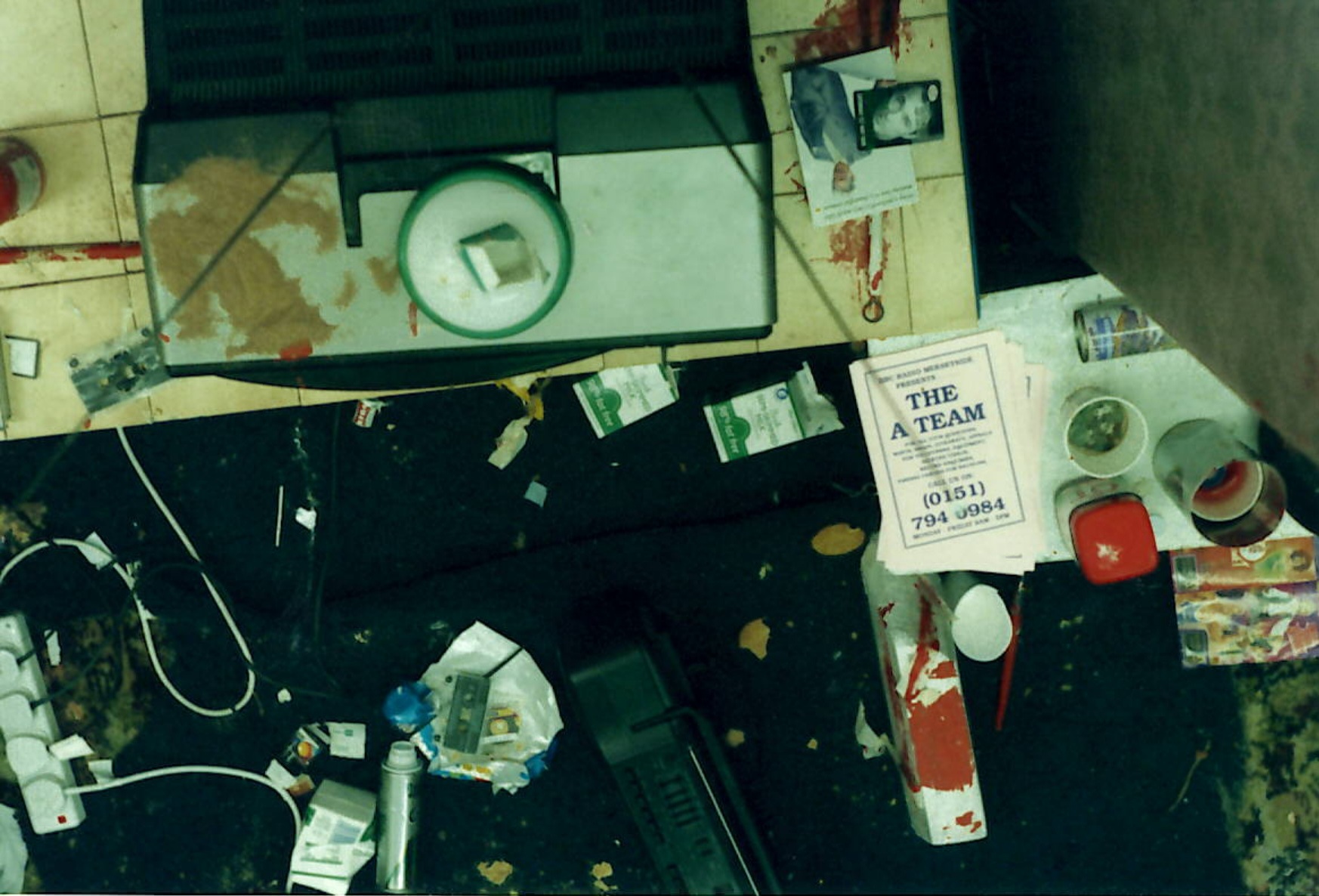
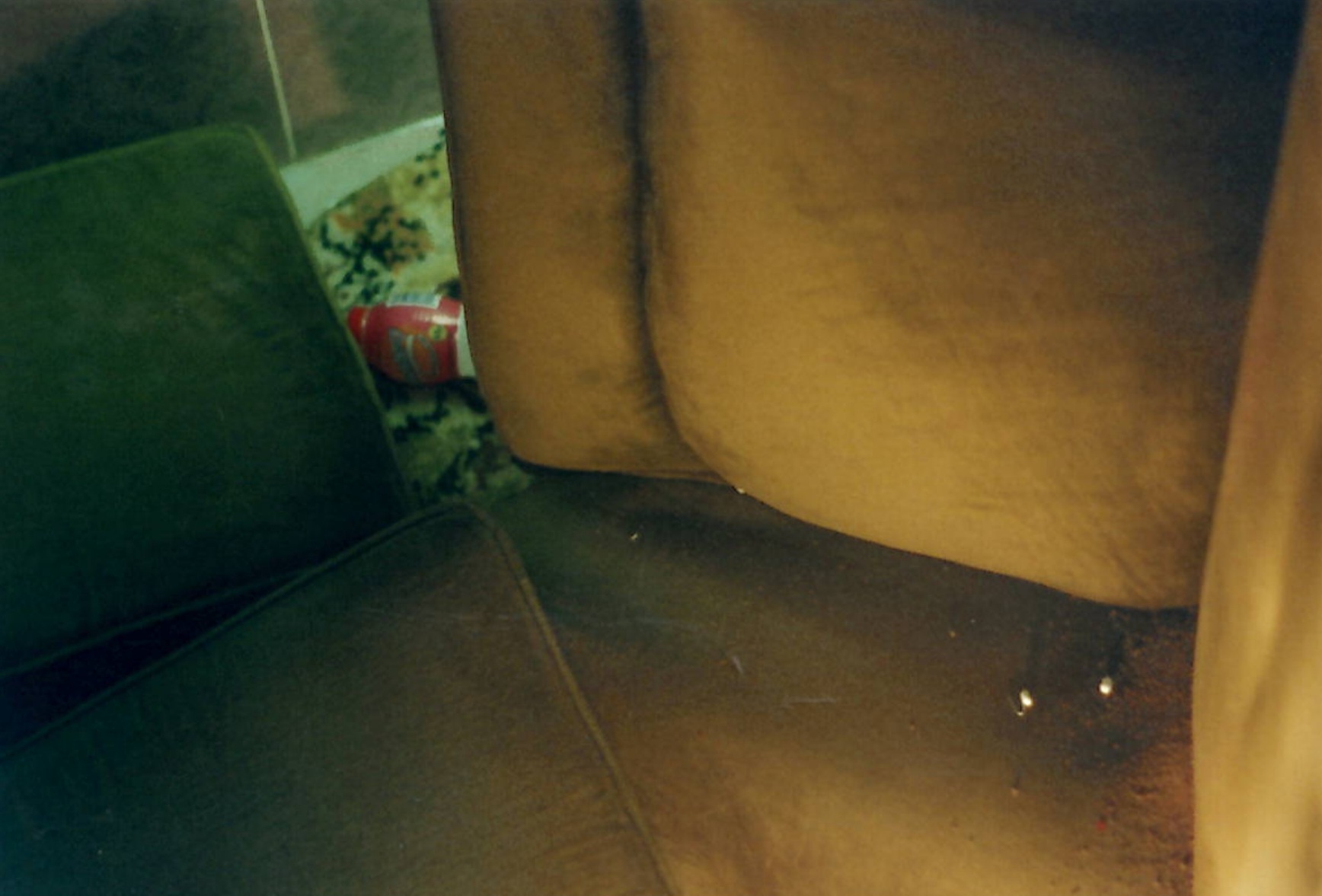
Common Room (degree show), 1999


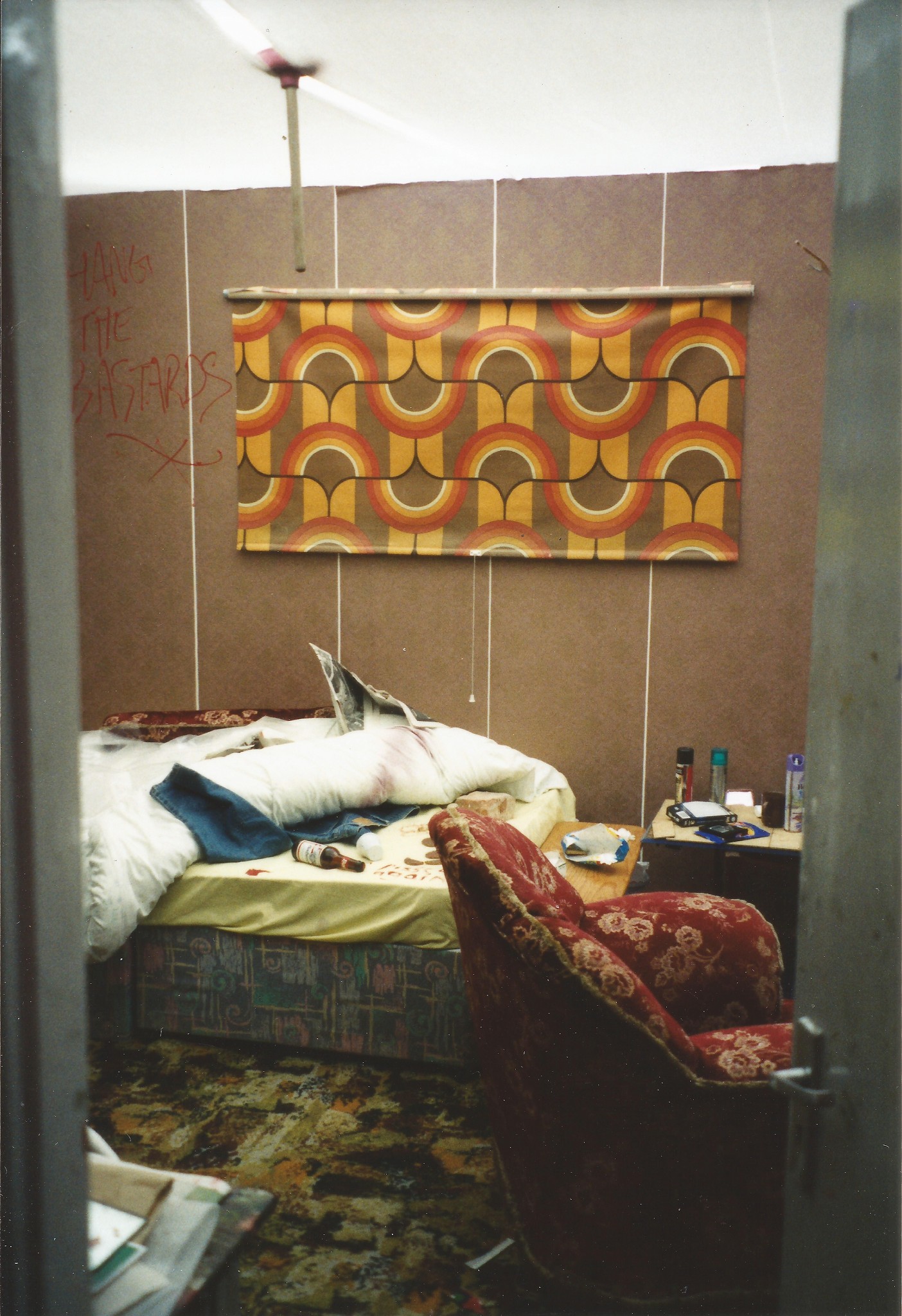
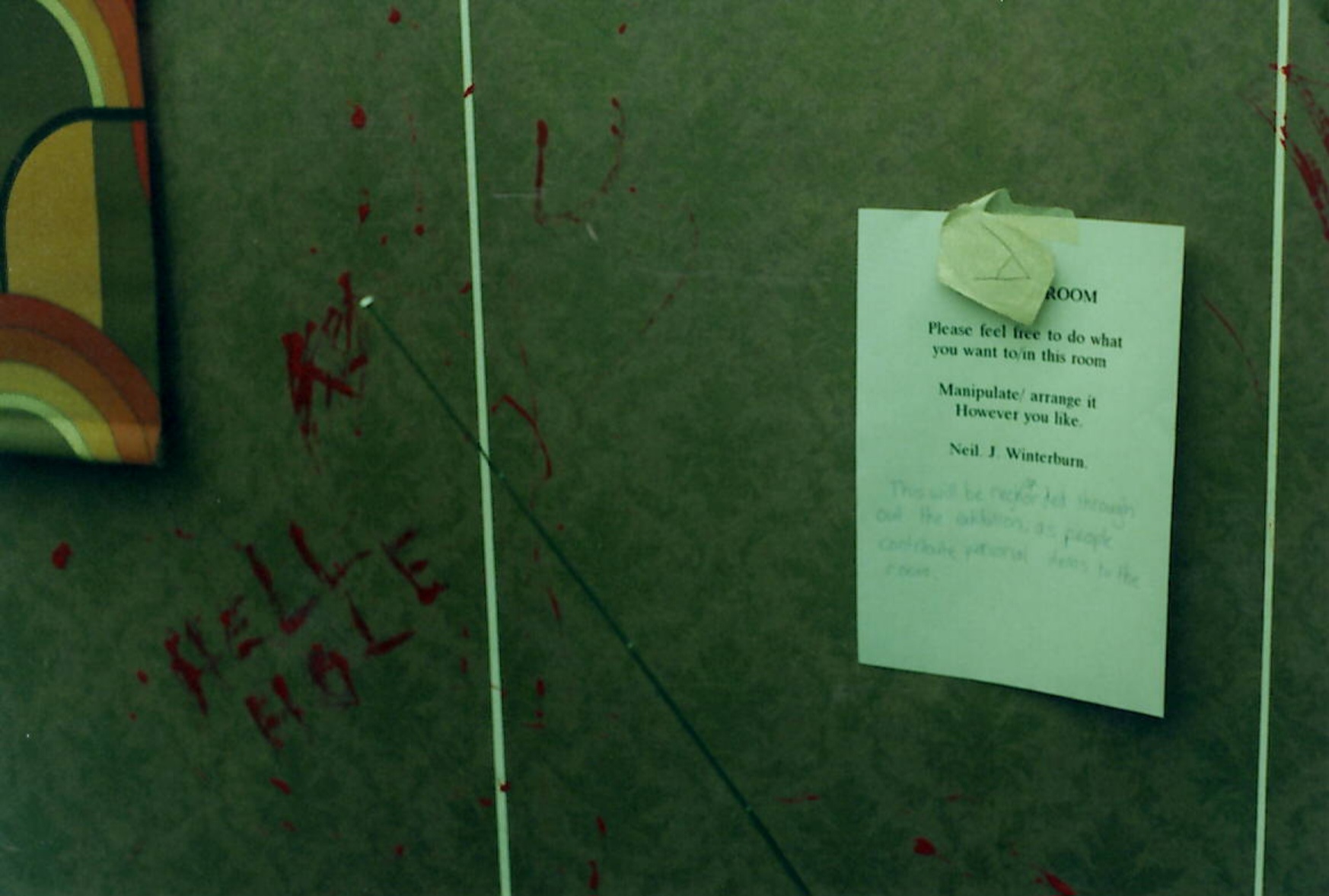
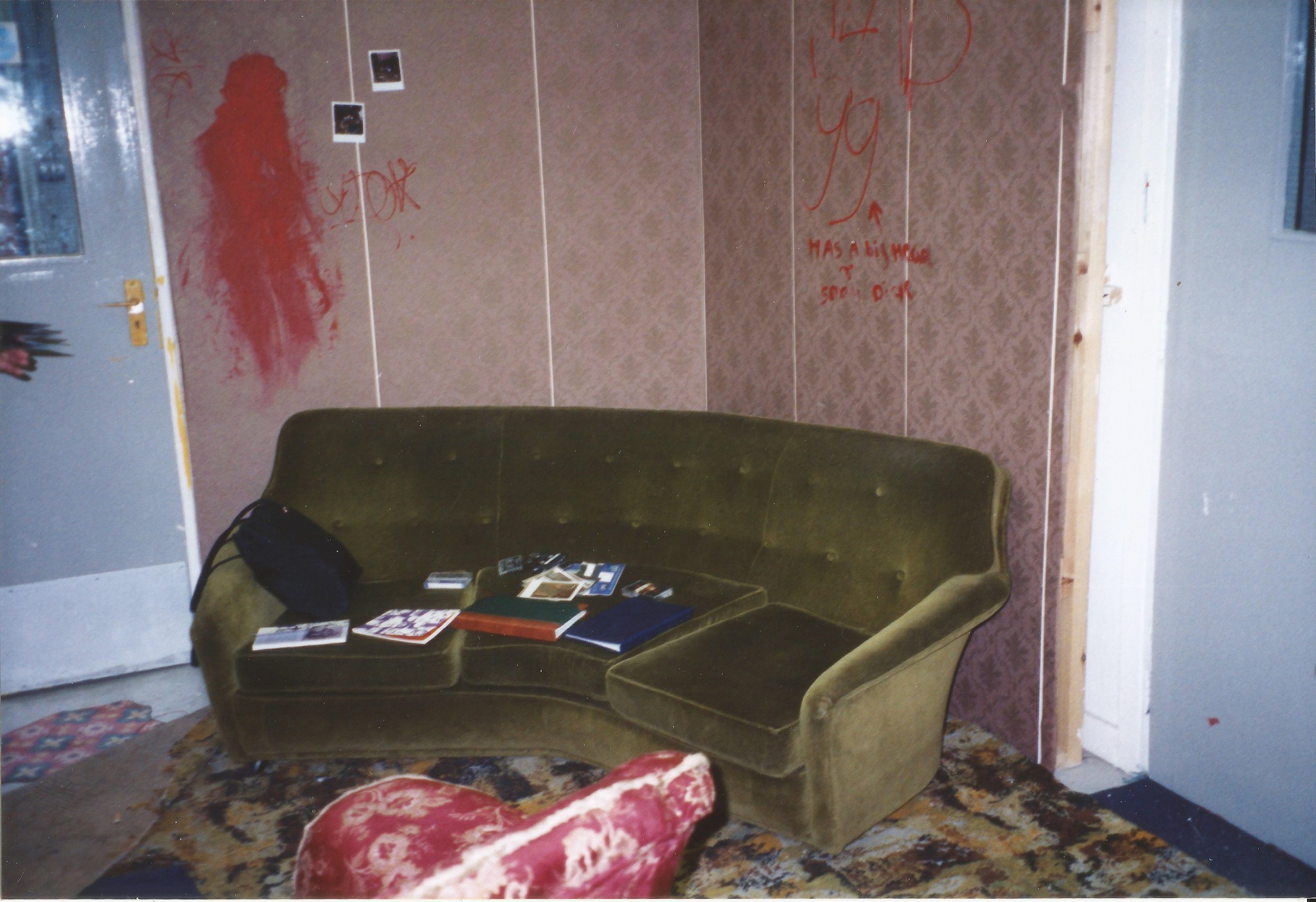
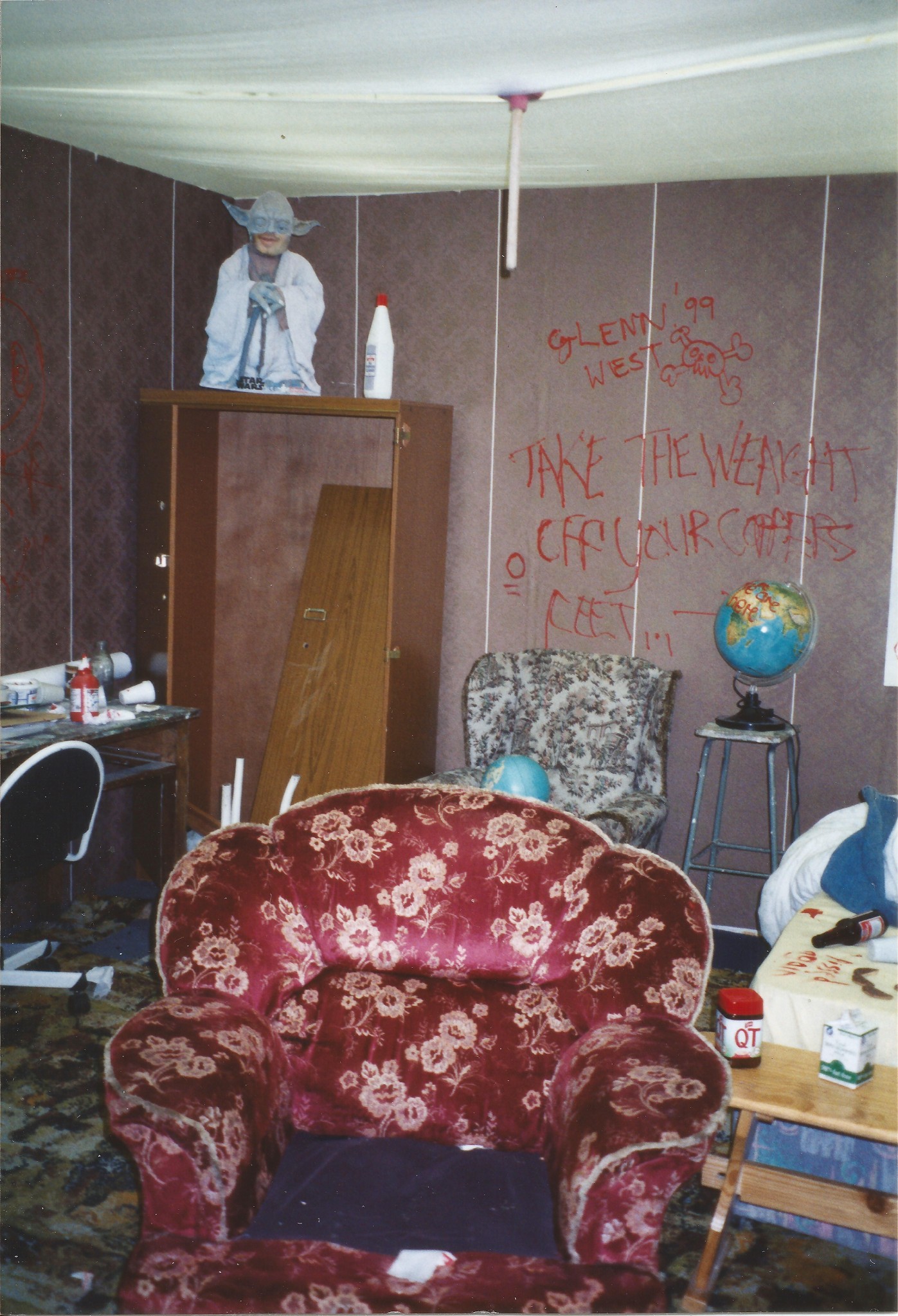
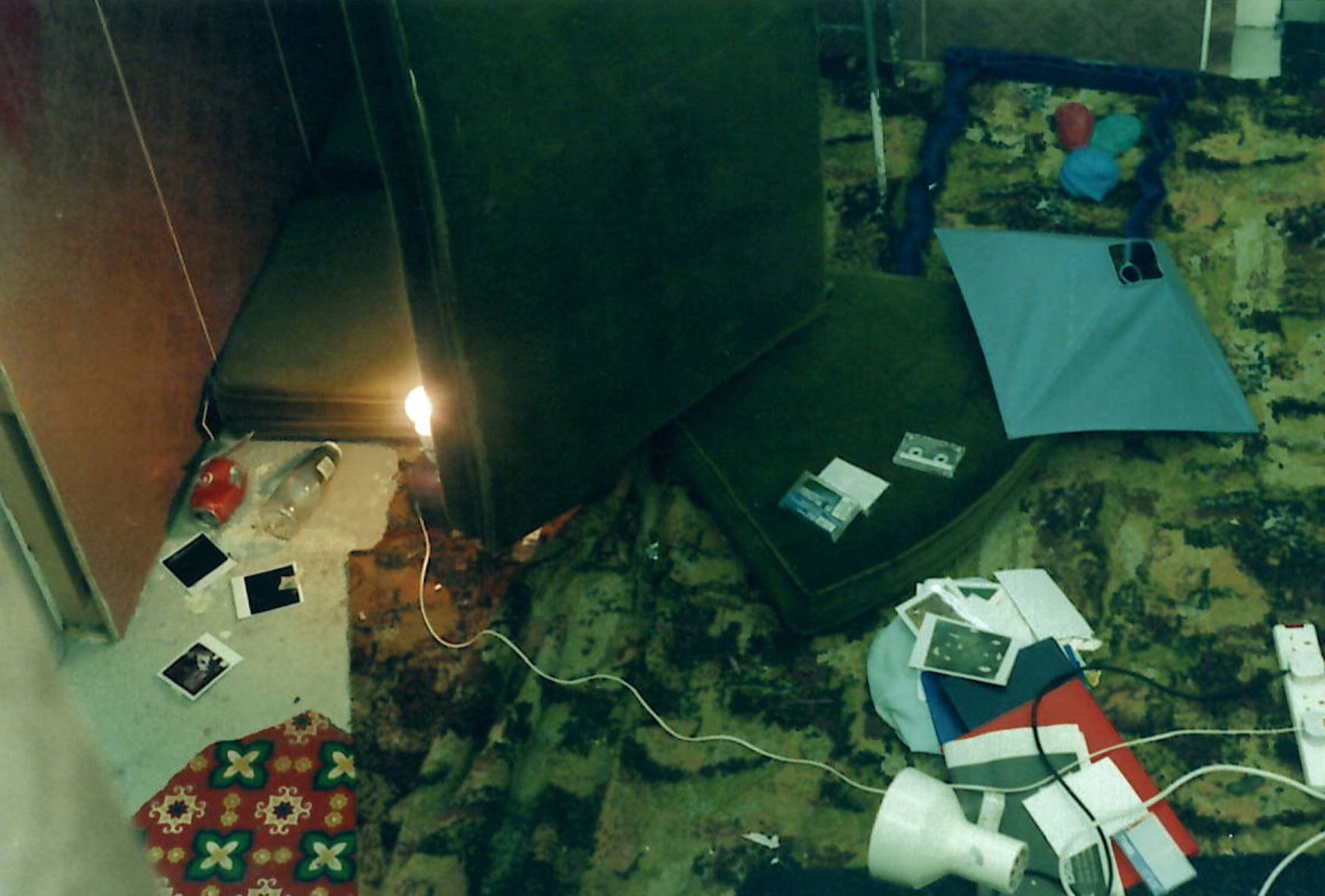
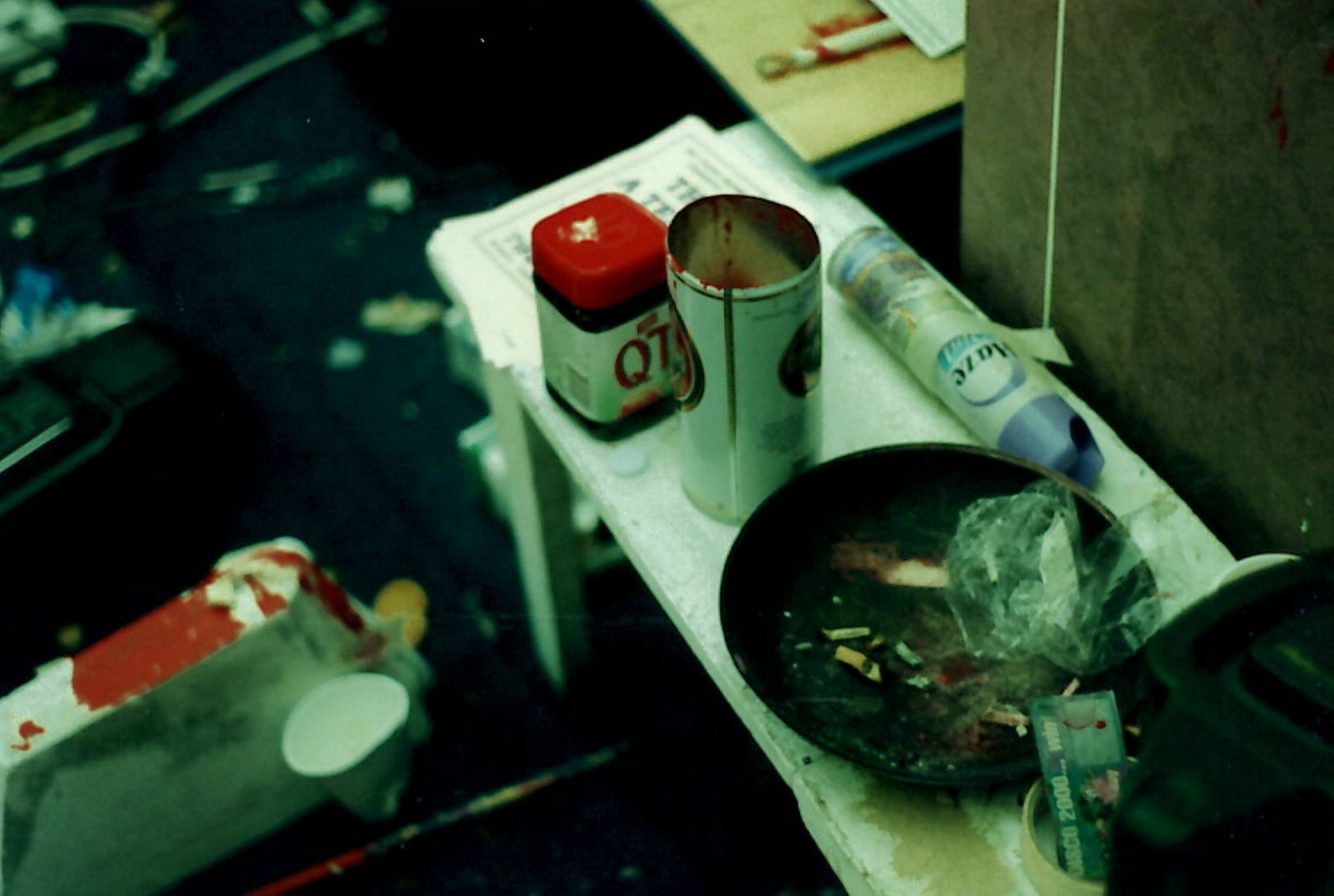
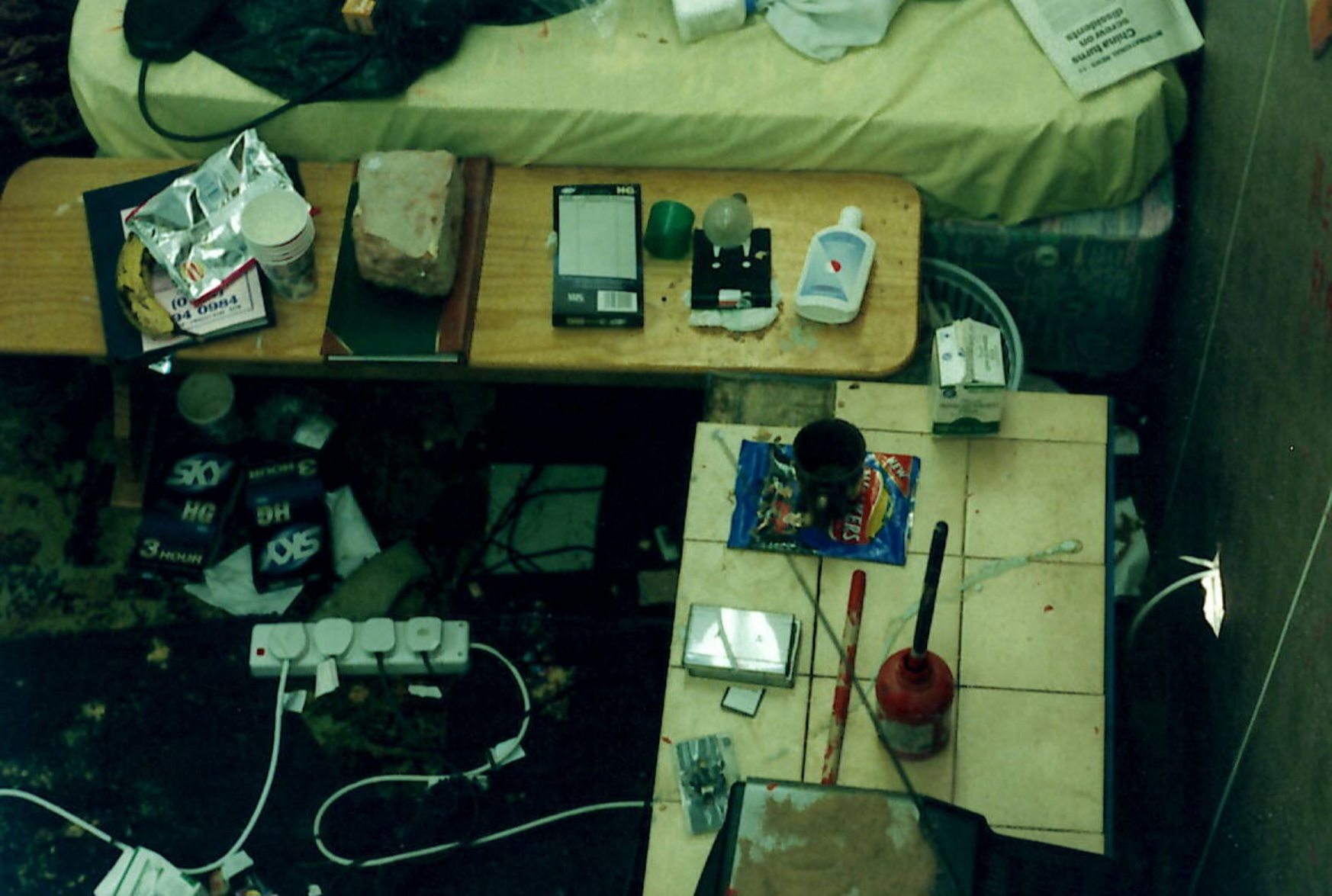
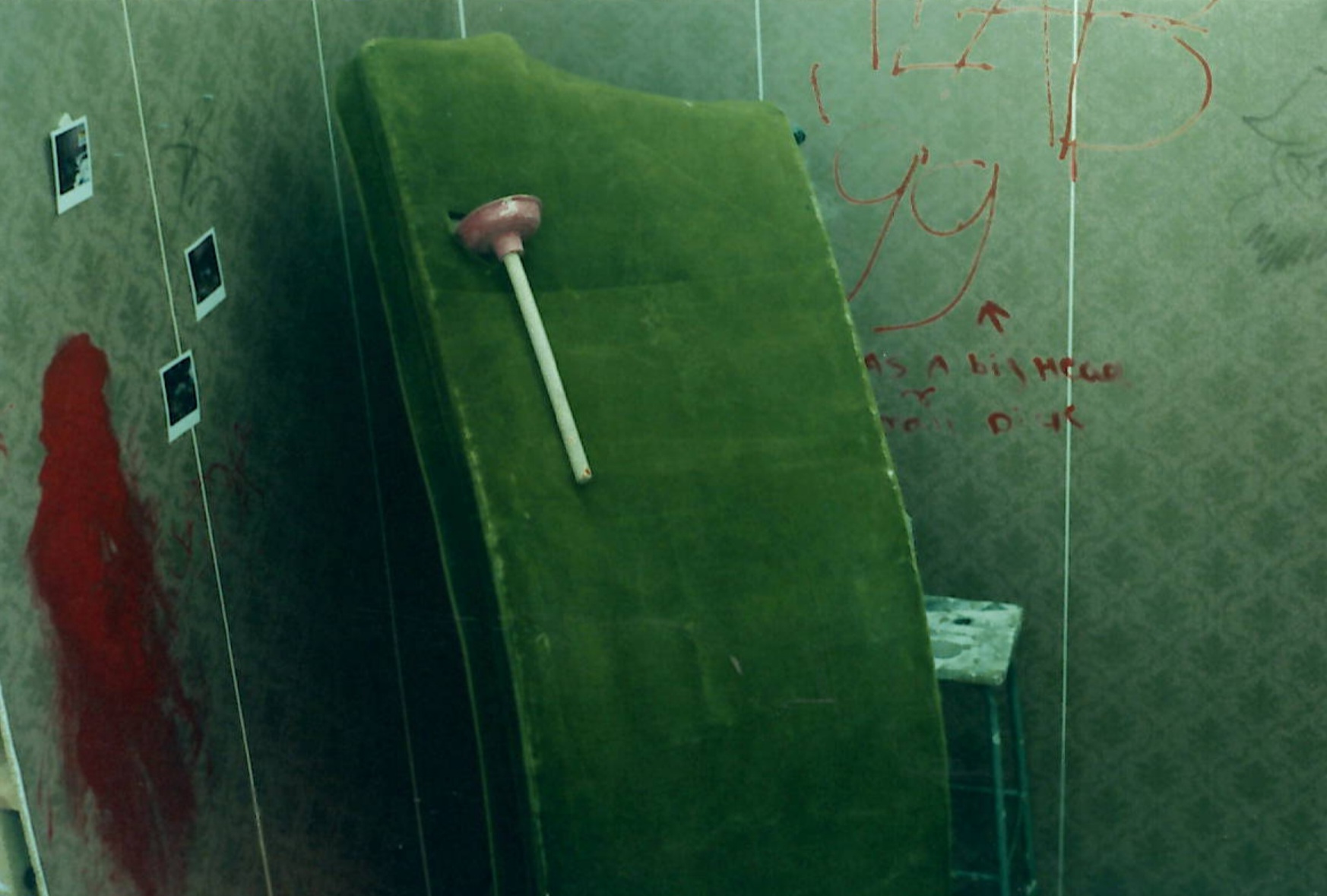
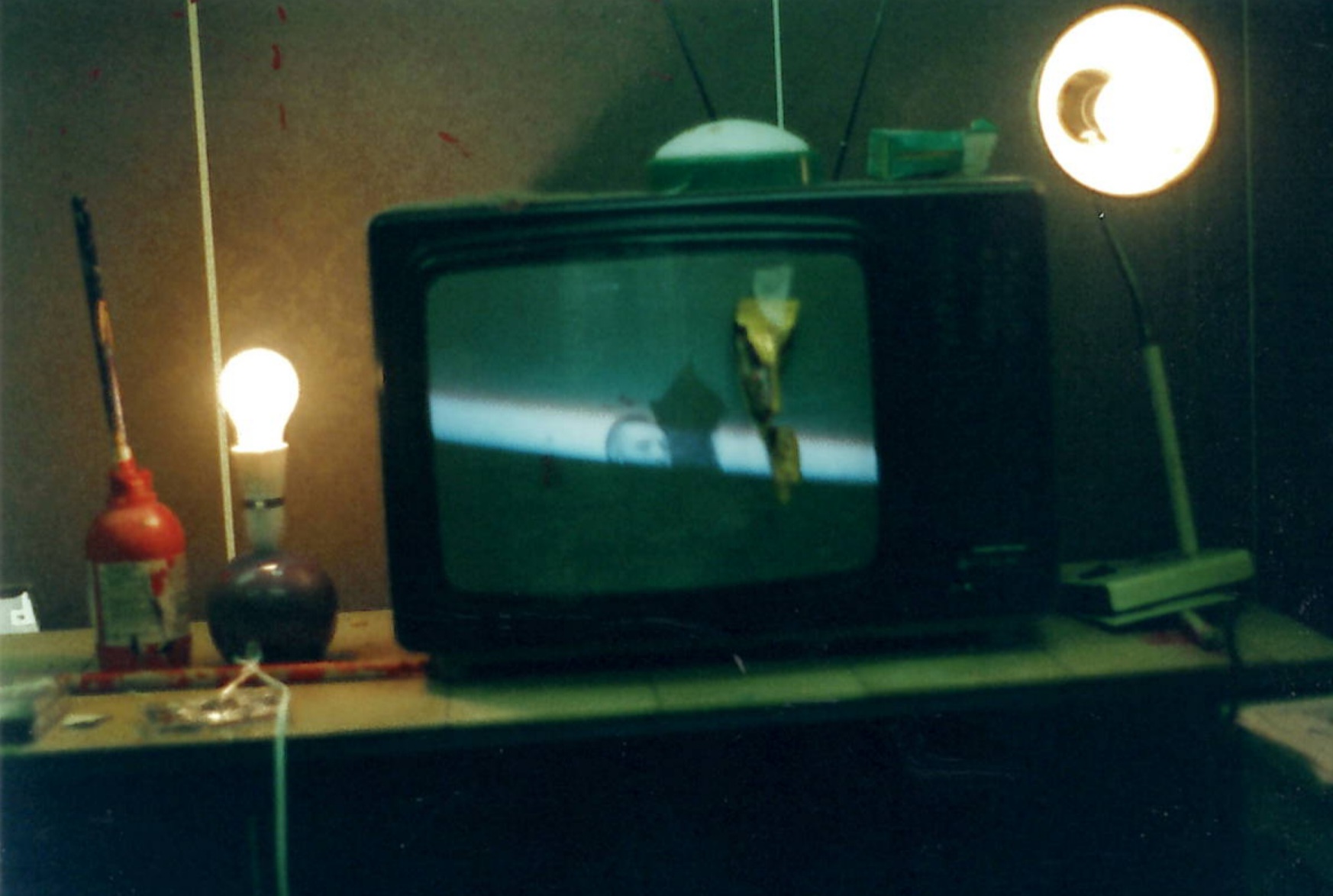
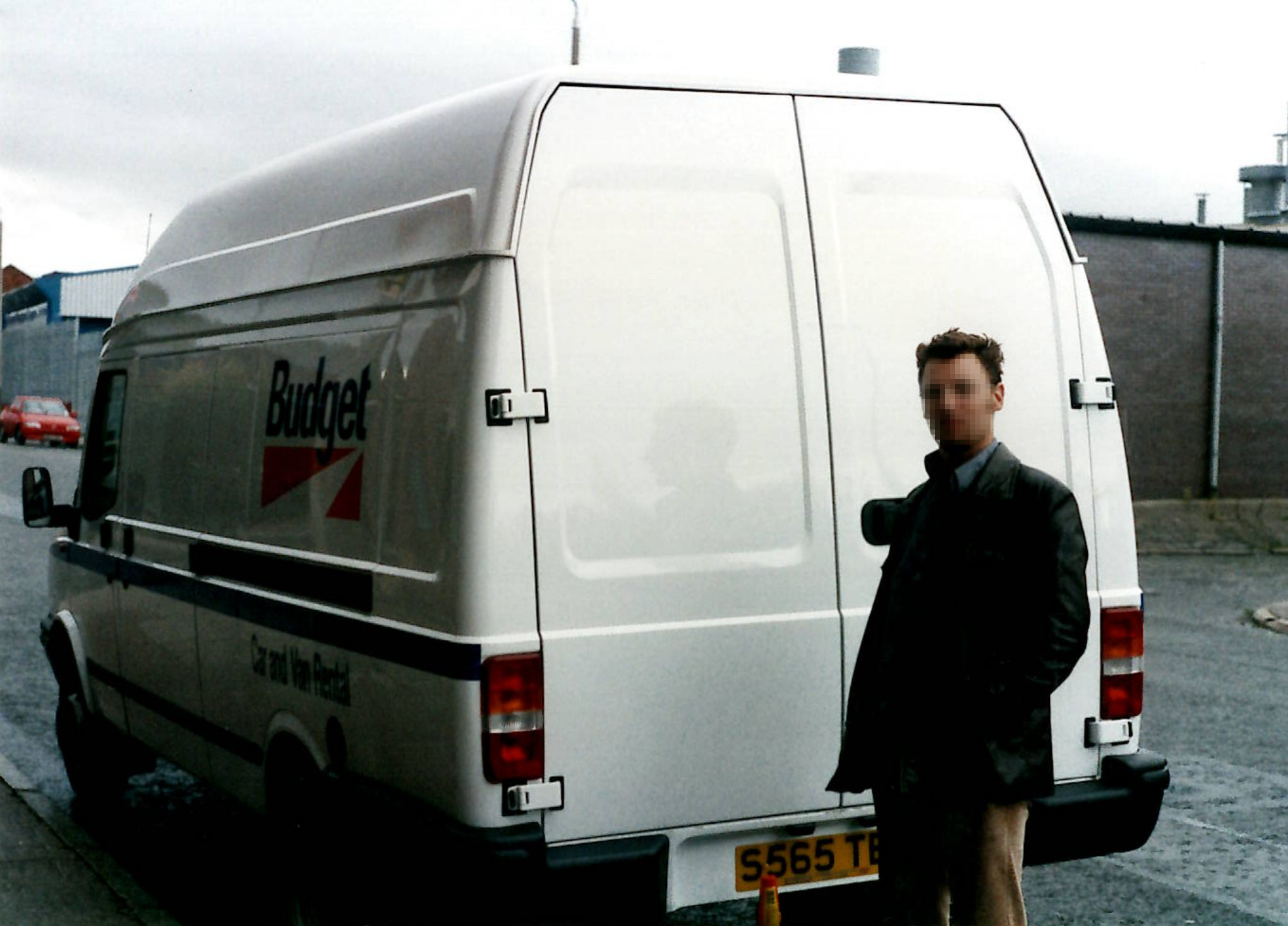
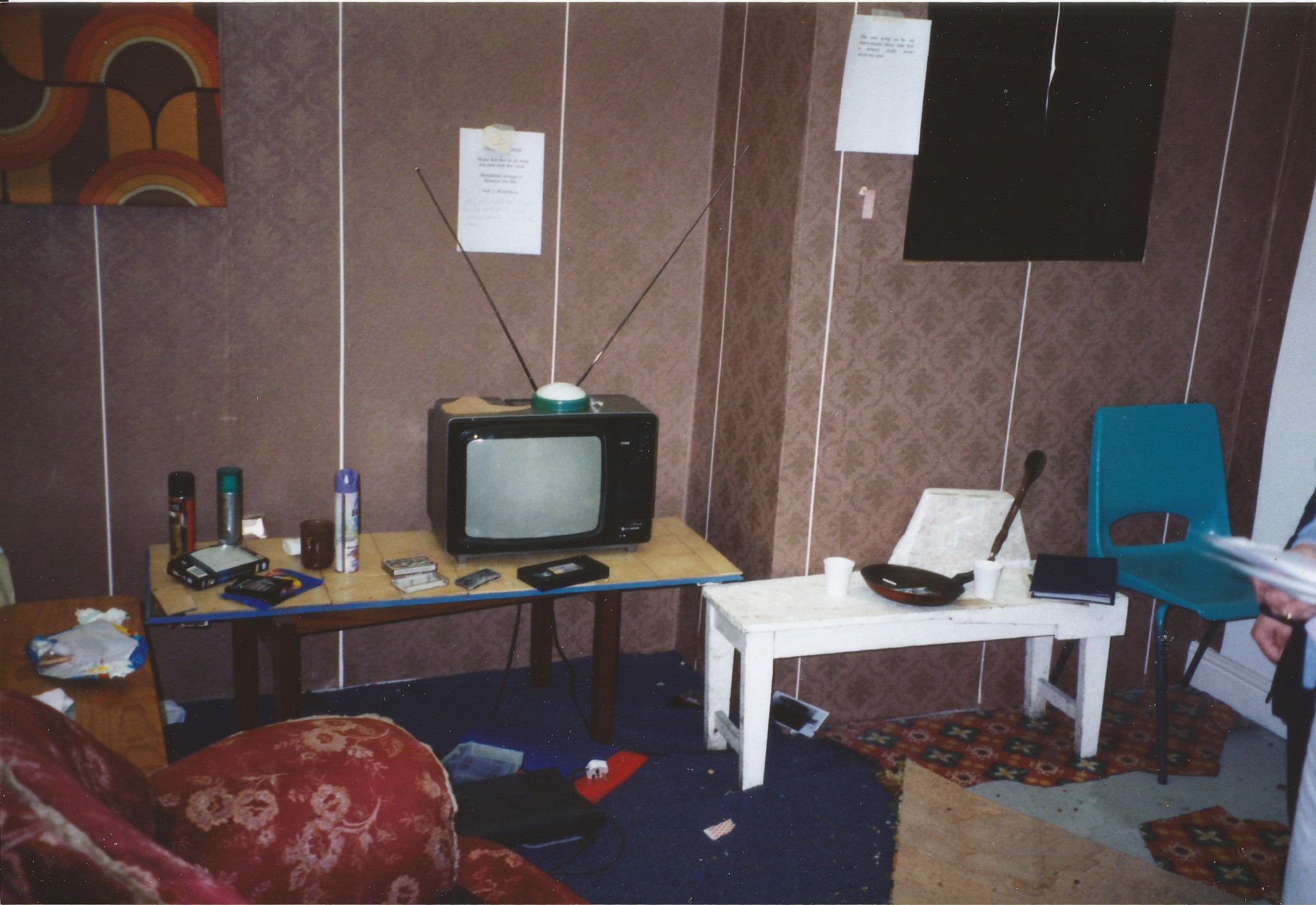
This was my final degree show at John Moores fine art. The exhibition space was a recreation of a student bedsit. The TV played my final video art pieces. On the wall was an instruction to move anything in the room. The photos below were taken the day after the exhibition opening. The video player was stolen within the first hour.


Move Something


← back


Move something is a social sculptural art experience.


To prepare, assemble a large collection of material objects in a large open space. A gallery, studio or project space work well.


The more diverse the range or materials the better. Try to get objects from as many different kinds of places, with as many different uses, scales, materials, textures, forms, affordances and cultural associations as you can.


Then gather two or more people.


To begin, take it in turns to move something.
Each turn you must move at least one thing, but you can move as many things as you like.


Speak as little as you can.


As your communication plays out through the materials, you can loosen the turn taking and begin to move things when you feel, in response and in relation to the other peoples movements.


As we became more absorbed bringing these objects to life, we started to pile, to build towers and other structures.


We noticed ourselves projecting all kinds of meaning onto these piles.


We turned our piles and collections into houses, towns, figures, people, machines, animals and empires.


As we played, mostly without talking, I got a sense of what Lewis was trying to do. He was trying to break apart my little town, turn my godess figure into a monster. There were tensions.


Our dynamics, the pushing of our different intentions played out through the materials


Something worked. There was something in the space, the group of people, the twilight and that assemblage of materials that supported us to manifest some of the complex dynamics moving between us at different scales and levels.


I got interested in the use of physical materials to mediate and social dynamics, tensions and intensions after a row me and my Dad had about a mess I made in his garage.


I'd been back at my mum and dads for the summer, between second and third year at university and my dad had very kindly let me use his tools in the garage over a few nights to make a sculpture. I left it in a mess and couldn't understand what his problem was at the time, what a twat. I was so caught up in my idea of being an artist I couldn't appreciate I was in his garage. 30 years after his British Rail apprenticeship this was stretching him to the limit. It had been a perfect and tense summer, my dad was dealing with my Nannas dementia and I didn't know how to talk to him about it or help.


I'd been obsessing about intersubjectivity, making lots of quite conceptual pieces and writing very abstract artist statements about the different worlds we each live in. My way of trying to feel in control of the overwhelm of people I guess. Anyway, this argument and realising it was the garage and the materials in it that provided the contact and the spark for me and my Dad to have the argument we needed, pulled me back into the physical world and away from ideas and theory. For a while at least.


← back


Critical Kits and How We Use Them


‘Critical Kits and How We Use Them’ is a book and card game exploring artistic approaches to the production and distribution of kits. It was produced by Re-Dock, Torque publications and artists from across the North of England. I wrote the introduction to the book, chapters on prototyping digital art with young people and created the Critical Kits card game with Ross Dalziel & Hwa Young Jung. You can read & download the digital edition of the book here.

‘This book is about DIY culture and how it meets participatory, inclusive and community-based forms of creative practice. Critical kits are toolboxes, resources, instructions for how to make great, or simply interesting, things happen with technology. But they also ask that we question why, and to be aware of the network of effects technologies participate in. Critical Kits includes a selection of case studies from artists and makers working in the kit form, a series of essays on the theory, historical and contemporary contexts for kit making and distribution, and an in depth look Gym Jams, a kit-based project which took place in a public leisure centre. It is designed to be useful for artists, makers, students of art-tech work, and anyone interested in current participatory and technology practices.’


← back


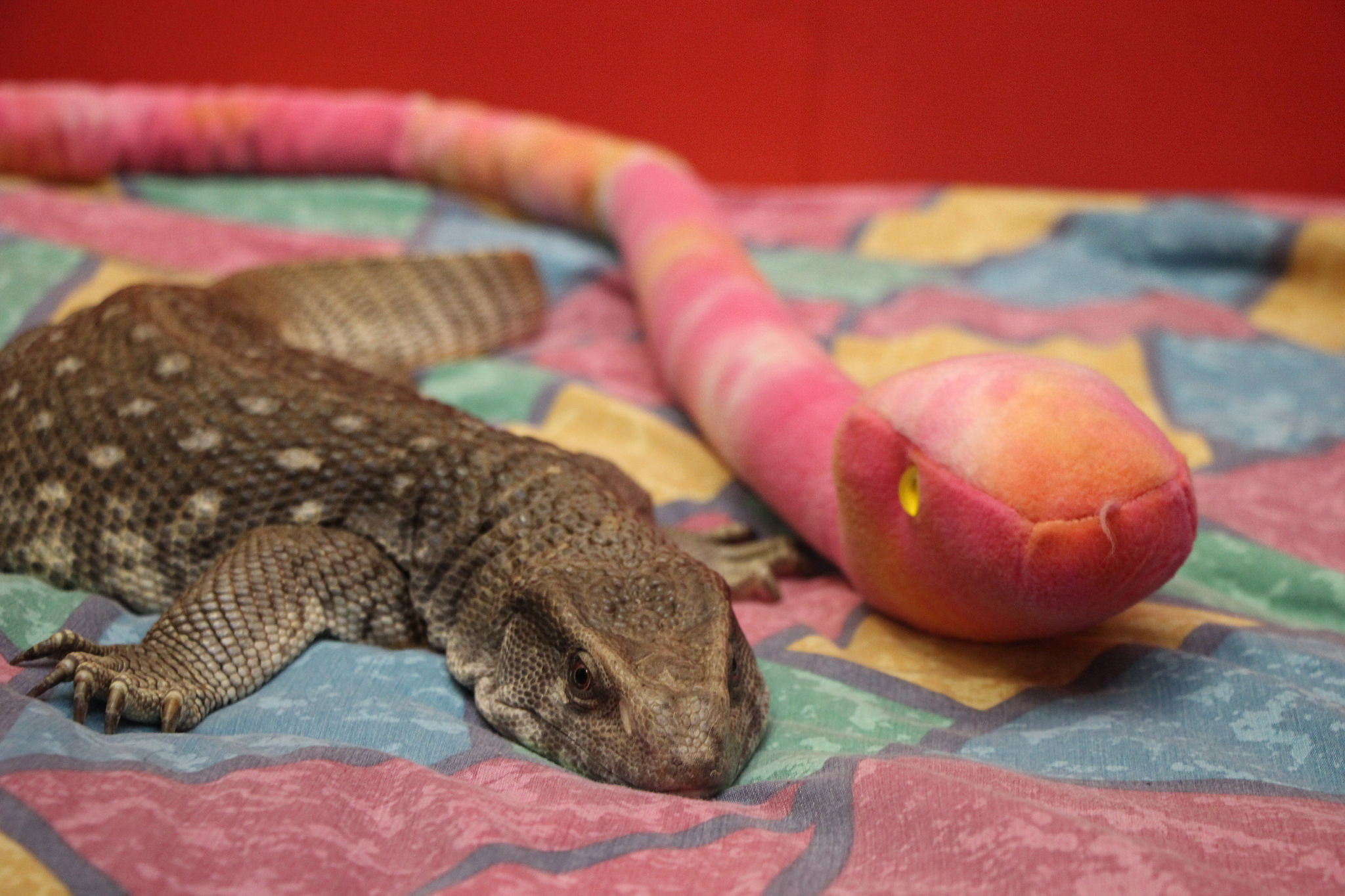
St.Helens Vs The Lizards


‘St. Helen’s Vs The Lizards’ is an 1980’s / Lizard themed Escape Room, designed with teenagers and built in St. Helen’s Central Library.


The Escape Room was designed in collaboration with set designer Olivia Dumonceau, set builder Colin Gaskarth, Escape room experts Exit Strategy and Teletext Artist Dan Farrimond. It was commissioned as part of the St.Helen’s Cultural Hubs programme.


The escape room is set in St.Helen’s just before Christmas 1984.
“Sam seems like any other teenager – problems with authority, fed up of school, etc. Except there might be something more going on. What if Dad isn’t just embarrassing, but is actually something much more sinister? What if the teachers at school aren’t only tracking grades, but his thoughts? There are strange messages in the music, and on Teletext. Patterns in the news, odd occurrences in the town. Something is going on, but no one else can see it. From now on, no one can be trusted – they could all be lizards!”
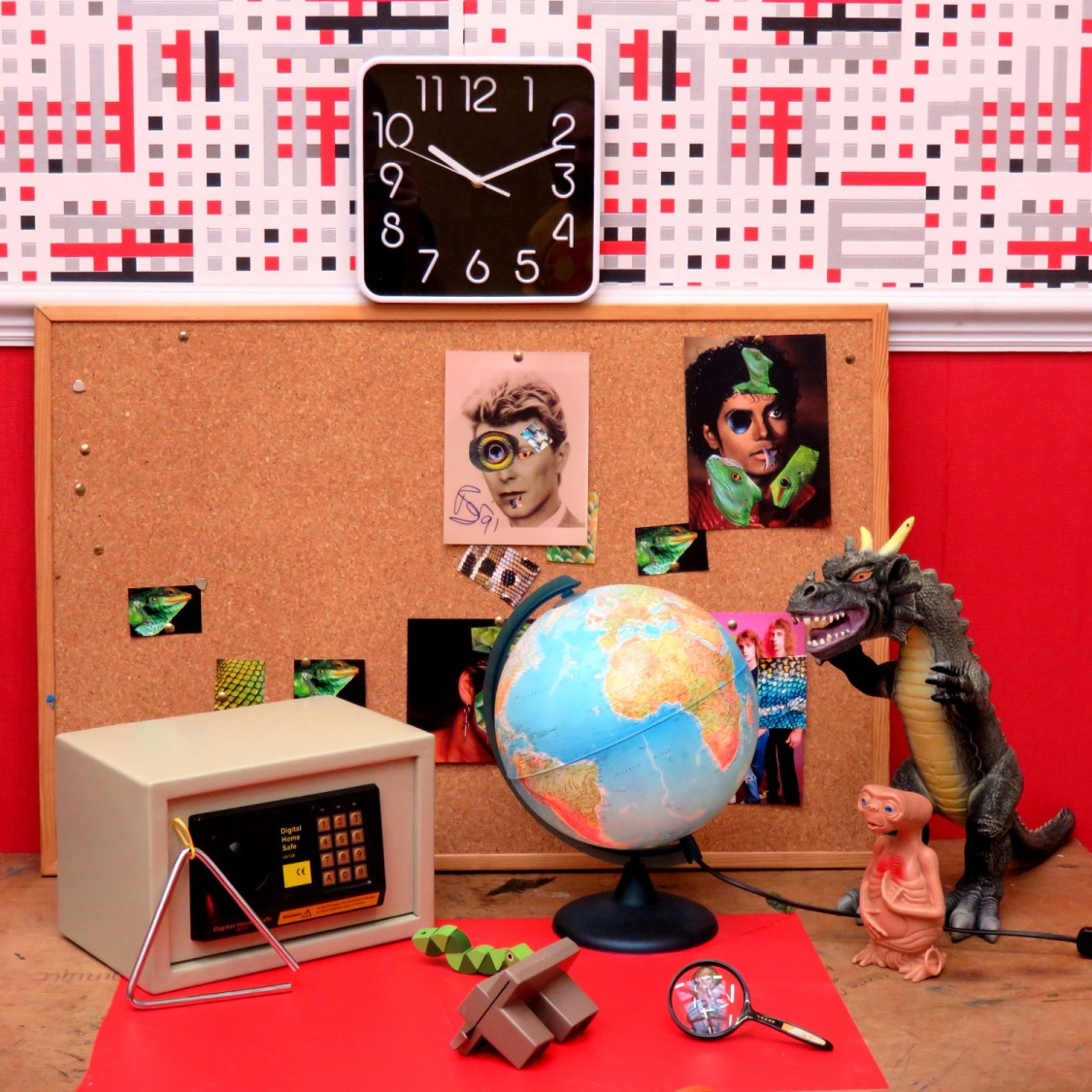
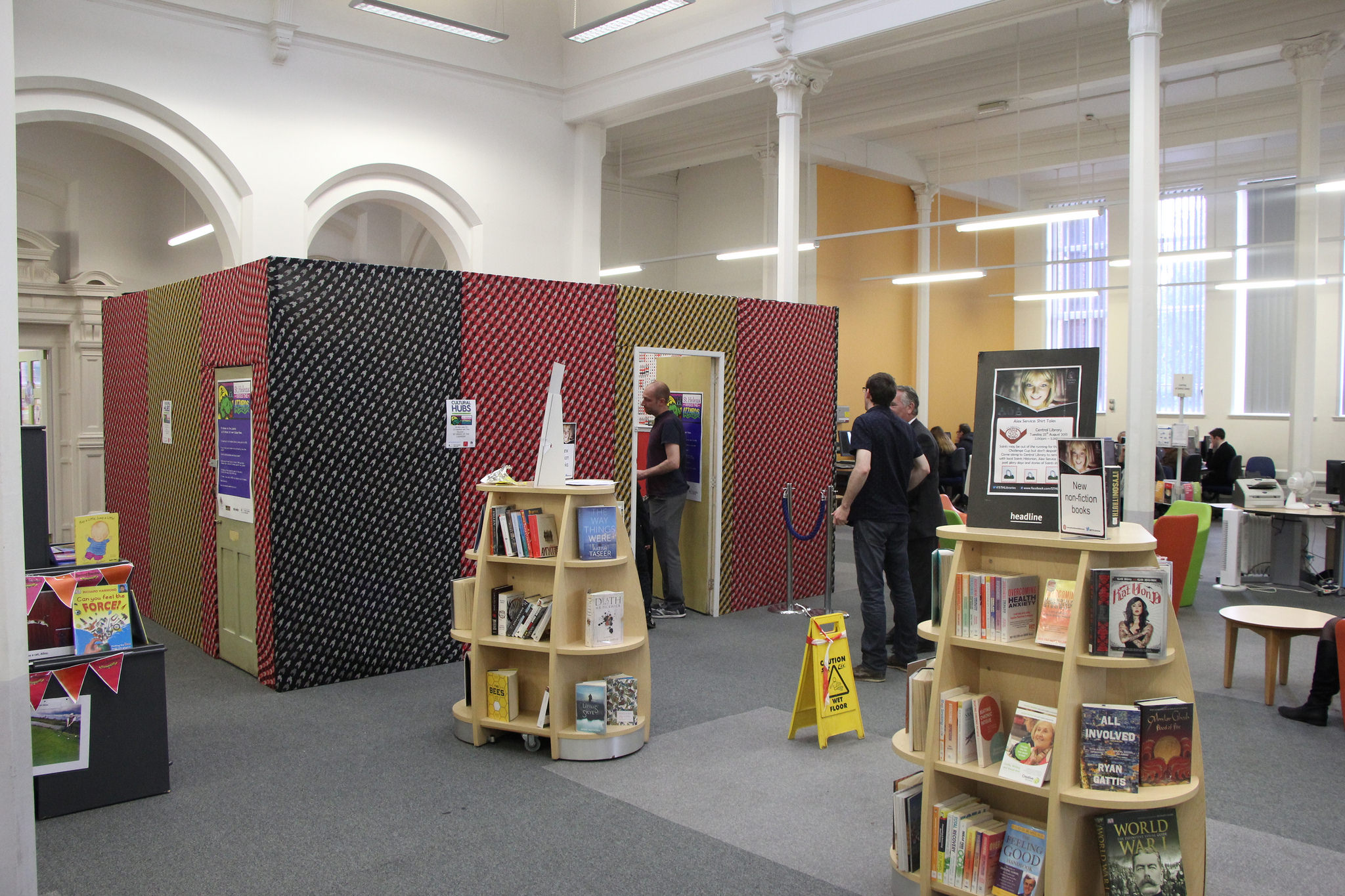
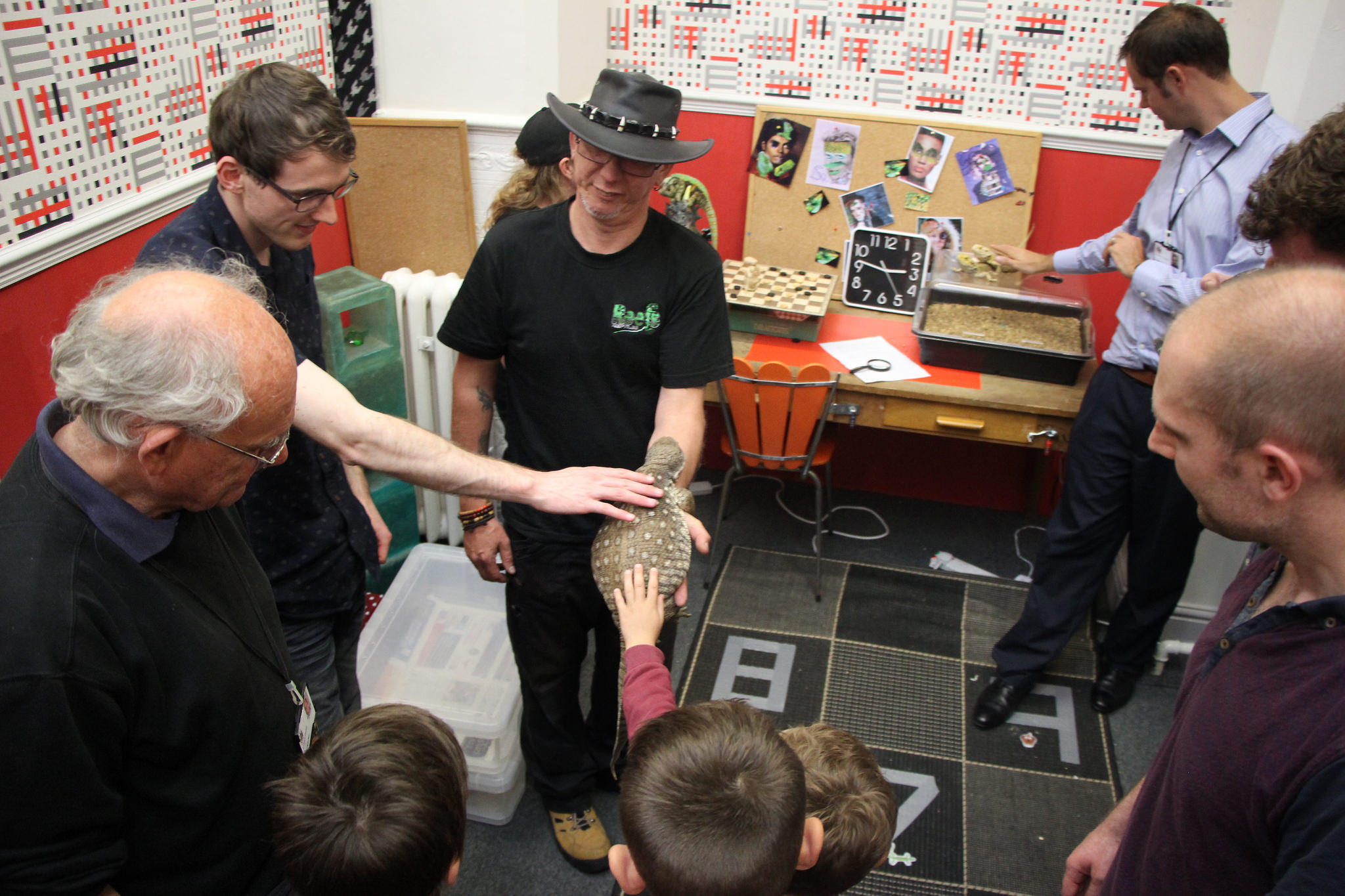
In ‘St Helens Vs Lizards’ players are challenged to explore the mind of Sam, a teenager who believes that Lizards are sending messages through Teletext, 80′s pop and everyday objects. Sam has begun to piece the evidence together around the room, but it will be up to you to make the connections that reveal the truth about Lizards. The room featured interactive puzzles that made use of contactless technology to trigger sounds when certain objects were placed in the right location and a bamboozling teletext quiz set by the lizards themselves.
To see more on this project, see the Re-Dock portfolio page.

← back


Thought Blobs


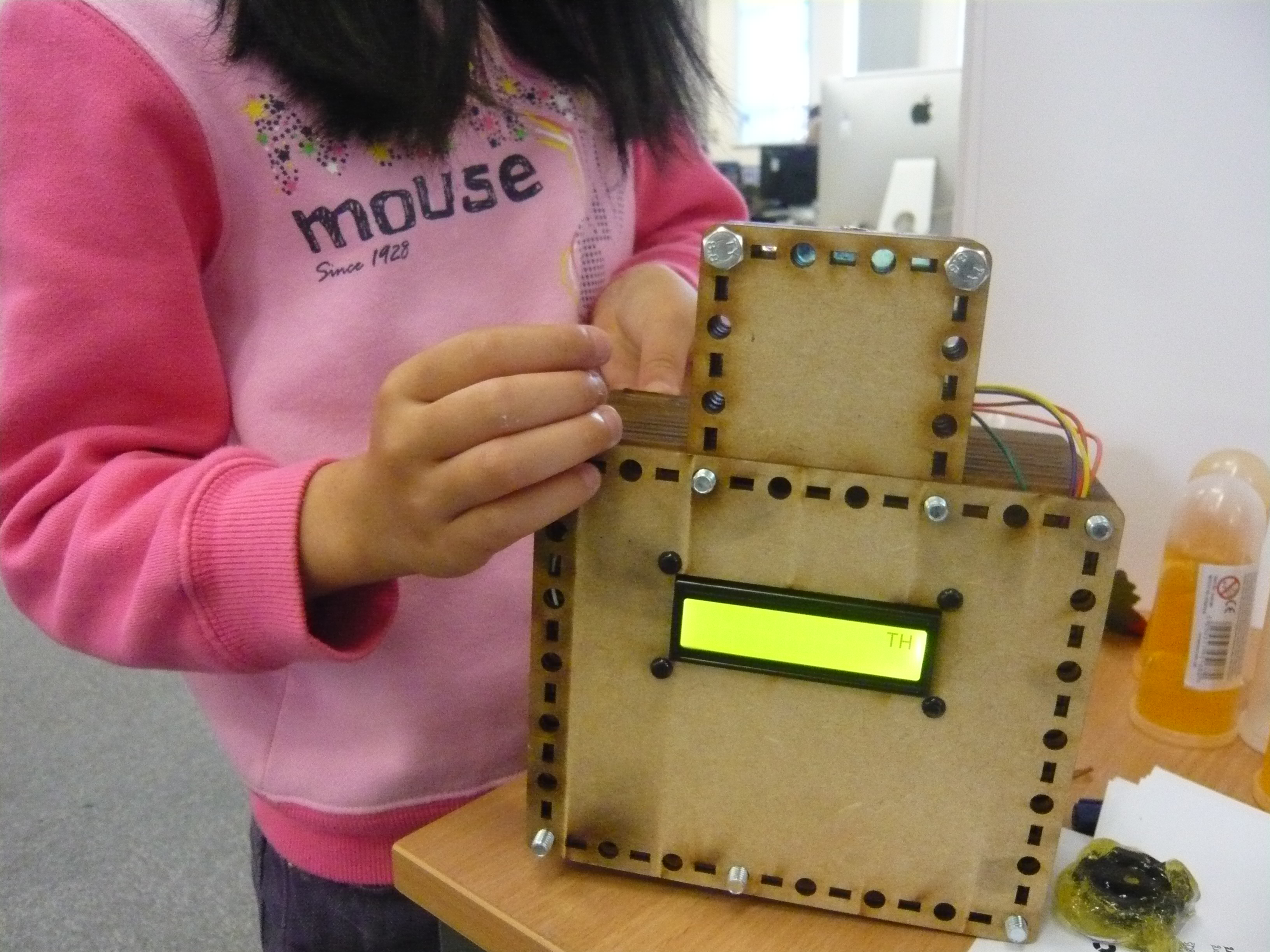
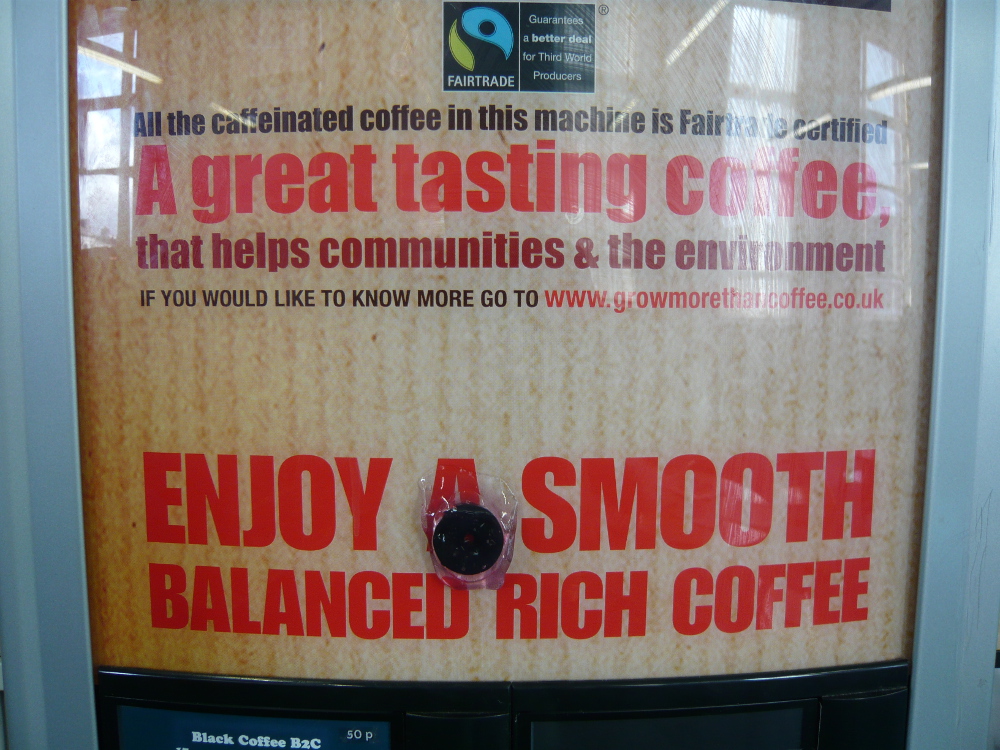
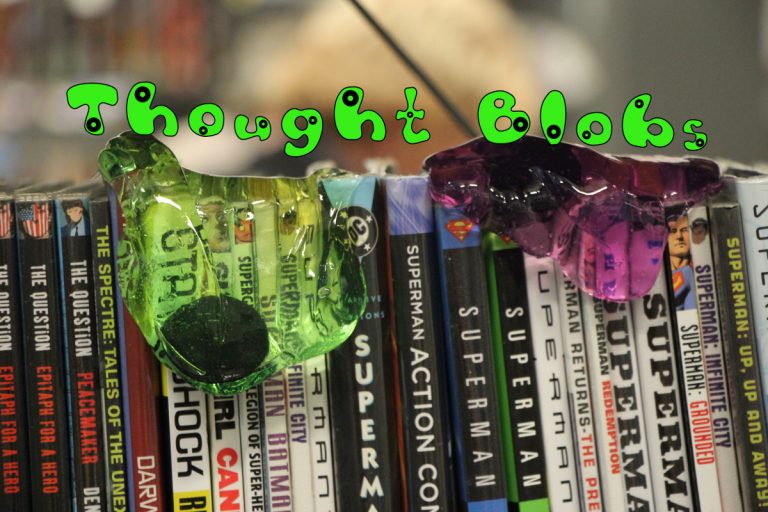
Thought Blobs are a slime based off grid communication system for children in libraries.


Young people created a trail of slimy thoughts around St.Helens Central Library and investigated them using a Thought Detector device.


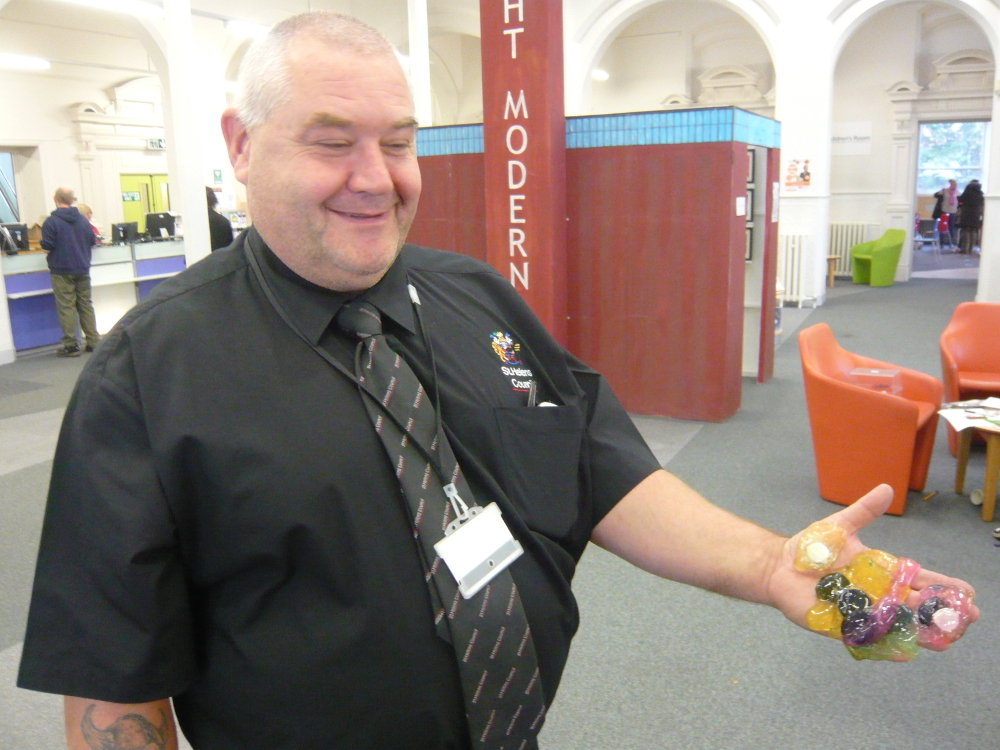
Here are some of the young people using the device to read the messaged stored in the thought blobs. Text descriptions of thoughts are written to slime covered RFID tags using a Raspberry Pi. They were then able to use a Ghostbusters style detector to read each other’s thoughts. The system was presented to the young people as a creative tool to be explore openly, allowing them to make their own connections between their thoughts and spaces.

Thought Blobs is part of the Re-Dock Cultral Hubs 2014 residency with St.Helens Libraries and St.Helens Arts Service. To make the detector I collaborated with IOT expert Adrian McEwen & OOBB inventors Oomlout.


← back


30 Years Of


In 2014 it was 30 years since the 1984 miners’ strike, which opposed the government’s policy of pit closures. Re-Dock and Internet of Things expert Adrian McEwen worked with women and men from the ex-mining community in St.Helens to create an interactive exhibition of enchanted objects, telling the story of the past 30 years.


Through a series of creative workshops we asked the men and women of the ex-mining community in St. Helens to share and curate a selection of objects to describe their experience of the past 30 Years. We used these objects as a focal point to discuss the strike, to evoke memories and to explore how things have changed over the years.


Producer Gary Conley introducing ‘Still The Enemy Within


The project culminated in a screening of the film ‘Still The Enemy Within’ and an exhibition of enchanted artefacts. Cabinets of interactive artefacts were displayed at Chester Lane and Haydock library, with viewers able to investigate the objects using a specially designed sensor, that triggered audio descriptions of the memories that they sparked. The exhibition also featured smart objects that responded when they were being talked about on Twitter.


The project was commissioned by St. Helens Arts Service as part of the second Cultural Hubs programme and is supported by public funding from the Arts Council of England.

← back


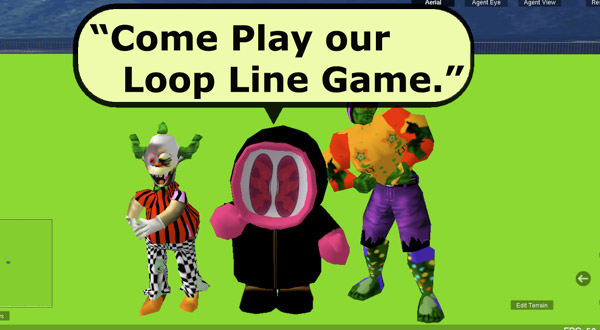
The Loop


The Loop is an artwork and compture game, made with a group of teenagers, looking at the way stories spread about the Liverpool Loop Line Cycle Track, known as the Ralla.

We asked Young people from Rice Lane City Farm and Norris Green Detached Youth Project, “If the Loop Line were a computer game, how would it play" We worked with them to create and code a game in which you collect an arsenal of stories about the Ralla and shoot them out to other people. Positive and negative stories spread between NPCs, can you spread enough good stories about the Ralla to relaim it?

This project was comissioned by the Bluecoat.